
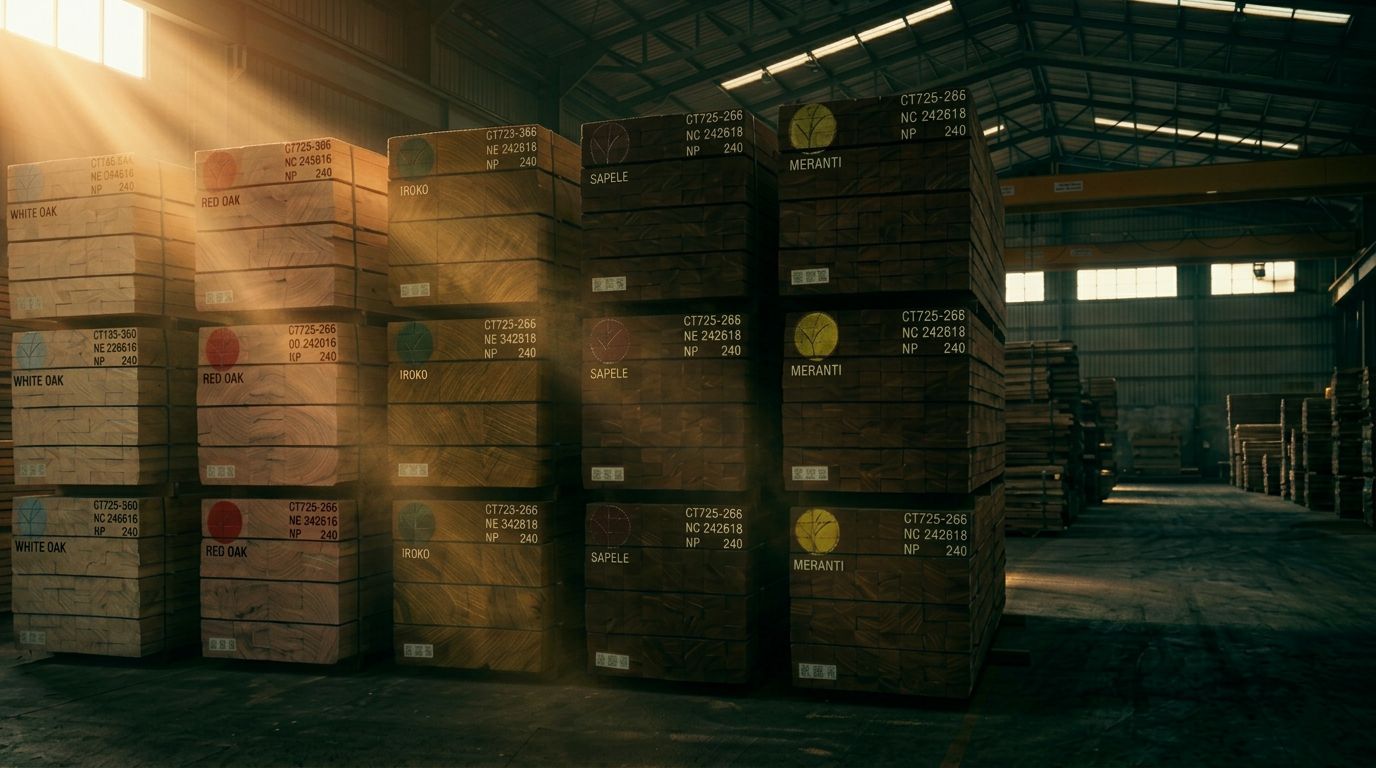
The world's finest hardwoods, under one roof.
African, European, American and Asian hardwoods, including kiln-dried lumber, four-sided square logs, beech wood, veneers and components, supplied mill-direct across the UAE, Saudi Arabia, Qatar, Kuwait, Oman, Bahrain, Egypt, Jordan and Iraq. FSC®, PEFC, NHLA and EUDR compliant.
Click any species for full specifications.
Janka hardness, density, grading, available thicknesses and indicative applications, plus an enquiry shortcut on every page.
Sapele, Utile/Sipo, African Mahogany, Iroko, Afrormosia, Wenge, Padauk, Zebrawood, Okoume, Movingui, Azobe, Kossipo, Dabema, Ayous, Bilinga, Dibetou, Okan, Bubinga.
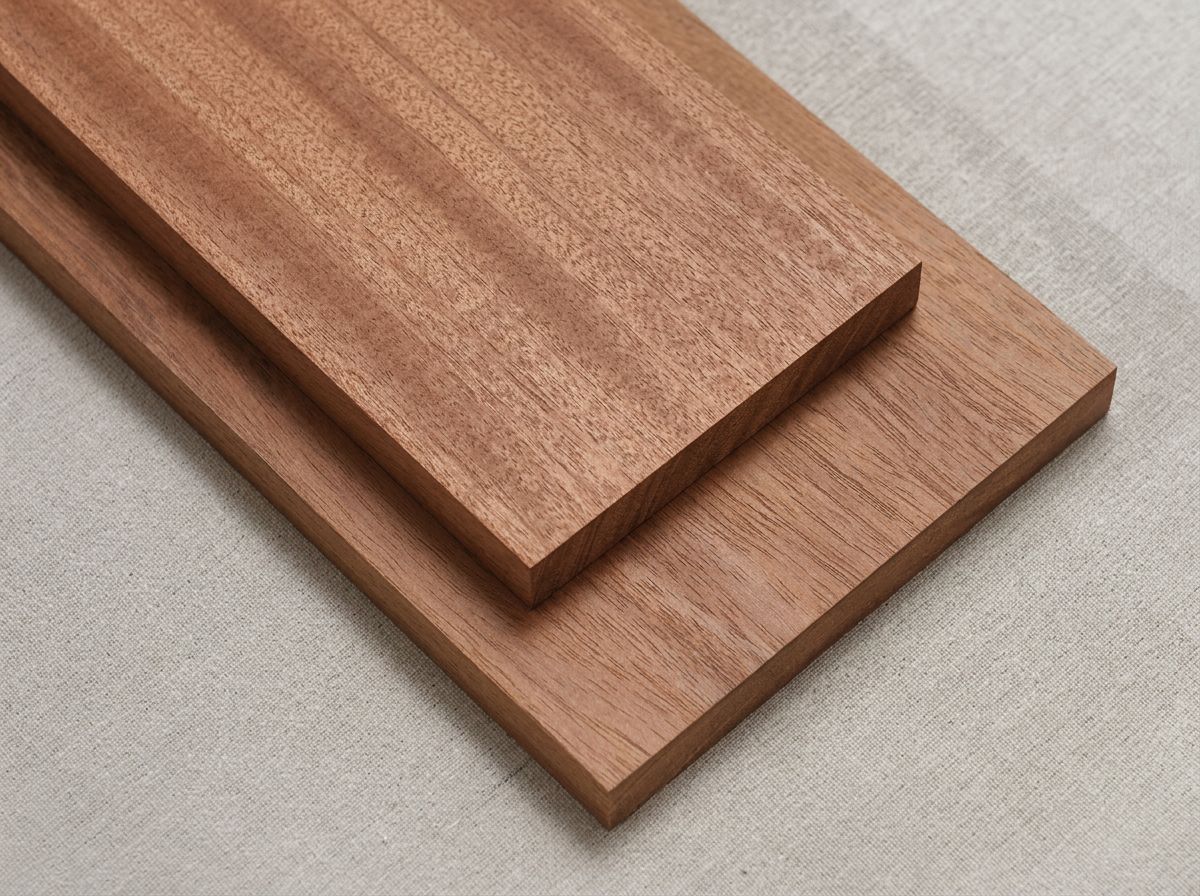
Sapele
The go-to mahogany alternative - ribbon-stripe figure, dense and stable.
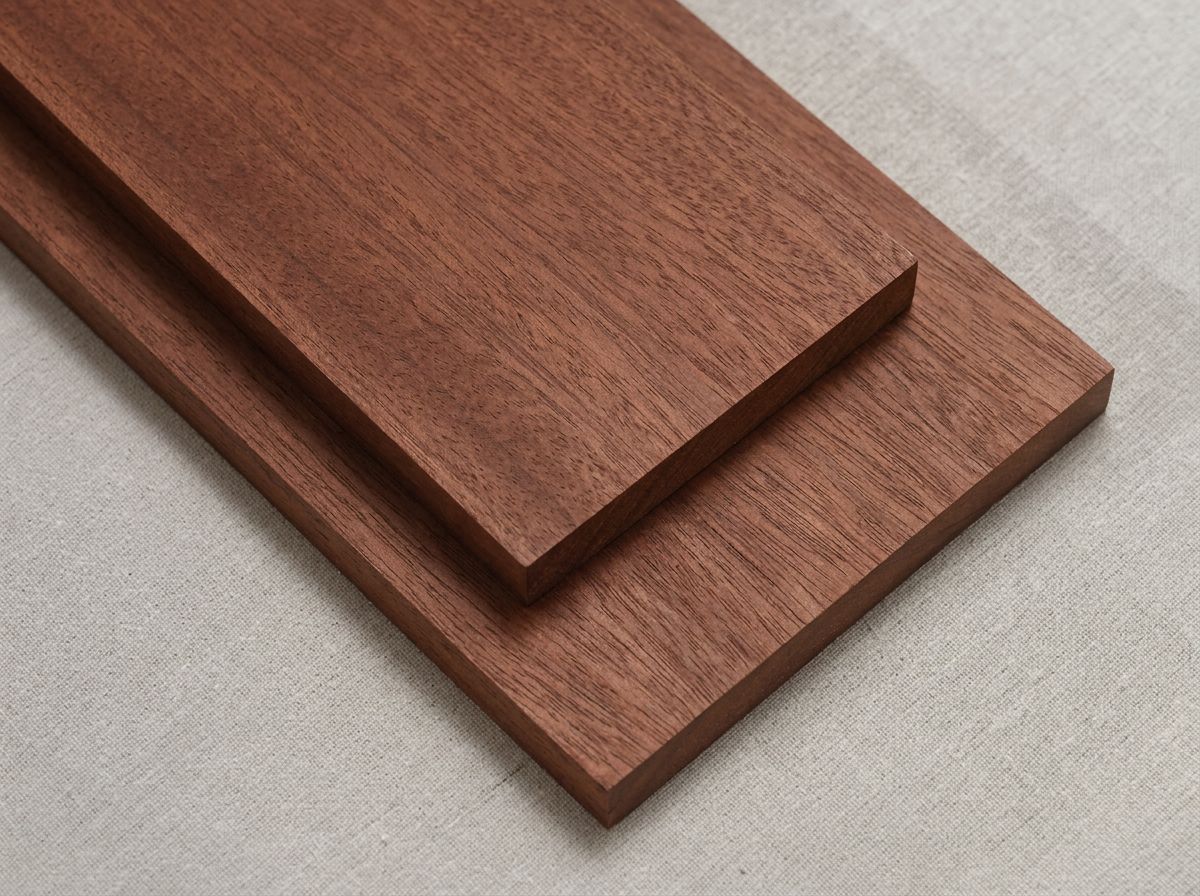
Utile / Sipo
Deep red, rot-resistant African hardwood - a top mahogany alternative.
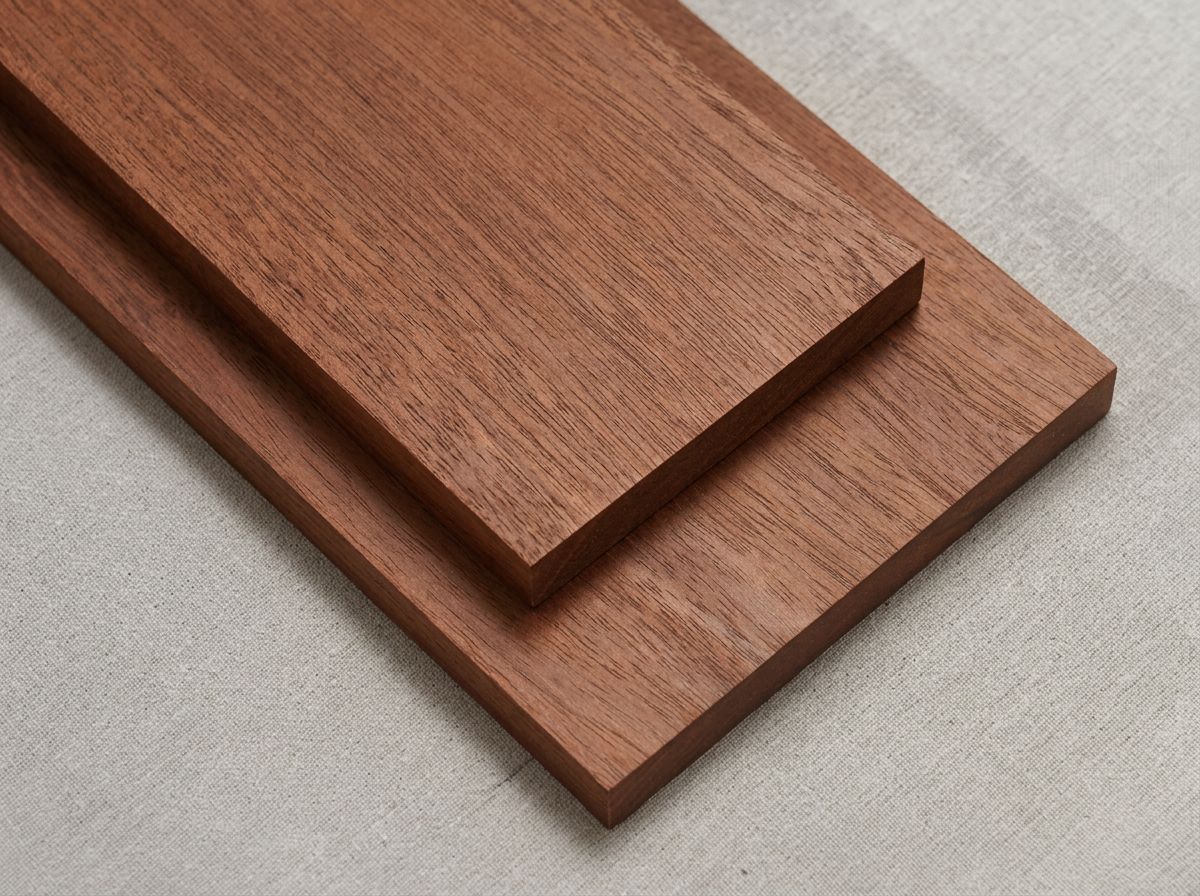
African Mahogany
Classic reddish-brown mahogany - wide availability, fine even texture.
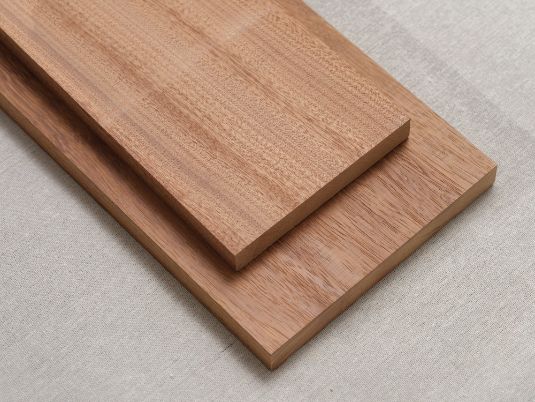
Iroko
Golden-brown West African hardwood - Class 1 durable, an economical teak alternative.
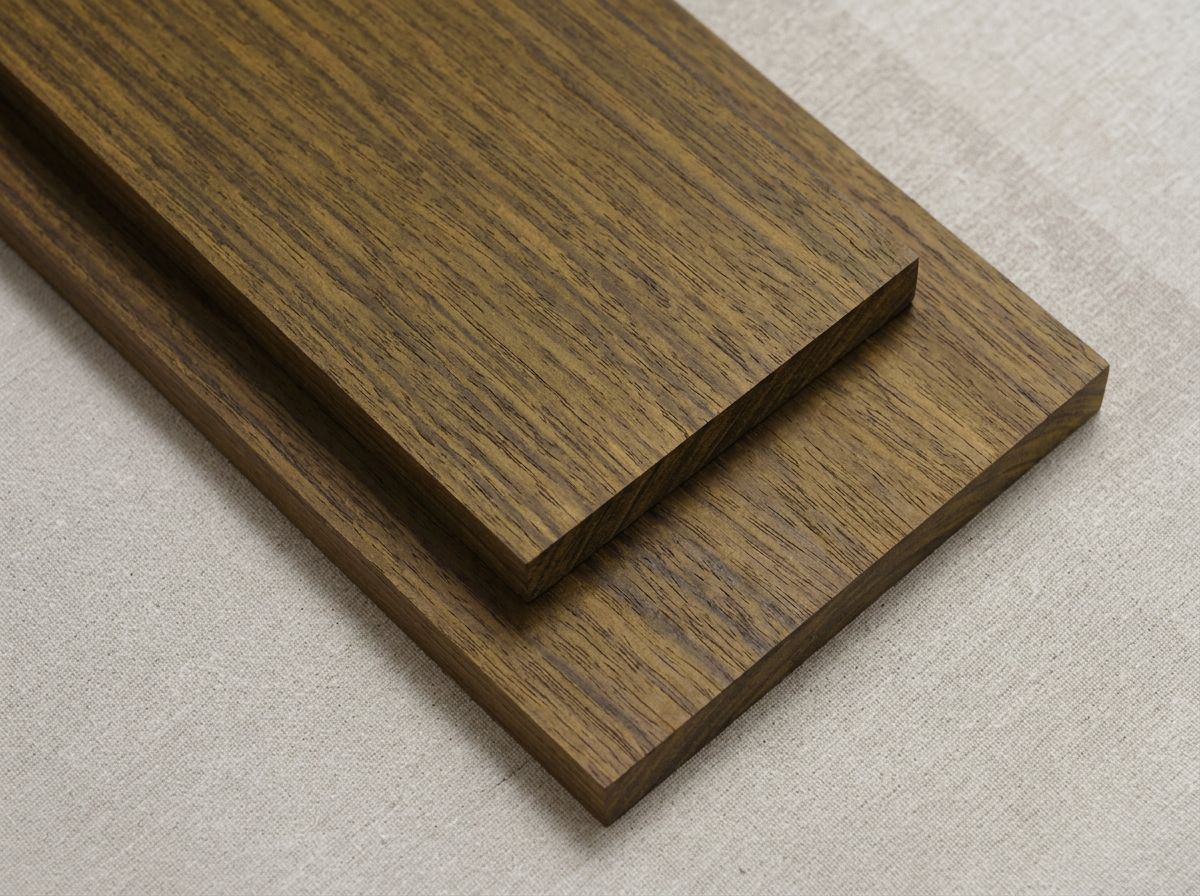
Afrormosia
A Teak-alternative African hardwood - darker, harder, and CITES-regulated.
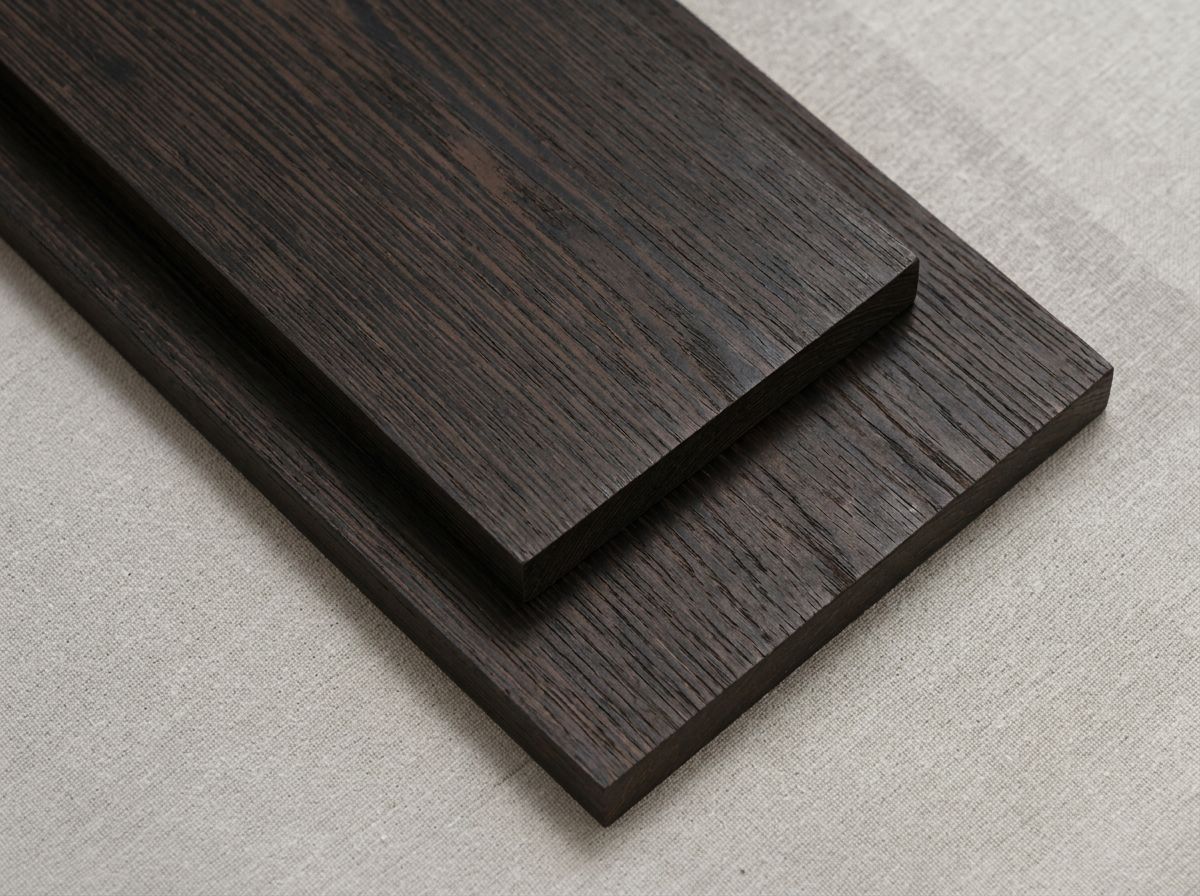
Wenge
Very dark, near-black African hardwood with bold parallel grain.
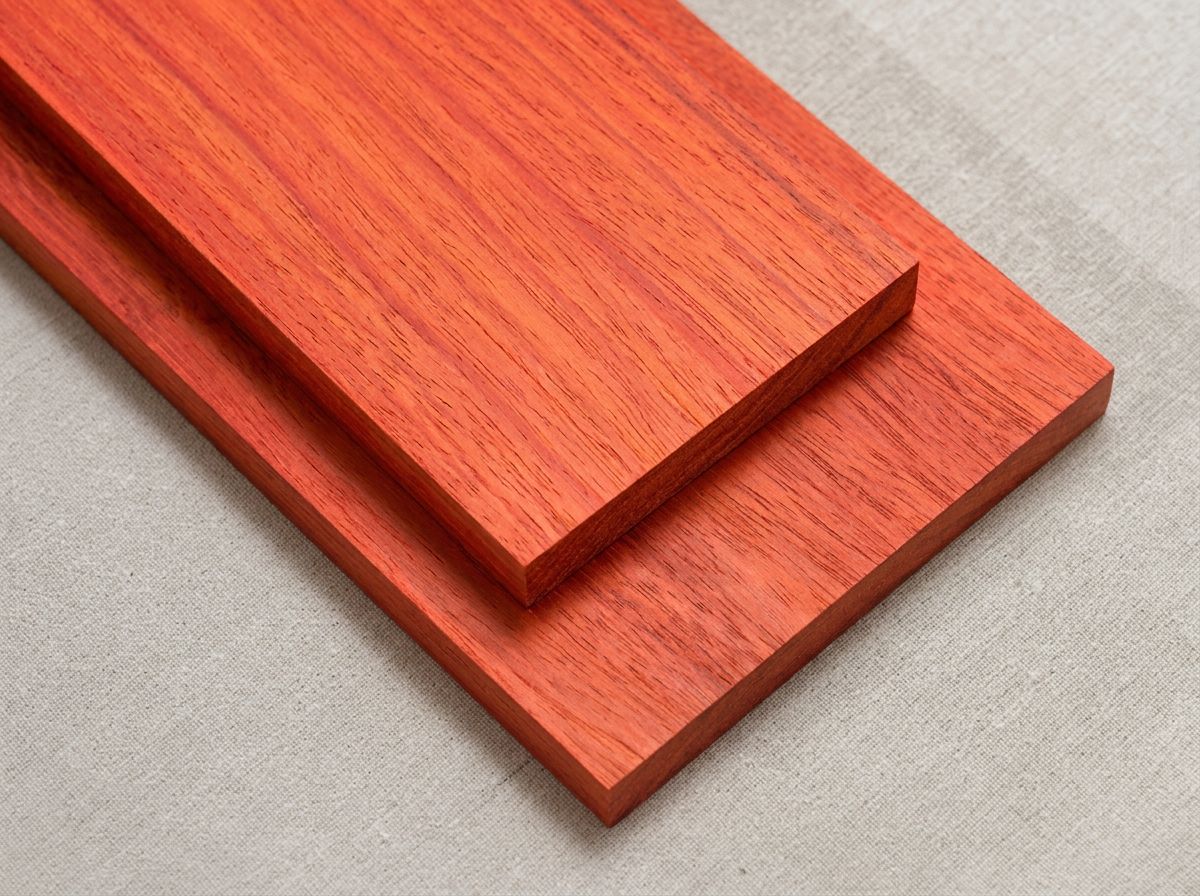
African Padauk
Bright orange-red heartwood - durable, stable and easy to work.
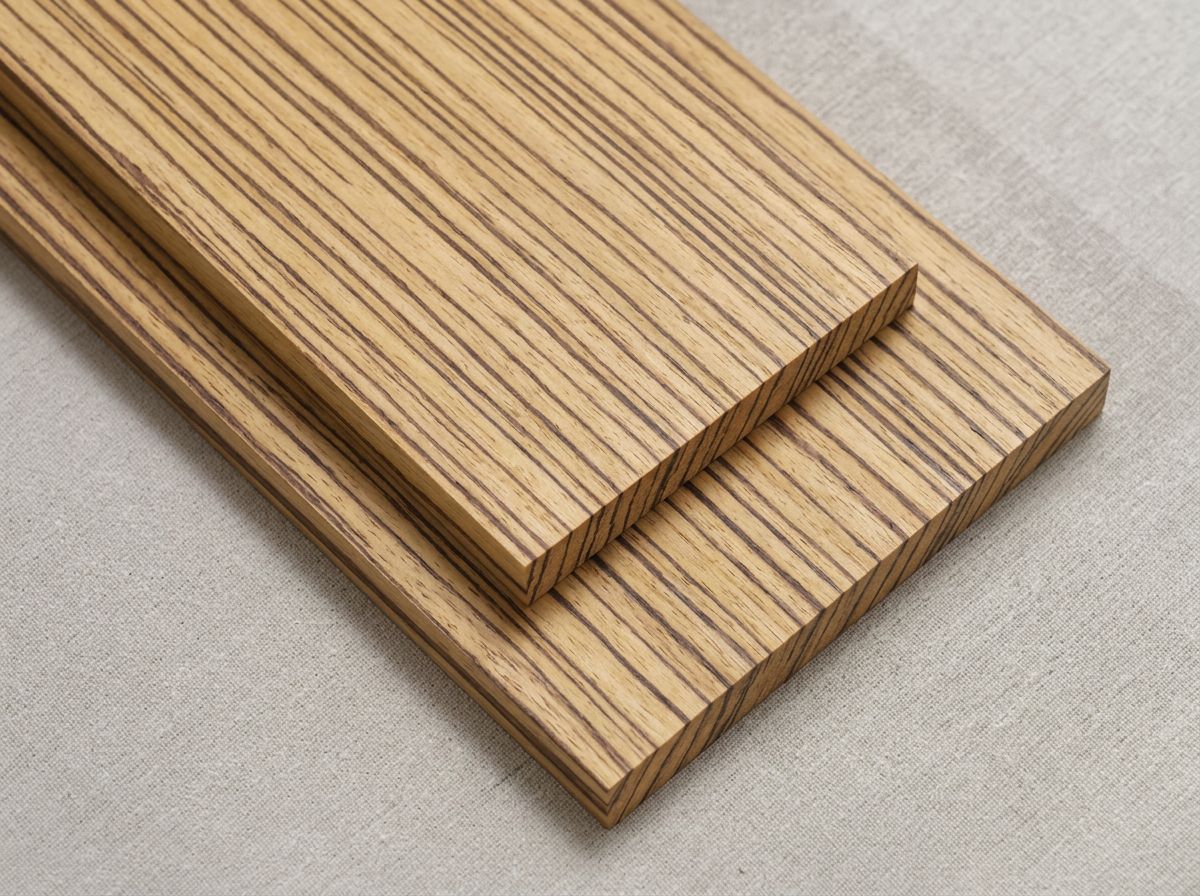
Zebrawood
Golden-cream wood crossed by bold dark zebra-like stripes.
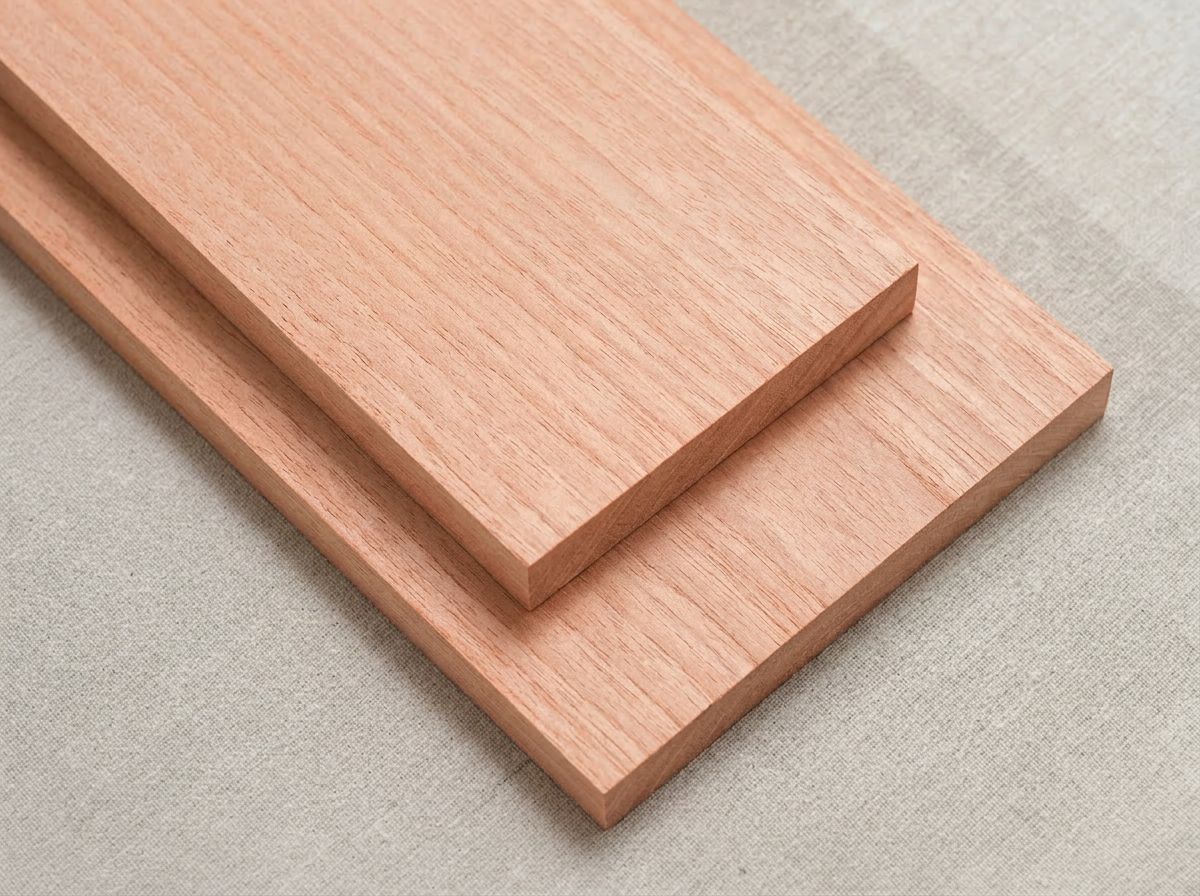
Okoume
Lightweight pinkish-salmon African hardwood - the backbone of marine plywood.
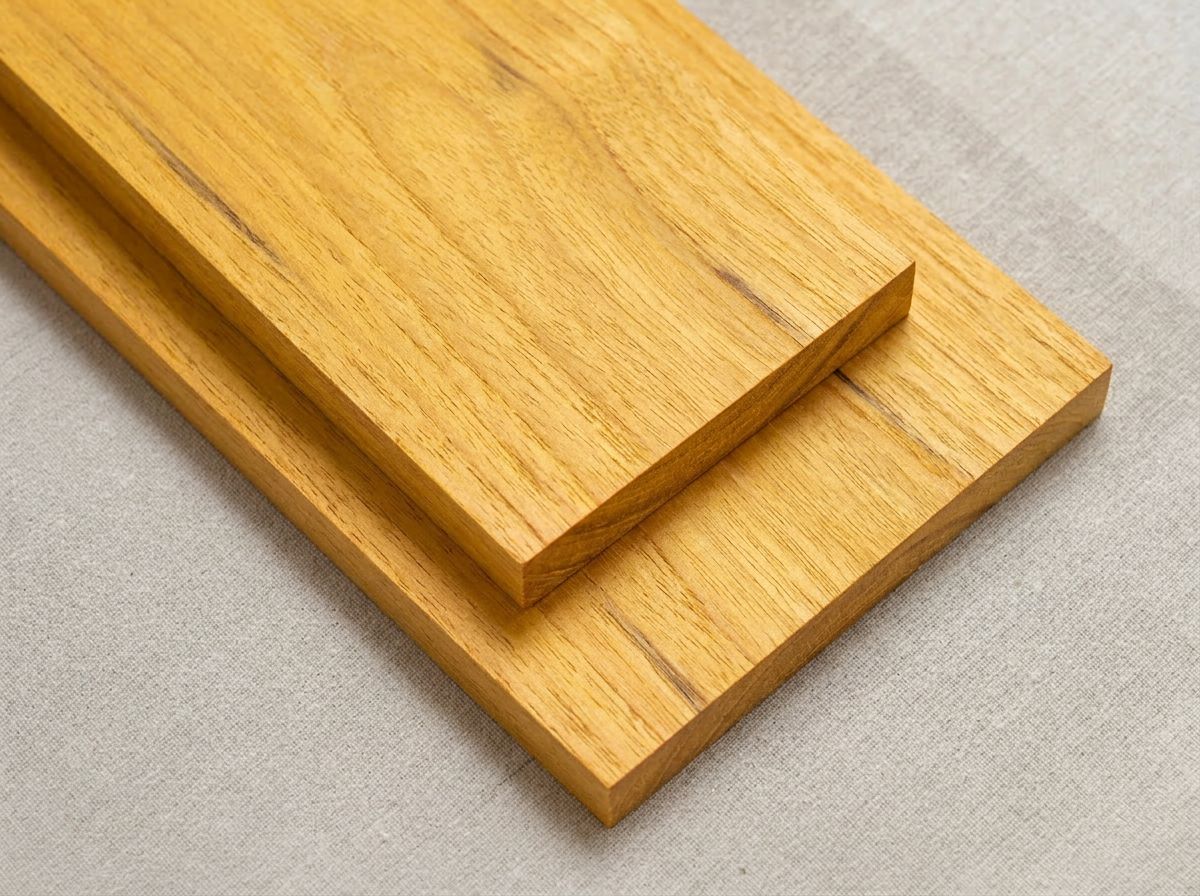
Movingui
Vivid golden-yellow hardwood with a fine lustrous grain.
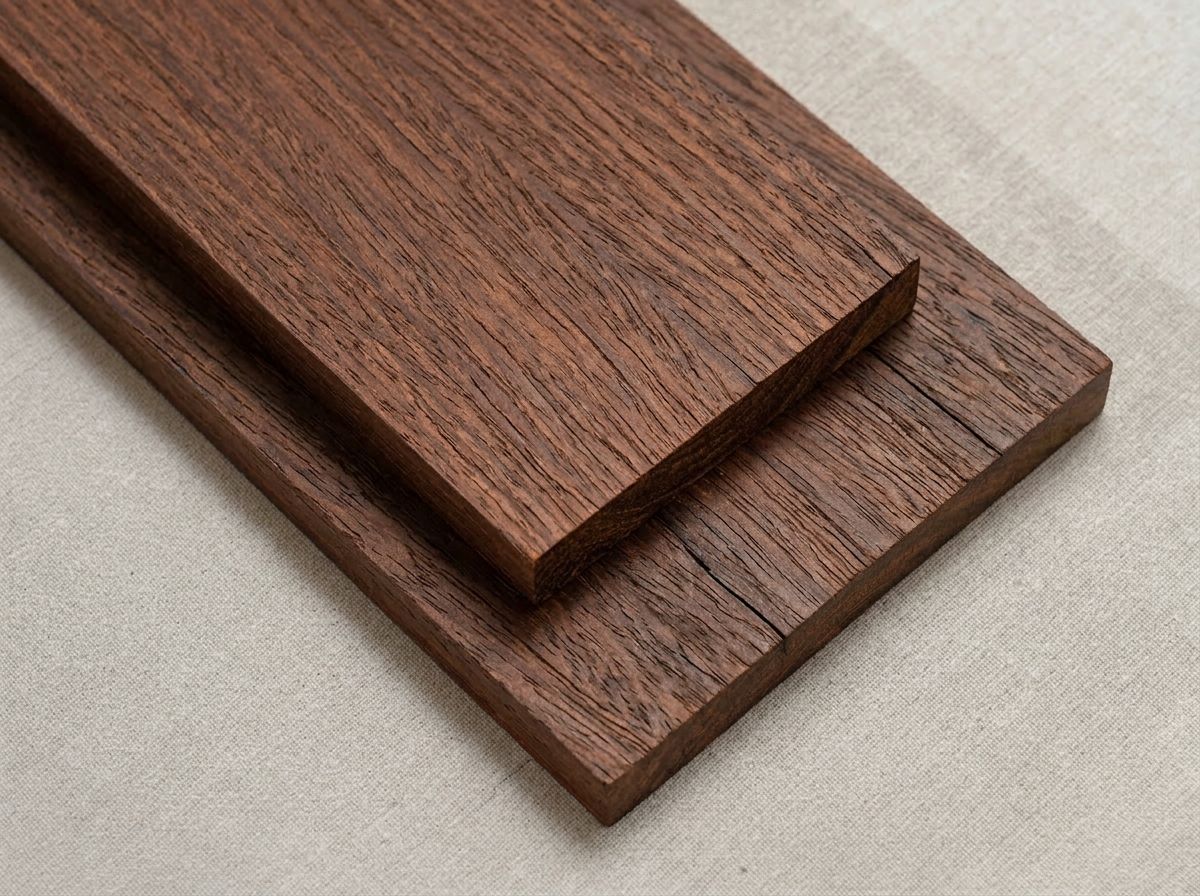
Azobe
Very dense dark reddish-brown hardwood for marine piling and heavy structures.
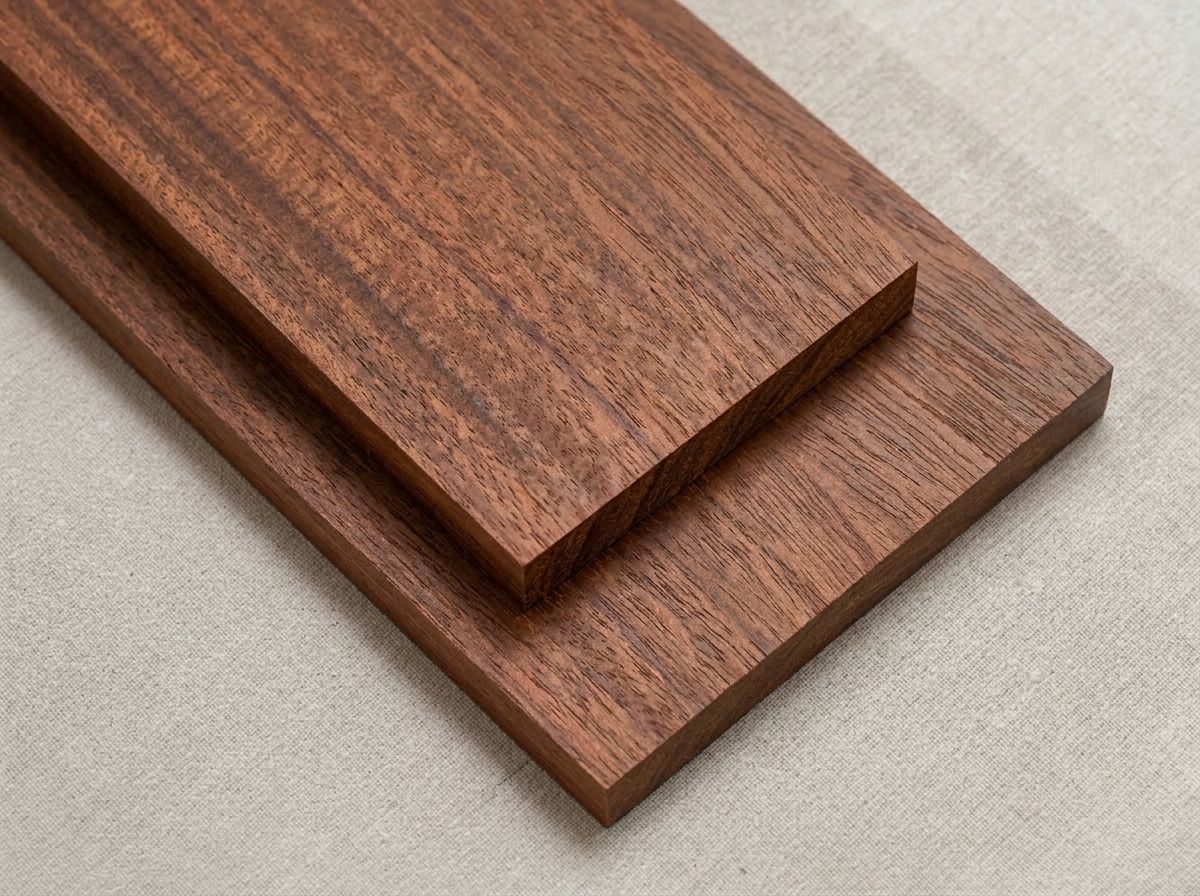
Kossipo
Reddish-brown Sapele relative with subtle ribbon figure - a mahogany alternative.
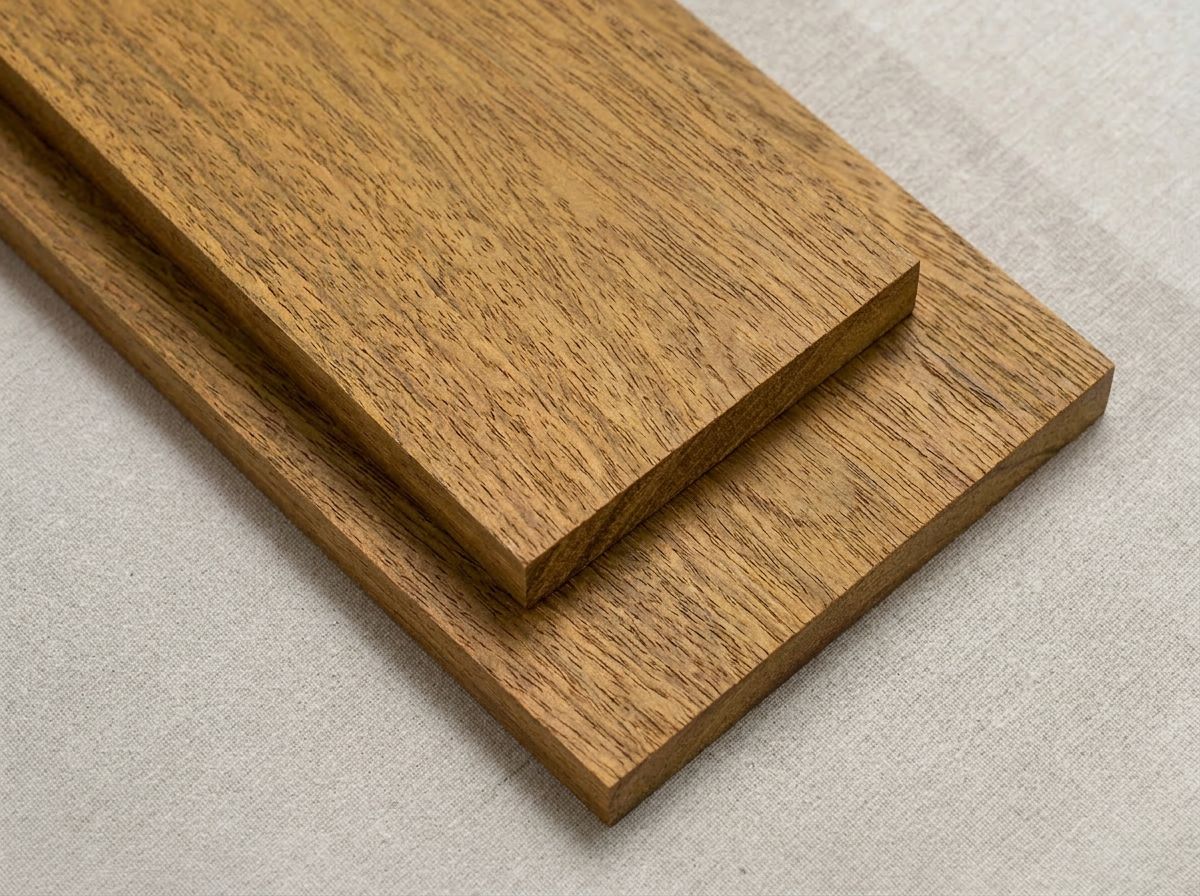
Dabema
Yellow-brown hardwood with coarse texture - heavy structural and exterior use.
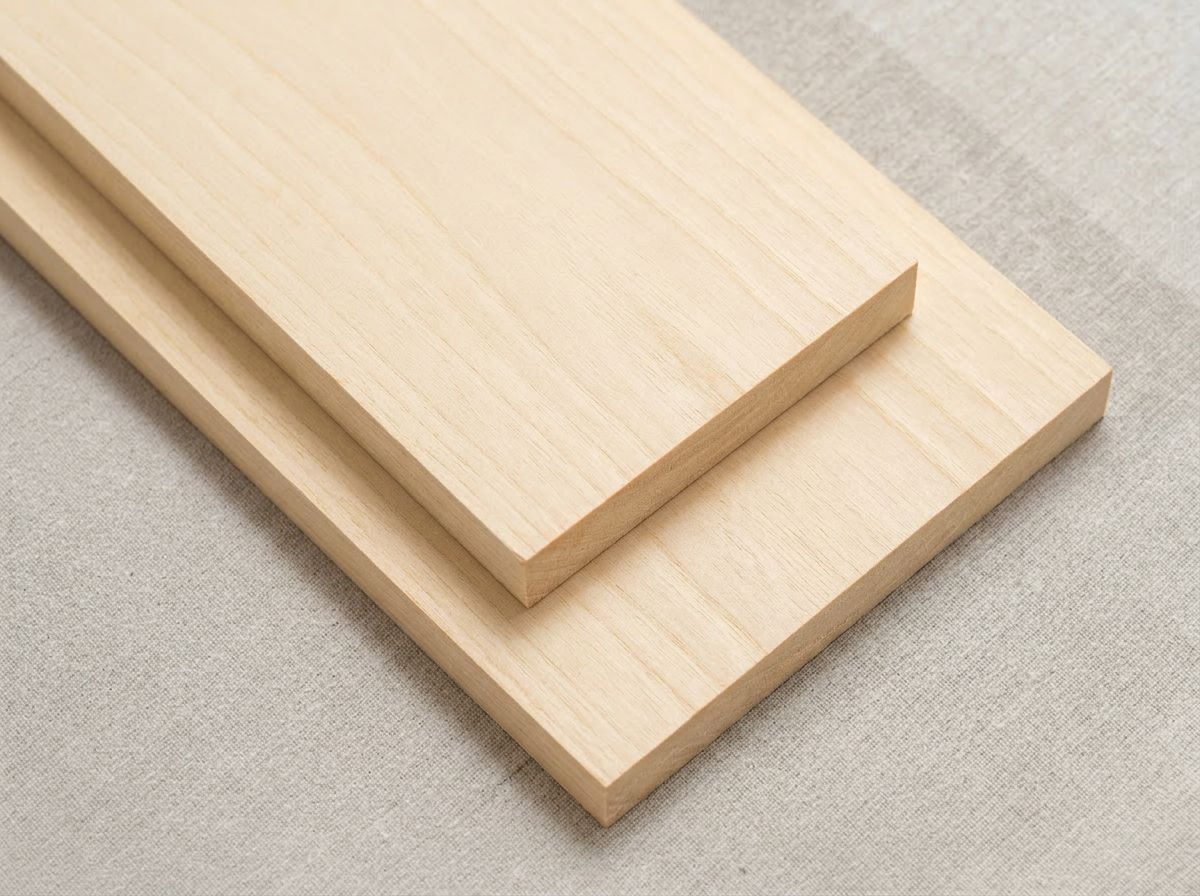
Ayous
Pale creamy-yellow lightweight hardwood - easy to work, stable & uniform.
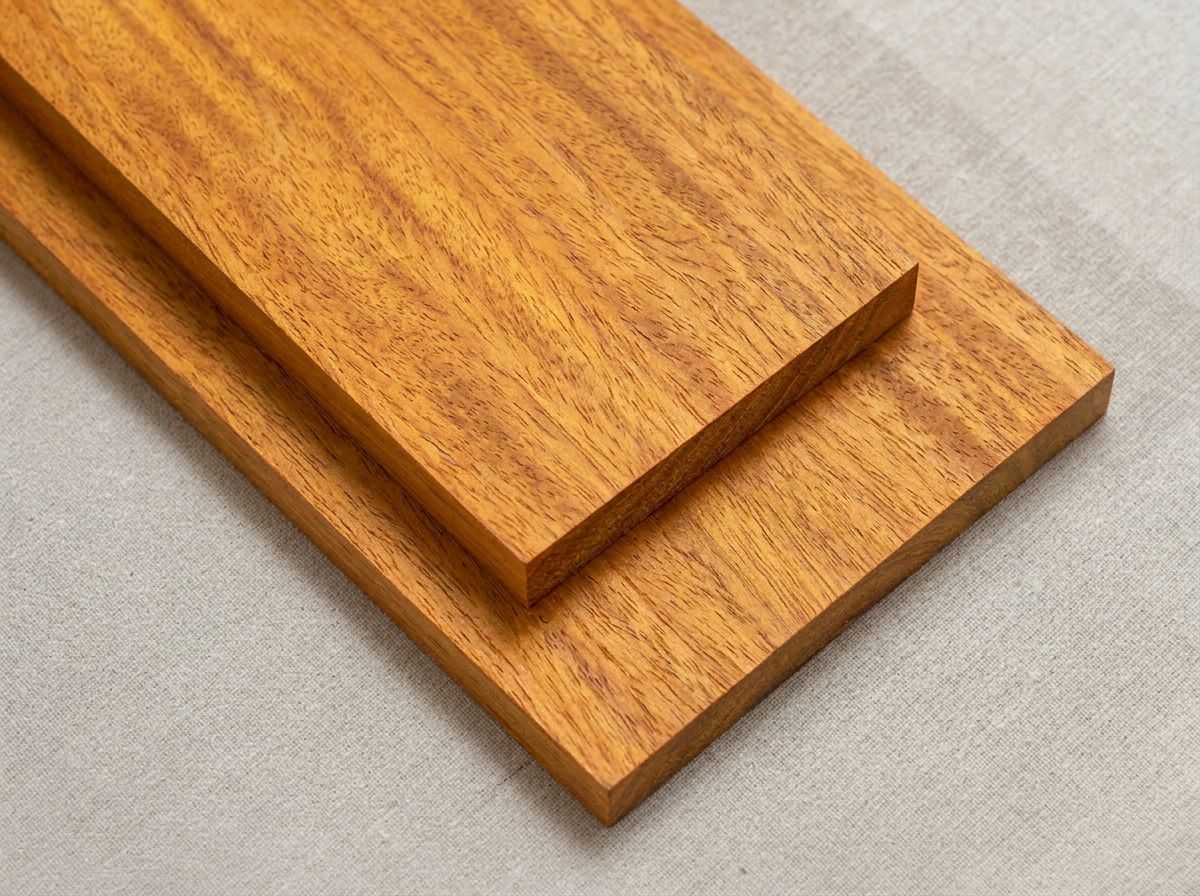
Bilinga
Golden-orange durable hardwood - exterior joinery, decking and marine use.
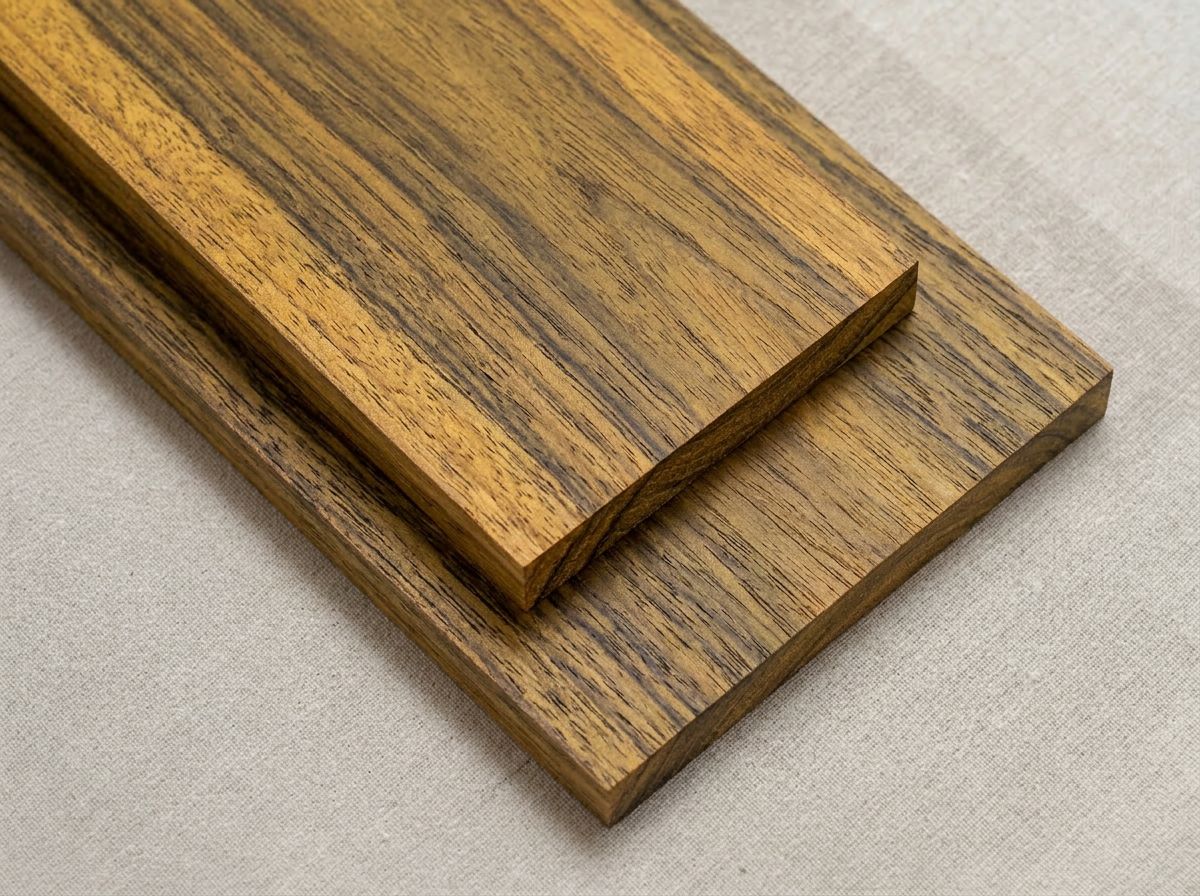
Dibetou
Olive-brown hardwood with dark streaks - a walnut alternative for fine joinery.
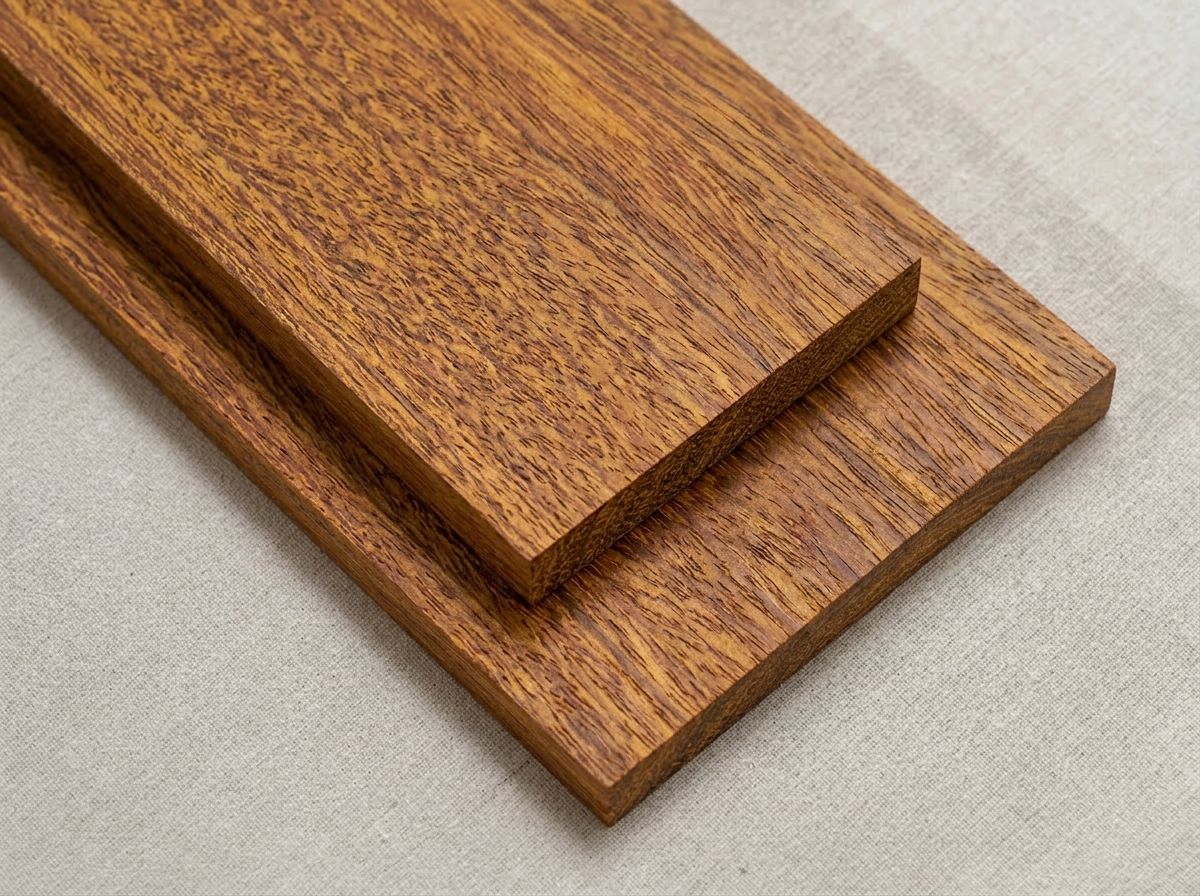
Okan
Yellow-brown to reddish hardwood with extreme density - heavy structural use.
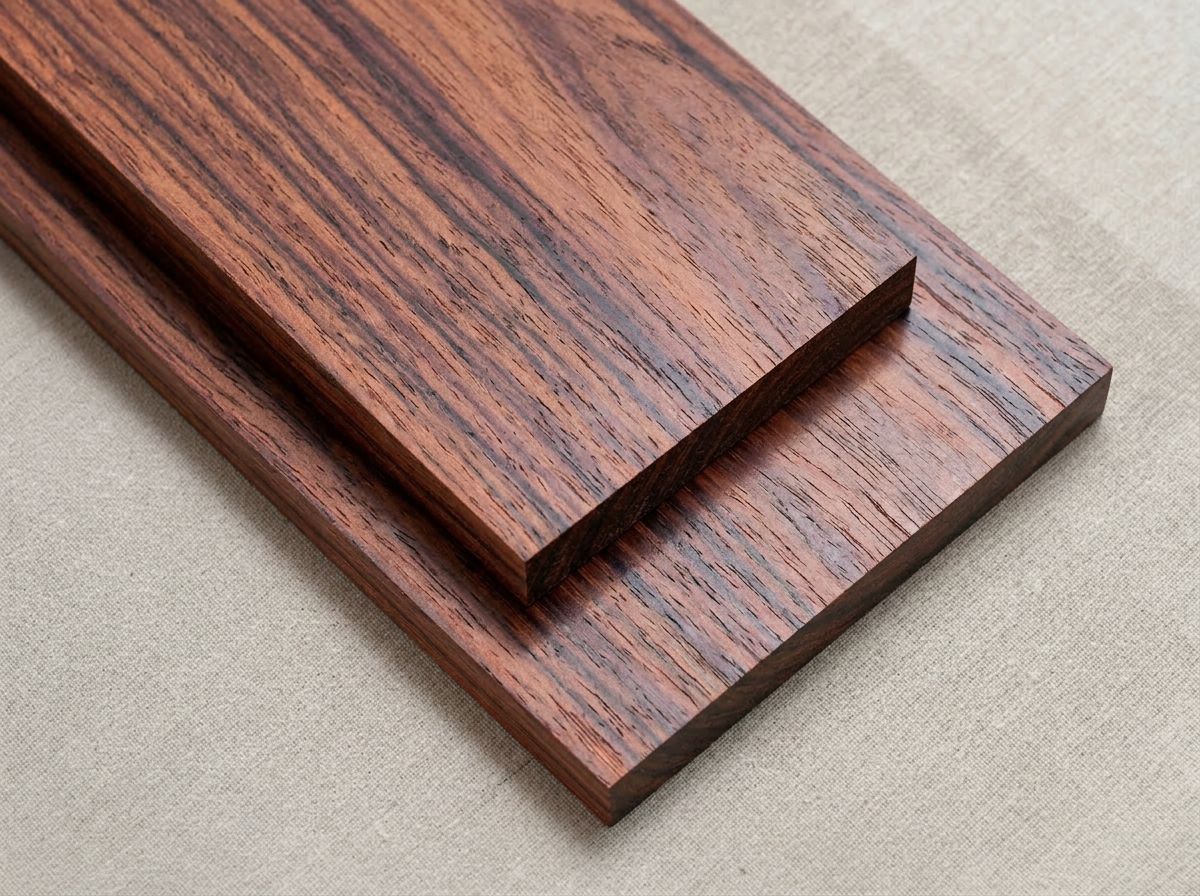
Bubinga
Reddish-violet hardwood with dramatic dark stripes - decorative furniture & veneer.
AHEC-graded Walnut, White & Red Oak, Cherry, Hard Maple, Ash.
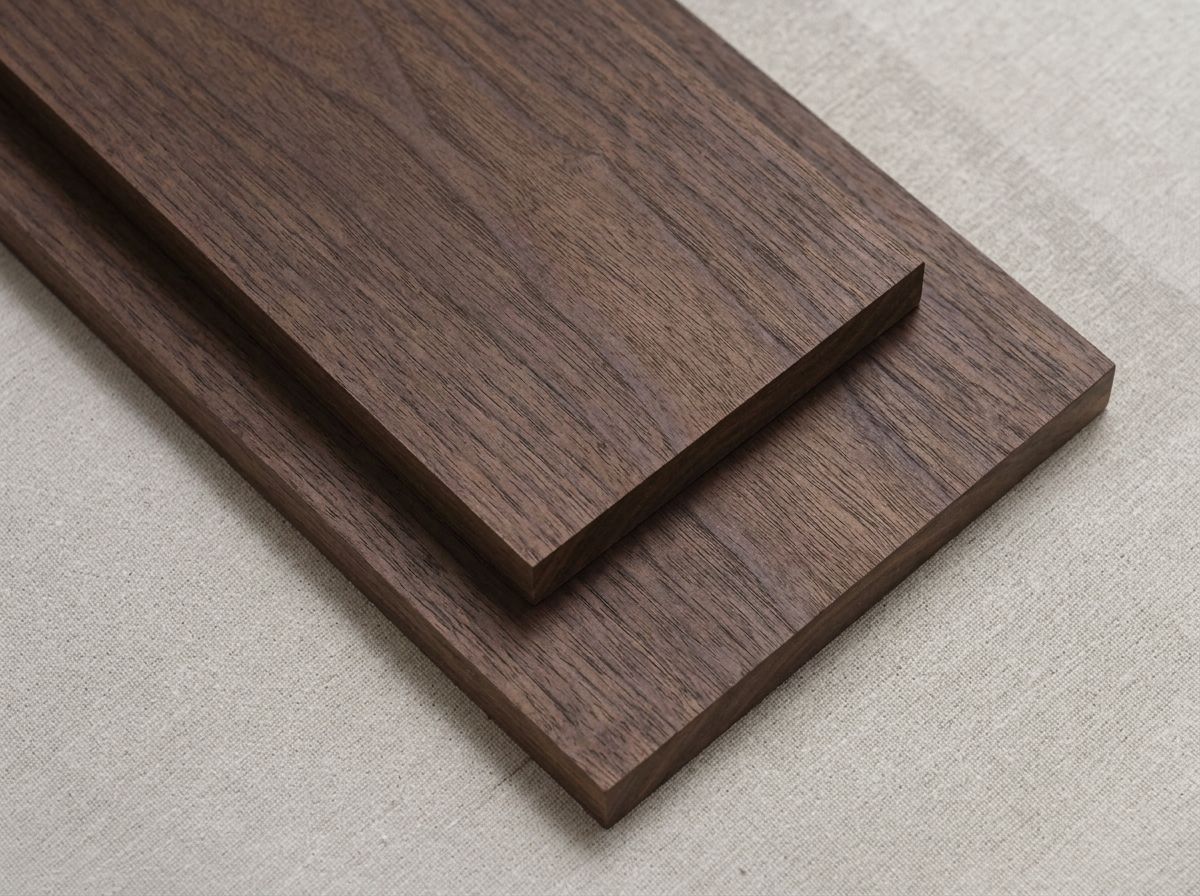
American Black Walnut
Iconic chocolate-brown North American hardwood - NHLA graded, AHEC traceable.
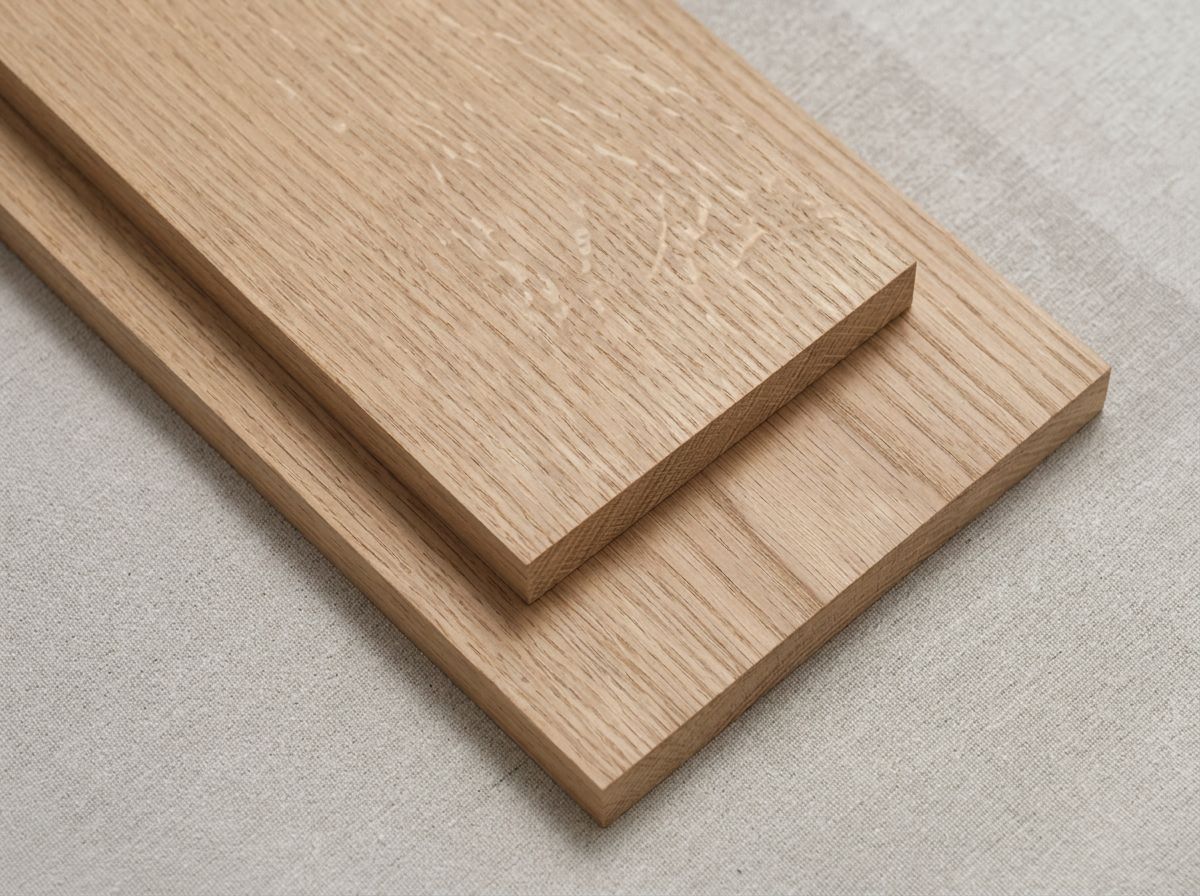
American White Oak
Tannin-rich, water-tight hardwood - barrels, flooring and architectural joinery.
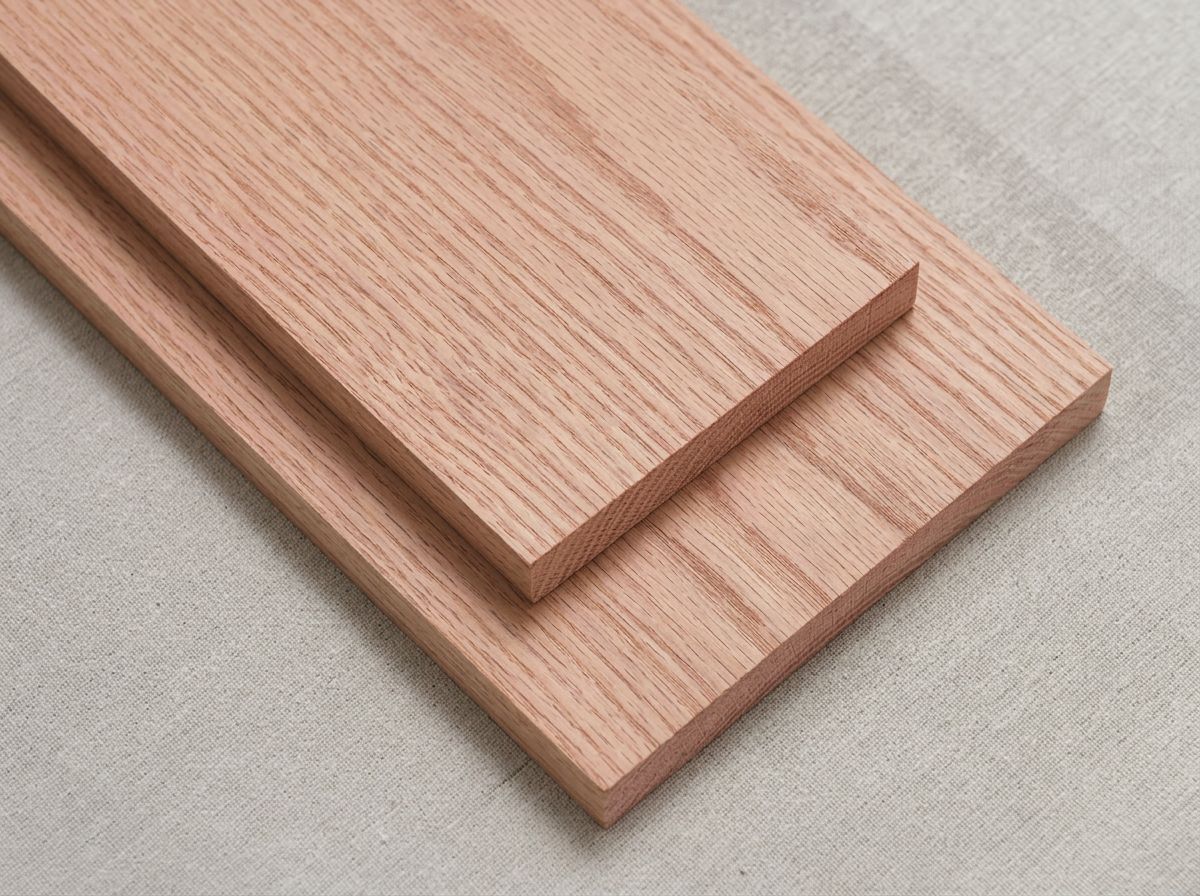
American Red Oak
Pinkish-tan with bold open grain - abundant and easy to stain.
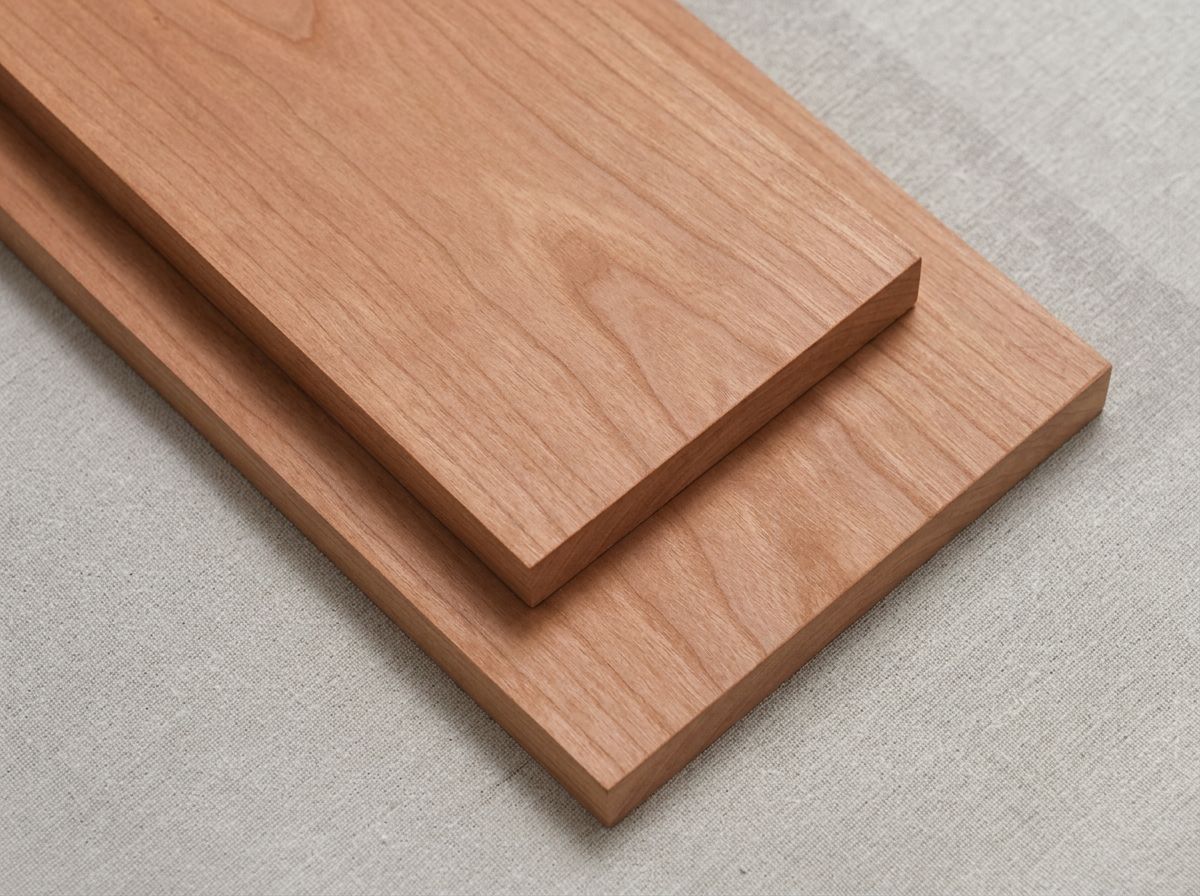
American Black Cherry
Warm reddish-brown hardwood - ages to a deep auburn patina.
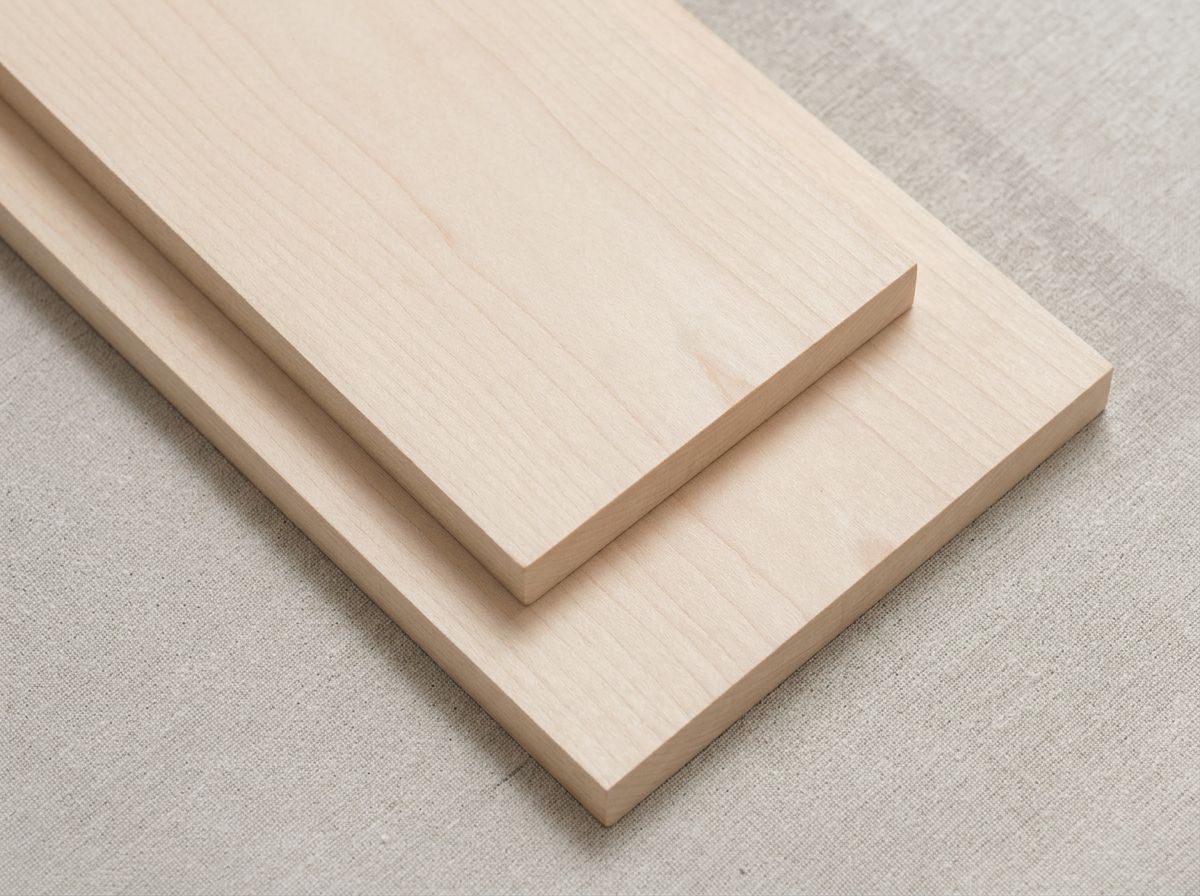
North American Hard Maple
Creamy-white, dense and shock-resistant - the sports flooring standard.
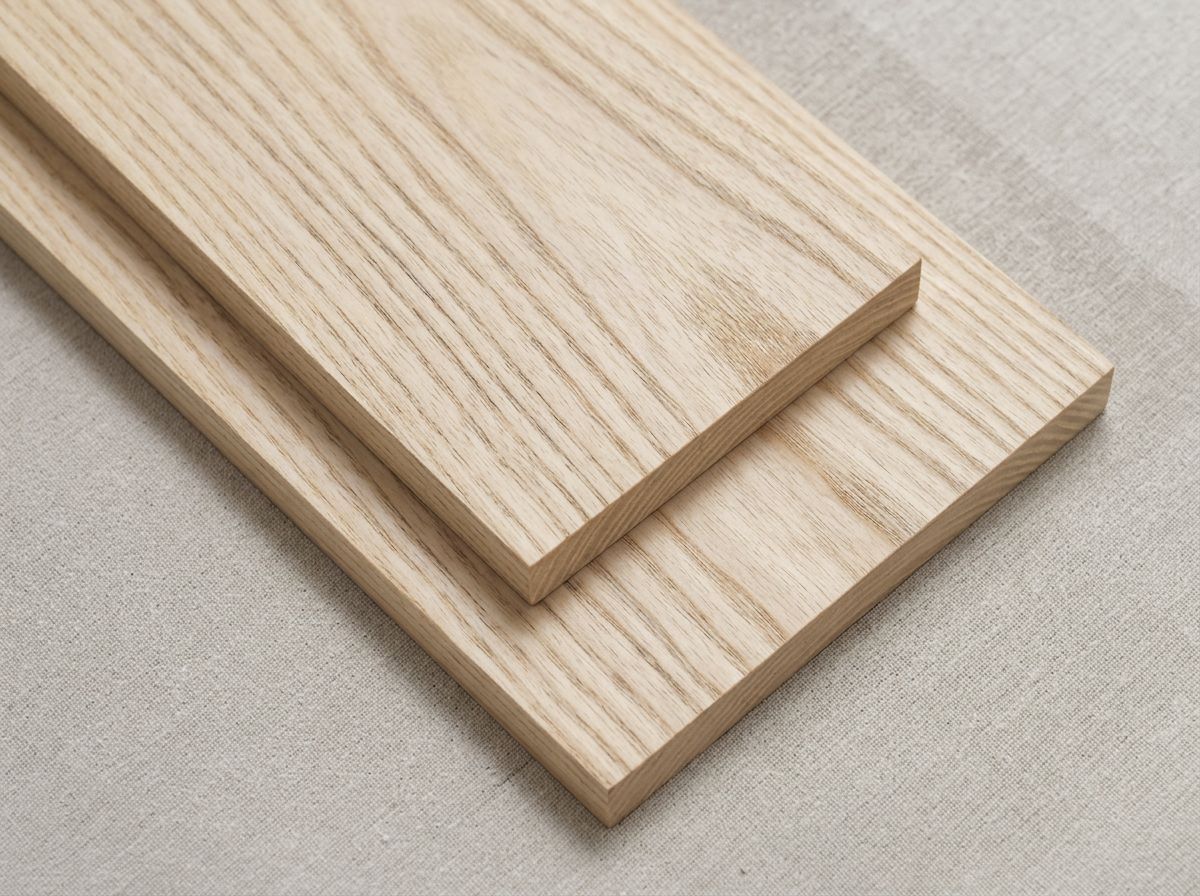
American White Ash
High strength-to-weight, shock resistant - the tool handle classic.
Burmese Teak and South-East Asian Red Meranti.
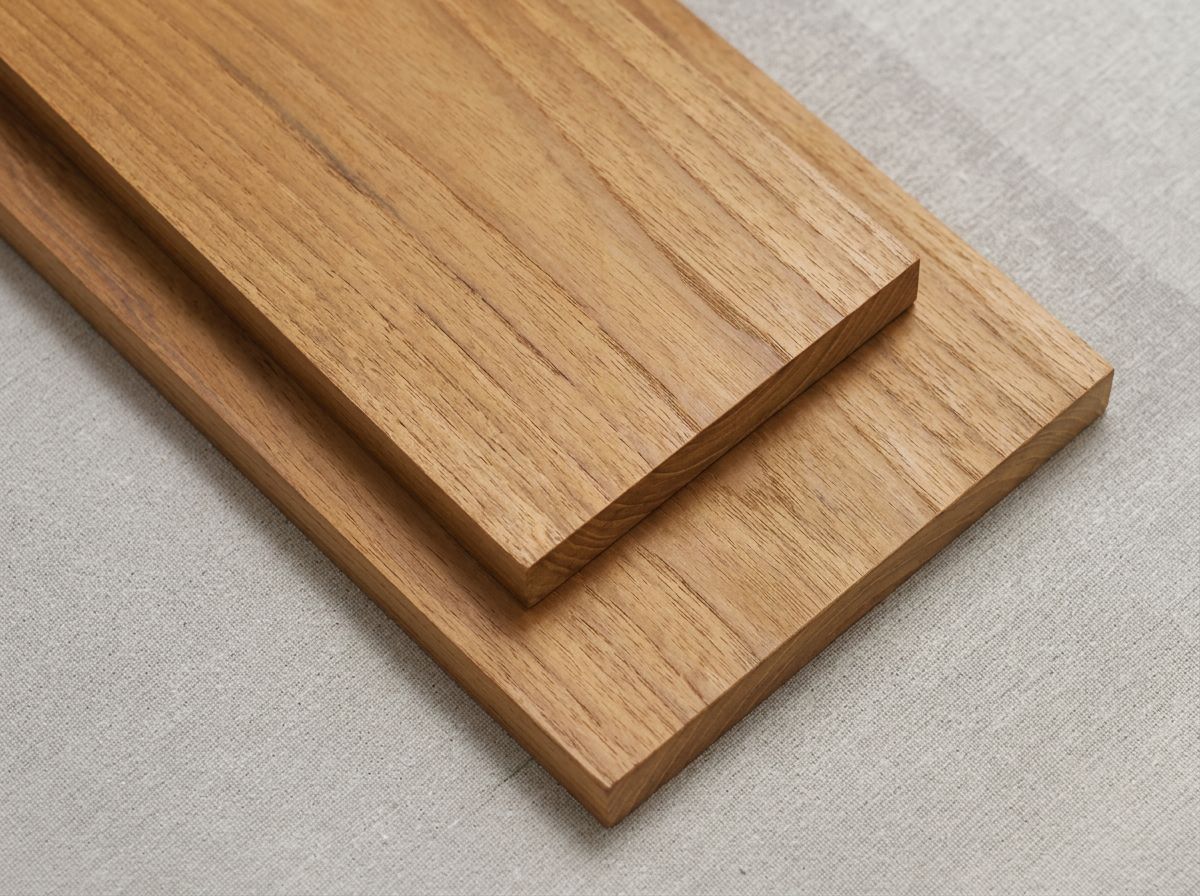
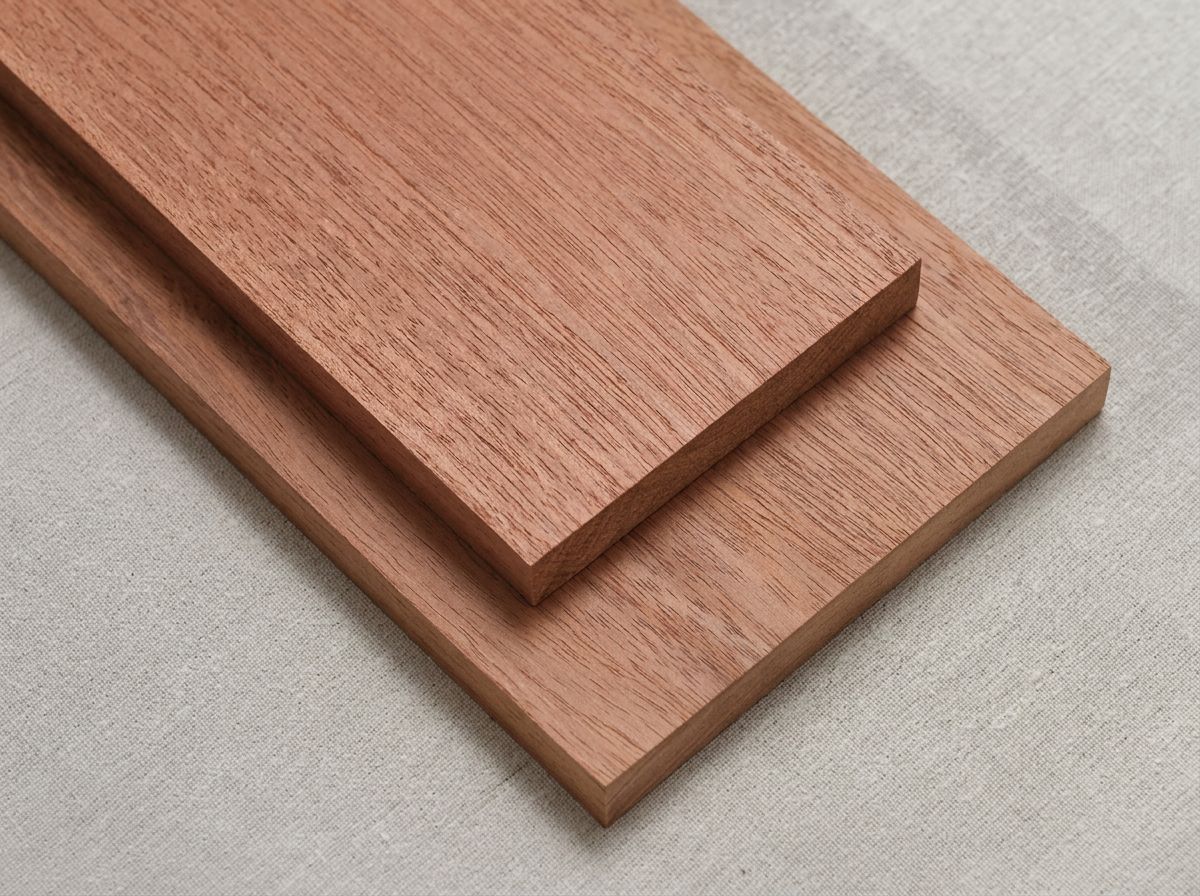
The timber of broad-leaved, mostly deciduous trees.
Hardwood is timber sourced from angiosperm (broad-leaved) trees, oak, beech, ash, walnut, maple, cherry, iroko, sapele, mahogany, teak. The term refers to the botanical origin, not the physical hardness of the wood: balsa is a hardwood, yew is a softwood.
Hardwoods have a complex cellular structure with vessels (visible as pores in the end grain), higher density than most softwoods (typically 500–1,100 kg/m³), and superior dimensional stability when properly kiln-dried. They are the timber of choice for joinery, furniture, flooring, architectural millwork, marine work and luxury fit-out.
Hardwoods are sourced globally: temperate species from Europe and North America under FSC® and PEFC chain-of-custody, tropical species from West and Central Africa under FSC® / OLB / TLV, and South-East Asian species including Burmese Teak under FEQ grading.
Four origins, one supply chain.
TIC Dubai sources hardwoods directly from concessions, sawmills and AHEC member yards across four continents, consolidated into mixed-species containers shipped to nine Middle East markets.
African Hardwoods
West and Central African tropical hardwoods, Iroko, Sapele, Utile, Khaya, Dabema, Wawa (Ayous), Afrormosia, Padauk, Wenge, Bilinga, Okan, Azobe, Bubinga and Okoume. Sourced from FSC® / OLB / PEFC concessions, exported FOB Douala, Owendo, San Pedro and Pointe-Noire, and shipped to Jebel Ali, Dammam, Hamad and Sohar in 20'/40' containers as lumber, squared logs and round logs.
European Hardwoods
European temperate hardwoods, predominantly Fagus sylvatica (European Beech), Quercus robur / Q. petraea (European Oak), Fraxinus excelsior (European Ash) and Juglans regia (European Walnut). Sustainably managed under PEFC and FSC® regimes, dried in conventional kilns to 8–12% MC, supplied steamed (beech) or unsteamed in grades A, AB, B, BC, C from Central and South-East European sawmills.
American Hardwoods
AHEC-member temperate hardwoods graded under NHLA rules, American White Oak, Red Oak, Hard Maple, Black Walnut, American Cherry, American White Ash, Yellow Poplar (Tulipwood). Kiln-dried to 6–8% MC, shipped from Baltimore, Norfolk, Charleston, Savannah and New Orleans. The international benchmark for furniture, joinery and architectural millwork.
Asian Hardwoods
South-East Asian tropical hardwoods, Burmese Teak (Tectona grandis), Red Meranti, Yellow Meranti, Keruing, Kapur, Merbau and plantation Teak from Indonesia and Costa Rica. Used in marine, exterior, decking, joinery and high-end architectural projects across the GCC. Supplied with phytosanitary documentation and origin grading certificates.
The twelve hardwoods that define the trade.
Reference cards on the species we ship most often across the GCC. Click any card to open the dedicated species page or category.
Iroko
- Origin
- West & Central Africa
- Density
- 640 kg/m³
- Janka
- 5,610 N
- Durability
- Very durable (Class 1–2)
Exterior joinery, decking, marine, parquet, doors
Sapele
- Origin
- West & Central Africa
- Density
- 640 kg/m³
- Janka
- 6,720 N
- Durability
- Moderately durable (Class 3)
Doors, windows, joinery, mahogany alternative, veneers
Khaya (African Mahogany)
- Origin
- West & Central Africa
- Density
- 545 kg/m³
- Janka
- 3,690 N
- Durability
- Moderately durable (Class 3)
Joinery, furniture, marine plywood cores, mouldings
Dabema
- Origin
- Cameroon, Gabon, Congo
- Density
- 720 kg/m³
- Janka
- 6,000 N
- Durability
- Moderately durable (Class 3)
Heavy joinery, structural, doors, exterior frames
Wawa / Ayous
- Origin
- West & Central Africa
- Density
- 385 kg/m³
- Janka
- 1,920 N
- Durability
- Non-durable (Class 5)
Sauna lumber, light joinery, mouldings, interior fit-out
European Beech
- Origin
- Germany, Croatia, Romania
- Density
- 720 kg/m³
- Janka
- 5,800 N
- Durability
- Non-durable (Class 5) – interior only
Furniture, bentwood, multiplex plywood, kitchenware, toys
European Oak
- Origin
- France, Germany, Croatia
- Density
- 720 kg/m³
- Janka
- 5,000 N
- Durability
- Durable (Class 2)
Joinery, flooring, doors, furniture, cooperage, beams
American White Ash
- Origin
- USA Appalachian
- Density
- 675 kg/m³
- Janka
- 5,870 N
- Durability
- Non-durable (Class 5) – interior
Furniture, joinery, sports equipment, tool handles, flooring
American Black Walnut
- Origin
- USA Mid-West & Appalachian
- Density
- 640 kg/m³
- Janka
- 4,490 N
- Durability
- Durable (Class 2) – interior premium
Premium furniture, panelling, gunstocks, architectural millwork
Hard Maple
- Origin
- USA Great Lakes & Appalachian
- Density
- 705 kg/m³
- Janka
- 6,450 N
- Durability
- Non-durable (Class 5) – interior
Flooring (sports halls, dance floors), butcher block, cabinetry
American Cherry
- Origin
- USA Appalachian
- Density
- 560 kg/m³
- Janka
- 4,230 N
- Durability
- Moderately durable – interior
Fine furniture, cabinetry, joinery, panelling
Burmese Teak
- Origin
- Myanmar (natural) & plantation
- Density
- 660 kg/m³
- Janka
- 4,740 N
- Durability
- Very durable (Class 1)
Marine decking, yacht joinery, exterior, luxury interiors
From log to finished component.
The full hardwood hierarchy, every product TIC Dubai supplies under the Hardwoods family.
Hardwood Lumber
Sawn boards in flat-sawn and quartersawn cuts, 25–75 mm rough thicknesses, NHLA/European/African origin grades.
Hardwood Square Logs
Four-sided squared logs in Iroko, Sapele, Khaya, Dabema, Teak, ready for the joinery line.
Beech Wood
European steamed/unsteamed beech, multiplex plywood, bentwood billets and finger-jointed components.
Timber Components
Edge-glued panels, finger-jointed blanks, glulam beech, mouldings and machined profiles.
Joinery Timber
Door and window blanks, jambs, sashes and architraves cut to specified moisture and grade.
Furniture Timber
FAS / 1F / Selects grades in walnut, oak, ash, cherry, maple, sapele and beech for premium furniture programmes.
Architectural Timber
Wide boards, long stock and figured grade lumber for cladding, wall panels, ceilings and feature walls.
Wood Veneers
Crown-cut, quartered, rotary and figured veneers from the same logs we supply as solid lumber.
FAS, F1F, Selects, Common, and the European equivalents.
| System | Grades (best to commercial) | Notes |
|---|---|---|
| NHLA (USA) | FAS, FAS-1F (F1F), Selects, 1 Common, 2A Common, 2B Common, 3A Common | Worldwide reference for American hardwoods. Yield-based; minimum clear cuttings off worst face. |
| European (EN 975-1) | A / Prime, AB, B / Common-1, BC, C / Industrial | Used for oak, beech, ash, walnut. Face-quality based with knot, sap and defect allowances. |
| African Export | LM (Loyal Merchant), CE / FAS Africain, CS (Choix Selectionné), QSE | Used for Sapele, Iroko, Utile, Khaya. Length and width based, with defect allowances by face. |
| Burmese Teak | FEQ (First European Quality), SQ (Sawmill Quality), Plantation Grades A/B/C | FEQ is the international benchmark for furniture, marine and luxury joinery. |
Specify the MC, control the warranty.
Moisture content is the single most important parameter on every hardwood contract. Below fibre saturation point (≈ 28% MC) hardwood shrinks, expands and twists in response to ambient humidity. The wrong MC at delivery is the number-one cause of furniture and joinery failure in the GCC climate.
| State | MC Range | Typical Use |
|---|---|---|
| Green / Air-Dried (AD) | 20–40% | Pre-shipment storage, intermediate squared logs, slow open-air seasoning. |
| Shipping Dry | 18–22% | Below fibre saturation point; safe for sea freight without honeycombing risk. |
| Kiln-Dried (KD), Tropical | 12–15% | Exterior joinery, doors, windows, decking in tropical and GCC climates. |
| Kiln-Dried (KD), Interior | 8–12% | General furniture, joinery, fit-out in air-conditioned GCC interiors. |
| Kiln-Dried (KD), Premium | 6–8% | Fine furniture, premium cabinetry, North American specification, MDF/HDF substrates. |
Common MC problems
Cupping, twisting, glue-line failure, finish lifting, joint movement, all traced to MC mismatch between timber and installation environment.
Storage in the GCC
Indoor 18–25 °C, 50–65 % RH. Always sticker-stacked, never wrapped in sealed poly, never in direct sun, never on bare concrete.
Recommended MC by use
Furniture: 8–10%. Joinery interior: 9–12%. Joinery exterior: 12–15%. Decking & marine: 15–18%. Premium American spec: 6–8%.
Ten defects every buyer must inspect for.
Checks
Lengthwise separation of wood fibres along the grain, usually at board ends. Caused by rapid moisture loss.
Splits
Through-thickness separation that follows the grain. End-painting and slow seasoning prevent splits.
Warp / Twist
Distortion across the length. Tension wood, irregular grain or uneven drying are typical causes.
Bow
Curvature along the face from end to end. Most often caused by poor sticker placement during kiln drying.
Cup
Curvature across the width of a board. Caused by differential shrinkage between the two faces.
Crook (Spring)
Edge-wise curvature along the length. Sawing through reaction wood is the usual cause.
Shake
Separation along the growth rings, present in the standing tree. Common in over-mature logs.
Blue / Sap Stain
Fungal discolouration on the sapwood of freshly felled timber. Prevented by rapid kiln drying or chemical dipping.
Insect Attack
Pinhole borer, longhorn beetle or termite activity. Phytosanitary inspection and HT / KD treatment eliminate the risk.
Reaction Wood
Tension wood in hardwoods causes machining problems and dimensional instability. Detected at the mill, not at site.
Where hardwood earns its place.
Architectural & Interior
- Joinery doors and windows
- Architectural millwork
- Wall and ceiling panelling
- Wide-board cladding
- Bespoke staircases & balustrades
Furniture & Fit-Out
- Premium residential furniture
- Hotel and hospitality fit-out
- Retail and showroom millwork
- Restaurant and F&B interiors
- Yacht and marine interiors
Flooring & Surfaces
- Solid hardwood flooring
- Engineered flooring lamellas
- Sports halls and dance floors (maple)
- Stair treads and risers
- Worktops and butcher blocks
Exterior & Marine
- Decking (teak, iroko, sapele)
- Marine joinery and boat building
- Exterior cladding and louvres
- Garden furniture
- External doors and gates
Get the contract right the first time.
- 01Define species and provenance, African, European, American or Asian, and any FSC® / PEFC / EUDR requirement.
- 02Specify grade reference and grading rule (NHLA FAS, European A/AB, African LM/CE, FEQ for teak).
- 03Confirm thicknesses (rough or S4S), width range, length range and length-mix tolerance.
- 04State target moisture content, 8–12% for joinery, 12–15% for exterior, 6–8% for premium furniture.
- 05Confirm sawing pattern, flat-sawn (plain), quartersawn or rift-sawn, and figure preferences.
- 06Specify packing: stickered, strapped, end-painted, poly-wrapped on HT pallets in 20'/40' containers.
- 07Lock incoterms (FOB / CFR / CIF), payment terms (LC, DP, advance) and discharge port.
- 08Agree on pre-shipment inspection, third-party SGS / Intertek inspection, and any tally / grading audit.
Eight checks at load port and discharge.
- 01Species identification against the LC / contract spec.
- 02Moisture content readings at 25%, 50% and 75% of bundle depth using a calibrated pin meter.
- 03Visual grading audit against the contract grading rule, face quality, clear cuttings, knot allowances.
- 04Dimensional check, thickness, width, length, parallelism, squareness, S4S net sizes.
- 05Defect log, checks, splits, warp, cup, bow, shake, stain, insect activity.
- 06Bundle tally and gross / net volume reconciliation against the packing list.
- 07Packaging integrity, strapping, end-paint, poly-wrap, HT pallets, container condition, dunnage.
- 08Documentation, phytosanitary, COO, FSC®/PEFC, EUDR, KD certificate, grading certificate.
Nine markets, one Dubai office.
Container loading is optimised to 22–28 m³ per 20' for stickered KD lumber and 32–38 m³ per 40' for square logs. We consolidate mixed-species and mixed-thickness shipments to reduce per-m³ freight across the GCC, Egypt, Jordan and Iraq.
| Market | Discharge Ports | Typical Lead Time |
|---|---|---|
| United Arab Emirates | Jebel Ali · Hamriyah · Khorfakkan · Khalifa Port · Port Rashid | 25–35 days from Europe & Africa; 30–45 days from USA |
| Saudi Arabia | Jeddah · Dammam · King Abdullah Port · Yanbu · Jubail | 28–38 days from Europe & Africa; 32–48 days from USA |
| Qatar | Hamad Port · Doha Port | 30–40 days from Europe & Africa |
| Kuwait | Shuwaikh · Shuaiba · Doha (KW) | 30–42 days from Europe & Africa |
| Oman | Sohar · Salalah · Sultan Qaboos | 25–35 days from Europe & Africa |
| Bahrain | Khalifa Bin Salman Port | 30–40 days from Europe & Africa |
| Egypt | Alexandria · Damietta · Port Said · Sokhna | 20–30 days from Europe; 28–38 days from Africa |
| Jordan | Aqaba | 25–35 days from Europe & Africa |
| Iraq | Umm Qasr · Khor Al Zubair | 32–45 days from Europe & Africa |
The species and process trade-offs, side by side.
Iroko vs Teak
| Property | Iroko | Burmese Teak |
|---|---|---|
| Density (12% MC) | 640 kg/m³ | 660 kg/m³ |
| Janka Hardness | 5,610 N | 4,740 N |
| Durability Class (EN 350) | 1–2 Very durable | 1 Very durable |
| Natural oil content | Moderate | Very high |
| Marine use | Good | Industry benchmark |
| Price index | 100 | 260–400 |
European Beech vs European Oak
| Property | European Beech | European Oak |
|---|---|---|
| Density (12% MC) | 720 kg/m³ | 720 kg/m³ |
| Janka Hardness | 5,800 N | 5,000 N |
| Durability Class | 5 Non-durable | 2 Durable |
| Tannin content | Low | High (reactive with iron) |
| Steam bending | Excellent | Good |
| Typical use | Furniture, bentwood, plywood | Joinery, flooring, doors, beams |
Beech vs Ash
| Property | European Beech | American White Ash |
|---|---|---|
| Density | 720 kg/m³ | 675 kg/m³ |
| Janka Hardness | 5,800 N | 5,870 N |
| Grain | Fine, uniform, ray fleck | Open, coarse, prominent grain |
| Shock resistance | Good | Excellent |
| Steam bending | Excellent | Excellent |
| Best use | Furniture, multiplex, toys | Sports goods, tool handles, joinery |
Khaya vs Sapele
| Property | Khaya (African Mahogany) | Sapele |
|---|---|---|
| Botanical | Khaya ivorensis / K. anthotheca | Entandrophragma cylindricum |
| Density | 545 kg/m³ | 640 kg/m³ |
| Janka Hardness | 3,690 N | 6,720 N |
| Grain figure | Straight to slightly interlocked | Strong ribbon-stripe (quartered) |
| Stability | Moderate | High |
| Best use | Joinery, plywood, mouldings | Premium doors, windows, exterior |
European vs African Hardwoods
| Aspect | European | African |
|---|---|---|
| Climate | Temperate | Tropical |
| Typical density | 640–720 kg/m³ | 545–1,100 kg/m³ |
| Grading | EN 975-1 (A/AB/B/C) | LM / CE / FAS Africain |
| Exterior durability | Mostly Class 3–5 | Mostly Class 1–3 |
| Certification | PEFC, FSC®, EUTR/EUDR | FSC®, OLB, TLV, EUDR |
| Best use | Furniture, joinery, flooring | Exterior, marine, premium joinery |
KD vs AD Hardwoods
| Aspect | Kiln-Dried (KD) | Air-Dried (AD) |
|---|---|---|
| MC range | 6–15% controlled | 18–25% climate-dependent |
| Drying time | 10–45 days | 6–24 months |
| Stability after drying | High | Variable |
| Risk of insect / stain | Eliminated by KD schedule | Present until kiln-dried |
| Use in GCC interiors | Mandatory (8–12% MC) | Not suitable |
| Cost premium | +8–18% over green | Baseline |
Three ways we trade hardwood.
Sawn species lumber, four-sided square logs and European beech, all sit under the Hardwoods family at TIC Dubai.
Hardwood Species
29 African, American, European and South-East Asian hardwood species in KD and AD lumber, scantlings and project packs.
Hardwood Square Logs
Four-sided squared hardwood logs in Iroko, Sapele, Khaya, Dabema, Teak, ready for the joinery line.
Beech Wood
European steamed and unsteamed beech, multiplex plywood and bentwood-grade billets from Central European mills.
Chain of Custody
FSC® / PEFC / OLB certificates and EUDR due-diligence statements with every consignment.
Sustainably Sourced
Concession-direct supply from legally managed forests and AHEC member sawmills.
Mixed Containers
Combine species, thicknesses and grades in a single 20' / 40' container shipment.
Technical reading on hardwoods.
Species, grading, drying, storage and procurement, the operational reference for joineries, furniture manufacturers, contractors and architects across the GCC.
African Hardwood Guide for GCC Joinery
African and tropical hardwoods are the backbone of GCC luxury joinery. A practical species selector for architects and joineries.
What Are Hardwood Square Logs?
Hardwood timbers squared on four faces at the origin sawmill: what they are, how they're produced, and why GCC joineries specify them over round logs.
African Hardwood Species Guide for Joinery Buyers
Fourteen African hardwood species explained for procurement teams, joinery managers and consultants specifying squared timber for GCC projects.
What Is Beech Wood? The Complete Buyer's Guide
Fine-grained, dense and dimensionally predictable: what beech wood is, why it is the European furniture industry's default hardwood, and how the GCC trade specifies it.
KD vs AD Hardwoods: Which Moisture Spec for the GCC?
The moisture spec on your RFQ decides whether your joinery survives a UAE summer. A buyers' guide to KD and AD hardwoods.
Hardwood Log Grading: Rules, Defects and Tender Language
How to write the grading line on your RFQ so the offer you receive matches what arrives at port.
Species and export-spec deep dives.
Iroko, Khaya, Beech, grading rules and export specifications, the second tier of hardwood content for buyers ready to specify.
Hardwood Export Specifications for GCC Buyers
Everything that needs to be in the file before the container leaves the load port, and what to check when it arrives.
Hardwood Storage Guide for GCC Yards and Joineries
The difference between premium hardwood that arrived in spec and joinery that fails on site is what happens in the two weeks in between.
Iroko Square Logs: Properties, Grades and Applications
Iroko is the African teak substitute that dominates GCC joinery. A full technical reference for buyers and joinery managers.
Khaya Square Logs: African Mahogany Explained
Khaya is the African Mahogany that built the modern GCC furniture and door industry. A complete technical reference.
Steamed vs Unsteamed Beech: A Specification Guide
The European furniture standard explained: the steam chamber process, the colour change, the dimensional benefits, and when unsteamed beech is the better call.
European Beech Grading: A, AB, B, BC and Industrial
The grading vocabulary of the European beech trade, what each grade actually allows on the face and back, and how to translate between European and NHLA conventions.
The full Wood Products family.
Hardwood Square Logs
Four-sided squared hardwood logs in Iroko, Sapele, Khaya, Dabema, Teak.
Beech Wood
European steamed/unsteamed beech, multiplex, bentwood billets.
Wood Veneers
Crown, rotary, quartered and figured veneers from premium logs.
White Wood / SPF
European whitewood, spruce-pine-fir for construction and joinery.
Plywood
Birch, hardwood and combi plywood, MR, BWR, BWP glue lines.
Film Faced Plywood
Brown / black film concrete formwork plywood for GCC contractors.
Pine Logs
Radiata, Scots and white pine logs for sawmills and chipping mills.
Pallet Wood
Pallet boards, blocks, EPAL and ISPM-15 ready pallet elements.
Hardwood, answered.
What is hardwood?
Hardwood is timber sourced from angiosperm (broad-leaved, mostly deciduous) trees, oak, beech, ash, walnut, maple, cherry, iroko, sapele, mahogany, teak. The term refers to the botanical origin, not the physical hardness: balsa is a hardwood, yew is a softwood. Hardwoods generally have a more complex cellular structure with vessels (pores), higher density (typically 500–1,100 kg/m³), and are the timber of choice for joinery, furniture, flooring and architectural projects.
What is the difference between hardwood and softwood?
Hardwood comes from broad-leaved trees (angiosperms) and contains vessels visible as pores in the end grain; softwood comes from coniferous trees (gymnosperms) and has a simpler tracheid structure with no vessels. Hardwoods are typically denser, more dimensionally stable when properly dried, and used for joinery and furniture; softwoods are faster-grown, lighter, cheaper, and used for construction, framing and pallets. Density alone is not a reliable indicator, balsa (a hardwood) is softer than pine (a softwood).
Why are hardwoods preferred for furniture and joinery?
Higher density, finer texture, dimensional stability when kiln-dried, ability to take fine joinery and machined details, and superior finishing performance. Hardwoods accept stains, polishes and lacquers more uniformly than softwoods, and the long fibres allow tight joinery, mortise and tenon, dovetails, dowels, to hold under stress over decades.
Which hardwoods does TIC Dubai supply to the GCC?
Twenty-nine species across four regions: African (Iroko, Sapele, Utile, Khaya, Dabema, Wawa, Afrormosia, Padauk, Wenge, Okoume, Movingui, Azobe, Kossipo, Ayous, Bilinga, Dibetou, Okan, Bubinga, Zebrawood); European (Beech, Oak, Ash, Walnut, Cherry, Maple); American (White Oak, Red Oak, Walnut, Cherry, Maple, Ash); Asian (Burmese Teak, Red Meranti). Lumber, square logs, components and veneers, kiln-dried, traceable, mill-direct.
Where do African hardwoods come from?
Primarily Cameroon, Gabon, Republic of Congo, Ivory Coast, Ghana, Equatorial Guinea and Liberia. Logs are felled in FSC®, OLB or PEFC certified concessions, transported to coastal sawmills, kiln-dried where required, and exported FOB Douala, Owendo, Pointe-Noire, Kribi or San Pedro. Documentation includes COO, phytosanitary certificate, TLV / OLB / FSC® chain-of-custody and EUDR due-diligence statements.
Where do European hardwoods come from?
Germany, France, Croatia, Slovenia, Romania, Austria, Czech Republic, Poland, Hungary and Italy. European beech, oak, ash, walnut, cherry and sycamore maple are sourced from PEFC and FSC® managed forests, dried in modern dehumidifier kilns to 8–12% MC, and exported FOB Koper, Rijeka, Constanta, Hamburg, Bremerhaven and Antwerp.
Where do American hardwoods come from?
The USA Appalachian belt, Mid-West, Pennsylvania, Indiana, Ohio, West Virginia and Eastern Canada. Graded under NHLA rules by AHEC member sawmills, kiln-dried to 6–8% MC, and shipped FOB Baltimore, Norfolk, Charleston, Savannah or New Orleans. The international benchmark for furniture, joinery and architectural millwork.
What is the densest hardwood you supply?
Azobé (Lophira alata) at 950–1,100 kg/m³, a Class 1 very durable West African hardwood used for marine piling, lock gates and heavy structural work. Followed by Okan (920 kg/m³), Wenge (870 kg/m³), Bubinga (890 kg/m³) and Padauk (745 kg/m³).
What is the lightest hardwood you supply?
Ayous / Wawa / Obeche (Triplochiton scleroxylon) at approximately 385 kg/m³, used for sauna lumber, mouldings, light joinery and pattern-making. Okoume follows at around 410 kg/m³, the standard core veneer for marine plywood.
What does FSC® certification mean?
Forest Stewardship Council® certification guarantees the timber comes from forests managed to FSC® principles covering environmental, social and economic standards. Chain-of-custody (FSC-COC) certification follows the timber from forest through every processing step to final supply. TIC Dubai supplies FSC® certified hardwoods across African, European and American origins on request.
What is EUDR and does it apply to my hardwood?
The EU Deforestation Regulation (EUDR) requires that timber and wood products placed on the EU market, or re-exported from a third country into the EU, come from deforestation-free supply chains, with geolocation data of harvest, due-diligence statements and full traceability. If you re-export hardwood goods from the GCC into the EU, EUDR applies. TIC Dubai supplies all required EUDR documentation.
What is NHLA grading?
The National Hardwood Lumber Association (NHLA) grading system is the worldwide reference for American hardwoods. Grades from highest to lowest are FAS (First and Seconds), FAS-1F or F1F (FAS one face), Selects, 1 Common, 2A Common, 2B Common, 3A Common. Grades are based on yield, the percentage of clear cuttings obtainable from the worst face.
What does FAS mean in hardwood lumber?
FAS stands for 'Firsts and Seconds', the highest standard NHLA grade. Minimum board size 6 inches wide × 8 feet long; both faces must yield clear cuttings of specified minimum size totalling at least 83.3% of the board area. FAS is the grade specified for premium furniture, architectural millwork and exposed joinery.
What is the difference between FAS and F1F?
FAS requires both faces to meet the FAS standard. F1F (FAS One Face) requires only the better face to meet FAS, the back face needs only meet 1 Common. F1F costs less than FAS and is suitable for components where only one face will be visible.
What does European A grade mean for hardwoods?
European A / Prime grade (under EN 975-1) is a face-quality grading: a clear, defect-free best face with very limited small allowances (pin knots, light colour variation). Typically equivalent to or slightly stricter than NHLA FAS for face quality. AB allows small sound knots on the back; B is the European 'common' grade with sound knots and minor defects on both faces.
What are typical hardwood thicknesses?
Rough sawn: 25, 27, 32, 38, 50, 52, 60, 65, 75, 80 and 100 mm. Net S4S (planed-four-sides) thicknesses: 20, 21, 27, 32, 45, 60 and 75 mm. American hardwoods are also supplied in 4/4 (25.4 mm), 5/4, 6/4, 8/4, 10/4, 12/4 and 16/4 quartersawn or flat-sawn.
What moisture content should I specify?
For GCC air-conditioned interiors (furniture, joinery, fit-out) target 8–12% MC. For exterior joinery (doors, windows, decking) target 12–15% MC. For premium fine furniture or American-spec joinery target 6–8% MC. Specify the MC target on the contract and request a kiln-drying certificate with the shipment.
What is KD vs AD?
KD (kiln-dried) timber is dried in temperature- and humidity-controlled kilns to a target MC range (typically 6–15%), giving rapid, predictable, dimensionally stable lumber. AD (air-dried) timber is seasoned in open or covered stacks for 6–24 months down to 18–25% MC, depending on climate. For GCC interior use, KD is mandatory; AD is only suitable for further drying or non-critical exterior use.
How is hardwood kiln-dried?
Logs are sawn, stickered (1 inch sticks between each board layer), stacked on bearers, and loaded into a conventional, dehumidifier or vacuum kiln. Drying schedules are species- and thickness-specific, typically 14–45 days from green to 8–12% MC. The schedule controls temperature ramp, equilibrium MC and final conditioning to relieve internal stress.
Can hardwoods be used outdoors in the GCC climate?
Yes, but only durability Class 1–3 species. Iroko, Sapele, Teak, Afrormosia, Azobe, Padauk, Okan and Bilinga handle GCC sun, humidity cycles and salt air. European Beech, Maple, American Ash and Cherry are Class 5 (non-durable) and unsuitable for exterior use without thermal modification or pressure treatment.
What is the most durable hardwood for exterior use?
Burmese Teak (Tectona grandis) is the international benchmark, Class 1 very durable, naturally oily, dimensionally stable, used for yacht decks and luxury exterior joinery. Iroko, Afrormosia and Azobé are excellent African alternatives at significantly lower cost. Padauk and Okan are also Class 1 options.
What is Janka hardness?
The Janka hardness test measures the force required to embed a 0.444-inch steel ball to half its diameter into the wood surface, expressed in pounds-force (lbf) or newtons (N). It is the standard reference for flooring and surface wear resistance: hard maple ~6,450 N, sapele ~6,720 N, oak ~5,000 N, walnut ~4,490 N, cherry ~4,230 N.
What is quartersawn vs flat-sawn hardwood?
Flat-sawn (plain-sawn) lumber is cut tangentially to the growth rings, showing cathedral grain patterns on the face, the most economical cut. Quartersawn lumber is cut radially with growth rings at 60–90° to the face, showing straight grain plus ray fleck (oak, beech) or ribbon stripe (sapele). Quartersawn is more dimensionally stable, more expensive, and preferred for fine furniture and architectural panels.
What is rift-sawn hardwood?
Rift-sawn lumber is cut radially with growth rings at 30–60° to the face, producing a perfectly straight grain pattern with no ray fleck. The highest yield loss of all cuts and the most expensive, used for very high-end architectural millwork, contemporary cabinetry and modern joinery where uniform grain is essential.
What are common hardwood defects?
Checks (lengthwise grain separation), splits (through-thickness checks), warp (twist), bow (lengthwise curve), cup (widthwise curve), crook (edge curve), shake (ring separation in the standing tree), blue / sap stain (fungal sapwood discolouration), insect holes (borer, beetle) and reaction wood (tension wood). All are graded and limited under the relevant grading rule.
How do I avoid blue stain in hardwoods?
Blue stain is a fungal discolouration of fresh sapwood. Prevention is rapid kiln drying immediately after sawing, anti-stain dipping of green lumber, and good stack ventilation. Light blue stain does not affect strength but downgrades the appearance grade. Specify 'no blue stain' in the contract for clear-finish applications.
How should hardwood lumber be stored in the GCC?
Stack on level bearers under shade, with 25 mm stickers between each board layer aligned vertically over the bearers. Maintain 70–80 cm clearance from the ground. Store in shaded, well-ventilated yards, never in direct sun or sealed containers. Indoor storage should be at 18–25 °C and 50–65 % RH to maintain interior-specification MC.
What is the typical container loading for hardwood lumber?
A 20' container holds 22–28 m³ of stickered KD hardwood; a 40' HC container holds 50–58 m³. Length-mix bundles in standard 1.8 m, 2.1 m, 2.4 m, 2.7 m, 3.0 m, 3.6 m and 4.0 m. Square logs in 40' containers run 32–38 m³ depending on diameter. We optimise mixed-thickness, mixed-grade and mixed-species loads to reduce shipping cost per m³.
Can I mix species in one container?
Yes. We routinely consolidate mixed-species, mixed-thickness, mixed-grade containers, for example, a 40' load of FAS American walnut, FAS American white oak, A-grade European beech and KD iroko square logs in one shipment. Bundle tags, certificates and origin documentation are issued per species.
What documents accompany a hardwood shipment?
Original Bill of Lading, commercial invoice, packing list with bundle tally, certificate of origin (COO), phytosanitary certificate, fumigation or HT certificate where required, kiln drying certificate, grading certificate (NHLA / origin), FSC®/PEFC chain-of-custody where applicable, and EUDR due-diligence statement for European-bound re-exports.
What is the typical lead time to the GCC?
European stock-spec hardwoods to Jebel Ali, Dammam, Hamad, Sohar: 25–35 days. African hardwoods FOB Douala / Owendo / Pointe-Noire to GCC: 28–40 days. American hardwoods FOB Baltimore / Norfolk / Charleston: 30–45 days. Burmese Teak FEQ: 30–45 days. Specialty grades and bespoke dimensions: add 30–60 days for mill production.
Which ports do you ship hardwoods to?
United Arab Emirates (Jebel Ali, Hamriyah, Khorfakkan, Khalifa, Port Rashid); Saudi Arabia (Jeddah, Dammam, King Abdullah Port, Yanbu, Jubail); Qatar (Hamad Port); Kuwait (Shuwaikh, Shuaiba); Oman (Sohar, Salalah); Bahrain (Khalifa Bin Salman Port); Egypt (Alexandria, Damietta, Sokhna); Jordan (Aqaba); Iraq (Umm Qasr, Khor Al Zubair).
What is the difference between Burmese teak and plantation teak?
Burmese teak (Tectona grandis from Myanmar) is slow-grown over 60–100 years, very dense (660 kg/m³), with high natural oil content and the famously tight, straight grain that makes it the marine and luxury benchmark. Plantation teak (Indonesia, Costa Rica, Africa) is fast-grown over 20–30 years, less dense (550–620 kg/m³), with lower oil content, wider growth rings and visible heartwood/sapwood contrast. Plantation teak costs significantly less and works well for general joinery; Burmese FEQ remains the premium for marine and yacht use.
Can you supply quartersawn oak?
Yes, quartersawn American White Oak, European Oak and Red Oak in FAS, F1F and Selects grades, kiln-dried 6–8% MC (American) or 8–12% MC (European). Quartersawn oak shows pronounced silver ray fleck and is the traditional choice for Arts & Crafts furniture, Mission-style cabinetry, and high-end architectural panelling.
Do you supply figured hardwoods?
Yes, figured walnut (curly, burl, crotch, quilted), figured maple (curly, bird's-eye, quilted), figured sapele (ribbon-stripe, pommele), figured anegre and other premium figured lumber and veneers for high-end furniture, musical instruments, gunstocks and architectural panels. Available on request, subject to availability.
Do you supply hardwood veneers?
Yes, natural sliced veneers in crown-cut, quartered, rift-cut and rotary-cut, plus engineered fineline veneers, in all the species we supply as lumber. Book-matched, slip-matched and random-matched bundles available. See our Wood Veneers page for technical details.
What is the difference between hardwood lumber and hardwood square logs?
Hardwood lumber is sawn into rectangular boards of fixed thickness, with two parallel sawn faces and finished width; ready for further machining into furniture or joinery. Hardwood square logs are entire logs squared on four faces (with bark and sapwood removed) but not sawn into boards, supplied to sawmills, joineries and component manufacturers who break them down to their own dimensions for maximum yield and minimum waste.
What is the best hardwood for marine applications?
Burmese Teak FEQ is the world benchmark, natural oils, very durable Class 1, dimensionally stable in wet/dry cycles, used for yacht decks, marine joinery and luxury boat building. Iroko and Afrormosia are credible cost-effective alternatives. For hull work and marine plywood cores, Okoume and Khaya are standard.
What is the best hardwood for flooring?
Solid flooring: Hard Maple (sports halls, dance floors), American White Oak, European Oak, Iroko, Sapele, Merbau. Engineered flooring lamellas: White Oak, Walnut, Ash, Maple, Cherry. Match Janka hardness to traffic, 4,000+ N for residential, 5,500+ N for commercial, 6,000+ N for sports and high-traffic areas.
What is the best hardwood for doors and windows in the GCC?
Sapele, Iroko, Utile, Khaya (African Mahogany) and European Oak are the GCC standards, Class 2–3 durable, dimensionally stable at 12–15% MC, machine cleanly, and accept exterior coatings well. Burmese Teak is the luxury choice. Avoid Beech, Maple, Ash, Cherry and Walnut for exterior frames, these are interior-only species.
Do you supply hardwood components ready to assemble?
Yes, finger-jointed blanks, edge-glued panels, glue-laminated beams, door and window scantlings, dimension stock, mouldings, S4S blanks and machined components in beech, oak, sapele and other species. Useful for joineries that prefer to skip the rough-mill stage.
Can you handle FCL and LCL hardwood shipments?
Yes. FCL 20' and 40' containers for full-load orders, and LCL groupage for trial orders, sample volumes or specialty species. LCL is typically combined with our weekly consolidations from Europe, Africa and South-East Asia.
Why source hardwoods through TIC Dubai?
Direct relationships with FSC® concessions in West and Central Africa, AHEC sawmills across the USA and Canada, PEFC mills across Central and South-East Europe, and FEQ teak suppliers in Myanmar and Indonesia. Twenty-nine species, full grading and certification, mixed-species containers, KD drying control, GCC-side acclimatisation, and one Dubai office handling documentation, banking, logistics and after-sales claims across nine GCC and Middle East markets.
Do you keep stock in Dubai?
TIC Dubai is a mill representation and international procurement company. Rather than holding warehouse stock, we coordinate factory-direct shipments sized to your project and consolidate deliveries against your programme.
Can I buy a few sheets or a single length?
Our supply model is built around container-load and project quantities. For small retail requirements, a local stockist will serve you faster; for bulk, project or recurring procurement, we're the right partner.
Do you supply containers directly from the factory?
Yes. Every enquiry is quoted mill-direct, with forward production booking, third-party inspection and shipment coordinated by our procurement team, from FOB origin through to your discharge port.
Can you support recurring procurement?
Yes. Long-term supply agreements and forward production bookings are the core of what we do for importers, contractors, distributors and EPC firms across the GCC and wider Middle East.
What is your minimum order?
Typically one FCL container per specification, though this varies by product and mill. Share your requirement and we'll confirm the mill's MOQ, lead time and indicative pricing.
Hardwoods across the GCC and Middle East
African and North American hardwoods for premium architectural projects.
Shipments routed through Jebel Ali, Khalifa, Hamad, King Abdulaziz Dammam, Sohar and other major regional ports, coordinated with contractor and procurement schedules.
Sapele, Iroko, Meranti, White Oak, American Walnut, Ash and other premium hardwoods are supplied (kiln-dried, graded and packed) for joinery workshops, luxury fit-out contractors, hotel developers and yacht builders across the UAE, KSA, Qatar and the wider GCC.
- Dubai
- Abu Dhabi
- Sharjah
- Ajman
- Ras Al Khaimah
- Fujairah
- Umm Al Quwain
- Al Ain
- Khor Fakkan
- Riyadh
- Jeddah
- Dammam
- Al Khobar
- Jubail
- Yanbu
- Mecca
- Medina
- Tabuk
- Abha
- JAFZA
- DIP
- Dubai Industrial City
- Sharjah Industrial Area
- KIZAD
- Hamriyah Free Zone
- RAKEZ
- SAIF Zone
- Doha
- Lusail
- Al Rayyan
- Mesaieed
- Al Wakrah
- Kuwait City
- Shuwaikh
- Shuaiba
- Ahmadi
- Manama
- Muharraq
- Riffa
- Sitra
- Muscat
- Sohar
- Salalah
- Duqm
- Nizwa
- Amman
- Zarqa
- Irbid
- Aqaba
- Baghdad
- Erbil
- Basra
- Mosul
- Najaf
- Karbala
- Sulaymaniyah
- Kirkuk
- Jebel Ali Port
- Khalifa Port
- Hamriyah Port
- Port Rashid
- Khor Fakkan Port
- King Abdulaziz Port Dammam
- Jeddah Islamic Port
- King Abdullah Port
- Jubail Commercial Port
- Yanbu Commercial Port
- Hamad Port
- Shuwaikh Port
- Shuaiba Port
- Khalifa Bin Salman Port
- Port of Sohar
- Port of Salalah
- Port of Duqm
- Port of Aqaba
- Umm Qasr Port
- Khor Al Zubair Port
Factory-Direct Supply Model.
TIC Dubai operates as a mill representation and international procurement partner. Every order is coordinated directly with a verified overseas manufacturer and shipped in container quantities against your project specification.
We do not maintain local warehouse stock. Products are supplied directly from carefully selected international manufacturing partners.
- Direct mill sourcing
- Container-load shipments
- Forward production bookings
- Project-based supply
- International procurement
- Mill-direct pricing
- Consistent, certified quality
- Long-term supply partnerships
Who we work with.
TIC Dubai partners with organisations that specify, import or build at project scale, across the UAE, GCC, Levant, Africa and wider Middle East.
How our supply model works best.
A quick view of where TIC Dubai adds the most value, and where a local stockist may serve you faster.
Container, project & repeat procurement.
- Container orders
- Factory bookings
- Project supply
- Repeat procurement
- Long-term contracts
- Bulk purchasing
Retail, spot & same-day pick-ups.
- Retail-quantity purchases
- Same-day requirements
- Spot warehouse pick-ups
If your requirement sits on the right, a local stockist is likely to serve you faster. We're happy to point you in the right direction.
Discuss your hardwood supply requirement.
Tell us species, grade, thickness, moisture target, container volume, certification and discharge port. TIC Dubai will revert with a fully landed factory-direct offer, origin options, kiln schedule and load-port inspection coordinated.