
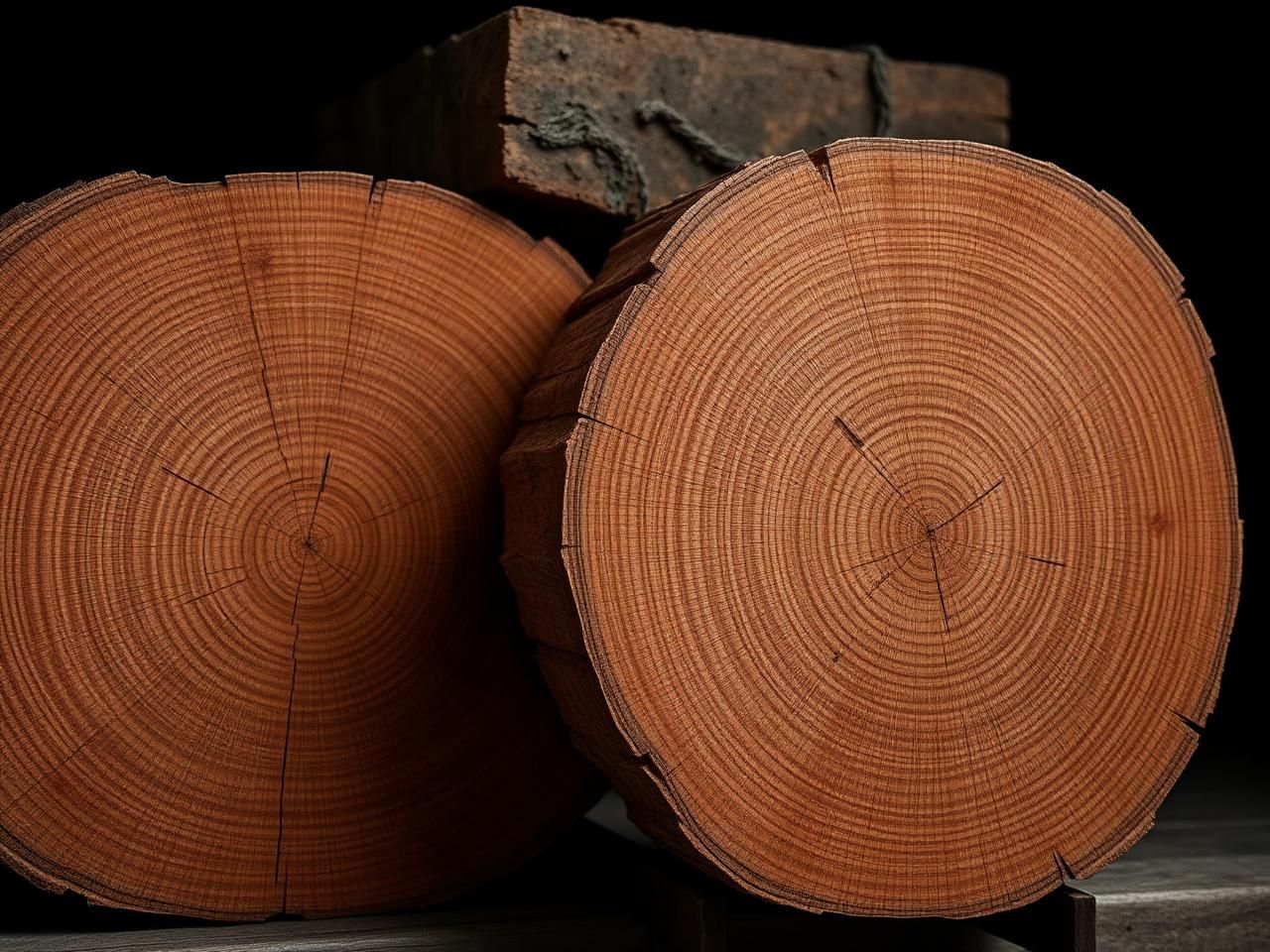
West & Central Africa
Iroko
Milicia excelsa
Golden brown to deep nut
- Janka
- 5,610 N
- Density
- 640 kg/m³
Joinery, doors, windows, boat building, marine-grade interiors
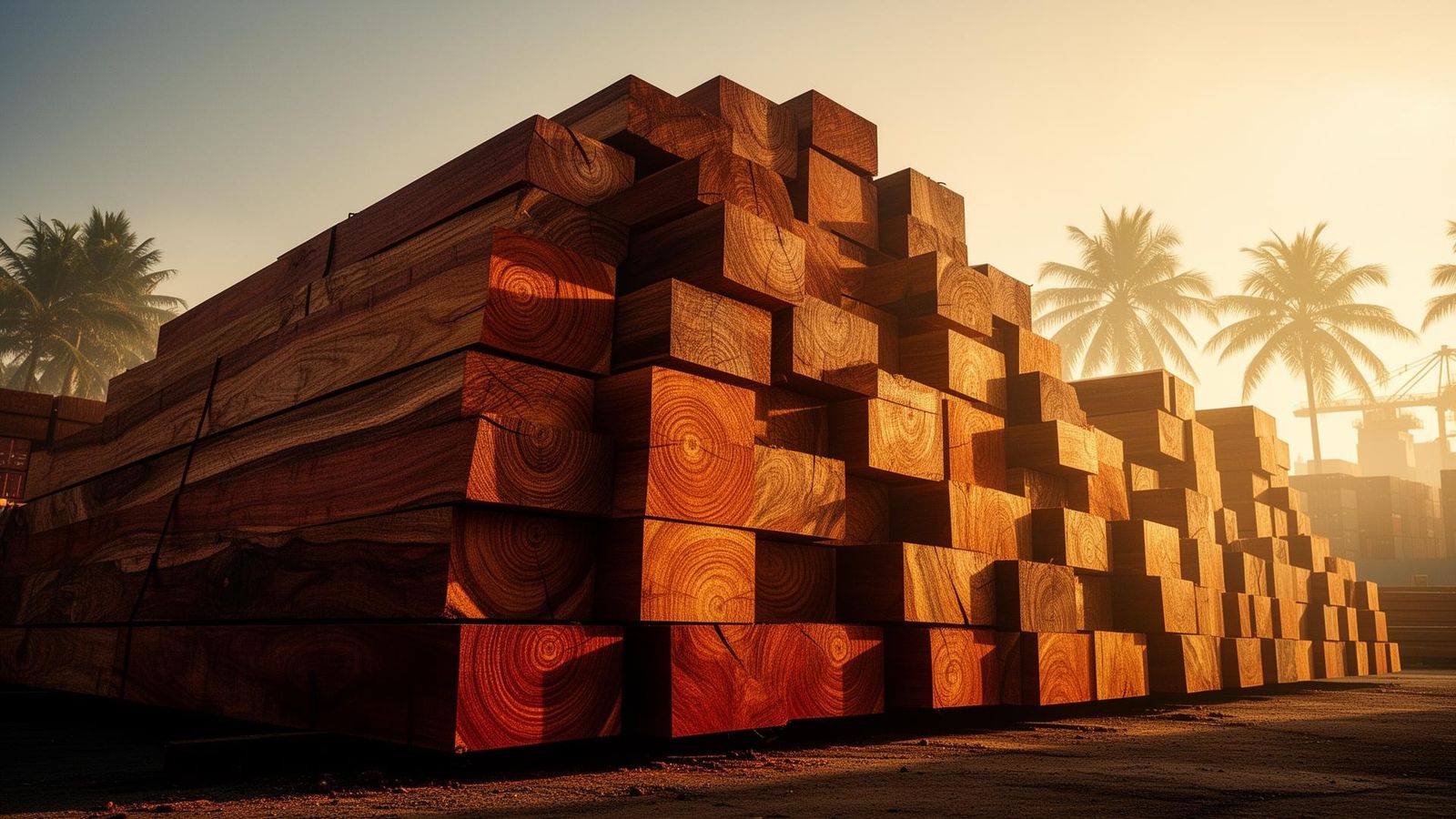
Iroko, sapele, dabema, khaya, wawa, teak, European oak, beech and ash, squared on four faces, kiln-dried where specified, FSC® available, shipped through Jebel Ali, Khalifa, Hamad, Dammam and Sohar for joineries, furniture plants and component shops across the Middle East.
Hardwood square logs are tropical, African or European hardwood timbers squared on four faces at the origin sawmill, presented as parallel-sided beams free of bark, sap and wane. They are the upstream feedstock for the joinery, furniture, flooring and door industries, the form that lifts downstream yield, simplifies container packing and removes a saw step at destination.
TIC Dubai supplies squared hardwoods from FSC® and OLB-certified West and Central African concessions, European mills in France, Germany, Croatia and Romania, and tropical sources in Myanmar, Indonesia, Ghana and Latin America, consolidated through Jebel Ali for buyers across the UAE, Saudi Arabia, Qatar, Oman, Kuwait, Bahrain, Iraq and the wider Middle East.
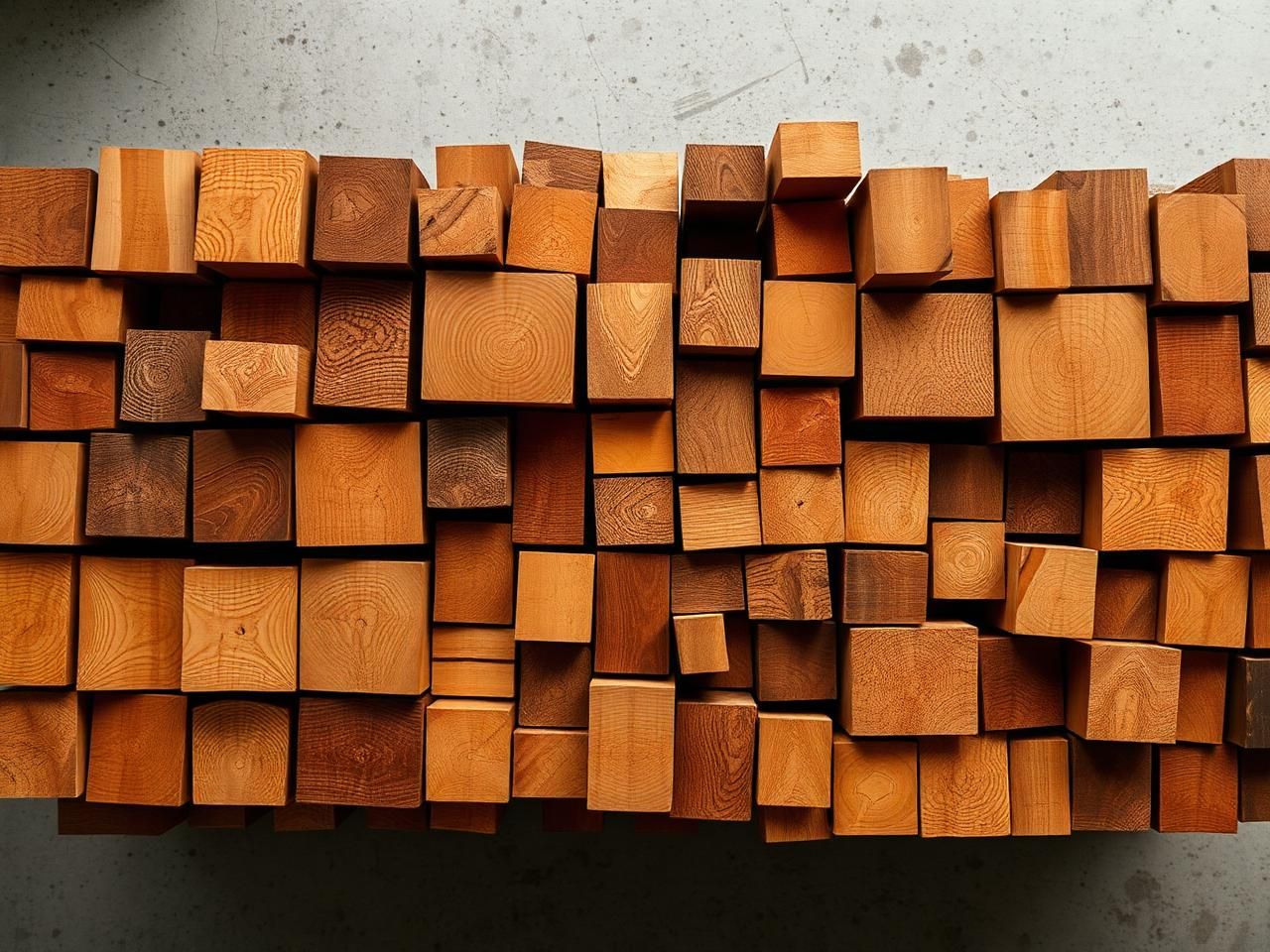
African workhorses (iroko, sapele, dabema, khaya, wawa), the global teak standard, and the European premium trio (oak, beech, ash), supplied as kiln-dried or air-dried squared timbers at standard and custom sections.
Milicia excelsa
Golden brown to deep nut
Joinery, doors, windows, boat building, marine-grade interiors
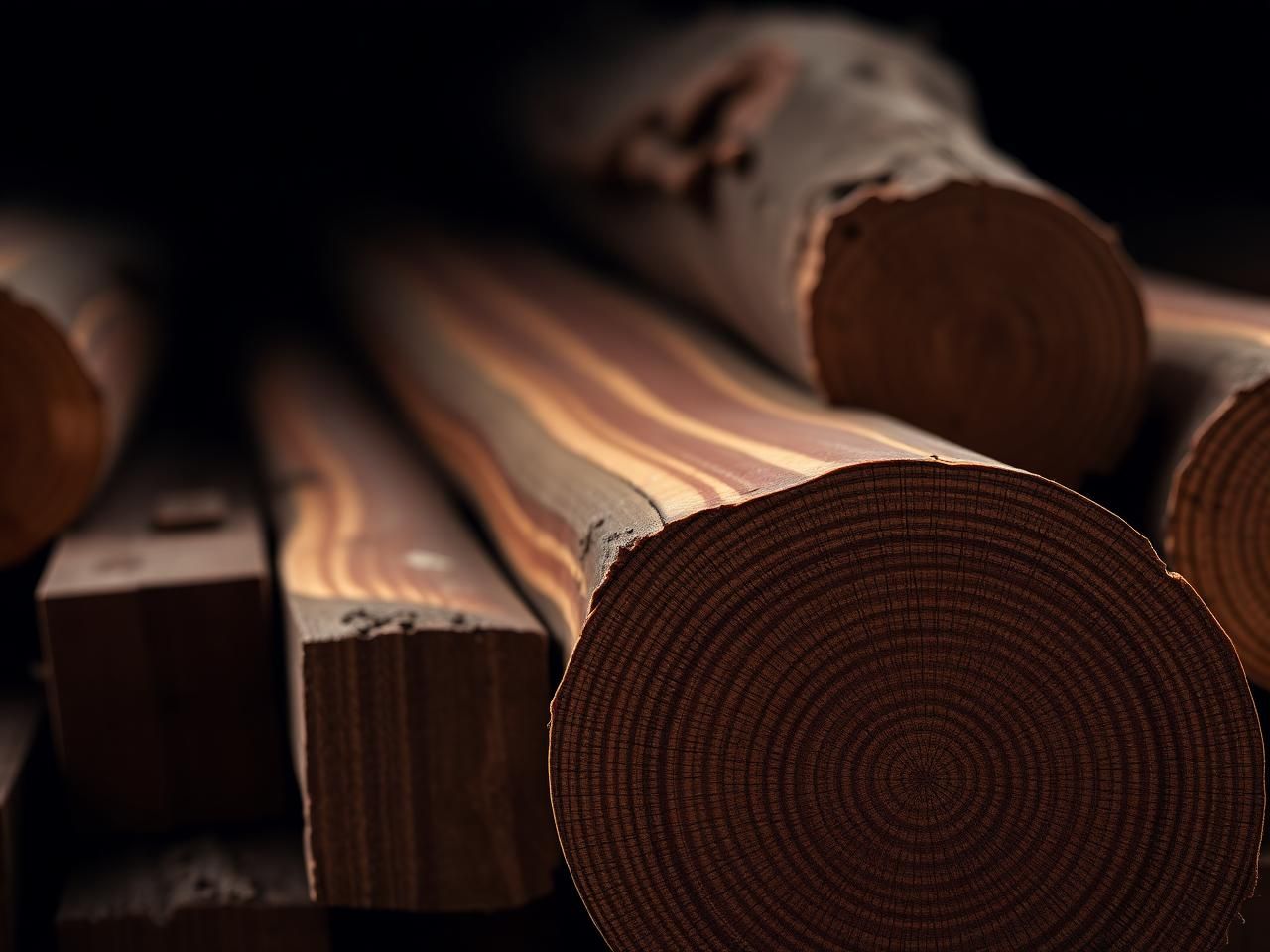
Entandrophragma cylindricum
Reddish brown, ribbon stripe figure
Furniture, doors, panelling, mahogany alternative, premium joinery
Piptadeniastrum africanum
Yellow-brown to medium brown
Heavy construction, decking, sleepers, joinery, flooring
Khaya ivorensis
Light pink to deep reddish brown
Furniture, panelling, mouldings, marine joinery, doors
Triplochiton scleroxylon
Pale yellow to creamy white
Light joinery, mouldings, sauna interiors, plywood core, pattern making
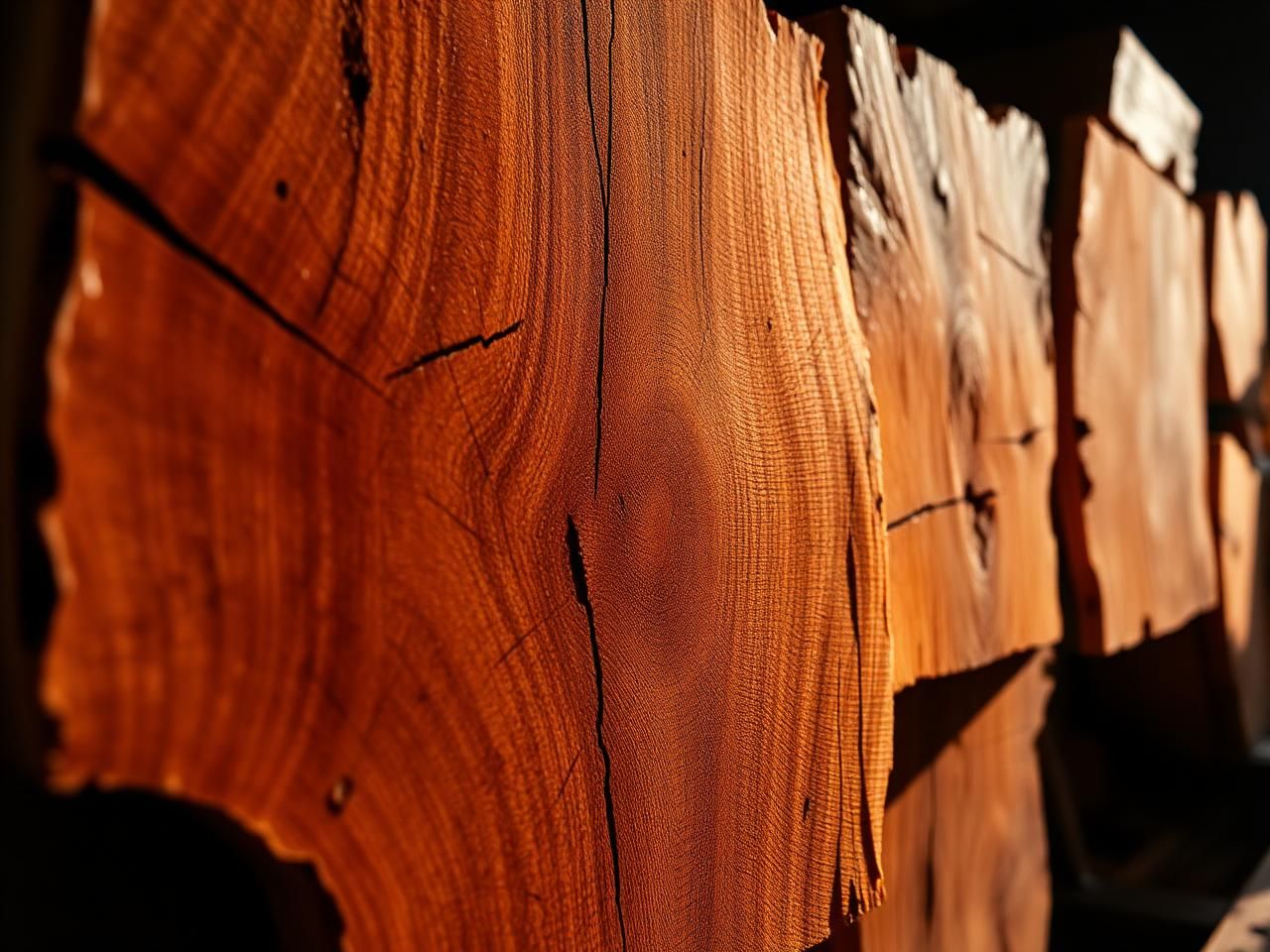
Tectona grandis
Golden brown with dark mineral streaks
Yacht decking, marine joinery, exterior furniture, luxury interiors
Quercus robur / Quercus petraea
Pale gold to medium brown
Furniture, flooring, joinery, doors, panelling, wine casks
Fagus sylvatica
Pale cream to pinkish brown (steamed: warm pink)
Furniture, doors, plywood cores, steam-bent joinery, interior fit-out
Fraxinus excelsior
Cream to light brown, bold straight grain
Furniture, flooring, sports equipment, joinery, interior panelling
Doors, frames, mouldings, architraves and interior architectural millwork in hardwoods chosen for stability and finish.
Solid hardwood furniture frames, table tops, structural carcasses and visible joinery in premium species.
Engineered and solid door blanks and window sections, machined from squared logs rather than re-glued boards.
Strip, plank and engineered flooring layers, sawn from squared logs and kiln-dried to 8–10% MC.
Sawmills, profile producers and component plants converting squares into boards, blanks and cut-to-size stock.
Re-export to Saudi Arabia, GCC, Levant, Iraq and Indian subcontinent in 20' and 40' containers.
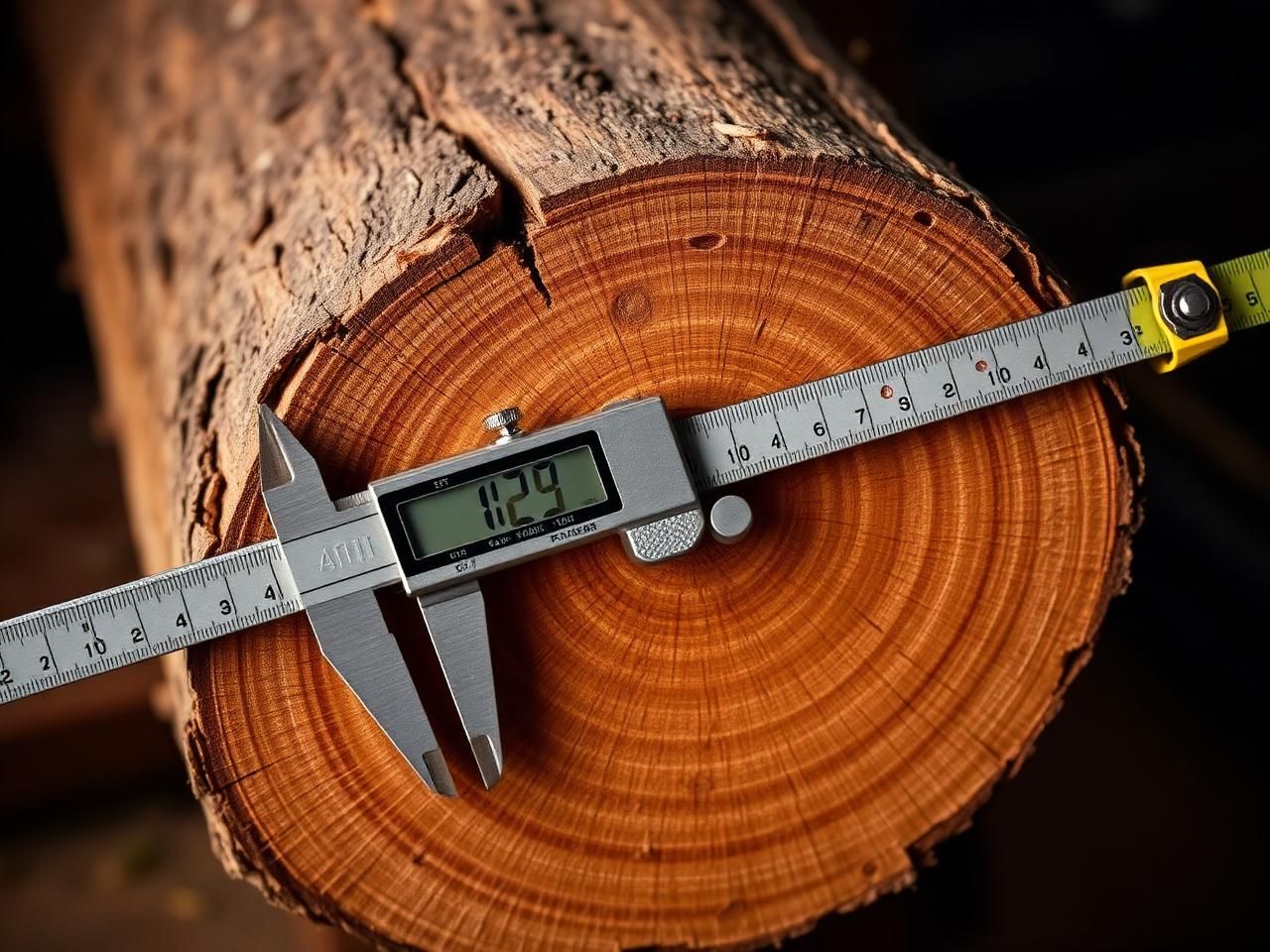
Cross-sections from 100 mm to 300 mm, lengths from 1.8 m to 6.0 m, ±5 mm tolerance per face. Larger sections subject to species log diameter at origin.
| Common Section (mm) | 100×100, 150×150, 200×200, 250×250, 300×300, and custom |
|---|---|
| Length | 1.8 m – 6.0 m (3.0 m and 4.0 m most-used) |
| Tolerance (cross-section) | ±5 mm on each face |
| Tolerance (length) | +50 / −0 mm |
| Moisture Content (KD) | 10–14% (interior joinery), 14–18% (general construction) |
| Moisture Content (AD) | 18–25% (air-dried, regional climate dependent) |
| Density Range | 380–760 kg/m³ depending on species |
| Squaring Method | Twin band-saw or chainsaw-squared, bark-free, sap-free |
| Aspect | Kiln Dried (KD) | Air Dried (AD) |
|---|---|---|
| Process | Forced drying in industrial kiln chambers | Open-stack drying under cover at ambient humidity |
| Final MC | 8–14% typical, predictable | 16–25% depending on origin climate |
| Drying Time | 1–6 weeks | 6–18 months |
| Stability in GCC | Stable in air-conditioned interiors | Will continue drying on arrival; movement expected |
| Cost | Premium (energy + handling) | Lower per cubic metre |
| Best For | Joinery, furniture, flooring, doors | Heavy construction, sleepers, re-sawing into boards |
| Aspect | Rough Sawn | Square Logs |
|---|---|---|
| Form | Sawn boards with live edges or one straight edge | Four-sided squared timbers, parallel faces |
| Yield | Wider boards, more waste in joinery | Higher usable volume per m³ for joinery and re-sawing |
| Container Packing | Lower packing efficiency | Tight, near-perfect packing density |
| Best Use | Workshops re-sawing to width | Production lines, component plants, mouldings, doors |

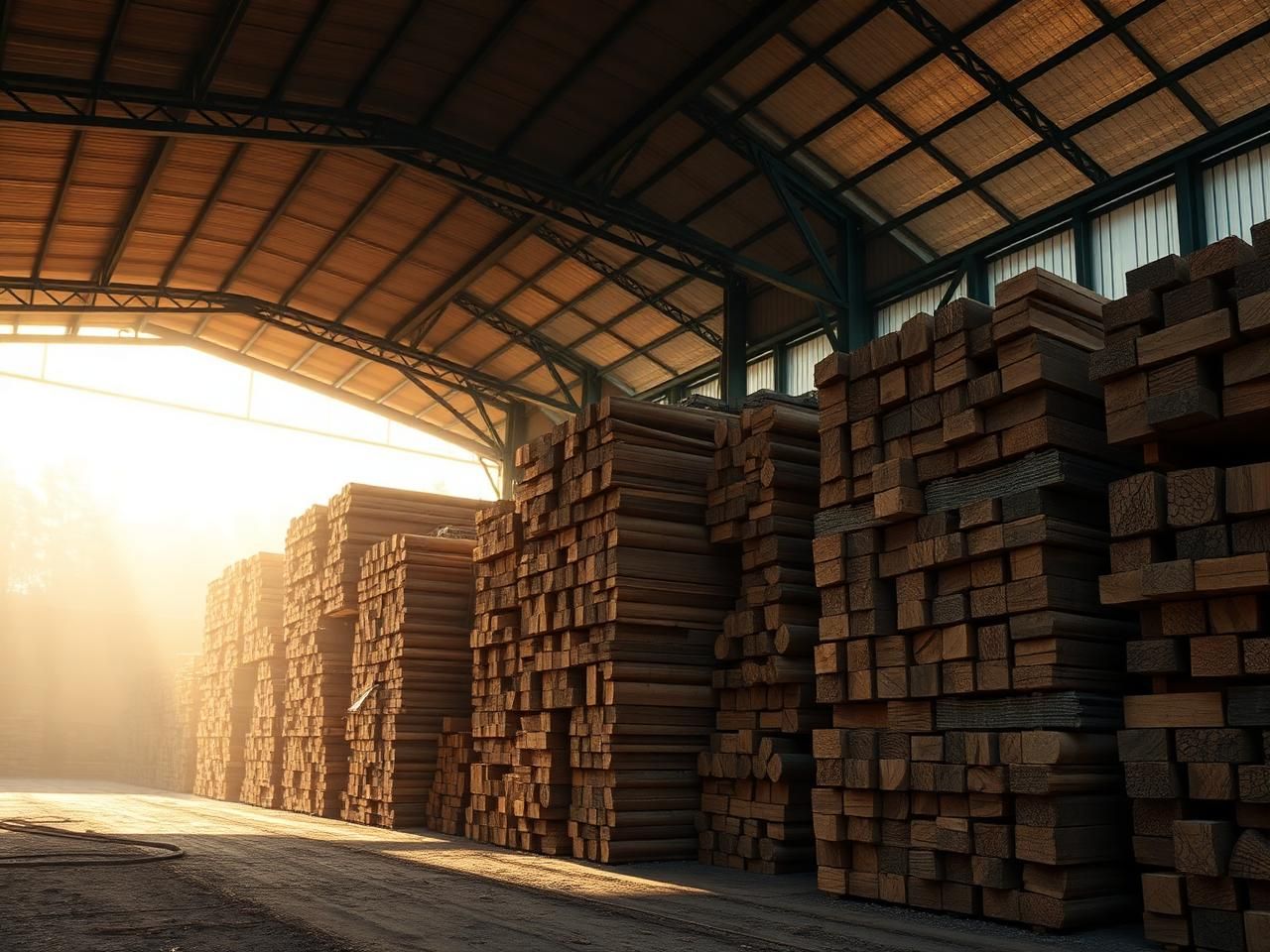
Cross-stack squared logs on 100 mm bearers above the ground, with airflow between layers. Cover the top with breathable tarp, not plastic sheeting.
For KD material, store in a roofed yard with ambient airflow. Avoid stacking against external walls in UAE summer humidity.
Apply wax-based end-sealer to freshly squared ends within 24 hours to prevent end checks and splits during acclimatisation.
Maximum 4-metre stack height for 300 mm sections, 3-metre for 200 mm, 2-metre for 150 mm to maintain stack integrity.
Allow KD hardwoods 2–4 weeks at site before machining; AD hardwoods require 8–12 weeks to reach equilibrium MC in air-conditioned space.
Radial split through the pith. Reject pieces with cracks extending beyond 1/3 of the cross-section.
Separation between growth rings. Cosmetic on most species, but downgrade for high-stress structural use.
Splits at the cut ends caused by uneven drying. Trim back 50–100 mm to clean stock before machining.
Residual bark or rounded edge on the squared face. Squared logs should be wane-free; flag at inspection.
Pin-hole borer activity (acceptable in some species) vs powder-post or termite damage (reject). Always specify in tender.
Dark mineral deposits common in iroko, teak and oak. Aesthetic, not structural. Accept as character.
Dark fungal lines in slow-dried logs. Acceptable for rustic interiors, reject for premium furniture grades.
Diamonding or bowing caused by incorrect drying. Reject pieces with deflection beyond 10 mm per 3-metre length.
African and North American hardwoods for premium architectural projects.
Shipments routed through Jebel Ali, Khalifa, Hamad, King Abdulaziz Dammam, Sohar and other major regional ports, coordinated with contractor and procurement schedules.
Sapele, Iroko, Meranti, White Oak, American Walnut, Ash and other premium hardwoods are supplied (kiln-dried, graded and packed) for joinery workshops, luxury fit-out contractors, hotel developers and yacht builders across the UAE, KSA, Qatar and the wider GCC.
Hardwood square logs are tropical, African, European or American hardwood timbers squared on four faces by twin band-saw or chainsaw, presented as parallel-sided beams free of bark, sap and wane. They are the upstream feedstock for sawmills, joinery shops and component plants converting timber into boards, blanks, mouldings and finished joinery.
Iroko, sapele, dabema, khaya (African mahogany), wawa, teak, European oak, European beech, European ash, padouk, okan, okoume, azobe, kossipo, movingui, dibetou, afrormosia, ayous, bilinga and bubinga. We also supply American hardwoods (walnut, maple, cherry, red oak, white oak) on request.
Round logs are felled timber in their natural cylindrical form, sold to sawmills that perform primary breakdown. Square logs are pre-squared at origin, lifting downstream yield, simplifying container packing, and removing the requirement for a primary breakdown saw at destination.
Common cross-sections are 100×100, 150×150, 200×200, 250×250 and 300×300 mm. Larger custom sections are available subject to log diameter. Lengths range from 1.8 m to 6.0 m, with 3.0 m and 4.0 m most-used in GCC joinery.
±5 mm on each face for cross-section, +50 / −0 mm on length, measured at ambient temperature on the squared face. Tighter tolerances are available for industrial component plants on enquiry.
Kiln-dried (KD) at 10–14% for joinery, furniture and flooring stock destined for air-conditioned interiors. Kiln-dried at 14–18% for general interior construction. Air-dried (AD) at 18–25% for heavy construction, sleepers and re-sawing operations where buyers run a finishing kiln.
Kiln-dried timber is force-dried in industrial chambers to a controlled final MC within 1–6 weeks. Air-dried timber is open-stacked under cover at ambient humidity, taking 6–18 months and reaching 16–25% MC depending on origin climate. KD is stable in GCC interiors; AD will continue drying on arrival and is best for buyers running their own kilns.
Yes. FSC®, PEFC and OLB certification is available across most African and European species on enquiry. We supply full chain-of-custody documentation and EUDR due-diligence statements for EU re-export consignments.
Iroko, sapele and dabema dominate joinery and door production. Khaya (African mahogany) is preferred for furniture and panelling. Teak is the marine and yacht standard. European oak and beech serve premium interior fit-out and steam-bent joinery.
Both are durable golden-brown hardwoods, but teak (Tectona grandis) is denser, oilier and more dimensionally stable in marine use. Iroko (Milicia excelsa) is the African equivalent for joinery and exterior architecture, at roughly half the cost. Iroko replaces teak in most GCC joinery and door specifications.
Sapele (Entandrophragma cylindricum) is denser (~640 kg/m³), darker reddish-brown, with ribbon stripe figure on quarter-sawn faces. Khaya (Khaya ivorensis) is lighter (~560 kg/m³), pinker, more open-grained and easier to machine. Sapele is the premium specification; khaya is the workhorse.
Full 20' (~22–25 m³) and 40' (~50–55 m³) containers are the standard sea-freight unit. Mixed-species and mixed-section containers are loaded against the packing list, banded and protected with moisture barrier for transit to UAE and GCC ports.
Jebel Ali (Dubai) is the primary discharge for UAE-bound timber, with Khalifa (Abu Dhabi) and Hamriyah (Sharjah) available for specific buyer locations. We coordinate clearing, transport and yard delivery on request.
Yes. Saudi Arabia ships through Jeddah Islamic Port, King Abdullah Port or Dammam. Qatar via Hamad Port. Oman via Sohar or Salalah. Kuwait via Shuwaikh, Bahrain via Khalifa Bin Salman, Iraq via Umm Qasr or Khor Al Zubair.
African and tropical hardwood square logs typically ship in 30–45 days from origin to GCC discharge. European hardwoods in 25–35 days. Production timelines depend on log availability at origin sawmills; lock orders 60–90 days ahead of site requirement for high-volume programmes.
Yes. TIC Dubai coordinates SGS, Bureau Veritas, TUV or buyer-nominated inspection at origin mill or load port. Inspection reports cover species verification, dimensional accuracy, MC, grade, quantity and container loading.
Original Bill of Lading, commercial invoice, packing list, certificate of origin, phytosanitary certificate, chain-of-custody certificate (FSC® / PEFC / OLB) where applicable, EUDR due-diligence statement (for EU re-export) and a heat-treatment certificate where required.
Hardwood square logs are heat-treated to ISPM-15 only where the buyer or jurisdiction requires it (typically for re-export packaging). Treatment is declared on the phytosanitary certificate at origin.
Cross-stack on 100 mm bearers above the ground, with airflow between layers, under a breathable canopy. Avoid stacking against external walls in UAE summer humidity. End-seal freshly cut faces within 24 hours. Allow 2–4 weeks acclimatisation for KD, 8–12 weeks for AD before machining.
Heart shake, ring shake, end checks, wane, insect borer holes, mineral streaks, fungal staining, warp and twist. Reject pieces with structural defects (heart shake beyond 1/3 of cross-section, active insect damage, deflection beyond 10 mm per 3 m). Accept aesthetic defects (mineral streaks, character marks) as species character.
Typical recovery from squared hardwood to finished joinery stock is 60–75% by volume, depending on section size, species and final product. Squaring at origin lifts recovery 8–15% versus shipping round logs and breaking down at destination.
Yes. Standard grades include FAS (First and Seconds, premium clear), Selects, No.1 Common and No.2 Common, mapped to species-specific origin grading rules. We supply grading rules with the offer and inspect against them at load port.
We do not trade CITES Appendix I species. CITES Appendix II species (e.g. African padouk, bubinga and some rosewoods) are supplied only with valid CITES export and re-export permits issued by competent national authorities. Specify at RFQ stage.
Letter of Credit at sight, Documents against Payment (DP), advance payment, and open-account for established repeat buyers. We work with project bankers across UAE, Saudi Arabia and GCC to structure terms that fit your treasury policy.
Mill-direct from origin to destination through a single counterparty in Dubai. Documentation, banking, port clearance, third-party inspection, container consolidation and after-sales claims handled in one workflow, in your timezone, in English and Arabic, with regional warehouses for fast top-ups.
Sourcing, grading, drying and storage, the operational reference for buyers and joinery managers across the GCC.
Hardwood timbers squared on four faces at the origin sawmill: what they are, how they're produced, and why GCC joineries specify them over round logs.
Fourteen African hardwood species explained for procurement teams, joinery managers and consultants specifying squared timber for GCC projects.
Iroko is the African teak substitute that dominates GCC joinery. A full technical reference for buyers and joinery managers.
Dabema is the African hardwood that quietly carries the heavy-construction, sleeper and decking market across the GCC.
Khaya is the African Mahogany that built the modern GCC furniture and door industry. A complete technical reference.
The moisture spec on your RFQ decides whether your joinery survives a UAE summer. A buyers' guide to KD and AD hardwoods.
Share species, sections, lengths, MC, certification and discharge port. TIC Dubai will revert with a fully landed offer, MTC documentation and load-port inspection coordinated.