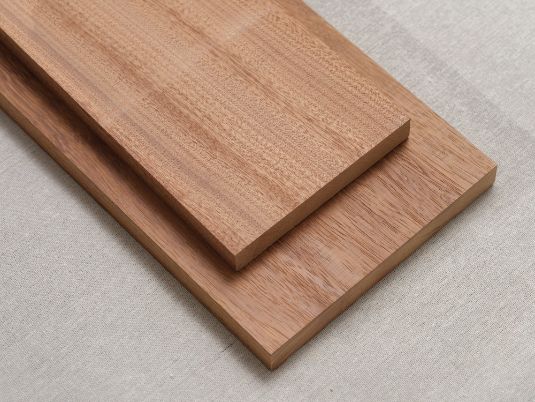
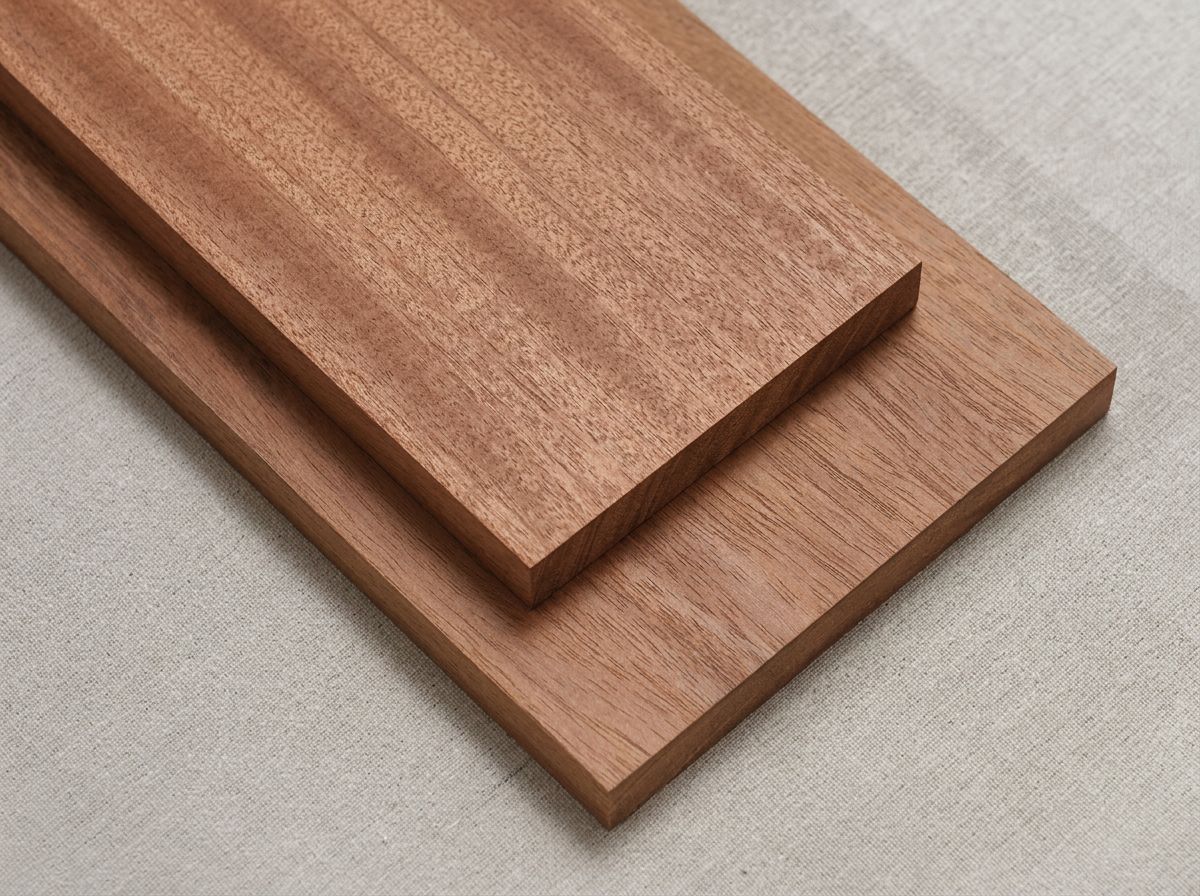
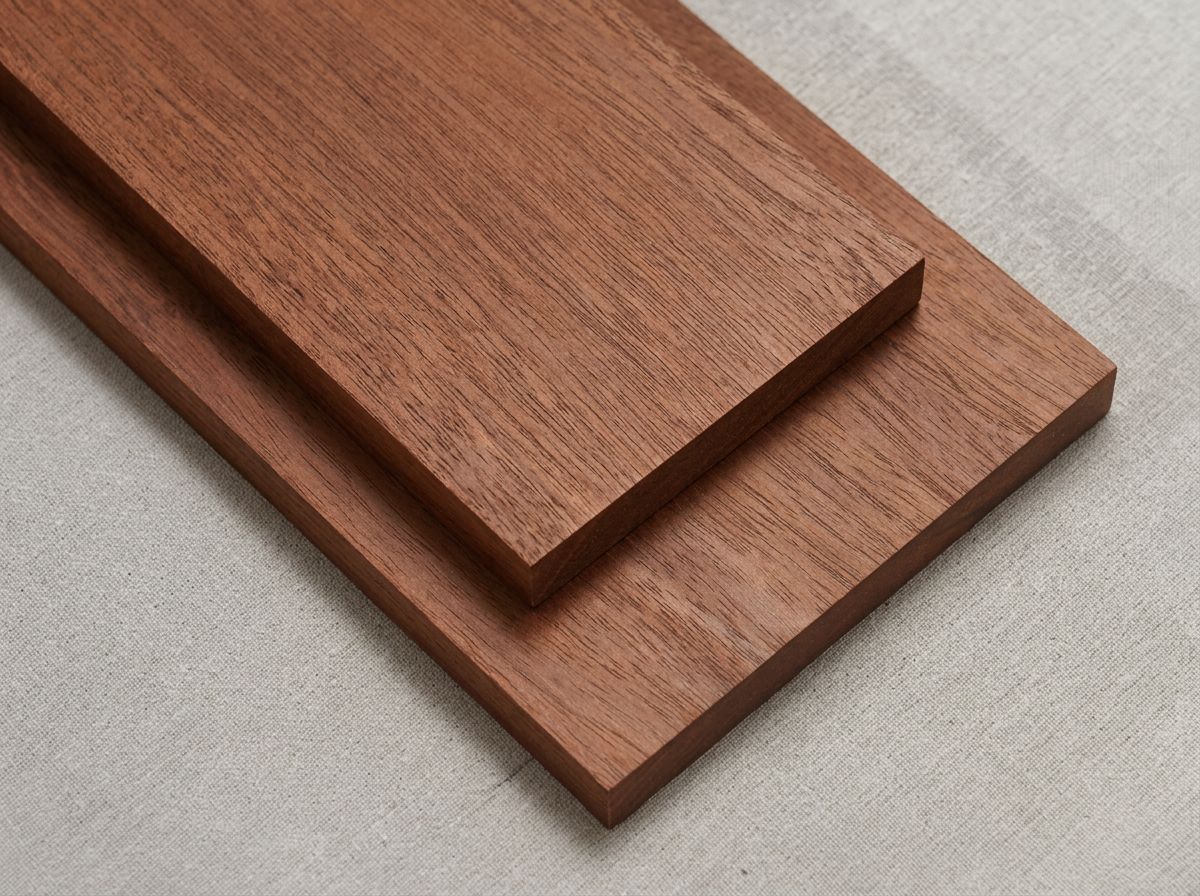
Sapele (Entandrophragma cylindricum) kiln-dried hardwood board supplied by TIC Dubai
    Africa hardwood·Origin: West & Central Africa

    Sapele

    Entandrophragma cylindricum
    African Hardwood for Exterior Trim, Siding & Decking

    Sapele is in the same family as Mahogany and the same genus as Utile, sharing many of their best qualities. It is an outstanding exterior wood often used for decking, siding and porch ceilings, and a mainstay of exterior door and window construction. Highly stable and easily available in wide and long boards in greater thicknesses, Sapele has quickly replaced Genuine Mahogany as the 'red wood' of choice for most applications.

    Ribbon-stripe quartersawn figure
    ≈ twice as hard as Genuine Mahogany
    Stable in long, wide and thick stock
    FSC® / OLB / EUDR options
    Density
    640 kg/m³ (42 lbs/ft³)
    Janka Hardness
    1,510 lbf (6,720 N)
    Durability
    Class 2-3: Moderately durable
    Stability
    Good (T/R ≈ 1.4)
    Workability
    Good; slight tearout on interlocked grain
    Certification
    FSC® / OLB / EUDR DDS

    African Sapele Mahogany - the go-to alternative

    Hailing from West Africa, Sapele contains an interlocking grain that produces light and dark ribbon stripes throughout the boards. It is commonly quartersawn to enhance these attractive ribbons, and is often used as veneer for plywood in this application. As a solid wood it is relatively stable once dry, and is frequently used in the construction of doors. Sapele is a fine exterior wood, although it is often painted in window and door applications because of its fine grain.
    Working properties

    Sapele takes a moulded edge very well, and the flat-sawn cut is best used for moulding applications due to its consistent appearance. Quartersawn Sapele's ribbon texture does not produce as consistent a coloration as flat sawn, but quartersawn boards offer increased stability. Sapele is a hard and dense hardwood - about twice as hard as Mahogany - but it is gentle on tools and easy to mill. The uniform grain makes it machine very evenly, and it is able to hold fine details and joinery. Note: Sapele dust can cause respiratory irritation; appropriate extraction is recommended.

    Sourcing & drying

    We import our Sapele from West Africa from carefully selected regions to obtain the best colours and consistencies. We import an even mix of flat-sawn and quartersawn lumber, and pay close attention to drying and re-drying to ensure stability. After arrival in Dubai, our Sapele is allowed to acclimatise to local conditions and re-dried as required for the destination market - from European 12–15% MC down to North American 6–8% MC. This slow acclimation process ensures stable, quality Sapele throughout our inventory.

    Appearance

    How Sapele looks & ages.

    color
    Medium to dark reddish-brown, often with golden lustre
    grain
    Interlocked, producing pronounced ribbon stripe on quartersawn faces
    texture
    Fine and uniform
    aging
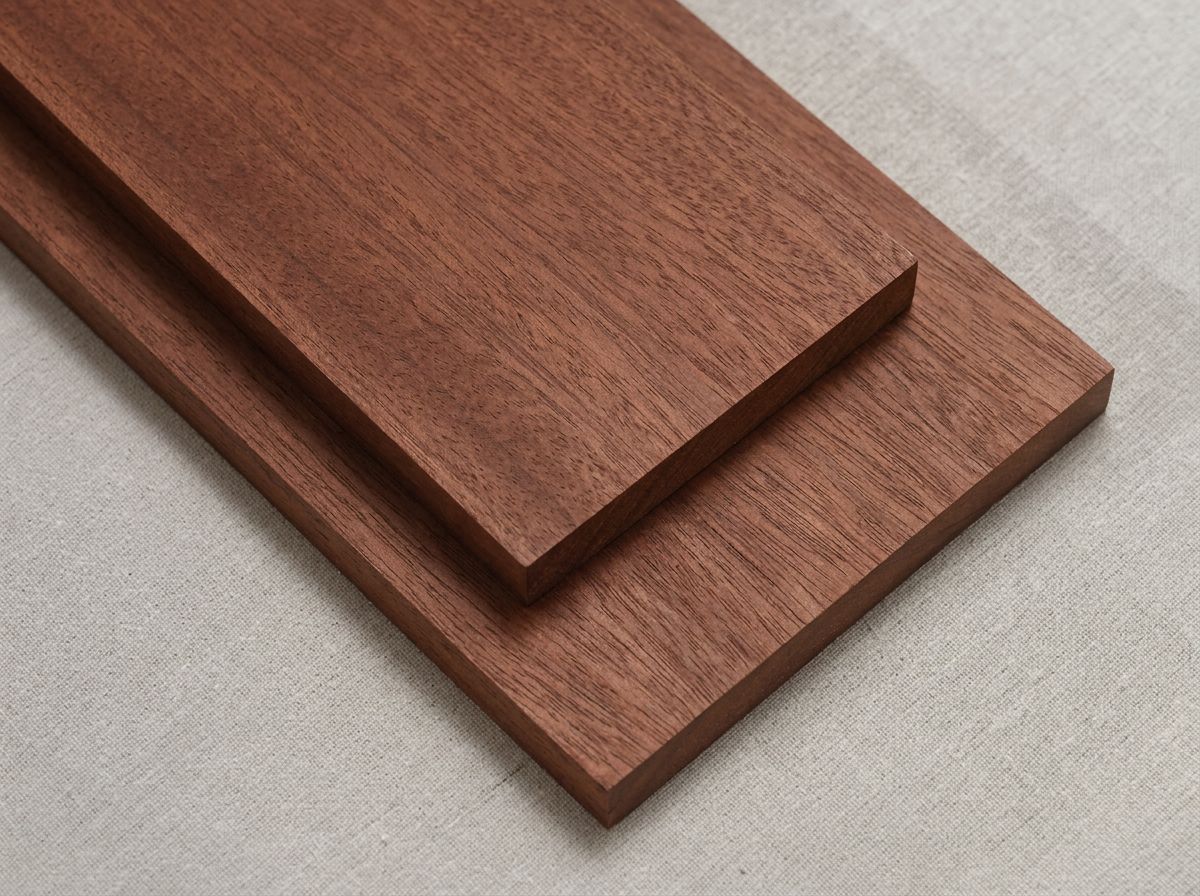
    Darkens slightly with UV exposure to a richer red-brown
    Lumber Specifications

    Sapele mechanical properties.

    Indicative values from The Wood Database, AHEC species data and USDA Wood Handbook (FPL-GTR-190). Actual values vary by origin and growing conditions.

    CharacterGreenDryUnits
    Bending Strength (MOR)10,23317,895psi
    Max Crushing Strength5,1158,788psi
    Stiffness (MOE)1,3971,7041,000 psi
    Hardness (Janka)-1,510lbf
    Specific Gravity0.480.62-
    Weight5242lbs/ft³
    Radial Shrinkage-5%
    Tangential Shrinkage-7%
    Swipe to view more
    Availability & Grading

    How we supply Sapele.

    Form
    Sawn boules, KD lumber, scantlings, sliced veneer
    Cut
    Flat-sawn (FS) and quartersawn (QS) ribbon
    Thickness
    4/4 – 16/4 (26 – 100 mm)
    Length
    8 – 16 ft (custom on request)
    Moisture content
    6 – 8% (NA) / 10 – 12% (EU)
    Certification
    FSC® / OLB / EUDR DDS available

    Other dimensions, grades and certifications available on request.

    Common Applications

    Where it's specified.

    • Exterior doors, windows & shutters
    • Decking, siding & porch ceilings
    • High-end interior joinery
    • Architectural mouldings
    • Boat building & marine trim
    • Rotary & sliced veneer for plywood
    Why specify it

    Why choose Sapele.

    Mahogany-Class Look

    Ribbon-stripe figure and rich red colour, a direct replacement for Genuine Mahogany.

    Twice as Hard

    Roughly 2× the Janka hardness of Genuine Mahogany, better for high-wear interiors.

    Large Stable Boards

    Available in wide, long and thick sections without warping.

    Chain-of-Custody

    FSC®, OLB and EUDR-compliant African supply.

    How it compares

    Sapele in context.

    Comparison

    Sapele vs Genuine Mahogany

    Sapele is harder, denser and more freely : the modern industry standard.

    Genuine Mahogany (Swietenia macrophylla) is CITES II restricted with tight supply. Sapele delivers a comparable look, superior hardness and broader sections, which is why it has replaced Mahogany across architectural joinery, doors and yacht work.

    Comparison

    Sapele vs Utile

    Utile works more easily and looks closer to Genuine Mahogany; Sapele has more figure.

    Utile and Sapele are botanical cousins. Sapele shows stronger ribbon stripe and is harder; Utile is calmer in figure, easier to machine and closer in temperament to true Mahogany.

    FAQ

    Sapele: answered.

    The questions buyers, architects and joiners ask us most often about Sapele.

    Enquire

    Get pricing for Sapele.

    Share thickness, grade, volume and destination port. We will revert with mill options, lead times and indicative pricing within one working day.

    Browse
    All hardwood species