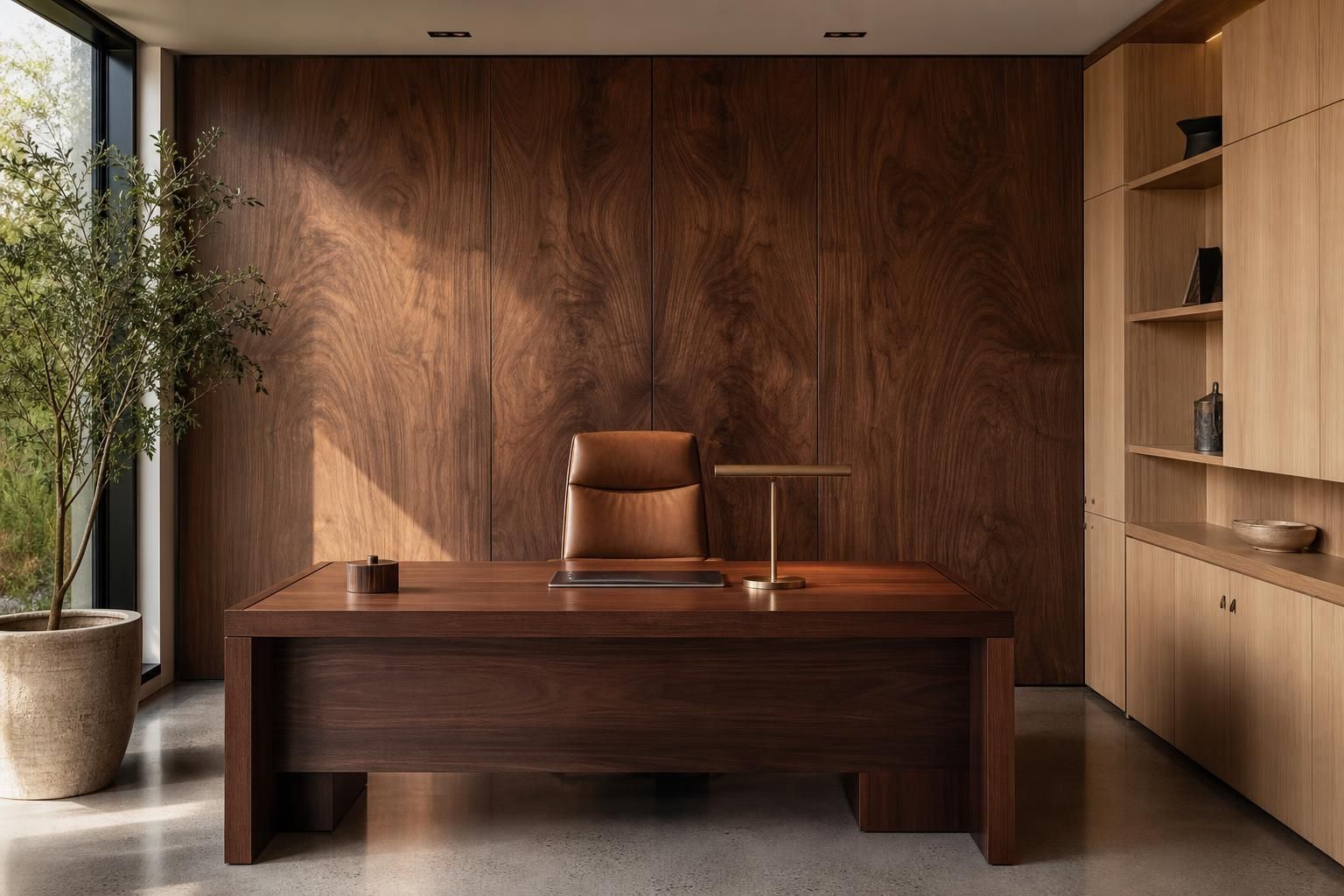
Wood Veneers for Luxury Interiors, Furniture & Architectural Applications.
Natural, engineered, figured, smoked and decorative veneers covering a wide range of species, cuts, matching styles and finishes for furniture, doors, wall panels, joinery and high-end fit-out projects across the GCC.
Real wood, engineered for architecture.
Wood veneer is a thin slice of natural timber, typically 0.5 to 2.5 mm thick, bonded to a stable substrate such as MDF, plywood or particle board. The result is a panel that carries the genuine character, grain and depth of solid timber, with significantly greater dimensional stability and a fraction of the timber consumption.
Unlike laminate (a printed decorative paper) or solid wood (a full timber section), veneer combines authentic natural appearance with engineered performance, making it the preferred finish for luxury residential, hospitality, retail, yacht and architectural interiors across the GCC.
- Natural, real-wood appearance
- Resource-efficient use of timber
- Greater dimensional stability than solid wood
- Wide design flexibility: species, cuts, matches, finishes
- Cost-efficient at architectural scale
- Compatible with curved, large-format and tall panels
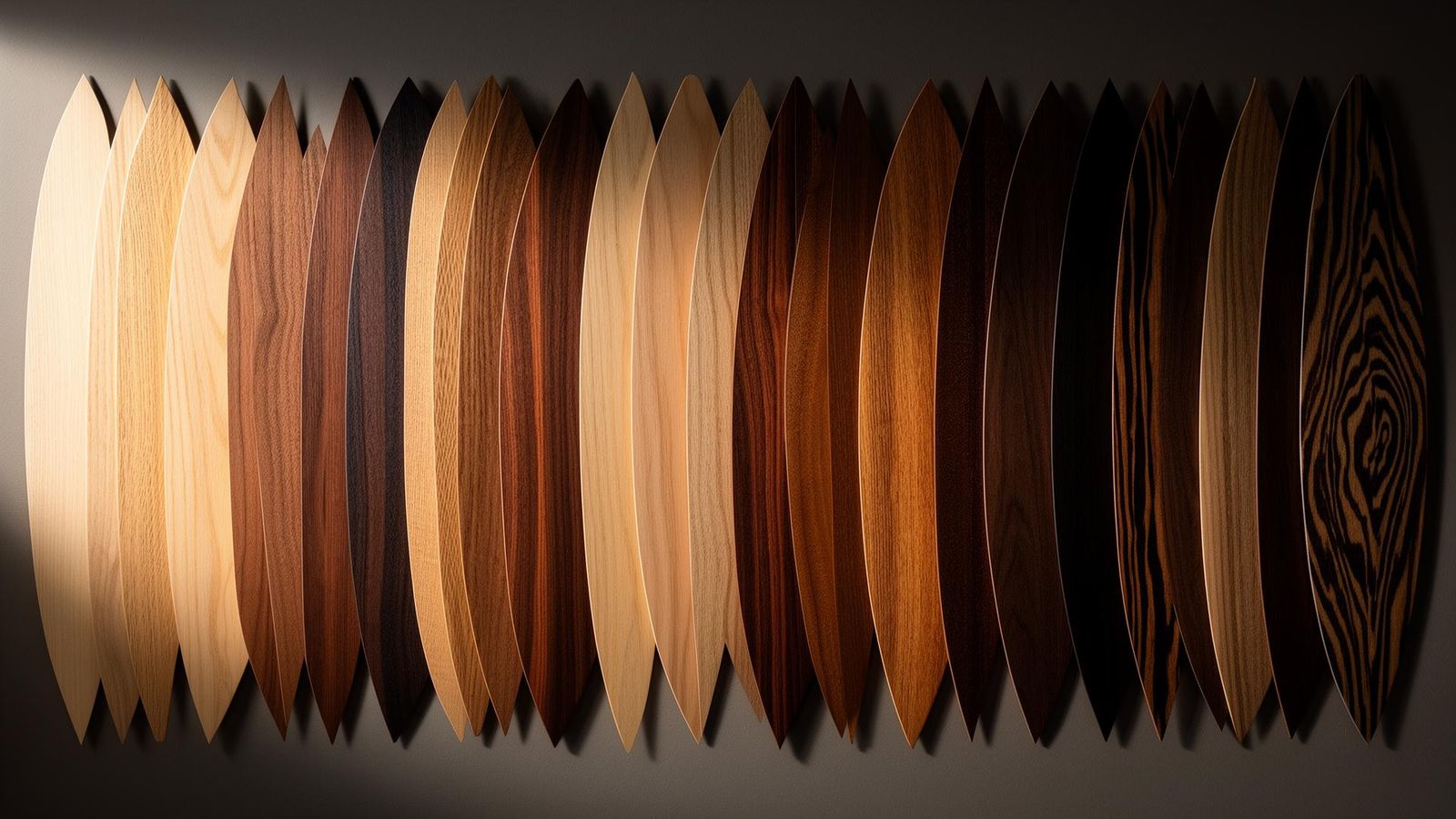
100+ veneer species, one curated library.
European Veneers
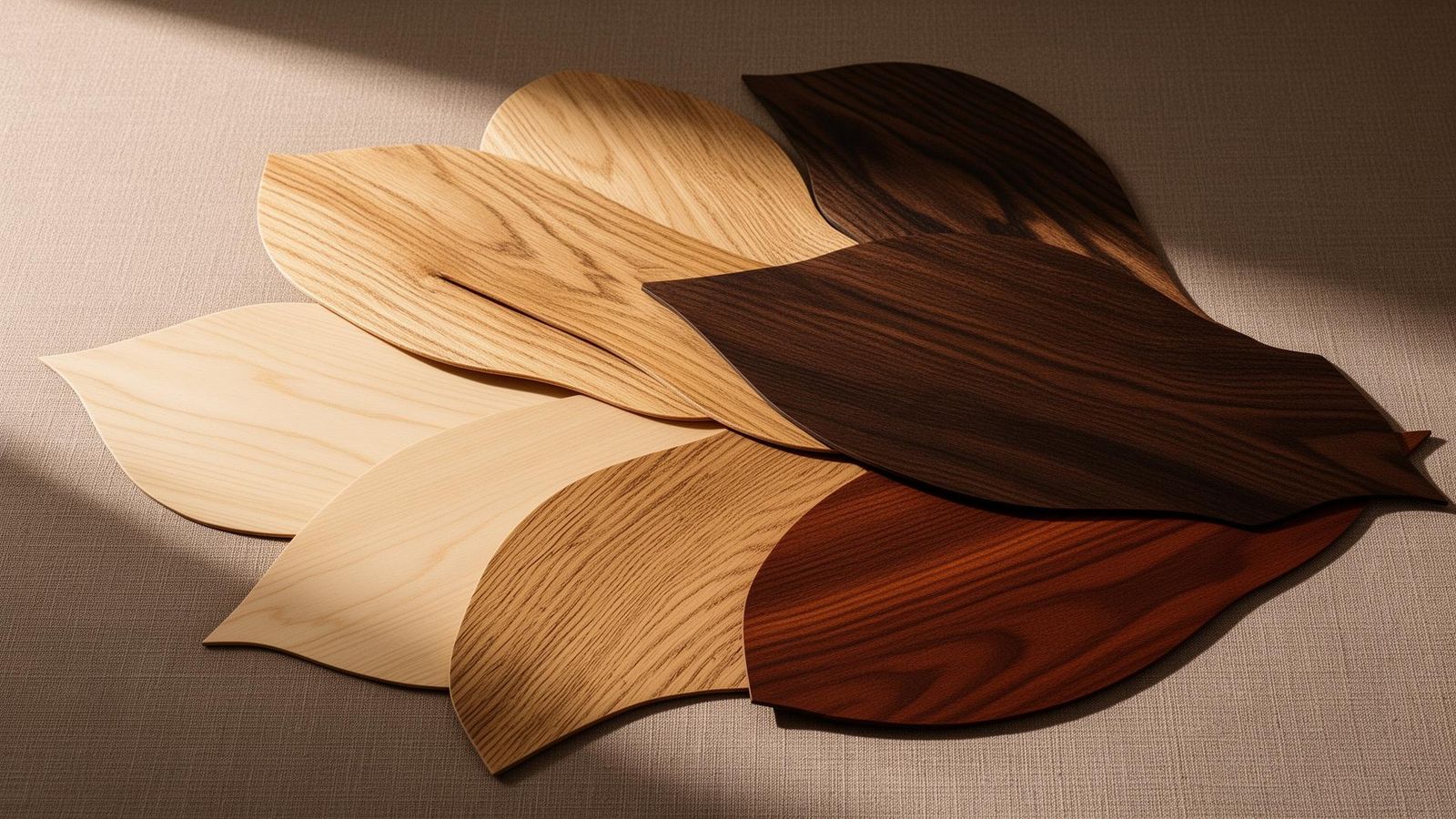
European Oak
Pale golden-brown, prominent grain, used for joinery, doors, wall panels and furniture.
Smoked European Oak
Ammonia-smoked oak with deep chocolate tones, used for luxury interiors and feature walls.
European Ash
Cream to light brown, bold straight grain, suited to contemporary furniture and millwork.
Beech
Fine, even texture, pale pink-cream, suited to steam-bent furniture and cabinetry.
Sycamore
Almost-white, lustrous figure, suited to high-end furniture and hospitality interiors.
Elm
Warm brown with interlocked grain, used for heritage joinery and feature panels.
Chestnut
Soft brown, oak-like grain, suited to rustic-luxury interiors and bespoke furniture.
European Walnut
Rich chocolate tones with subtle figure, used for flagship luxury interiors.
Cherry
Pinkish-red, ages warmer over time, suited to premium furniture and cabinetry.
Maple
Creamy white, fine grain, used for modern minimalist interiors and joinery.
American Veneers
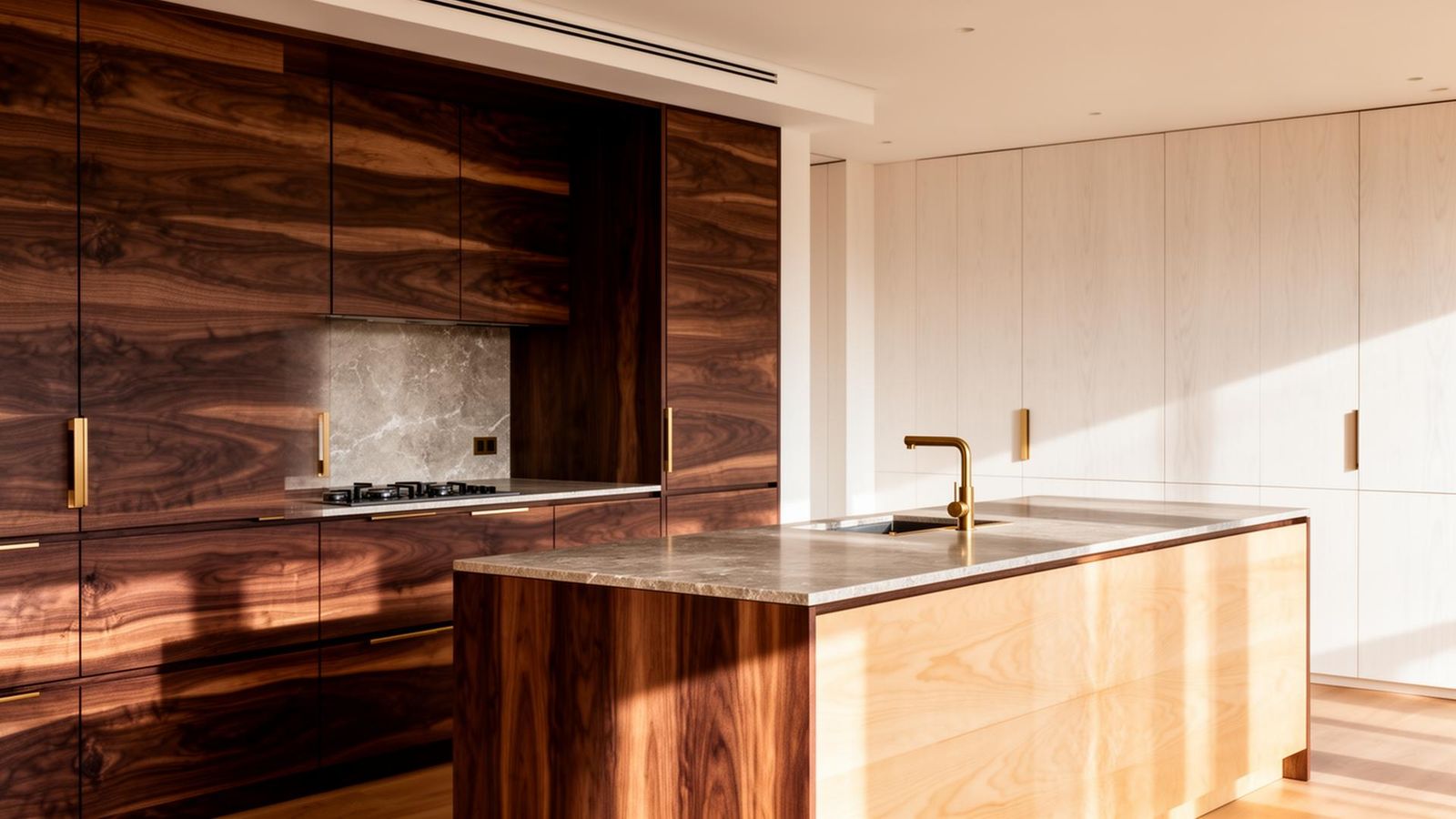
American White Oak
Light tan with strong straight grain, used for fit-out, doors, furniture and flooring overlays.
American Red Oak
Pinkish-red, open grain, suited to value-oriented joinery and furniture.
American Walnut
Deep purple-brown, preferred for flagship hospitality and residential interiors.
Cherry (American)
Reddish-brown that deepens with age, used for heritage cabinetry and millwork.
Hard Maple
Pale cream, dense, fine grain, suited to sports, retail and contemporary interiors.
Soft Maple
Slightly softer cousin of hard maple, used for paint-grade and stained millwork.
Ash (American)
Light, bold grain, suited to modern furniture and architectural panels.
Hickory
Strong contrast between sapwood and heartwood, suited to rustic-luxury fit-out.
Alder
Light reddish-brown, knotty options available, used for cabinetry and door skins.
Poplar
Pale and even, used for paint-grade veneers and economical core faces.
African Veneers
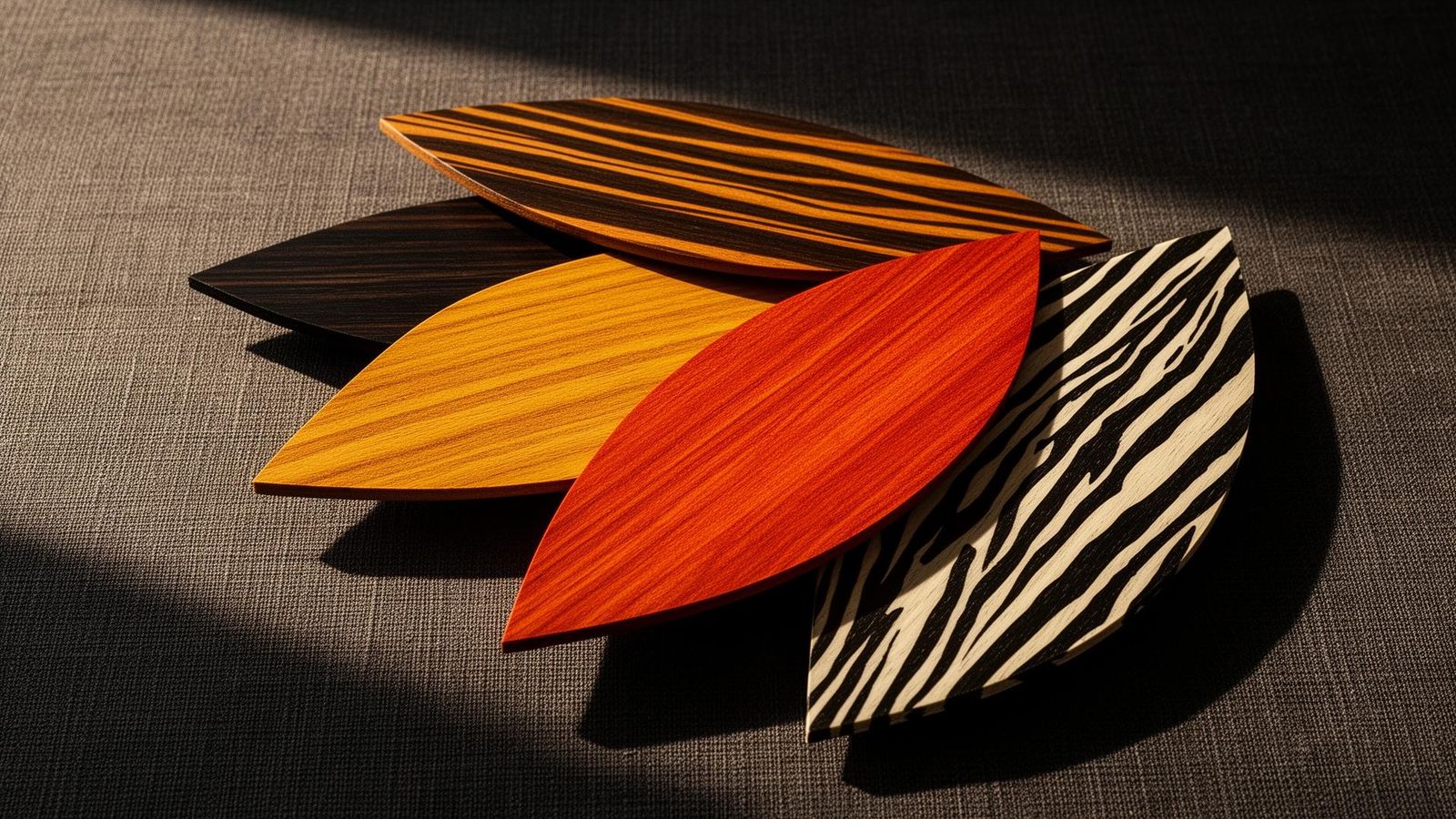
Sapele
Reddish-brown mahogany alternative with ribbon stripe, used for doors, panelling and hotel joinery.
Sapele Pommele
Quilted figure on quarter-cut sapele, used for feature walls and yacht interiors.
Utile / Sipo
More uniform than sapele, with a deep mahogany tone, suited to premium doors and joinery.
Khaya Mahogany
The classic African mahogany, used for heritage furniture and panelled interiors.
Wenge
Near-black with parallel grain, used for modern dramatic interiors and feature panels.
Iroko
Golden-brown and naturally durable, suited to premium joinery and high-humidity interiors.
Afrormosia
Often called African teak, with yellow-brown, fine grain, used for marine-grade interiors.
Movingui
Bright yellow tones, used for designer accent veneers and contrast panels.
Padauk
Vivid orange-red on freshly cut faces, used for feature furniture and architectural inlays.
Zebrawood
Cream background with sharp dark stripes, suited to statement walls and bespoke furniture.
Anegre
Pale gold, often figured, suited to luxury hotel and yacht interiors.
Makore
Pink to red-brown, mottled figure, used for flagship millwork and panelling.
Asian Veneers
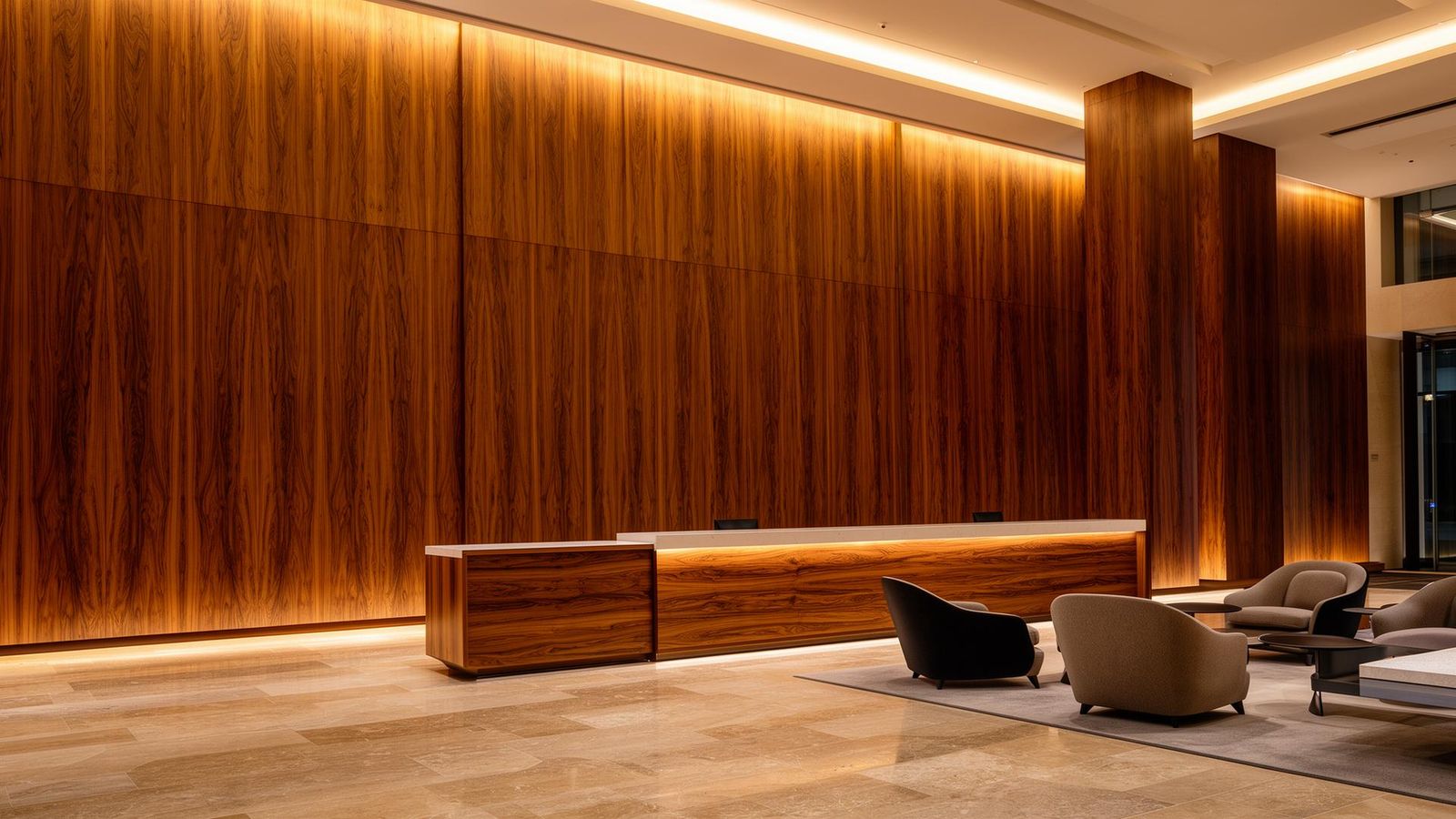
Teak
Golden-brown, naturally oily and durable, suited to yacht, hotel and exterior-grade interiors.
Red Meranti
Pinkish-red and economical, used for door skins, panelling and joinery.
Keruing
Reddish-brown and dense, suited to heavy-duty interior fit-out and panelling.
Okoume
Pinkish-cream and light, used for door cores, panelling and marine-derived applications.
Eucalyptus
Pale to mid-brown, used for engineered veneer faces and value cabinetry.
Recon Teak
Reconstituted teak with consistent grain and colour at scale.
Recon Walnut
Reconstituted walnut with uniform appearance for large project volumes.
Exotic & Decorative
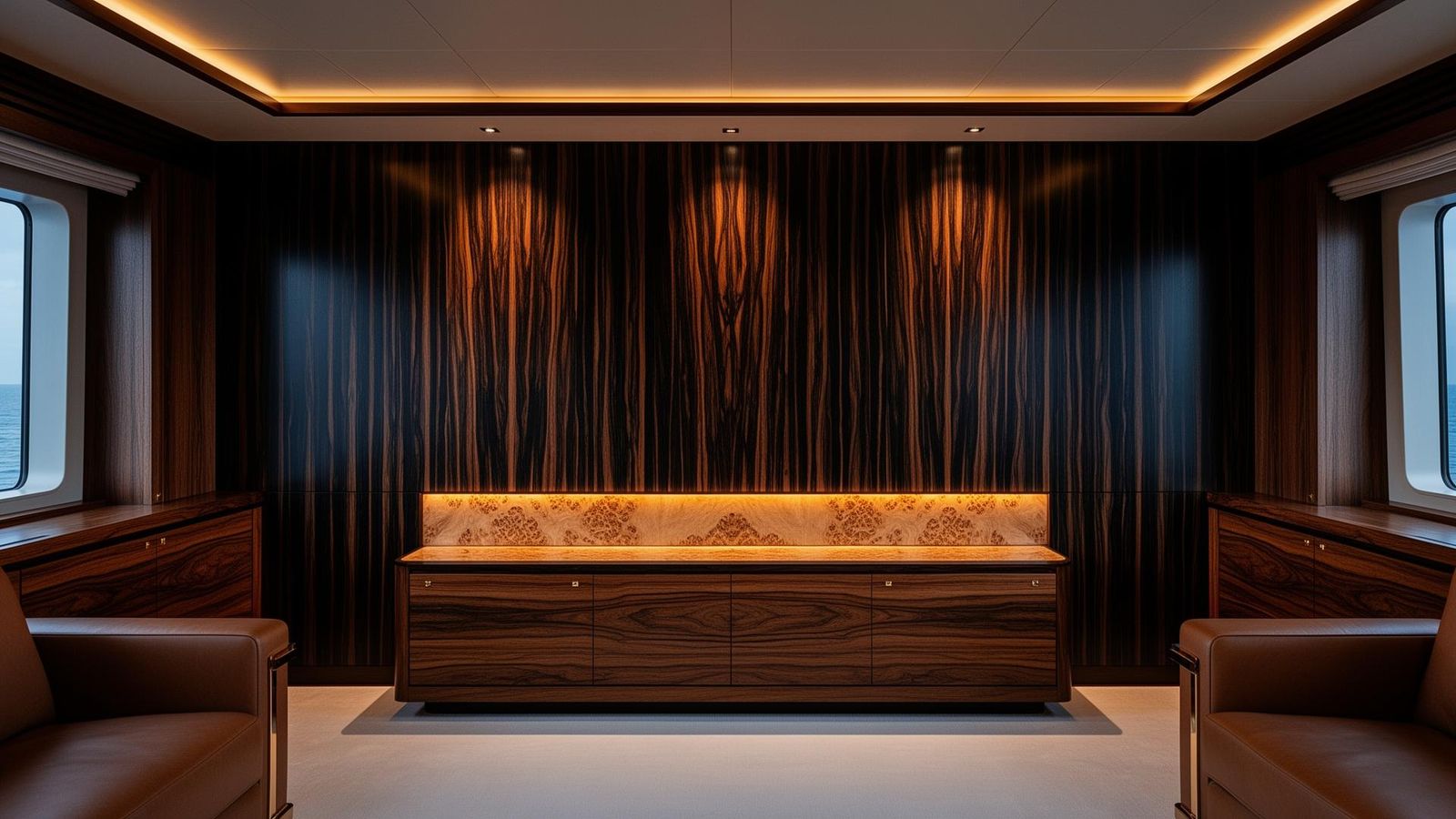
Ebony
Deep black with subtle figure, used for luxury accent veneers and inlays.
Macassar Ebony
Dark brown with dramatic black stripes, suited to flagship hotel and yacht interiors.
Rosewood
Rich brown-purple, fine figure, used for heritage furniture and feature joinery.
Santos Rosewood
Variegated brown tones, used in bespoke residential interiors.
Olive Wood
Cream with dark figure, suited to designer furniture and small accent panels.
Olive Ash
Ash with strong central figure, used for statement furniture and feature walls.
Lacewood
Distinct medullary fleck, suited to architectural panels and contemporary cabinetry.
Zebrano
The African zebrawood, offering bold linear contrast for feature interiors.
Beyond standard sliced veneer.
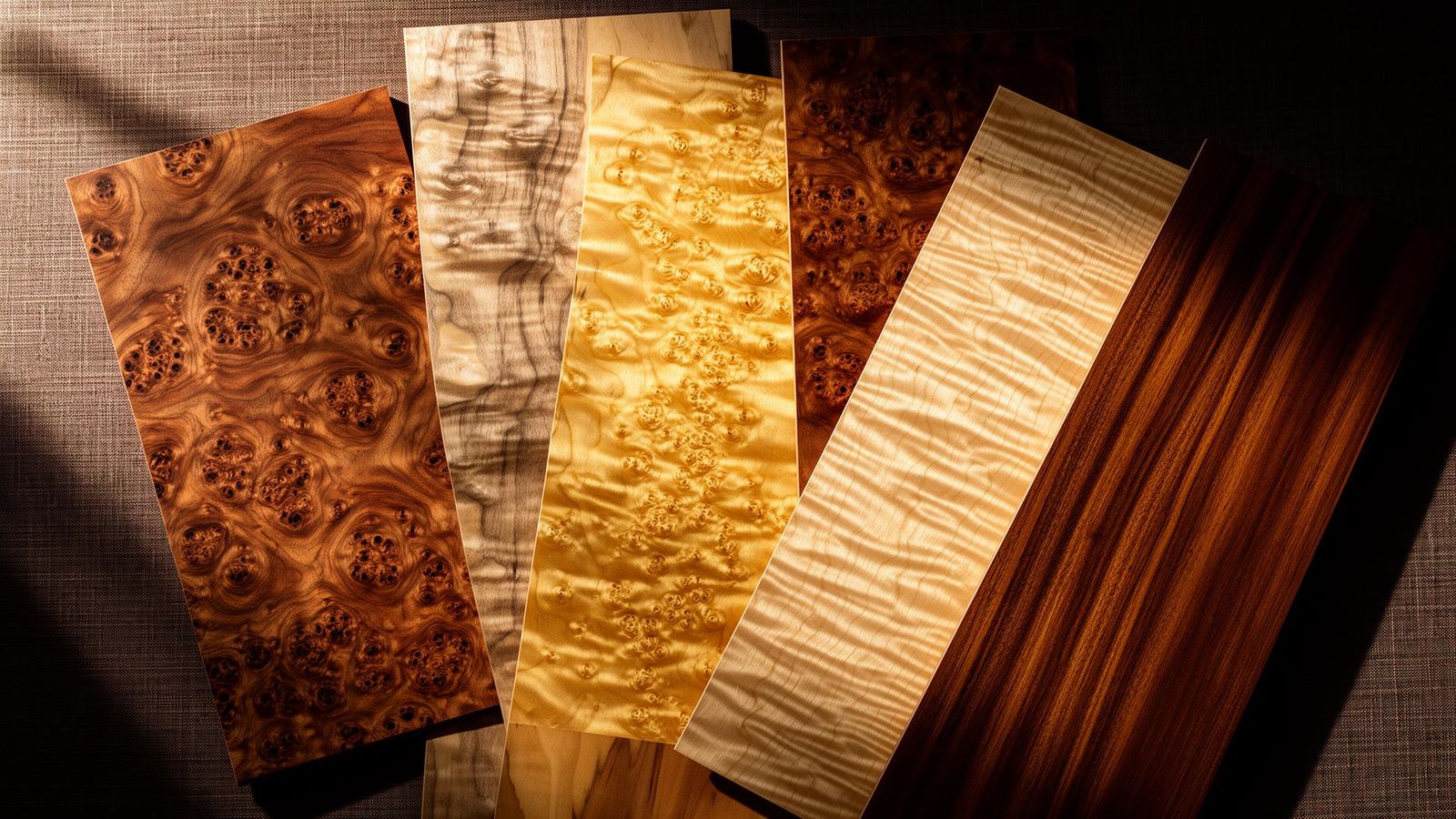
Natural Veneers
Real wood sliced from logs, with unique grain and unique character. Specified for premium and bespoke interiors.
Engineered Veneers
Real wood, dyed and re-laminated into consistent flitches, delivering predictable colour and grain across large projects.
Reconstituted Veneers
Engineered alternative to rare or restricted species, with uniform appearance at scale.
Dyed Veneers
Stained through the full sheet, producing rich saturated colours for designer feature walls and cabinetry.
Smoked Veneers
Tannin-rich species (oak, larch) ammonia-smoked, producing a deep tonal change without surface stain.
Burl Veneers
Cut from burl growths, featuring swirling figure used as accent panels and inlays.
Figured Veneers
Fiddleback, quilted, curly, mottled, selected for visual drama in flagship interiors.
Pommele Veneers
Quilted-like figure (commonly sapele, makore), used for premium hotel and yacht panelling.
Crotch Veneers
Cut from the fork of a tree, featuring flame-like figure suited to classic luxury furniture and inlay use.
How the log is sliced shapes the grain.
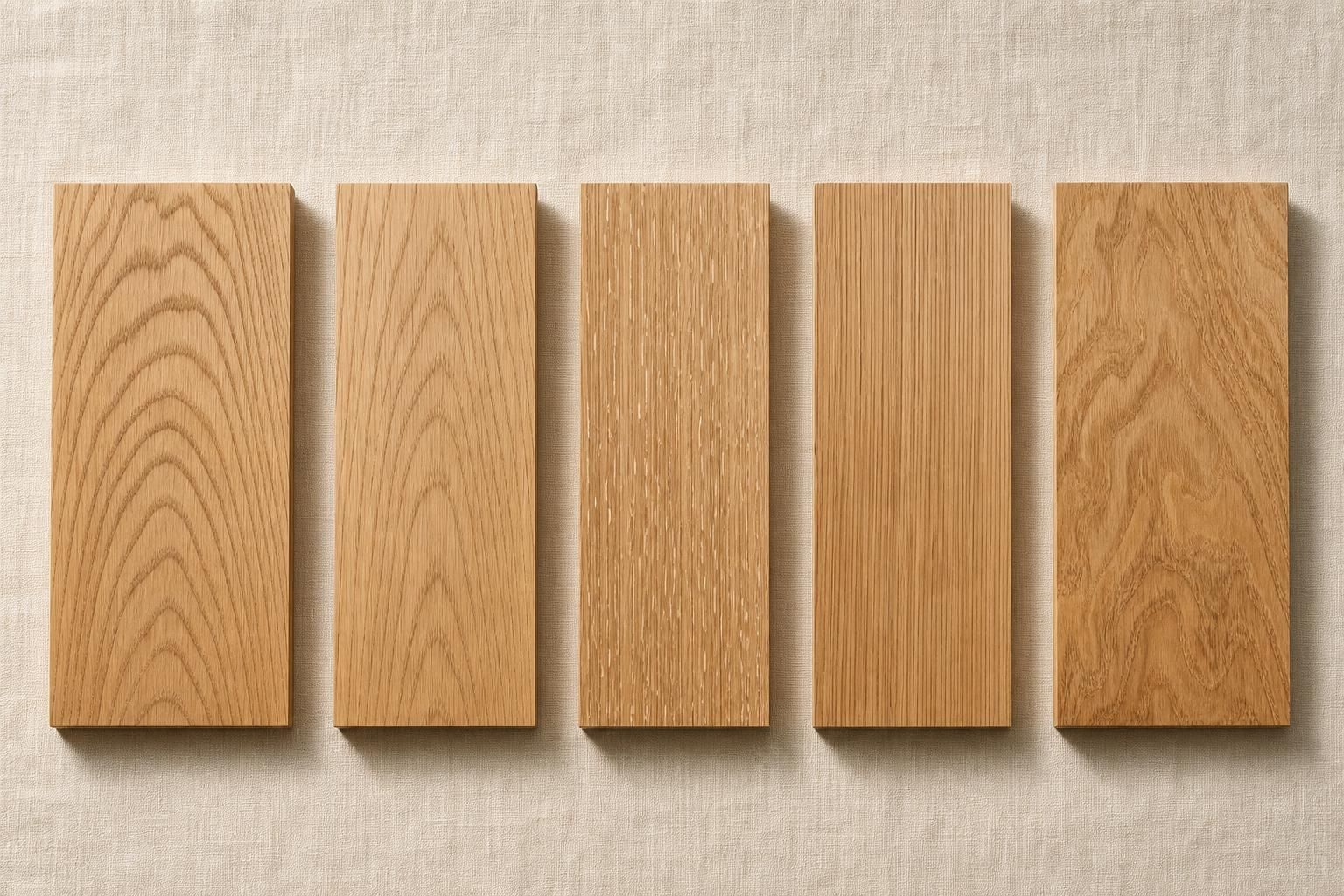
Flat Cut
Half-round or plain slicing, producing a cathedral grain pattern with the widest leaves, the architectural default.
Crown Cut
Sliced parallel to the centre of the log, yielding bold cathedral figure with straight side grain.
Quarter Cut
Sliced perpendicular to the growth rings, producing straight, even grain that reveals medullary rays in oak.
Rift Cut
Cut at a slight angle to quarter, delivering straight grain with minimal flake, used heavily on oak.
Rotary Cut
Log peeled like a roll, producing wide, wild-grain leaves mostly used for face plywood and engineered cores.
Butt Cut
Cut from the base of the tree, featuring swirling figure often used as accent inlays.
Rough Sawn Veneer
Saw-textured face for tactile, raw-luxury interiors and feature panels.
| Cut | Grain appearance | Typical use |
|---|---|---|
| Flat / Crown | Cathedral grain | Architectural panels, doors, furniture |
| Quarter | Straight, ray fleck (oak) | Premium joinery, feature walls |
| Rift | Tight straight grain | Contemporary fit-out, cabinetry |
| Rotary | Wide wild grain | Plywood faces, value joinery |
| Burl / Crotch | Figured / flame | Accent panels, luxury inlays |
| Rough Sawn | Saw-textured face | Tactile feature interiors |
How leaves are assembled into panels.
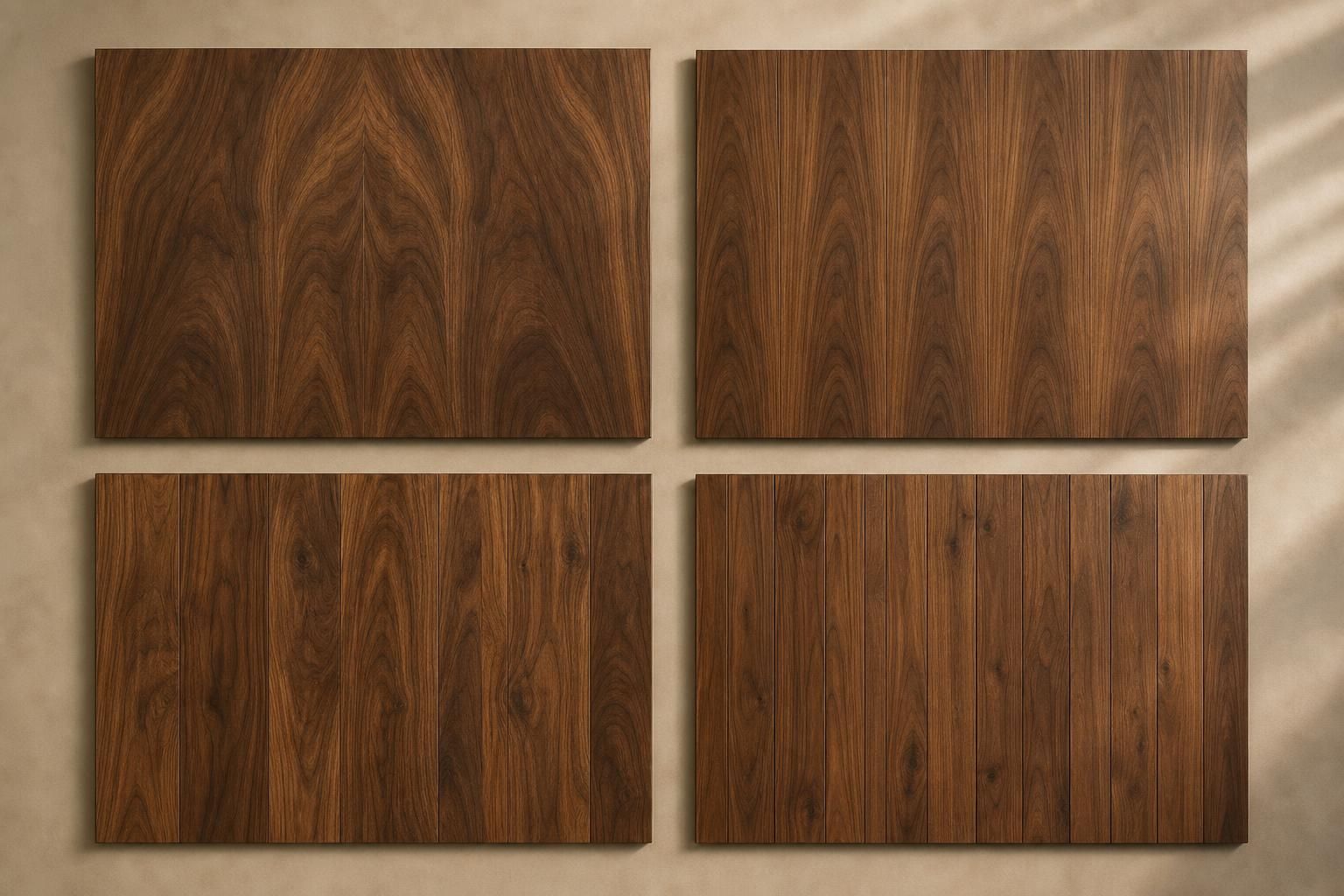
Book Match
Alternate leaves flipped to create a mirror-image grain across the panel, the most-used architectural match.
Slip Match
Sequential leaves slipped side-by-side for consistent grain progression, common on quarter-cut oak.
Random Match
Leaves assembled without sequence, creating a relaxed, natural appearance for residential interiors.
Plank Match
Narrower leaves arranged to imitate a plank floor pattern, giving a modern, casual feel.
Reverse Slip Match
Slip-matched with alternate leaves end-reversed, balancing colour variation across the panel.
End Match
Leaves joined end-to-end as well as side-to-side, used for tall doors and full-height panels.
Book & Butt Match
Book-matched horizontally and vertically for four-leaf radial symmetry on flagship feature walls.
Standard veneer thicknesses & uses.
- 0.5 mm: standard architectural face veneer for doors, panels and furniture
- 0.6 mm: door skins, cabinetry, general joinery
- 1.0 mm: heavier-wear surfaces, executive joinery
- 1.5 mm: architectural panels with deeper sanding tolerance
- 2.0 mm: premium furniture and feature joinery
- 2.5 mm: heavy-wear panels, repairable luxury surfaces
Backings for production & install.
Raw Veneer
Unbacked sliced veneer, pressed in-house onto MDF, plywood or particle board substrates.
Paper Backed
Kraft paper backing for easier handling on large panels and curved surfaces.
Fleece Backed
Non-woven backing, providing added strength and crack resistance on wide leaves.
Phenolic Backed
Resin-impregnated backing for moisture stability in wet-area or wider-format use.
Engineered Veneer Sheets
Pre-laminated full sheets with a consistent face for high-volume joinery and door programmes.
Where our veneers ship.
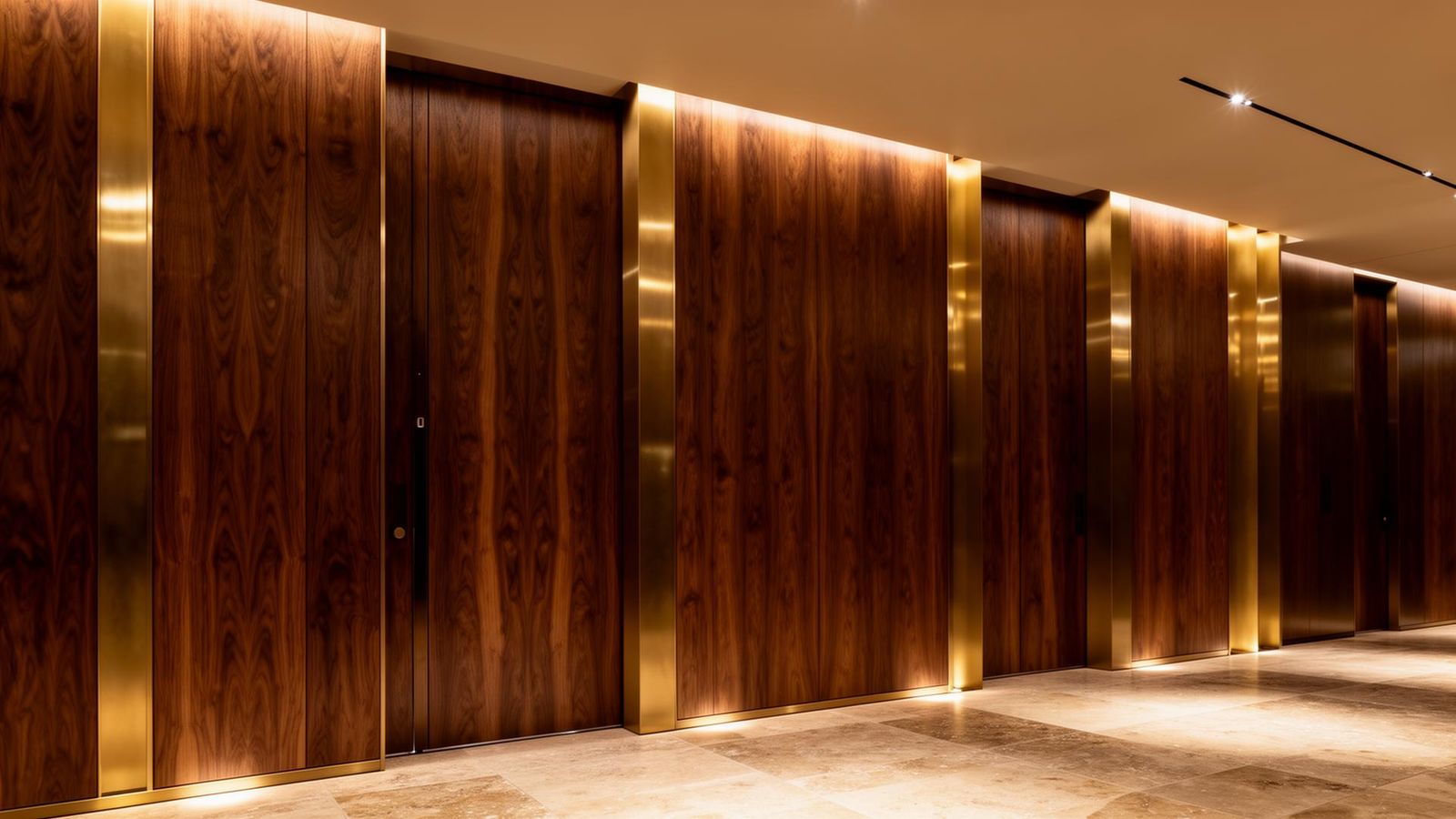
More surface, less timber.
A single cubic metre of log produces dramatically more finished architectural surface as veneer than as solid timber, making veneer one of the most resource-efficient ways to use high-value species. For specifiers focused on responsible material use, this efficiency is one of the strongest arguments for veneered construction at scale.
FSC® and PEFC certified veneer is available across most European, American and African species through our partner mills. Where projects require it, chain-of-custody documentation is coordinated alongside shipment.
Certification availability varies by species, mill and project volume. Please confirm at enquiry stage.
Hardwoods across the GCC and Middle East
African and North American hardwoods for premium architectural projects.
Shipments routed through Jebel Ali, Khalifa, Hamad, King Abdulaziz Dammam, Sohar and other major regional ports, coordinated with contractor and procurement schedules.
Sapele, Iroko, Meranti, White Oak, American Walnut, Ash and other premium hardwoods are supplied (kiln-dried, graded and packed) for joinery workshops, luxury fit-out contractors, hotel developers and yacht builders across the UAE, KSA, Qatar and the wider GCC.
- Dubai
- Abu Dhabi
- Sharjah
- Ajman
- Ras Al Khaimah
- Fujairah
- Umm Al Quwain
- Al Ain
- Khor Fakkan
- Riyadh
- Jeddah
- Dammam
- Al Khobar
- Jubail
- Yanbu
- Mecca
- Medina
- Tabuk
- Abha
- JAFZA
- DIP
- Dubai Industrial City
- Sharjah Industrial Area
- KIZAD
- Hamriyah Free Zone
- RAKEZ
- SAIF Zone
- Doha
- Lusail
- Al Rayyan
- Mesaieed
- Al Wakrah
- Kuwait City
- Shuwaikh
- Shuaiba
- Ahmadi
- Manama
- Muharraq
- Riffa
- Sitra
- Muscat
- Sohar
- Salalah
- Duqm
- Nizwa
- Amman
- Zarqa
- Irbid
- Aqaba
- Baghdad
- Erbil
- Basra
- Mosul
- Najaf
- Karbala
- Sulaymaniyah
- Kirkuk
- Jebel Ali Port
- Khalifa Port
- Hamriyah Port
- Port Rashid
- Khor Fakkan Port
- King Abdulaziz Port Dammam
- Jeddah Islamic Port
- King Abdullah Port
- Jubail Commercial Port
- Yanbu Commercial Port
- Hamad Port
- Shuwaikh Port
- Shuaiba Port
- Khalifa Bin Salman Port
- Port of Sohar
- Port of Salalah
- Port of Duqm
- Port of Aqaba
- Umm Qasr Port
- Khor Al Zubair Port
Complete the wood package.
20+ African, American, European and Asian hardwood species.
Commercial, marine, MR, BWR, WBP, decorative and structural plywood.
Shuttering plywood for GCC concrete formwork.
Raw, HMR, FR, melamine and veneer MDF, the preferred veneer substrate.
Particle board, chipboard, blockboard, OSB and engineered panels.
European whitewood, Nordic spruce and softwood timber.
Wood veneers: technical reading.
Cut, match, grading and selection guidance for architects, joineries and specifiers.
What Is Wood Veneer? Definition, Production and Applications
The thin face that defines high-end interiors. A technical reference on what veneer actually is, how it is made, and where it lives in GCC architectural projects.
Natural Veneer vs Engineered Veneer: A Specification Reference
Two distinct product classes, often grouped under 'wood veneer'. A technical comparison for designers and procurement.
Rotary Cut vs Crown Cut Veneer: How Slicing Defines Appearance
The slicing method, not just the species, determines what a veneer looks like. A technical reference on the four primary cuts.
Book Match vs Slip Match Veneer: Layup Patterns Explained
The same leaves can read entirely differently depending on how they are arranged on the panel. A technical reference on veneer layup matching.
Wood Veneer Grades Explained: AA, A, B and Architectural Standards
Grading is the price-quality dial. A reference for specifying veneer grade against project budget and visual expectations.
African Hardwood Guide for GCC Joinery
African and tropical hardwoods are the backbone of GCC luxury joinery. A practical species selector for architects and joineries.
Wood Veneer FAQ
What is wood veneer?
Wood veneer is a thin slice of real timber, typically 0.5–2.5 mm thick, bonded to a substrate such as MDF, plywood or particle board to produce a panel with the appearance of solid wood at a fraction of the timber cost and resource use.
What is the difference between veneer and laminate?
Veneer is real, natural wood. Laminate is a printed decorative paper layer impregnated with resin. Veneer can be sanded, stained, lacquered and repaired; laminate cannot. Veneer is specified where a genuine timber appearance is required.
What is the difference between veneer and solid wood?
Solid wood is a full piece of timber. Veneer is a thin slice of the same timber bonded to a stable substrate. Veneered panels are typically more dimensionally stable, more resource-efficient and more cost-effective than solid timber for large architectural surfaces.
What is the difference between natural and engineered veneer?
Natural veneer is sliced directly from the log and retains the unique grain of each tree. Engineered veneer (also called reconstituted or recon) is real wood that has been dyed, layered and re-sliced to produce a perfectly consistent grain and colour across large projects.
What is the difference between rotary cut and crown cut veneer?
Rotary cut peels the log like a roll of paper, producing wide, wild-grain leaves used for plywood faces. Crown cut slices parallel to the centre of the log, producing the architectural cathedral-grain pattern preferred for furniture and panels.
What is quarter cut veneer?
Quarter cut slices perpendicular to the growth rings, producing straight, even grain. On oak, this exposes the medullary ray flake, giving the classic 'tiger oak' look used for premium furniture and feature walls.
What is rift cut veneer?
Rift cut slices at a slight angle to true quarter, eliminating most of the ray flake while keeping a tight, straight grain. It is the preferred cut for contemporary oak joinery and cabinetry.
What is book match in veneer?
Book match flips alternate leaves to create a mirror-image grain pattern across the panel. It is the most-used architectural match for furniture, doors and feature walls.
What is slip match in veneer?
Slip match places sequential leaves side-by-side without flipping, producing a consistent grain progression. It is the standard match for quarter-cut oak and contemporary fit-out.
What is random match?
Random match assembles leaves without sequence, creating a relaxed, plank-like appearance. It is used for residential interiors and casual hospitality spaces.
What is balance match?
Balance match uses leaves of equal width, centred on the panel. It produces a symmetrical, formal appearance preferred for doors, executive interiors and feature panels.
Can veneer be applied to MDF?
Yes. MDF is the most common substrate for veneer in joinery and furniture. The smooth, uniform MDF face produces an excellent finish with no telegraphing.
Can veneer be applied to plywood?
Yes. Plywood is the preferred substrate where dimensional stability, screw-holding or wet-area performance is required, for example in joinery exposed to humidity or wet zones.
Can veneer be applied to particle board?
Yes. Particle board is the most economical substrate for veneered furniture and fit-out. Use balanced backing on both faces to prevent warping.
Which substrate is best for veneer?
MDF for visible architectural faces (smoothest finish), plywood for screw-holding and stability, particle board for cost-driven volume furniture. Always apply a balanced backing veneer to the reverse face.
Can veneer be polished, stained or lacquered?
Yes. Natural veneers accept the full range of architectural finishes including PU lacquer, polyester, oils, waxes and matte / gloss top coats.
Can veneer be used on curved surfaces?
Yes. Paper-backed and fleece-backed veneers are commonly applied to curved doors, columns and architectural panels with vacuum or membrane pressing.
Can veneered surfaces be repaired?
Yes. Minor damage to thicker veneers (1.0 mm and above) can usually be sanded, filled and refinished. Thinner 0.5–0.6 mm veneers can be patched by a skilled joiner.
What is veneer thickness in mm?
Architectural veneer is typically 0.5–0.6 mm. Premium furniture uses 1.0 mm. Heavy-wear and repairable surfaces use 1.5–2.5 mm. We supply the full thickness range.
What are common veneer defects to inspect for?
Splits, knots above grade allowance, mineral streaks, colour mismatch between leaves, glue bleed-through, telegraphing of core, edge waviness, and sap-stain. Specify A/AB grade for visible architectural use.
How is veneer graded?
Veneer is graded on visual quality (A, AB, B, C), cut (rotary/crown/quarter/rift), thickness, leaf width, and species-specific characteristics such as mineral streak or knot allowance. All four must be specified at enquiry.
What is burl veneer?
Burl veneer is cut from the burl growth on a tree, a deformed knot cluster that produces swirling, intricate figure. Used for accent panels, inlays and luxury executive interiors.
What is figured veneer?
Figured veneers (fiddleback, quilted, curly, mottled, pommele, crotch) have natural three-dimensional figure caused by irregular grain or compression growth. Used for flagship feature panels and yacht interiors.
What is the difference between Macassar ebony and standard ebony?
Macassar ebony is dark brown with dramatic black streaks, primarily used for yacht, hotel and luxury automotive interiors. Standard ebony is uniformly near-black, used for accent inlays and small components.
What is smoked veneer?
Smoked veneer (typically oak) is ammonia-fumed, reacting with the natural tannin to darken the wood through its full thickness without surface stain. Produces deep chocolate tones with no fading or wear-through.
Which veneer is best for hotel interiors?
Walnut, smoked oak, sapele, anegre and figured species are the most-specified hotel veneers, chosen for warmth, scale and consistency across large panel runs.
Which veneer is best for yacht interiors?
Macassar ebony, teak, anegre, sapele pommele and burl veneers dominate yacht interiors. All can be specified with phenolic backing for moisture stability.
How should veneer be stored?
Store flat in a temperature-controlled space (18–22°C, 50–60% RH), protected from direct sunlight. Keep flitches tied with original sequence intact. Avoid stacking on damp surfaces.
How should veneer be handled on site?
Handle with cotton gloves to prevent finger oils marking the face. Allow 48 hours acclimatisation in the workshop before pressing. Always press balanced (face + back veneer) to prevent panel warping.
What is the lead time for veneer from your mills?
Stock species and cuts: 2–4 weeks. Custom flitches and figured veneers: 6–10 weeks. Engineered veneer with consistent colour: 4–6 weeks. Specify at enquiry stage.
Do you supply FSC or PEFC certified veneer?
Yes. FSC and PEFC certified veneer is available across most European, American and African species on request. Specify at enquiry stage.
What is the minimum order quantity for veneer?
MOQs depend on species, cut and backing. We supply both project quantities and full container programmes. Share your project list and we will revert with the most efficient sourcing option.
How long does veneered furniture last?
Veneered panels installed in stable interior conditions and maintained with standard furniture care typically last for decades, equivalent in longevity to solid timber joinery.
Can veneer be matched across multiple panels for a feature wall?
Yes, this is called sequence-matching. We supply flitches kept in original log sequence, allowing joineries to book or slip match across walls, doors and ceiling soffits with continuous grain flow.
What is the difference between paper-backed, fleece-backed and phenolic-backed veneer?
Paper-backed eases handling on large flat panels. Fleece-backed adds tear resistance for curves and wide leaves. Phenolic-backed adds moisture stability for wet-area or wide-format use. Raw veneer (unbacked) is preferred for traditional joinery.
Get a veneer quotation.
Tell us species, cut, matching style, thickness, backing, panel size and quantity; we revert with mill options, lead times and indicative pricing within one working day.