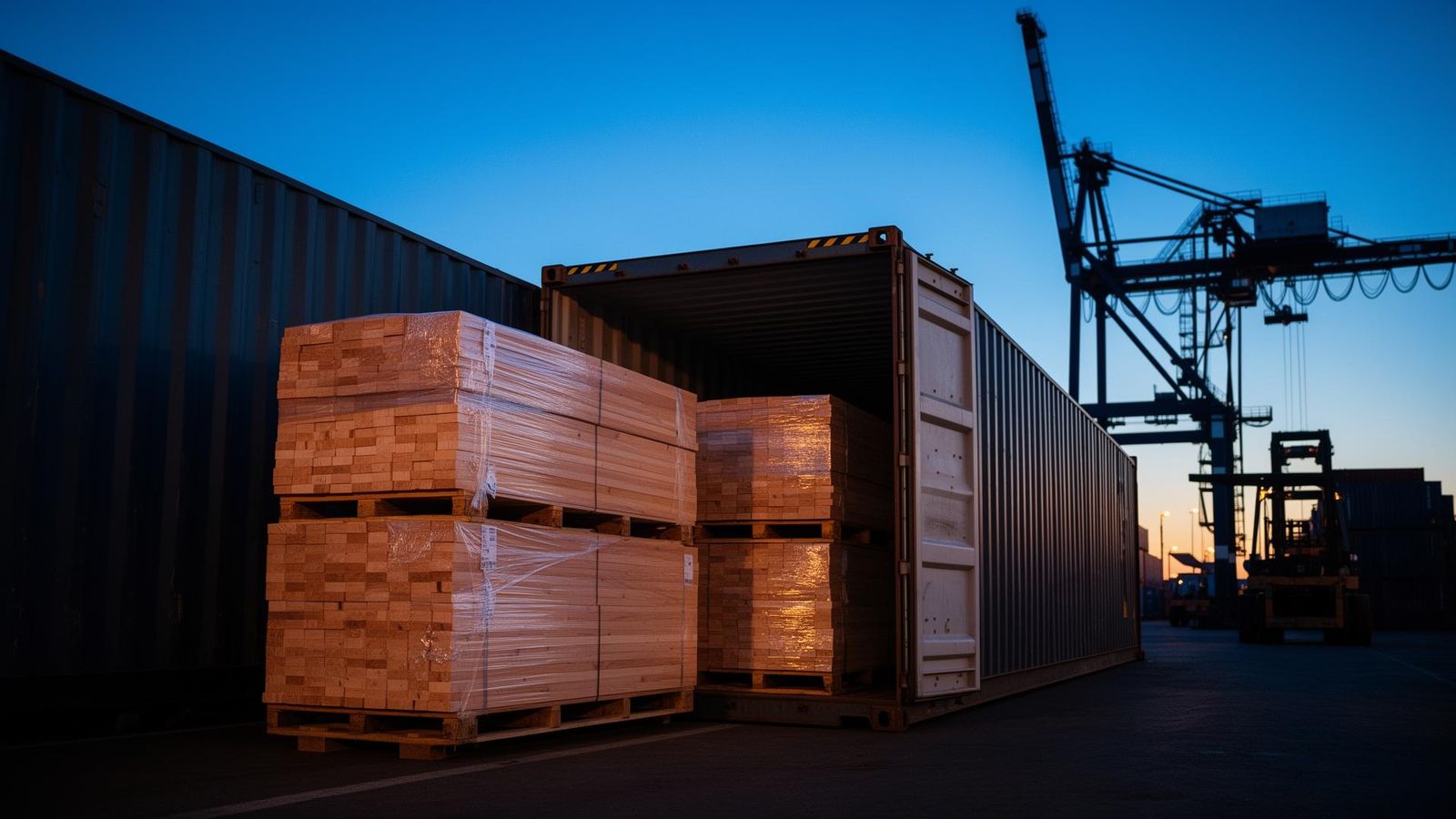
What is beech wood?
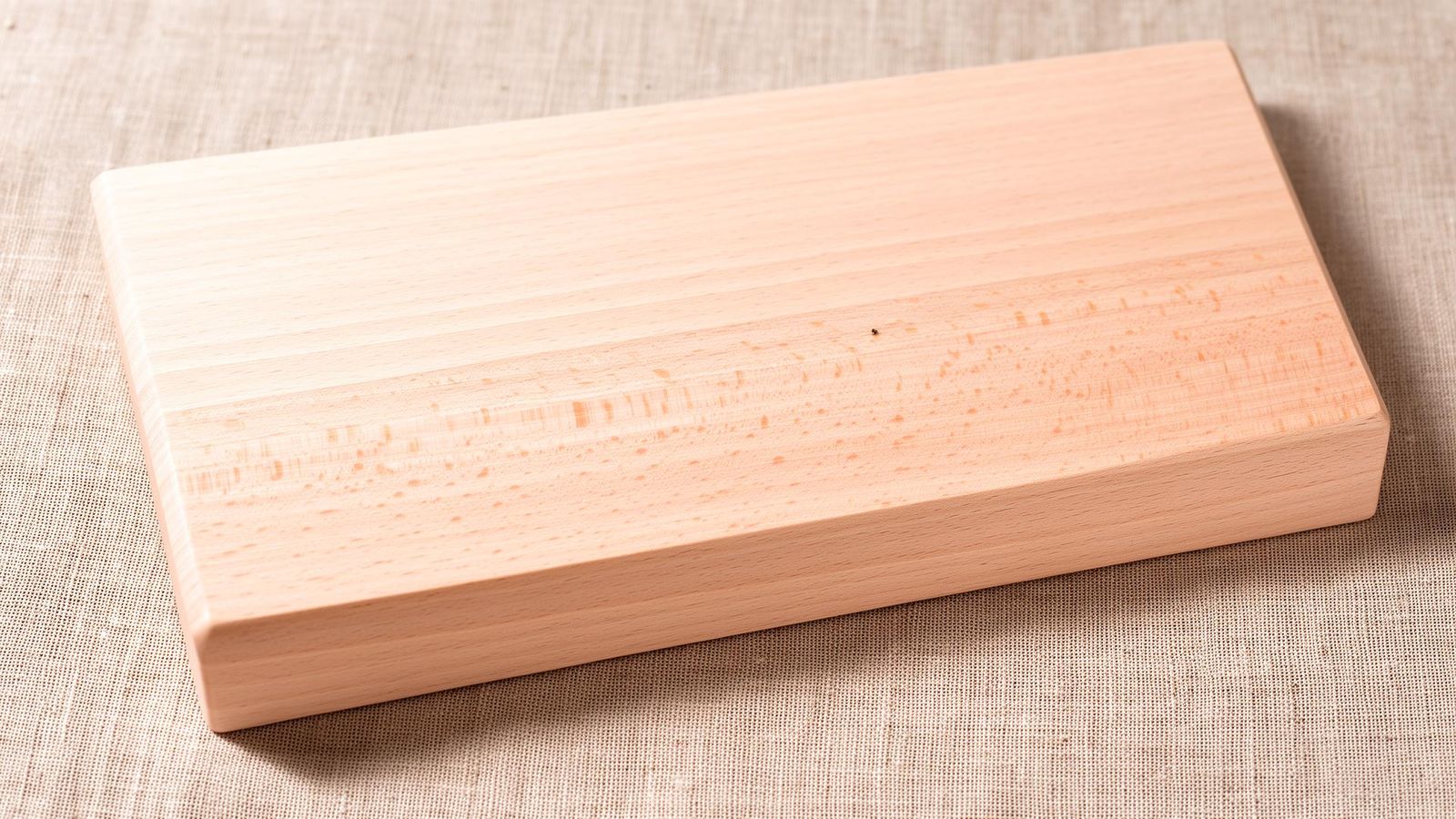
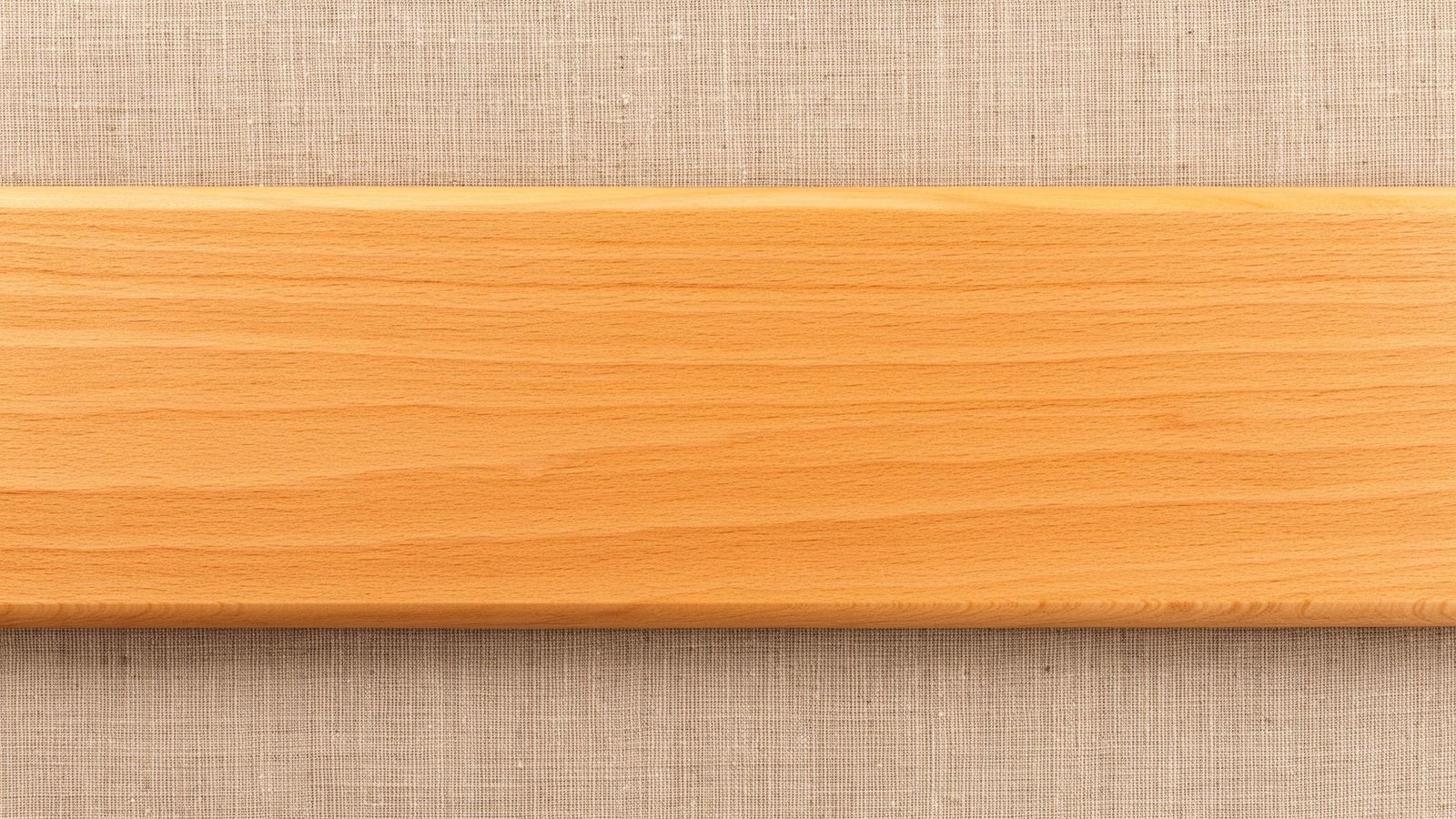
Beech wood is a fine-grained, pale-cream to pinkish hardwood from the Fagus genus, primarily European beech (Fagus sylvatica) and American beech (Fagus grandifolia). It is dense (680–750 kg/m³), hard (Janka ~5,800 N), straight-grained and uniform, with characteristic ray flecks on the quartersawn face. The industrial hardwood of the European furniture, bentwood, plywood, toy and kitchenware trades.
Why is most European beech a pinkish-red colour?
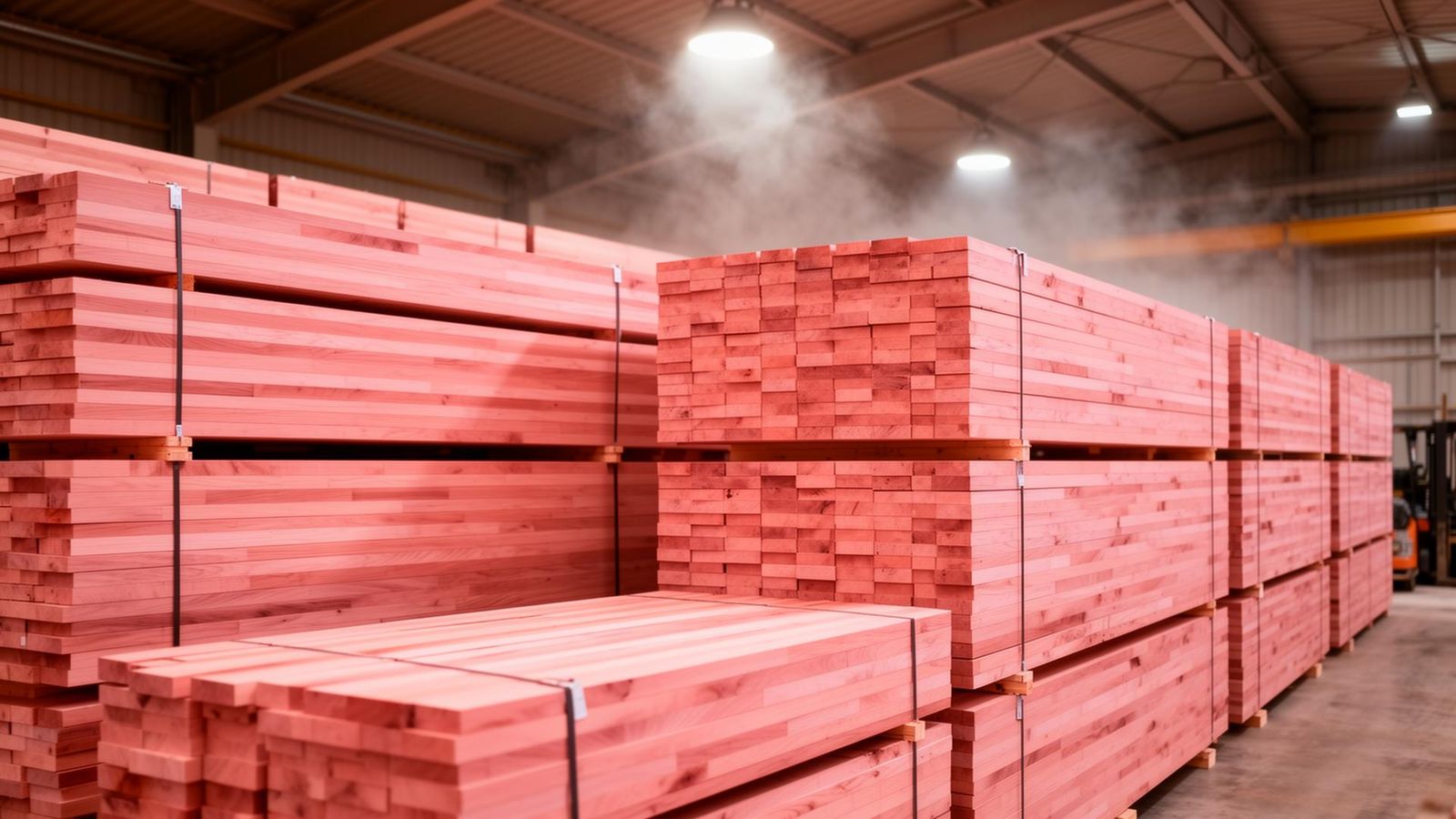
Because it is steam-treated. Green beech logs or boards are loaded into a steam chamber at 95–100°C for 36–72 hours before kiln drying. The heat denatures phenolic compounds, producing a homogeneous warm pinkish-red colour throughout the board and reducing internal drying stress. Steamed beech is the European furniture industry default.
What is the difference between steamed and unsteamed beech?
Colour, stability and finishing behaviour. Steamed beech is pinkish-red, dimensionally more stable post-treatment, accepts stain evenly across heartwood and sapwood, and carries a 5–10% per-m³ premium. Unsteamed beech is pale cream to light yellow, marginally harder, and shows clear heartwood/sapwood colour mismatch under clear finishes. The US market prefers unsteamed; Europe and the GCC import steamed.
Is beech a hardwood?
Yes. Beech is a temperate-climate hardwood from the Fagaceae family, the same family as oak. Density 680–750 kg/m³, Janka hardness ~5,800 N, modulus of rupture ~103 MPa, comparable to European oak and ash in mechanical performance.
What is beech wood used for?
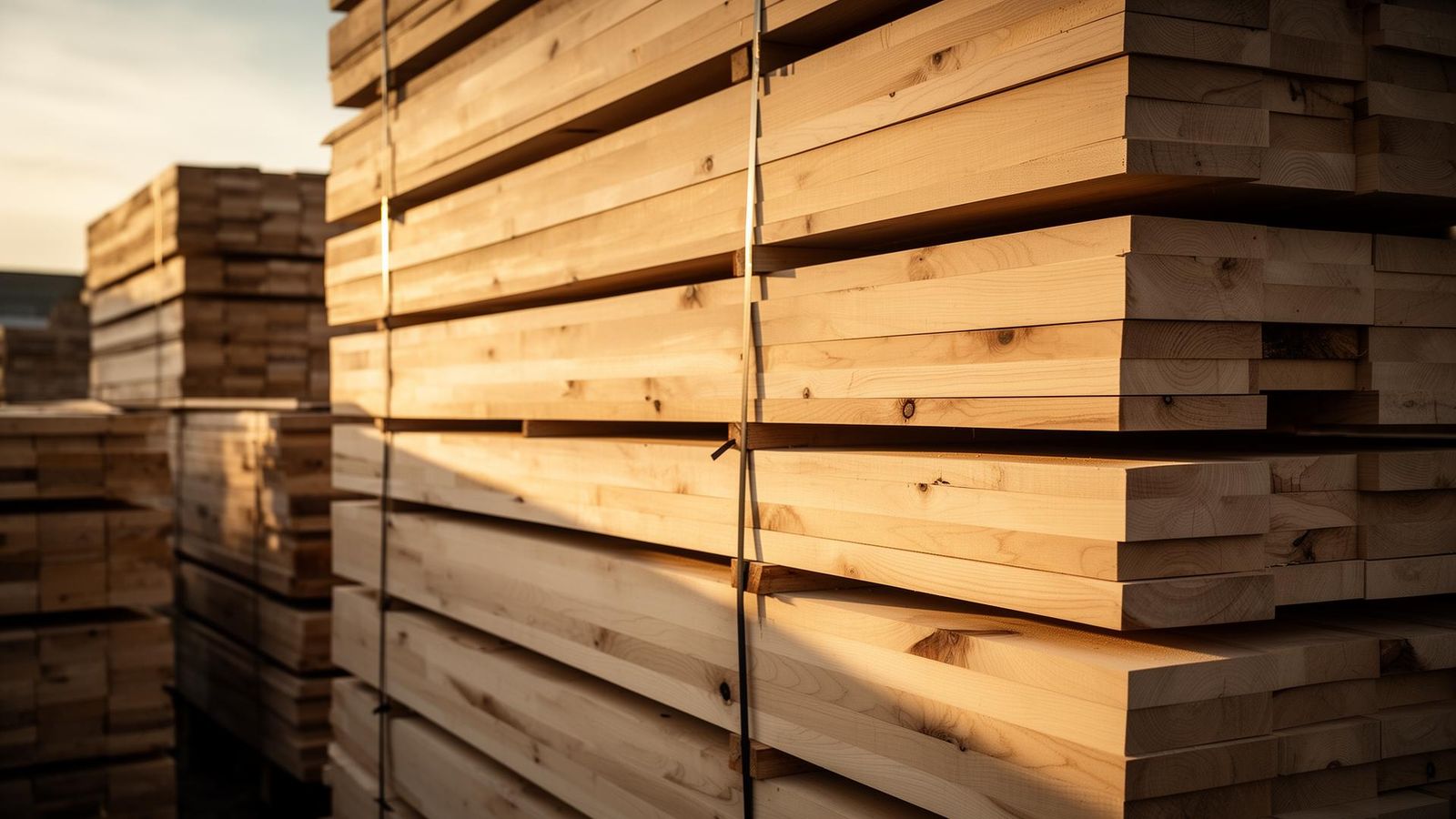
Furniture and cabinetry, bentwood chair frames, plywood multiplex (Buchensperrholz), flooring and stair treads, toys and children's furniture, kitchenware and chopping boards, tool handles, sewing-machine cases, machine jigs and pattern-making. Beech machines to a glass-smooth finish and is the European default hardwood for industrial and furniture applications.
Can beech wood be used outdoors?
Untreated beech is not durable outdoors, it is rated EN 350 class 5 (not durable). For exterior use, beech must be thermally modified (Thermo-Beech, treated at 180–220°C in the absence of oxygen) or pressure-treated. Standard steamed and unsteamed beech is an interior-only timber.
Where does beech wood come from?
European beech (Fagus sylvatica) is sourced from Germany, France, Romania, Croatia, Slovenia, Austria, the Czech Republic and Poland. American beech (Fagus grandifolia) from the USA Appalachian belt and Eastern Canada. Oriental beech (Fagus orientalis) from Turkey, Iran and the Caucasus. TIC Dubai supplies all three across the UAE and GCC.
What thicknesses of beech do you supply?
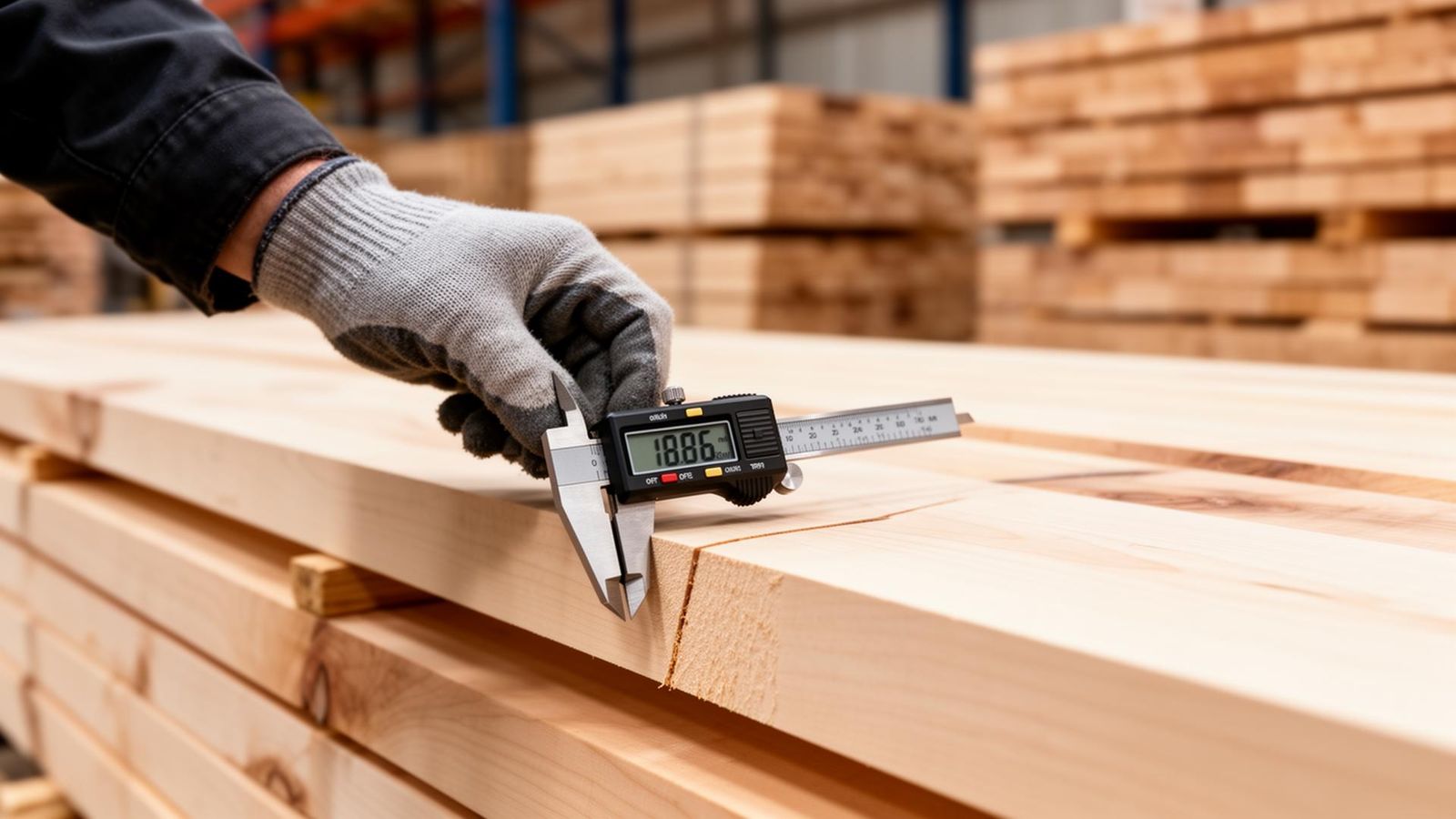
Rough thicknesses 26, 32, 38, 50, 52, 65, 80 and 100 mm. S4S (planed-four-sides) thicknesses 20, 27, 32, 45, 60 and 75 mm net. Custom dimensions on request for kitchen, joinery and furniture programmes.
What grades of beech do you supply?
European grading: A/Prime (clear face), AB (one clear face, minor knots on back), B/Common-1, BC, and C/Industrial. NHLA grading (American beech): FAS, FAS-1F, Selects, 1 Common and 2A Common. Steamed and unsteamed in all grades.
Is European beech better than American beech?
They are mechanically equivalent (density ~700 kg/m³, Janka ~5,800 N). European beech is finer-grained, more uniform, and almost always supplied steamed, the European furniture industry standard. American beech has slightly more pronounced ray fleck on quartered stock and is typically supplied unsteamed under NHLA grading. Specification choice depends on end-use and provenance preference.
Is beech good for furniture?
Yes, beech is the European furniture industry's default hardwood. Excellent machining, glass-smooth finish off the blade, accepts stain evenly (especially steamed), strong glue-up performance, and dimensionally predictable when properly kiln-dried. Used solid and as the core of beech-faced plywood and multiplex.
Why is beech used for bentwood chairs?
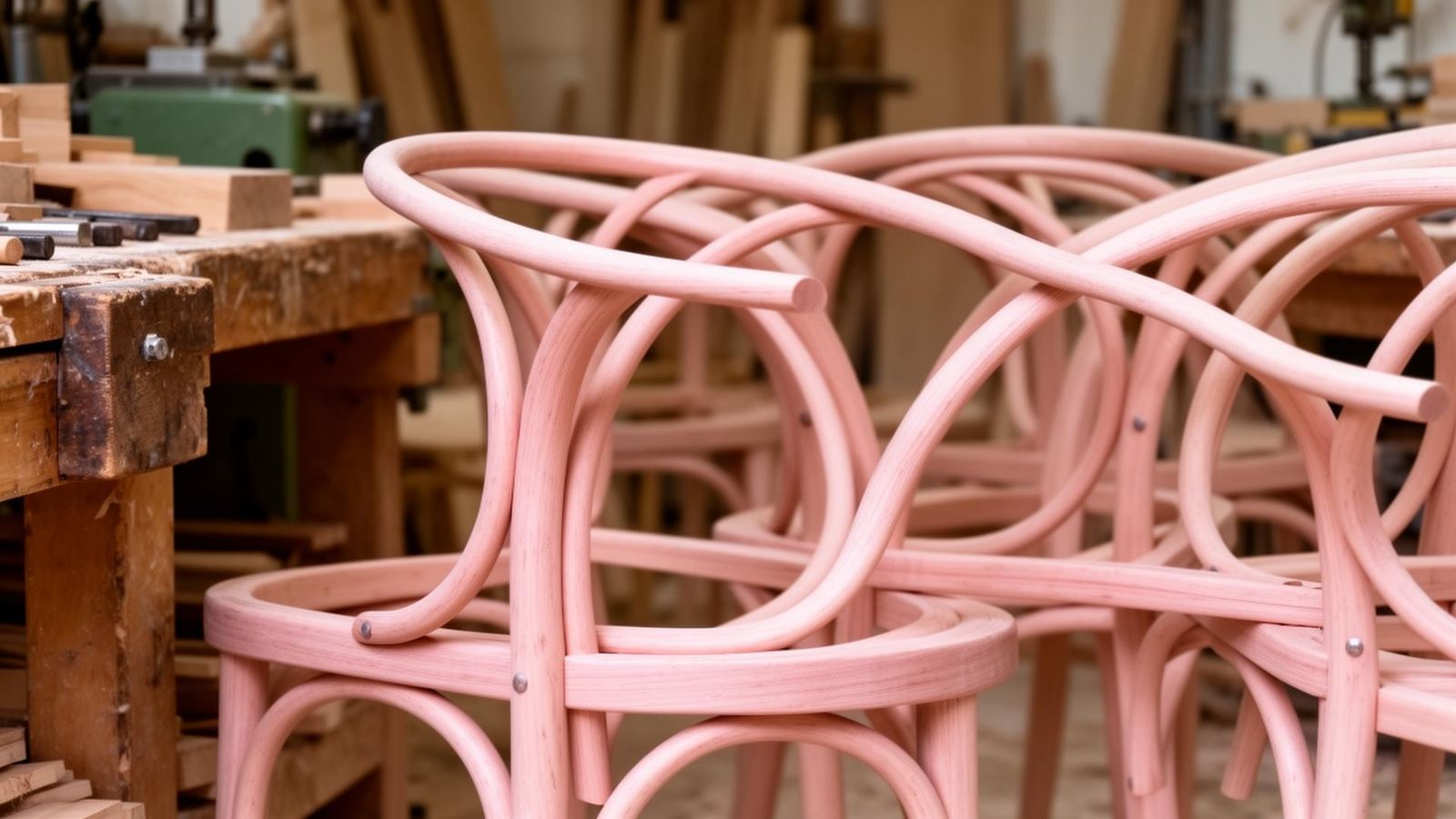
Beech has long, straight, uniform cell structure with low ray-fleck interference, allowing it to bend to tight radii under steam without splitting. The Thonet bentwood chair (1859) established beech as the global benchmark for steam-bent furniture, and it remains the dominant species for bentwood production today.
Is beech wood toxic or food-safe?
Beech is non-toxic, taint-free and steam-sterilisable, which is why it is the European standard for cutting boards, butcher blocks, spatulas, ice-cream sticks, toys and children's furniture. Always specify food-grade beech with the appropriate finish (mineral oil, beeswax) for direct food contact.
How stable is beech wood?
Beech has medium-high movement: radial shrinkage ~5.8%, tangential shrinkage ~11.8% from green to oven-dry. Proper kiln drying, equalisation, conditioning and a controlled installation environment (typical interior 50–65% RH) are essential. Steaming reduces internal stress and improves stability somewhat.
How is beech kiln-dried?
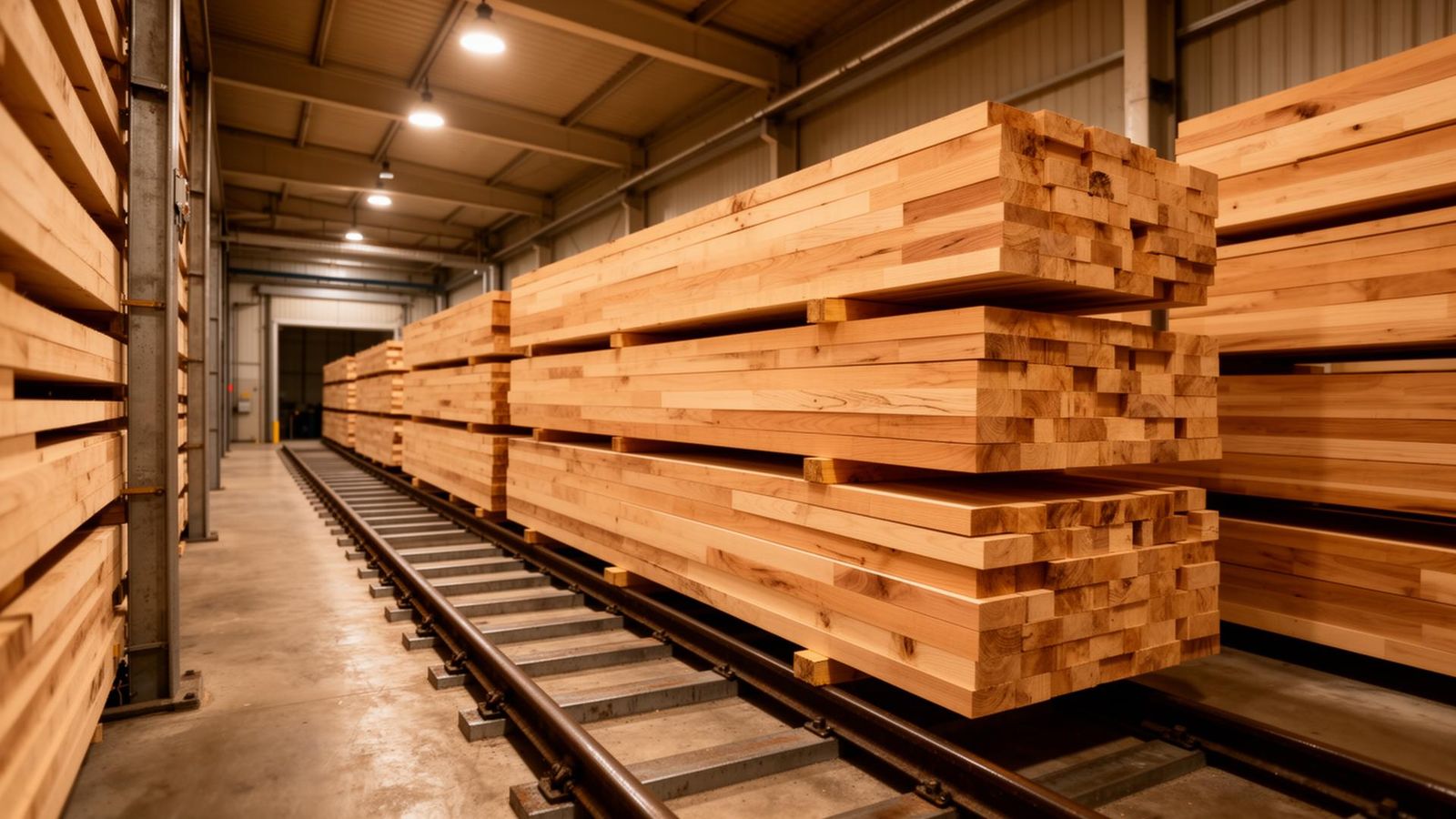
Beech is dried in conventional dehumidifier or vacuum kilns over 14–28 days depending on thickness, with a conservative schedule that protects against checking, honeycomb and colour scorch. Typical commercial moisture content targets: 8–10% for joinery, 10–12% for general furniture, 12–15% for industrial and packaging uses.
Can you supply FSC certified beech wood?
Yes, FSC® and PEFC certification is available across European, American and Oriental beech origins. EUDR (EU Deforestation Regulation) due-diligence statements supplied where required for re-export to European customers.
What lead time should I plan for?
Stock-spec European steamed beech in containers from Croatian or Romanian mills runs 25–35 days to Jebel Ali, Hamriyah, Sohar, Dammam or Hamad. American beech from Baltimore, Norfolk or Charleston typically 30–45 days. Specialty grades or non-standard dimensions: add 30–45 days for mill production.
Which ports do you ship beech to?
Container terminals at Jebel Ali, Hamriyah, Khorfakkan, Sohar, Salalah, Dammam, Jeddah, Hamad, Shuwaikh, Shuaiba, Khalifa Bin Salman, Aqaba and Umm Qasr. European beech ships from Koper, Rijeka, Constanta, Hamburg, Bremerhaven and Antwerp.
What documentation accompanies a beech shipment?
Original Bill of Lading, commercial invoice, packing list with bundle tally, certificate of origin, phytosanitary certificate, fumigation/HT certificate where required, kiln drying certificate, steam treatment certificate, FSC®/PEFC chain-of-custody where applicable, and EUDR due-diligence statement for European-bound onward re-export.
Can you supply beech multiplex / beech plywood?
Yes, beech multiplex (Buchensperrholz) in 9, 12, 15, 18, 21, 24, 27 and 30 mm thicknesses, all-beech cross-bonded plywood for jig-making, machine tooling, work surfaces and structural plywood applications. Available BB/BB, B/BB and B/B face grades.
Do you supply beech finger-jointed components?
Yes, finger-jointed beech blanks, glue-laminated beech panels (Leimholz), edge-glued furniture panels, and KOMO/CTB-certified beech joinery components for European market specifications.
Can beech be thermally modified for outdoor use?
Yes, Thermo-Beech treated at 180–220°C in the absence of oxygen produces a stable, durable timber suitable for exterior cladding, decking and joinery. The treatment darkens the colour to a coffee brown and reduces hardness ~10–15%. We supply thermo-beech on request.
Why source beech wood through TIC Dubai?
Mill-direct relationships across Central and Eastern Europe (Germany, Croatia, Slovenia, Romania, Austria), North America and Turkey. Steamed and unsteamed grades, full size and thickness range, FSC®/PEFC certified, container and FCL loading consolidated to a single discharge port across the UAE, Saudi Arabia, Qatar, Oman, Kuwait, Bahrain and Iraq, with documentation, banking and after-sales claims handled from one office in Dubai.