
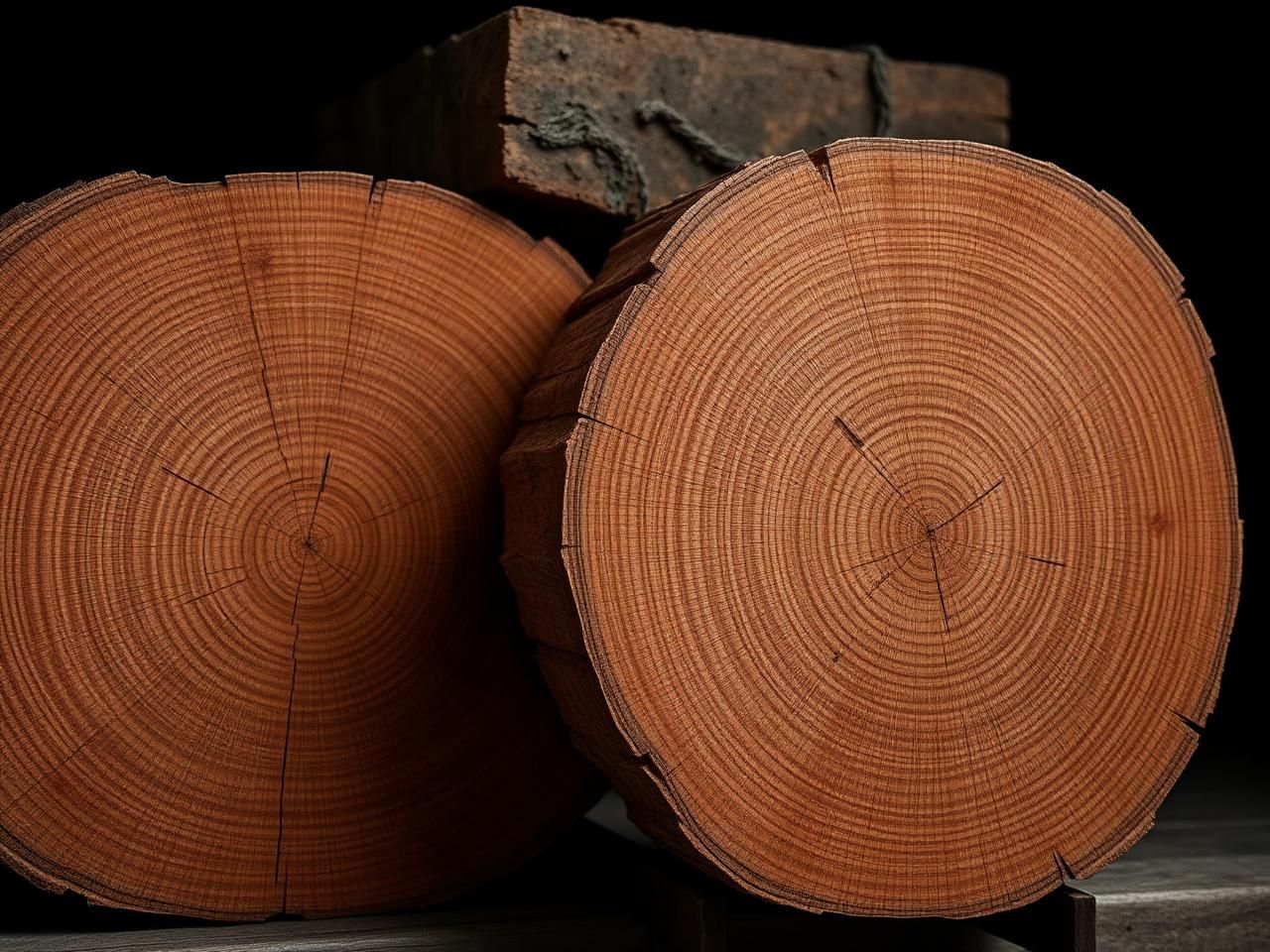
Iroko at a glance
Botanical: Milicia excelsa. Origin: Côte d'Ivoire, Cameroon, Gabon, Congo, Ghana. Density: 640 kg/m³ at 12% MC. Janka hardness: 5,610 N. Heartwood: golden yellow when fresh, deepening to nut-brown with light. Durability class: 1 (very durable, ground contact suitable for ~25 years). Workability: good with carbide tooling; sandstone-like silica inclusions can dull steel blades.
Why iroko replaced teak in GCC joinery
Three commercial drivers: cost (~50% of teak landed), supply (Burmese teak supply restrictions vs reliable West African iroko volumes), and performance (iroko is durability class 1, sufficient for almost all interior and external joinery uses outside true marine decking).
Most "teak" doors, window frames and exterior joinery specified across UAE and Saudi residential and hospitality projects today are produced in iroko. Specifying iroko explicitly on tender drawings avoids the substitution disputes that plague generic "teak" specifications.
Dimensions, drying and grading
Standard cross-sections: 100×100 to 300×300 mm. Lengths: 1.8-6.0 m, with 3.0 m and 4.0 m most-used. KD for joinery (10-14% MC) or AD for resawing (18-22% MC). Grades: FAS (premium clear), Selects, No.1 Common, origin grading rules supplied with offer.
Joinery and furniture applications
Doors and door blanks, window frames and sashes, staircase parts, kitchen cabinetry frames, exterior pergolas and screens, marine-adjacent interior fit-out, premium furniture frames, decking (with caveats, iroko's silica can dull cutters during long deck-board runs).
Storage and machining notes
End-seal within 24 hours of squaring at origin; re-seal cut ends on site. Acclimatise 2-4 weeks before joinery production. Use carbide-tipped tooling and dust extraction, iroko dust is a known sensitiser. Glue with PU or epoxy systems; PVA gives variable results on oily heartwood.