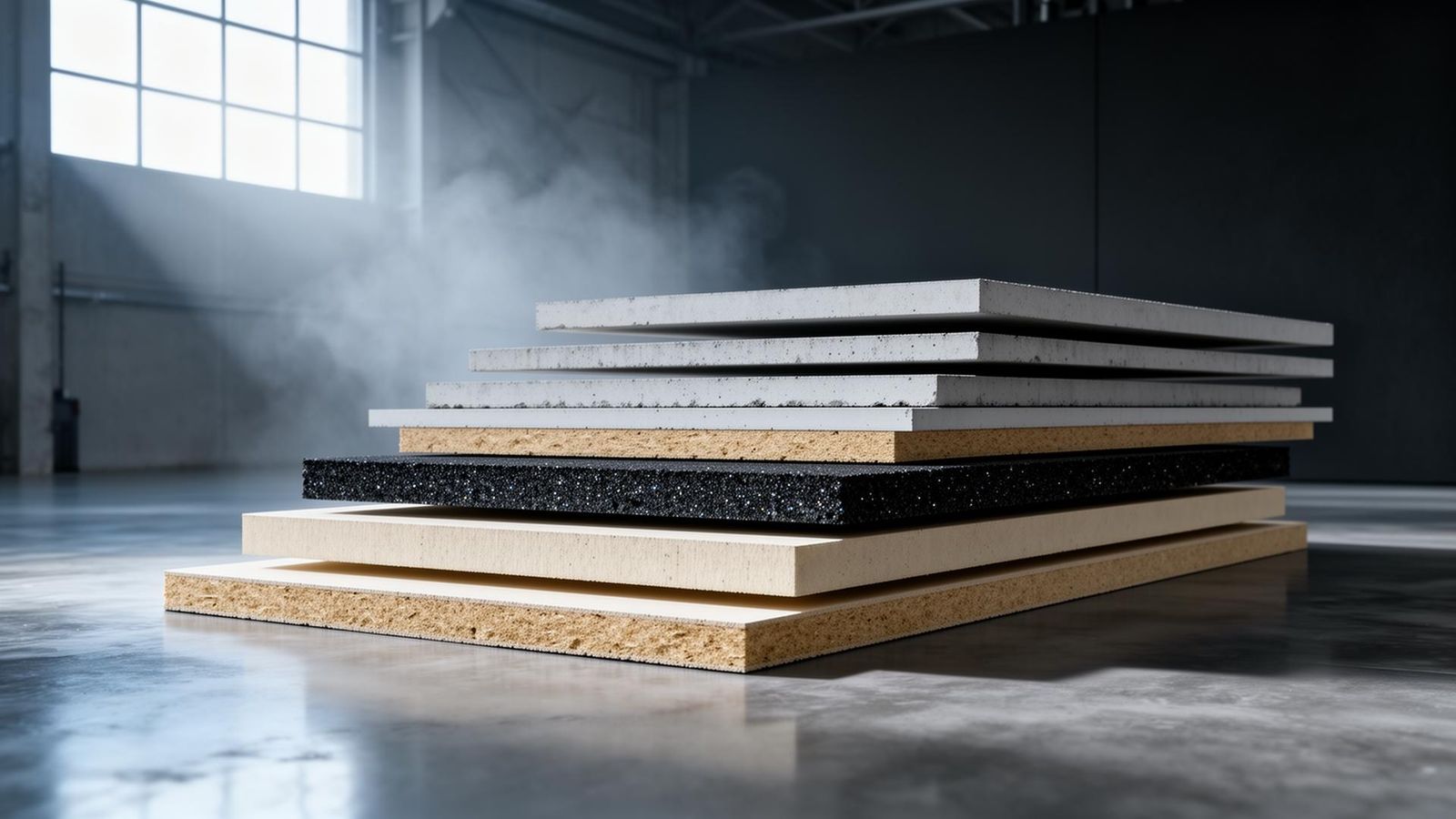
Boards, joints, insulation, engineered for GCC infrastructure.
Bitumen softboard and expansion joint fillers to ASTM D1751 / D1752, fibre cement and calcium silicate boards to EN 12467, the Eco-Friendly Joint Filler Board, and thermal & acoustic insulation to EN 13162, supplied mill-direct across UAE, Saudi Arabia, Qatar, Kuwait, Oman, Bahrain, Egypt, Jordan and Iraq.
The engineered systems that hold a building together.
Construction materials are the engineered products that form the envelope, structure, joints, partitions, insulation and finishing systems of every modern building and infrastructure asset. They are specified by code (ASTM, EN, BS), certified by mill, and inspected on delivery.
TIC Dubai's Construction Materials division covers seven inter-connected families: building envelope materials, expansion joint systems, board products, insulation systems, concrete accessories, infrastructure materials and commercial construction products. Together they cover >80% of the dry-trade scope on a typical GCC tower, infrastructure or industrial project.
Every shipment moves with full mill test certificates, ASTM / EN compliance documents, CE Declarations of Performance where relevant, and consultant-ready submittals, accepted on Aramco, ADNOC, ASHGHAL, RTA, MOMRA, NEOM, Etihad Rail and Egyptian New Administrative Capital projects.
Five core categories. One sourcing partner.
Every category is specified, certified and shipped to GCC consultant standards. Click any card to open the dedicated product authority page.
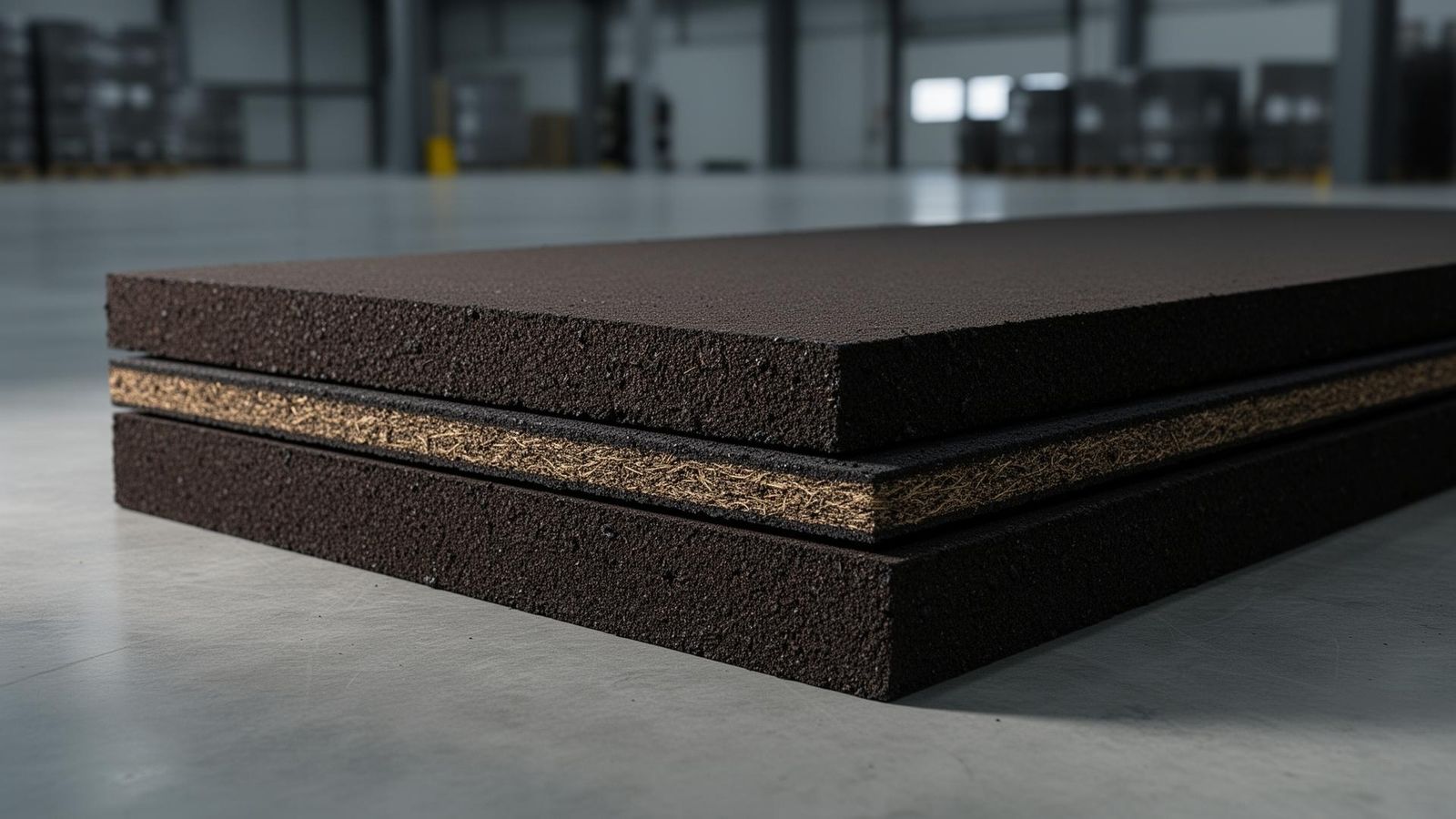
Bitumen Softboard & Expansion Joint Filler Boards
Bitumen-impregnated cellulose fibre expansion joint filler boards for highways, bridges, airports, ports, industrial floors, precast and structural concrete. The GCC default for compression-dominated joints.
- Specs
- 1220 × 2440 mm sheets · 10–25 mm thickness · MTC on every shipment
- Standards
- ASTM D1751 · BS 5212 · DIN 18540
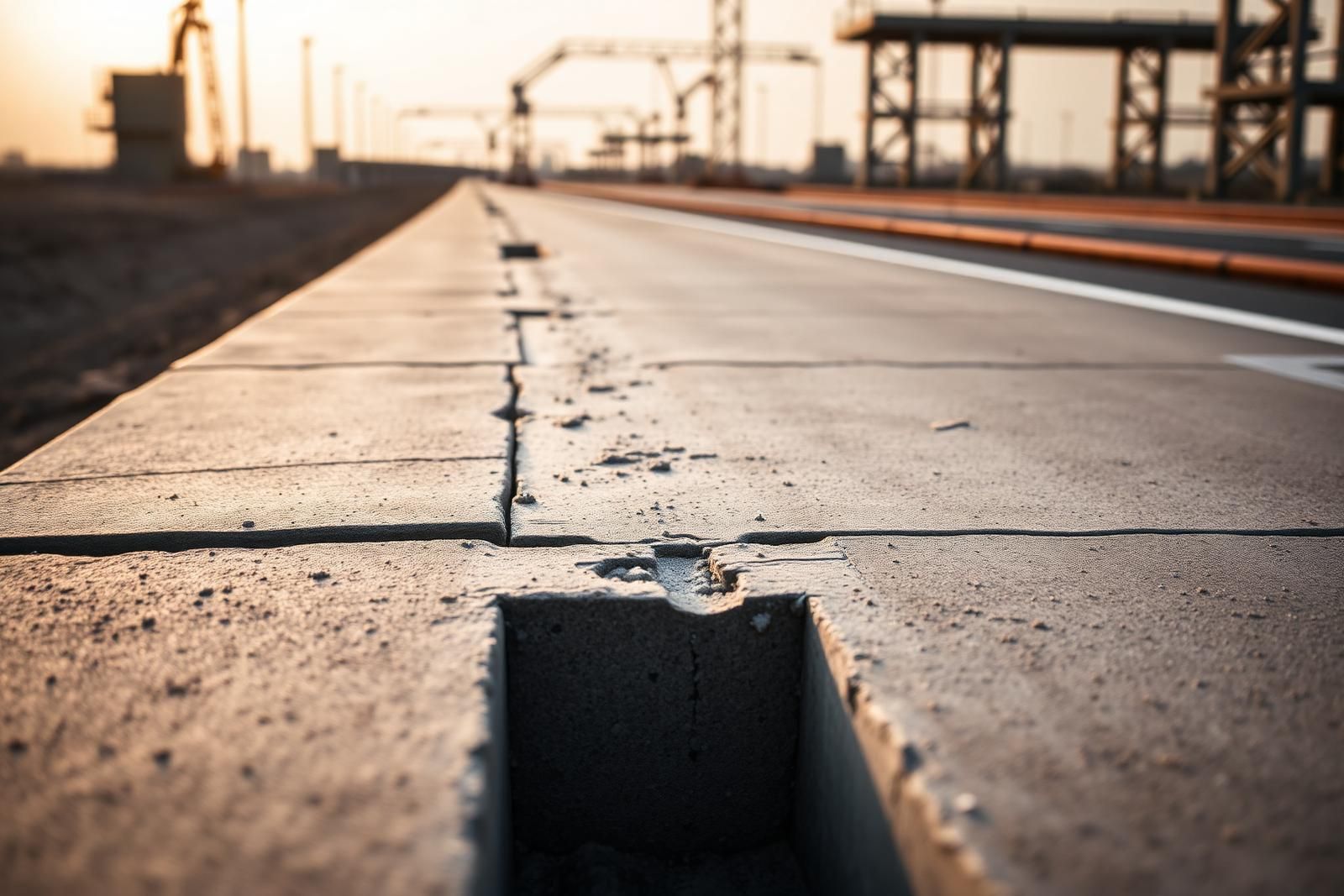
Expansion Joint Filler Boards
Full range of preformed expansion joint fillers supplied to ASTM D1751 (bitumen) and ASTM D1752 Types I, II, III (cork, self-expanding cork, sponge rubber). Selected by application, paving, water-retaining, or architectural.
- Specs
- Custom widths · 10–50 mm thickness · Cork density 192–256 kg/m³
- Standards
- ASTM D1751 · ASTM D1752 (I/II/III) · ASTM D994
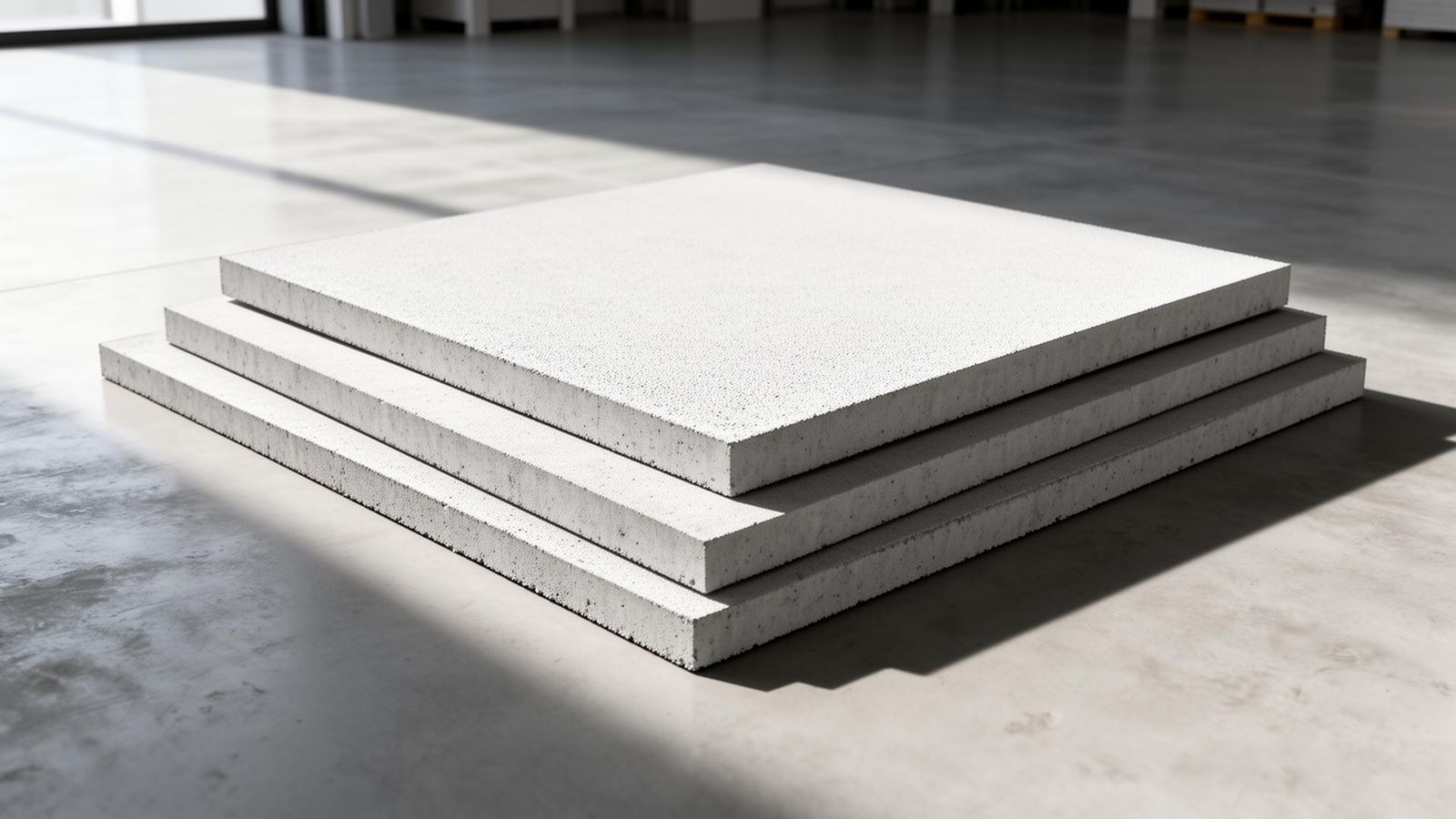
Cement Boards
Non-combustible fibre cement boards for facades, wet-area partitions, fire-rated walls, ceilings and external sheathing. Specified across UAE, KSA and Qatar towers, hospitality, hospitals and infrastructure buildings.
- Specs
- 6 / 8 / 9 / 12 / 15 / 18 mm · 1200 × 2400/3000 mm · Density 1,150–1,450 kg/m³
- Standards
- EN 12467 · ASTM C1186 · BS EN 13501-1 (A1/A2)
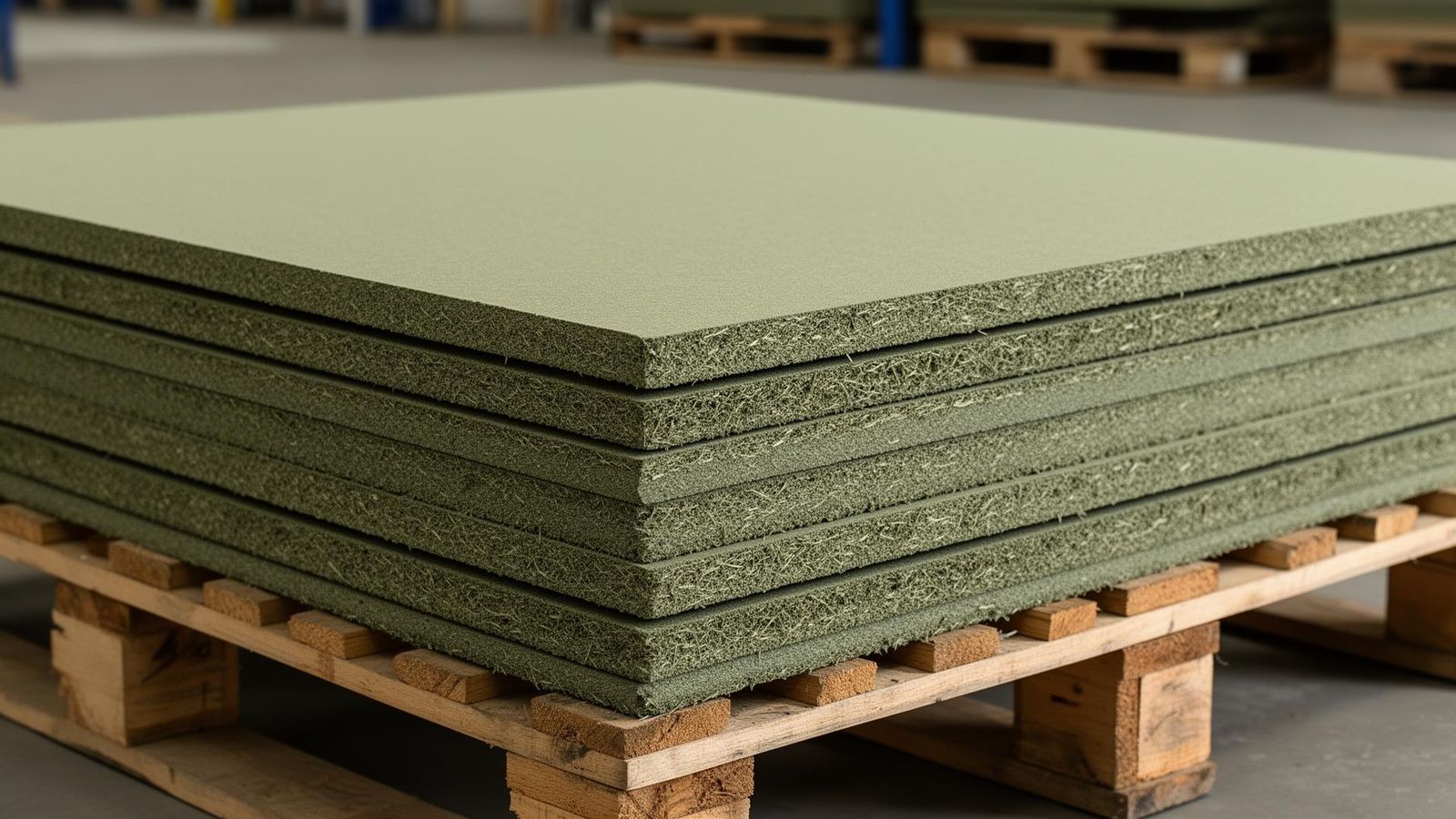
Eco-Friendly Joint Filler Board
Compressed wood-fibre expansion joint filler board, a sustainable, bitumen-free alternative to traditional bitumen softboard for concrete movement joints in highways, bridges, pavements and industrial floors. Aligned with Al Sa'fat, Estidama and SBC 601 green-building intent.
- Specs
- 10–25 mm thickness · 1220 × 2440 mm · Olive-green compressed wood fibre
- Standards
- Compatible with ASTM D1751 / D1752 application logic · Sealant-ready face
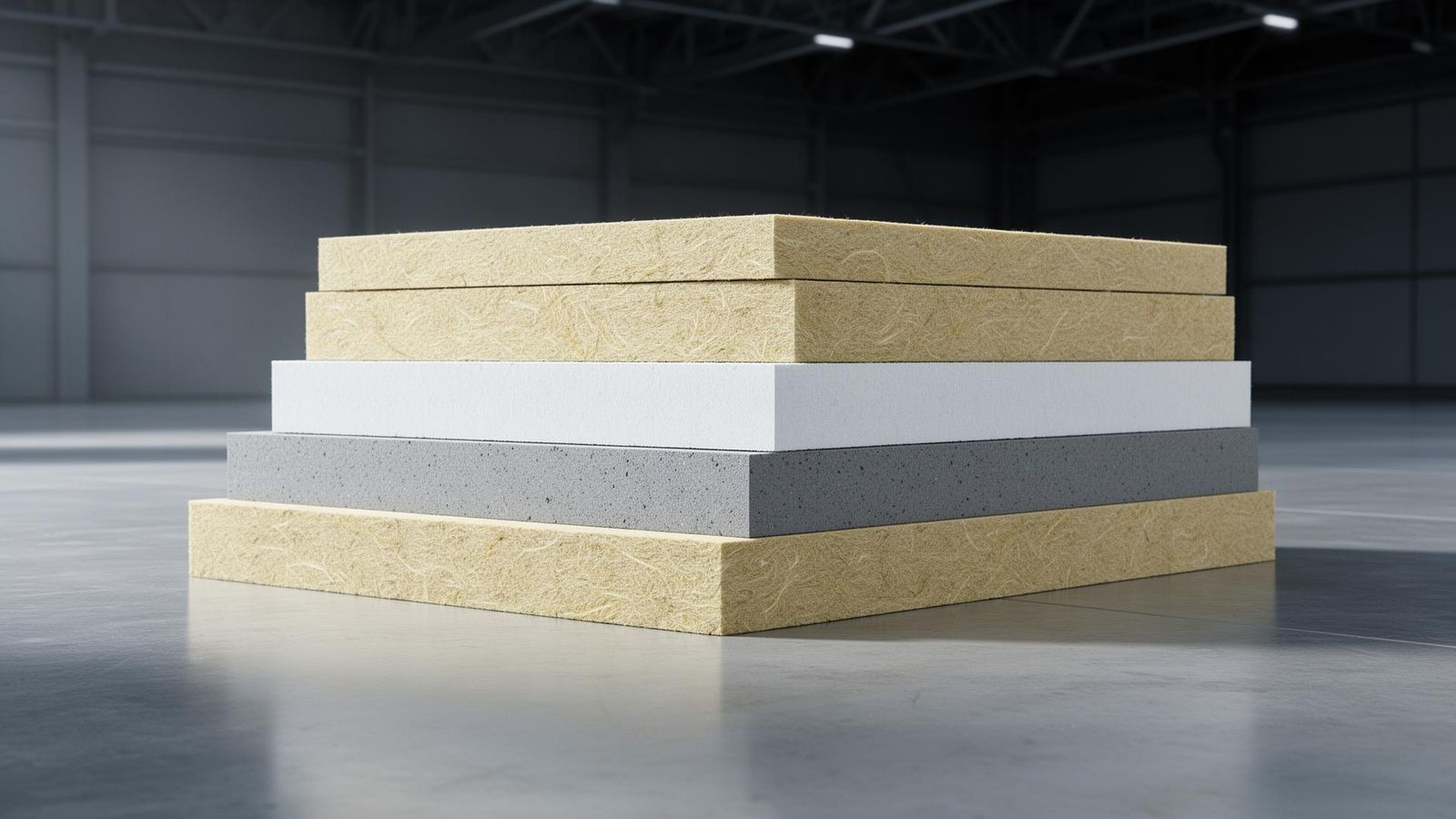
Insulation Boards
Mineral wool, stone wool, XPS, EPS and PIR insulation boards for roofs, walls, floors, HVAC and fire-rated assemblies. Specified for thermal performance, acoustic attenuation and Al Sa'fat / Estidama compliance.
- Specs
- 25–200 mm · Density 30–160 kg/m³ · λ 0.022–0.040 W/m·K
- Standards
- ASTM C612 · EN 13162 · ASTM C518 · BS 476
Seven systems, one specification language.
Building Envelope
Cement boards, insulation boards and external sheathing, the thermal, fire and weather barrier of every modern GCC building.
Expansion Joint Systems
Preformed bitumen, cork and foam fillers, joint sealants and water stops, controlling concrete movement on roads, bridges and structures.
Board Products
Fibre cement, calcium silicate, gypsum, bitumen softboard and the Eco-Friendly Joint Filler Board, engineered boards for every wet, fire, structural and joint sub-system.
Insulation Systems
Thermal, acoustic and fire-grade insulation in mineral wool, stone wool, XPS, EPS and PIR, sized for GCC roof, wall, HVAC and cold-store loads.
Concrete Accessories
Joint fillers, dowel sleeves, water stops, bond breakers and curing accessories for precast yards and ready-mix concrete pours.
Infrastructure Materials
ASTM D1751 boards, geo-fabrics and joint systems specified on Aramco, ADNOC, ASHGHAL and Ministry of Public Works tenders.
Commercial Construction Products
Fire-rated boards, acoustic panels and specialty composites for towers, hospitality, healthcare, retail, mixed-use and government projects.
From highways to towers, the same library of boards.
Highways & Roads
- Transverse expansion joints every 4–6 m
- Longitudinal isolation joints
- Median barrier & kerb joints
- Bridge approach slabs
Bridges & Viaducts
- Deck joint fillers
- Precast segmental joints
- Pier head movement joints
- Modular joint system fillers
Airports & Ports
- Runway & taxiway slabs
- Apron pavements
- Container yard slabs
- Quay-wall & breakwater joints
Rail & Metro
- Station slab joints
- Maintenance depot floors
- Platform copings
- Cut-and-cover tunnel joints
Industrial Facilities
- Warehouse floor isolation
- Heavy-duty production floors
- Loading bay & dock joints
- Steel column base isolation
Water & Power
- Water treatment tank joints
- Reservoir & pump station slabs
- Power plant turbine hall floors
- Substation control building walls
Commercial Towers
- Wet-area partition systems
- Fire-rated shafts & corridors
- Acoustic separation walls
- External facade sheathing
Residential & Mixed-Use
- Bathroom & kitchen substrates
- Apartment-to-apartment fire walls
- MEP riser partitions
- Roof thermal insulation
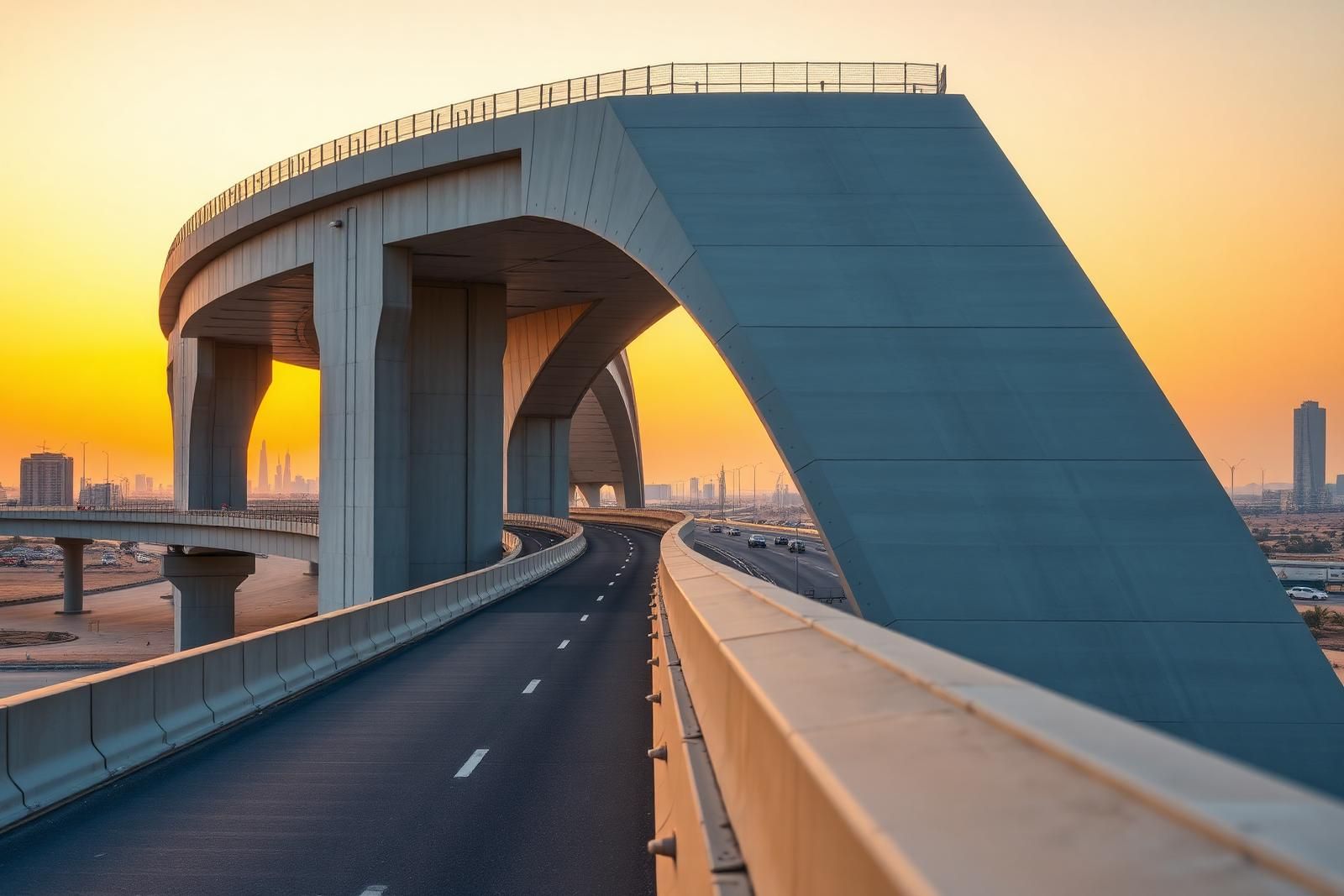
The expansion joint is the bridge.
On every road, runway, viaduct and industrial slab across the GCC, ASTM D1751 bitumen softboard absorbs the daily thermal cycle that would otherwise crack the concrete. TIC Dubai supplies the filler, and the documentation that wins consultant approval.
The consultant's reference shelf.
Twelve standards govern the construction-materials specifications used across the UAE, KSA, Qatar and wider GCC. We supply to all of them with mill-traceable documentation.
| Standard | Description | Scope |
|---|---|---|
| ASTM D1751 | Preformed bituminous expansion joint filler, the GCC default for highway, bridge, airport and infrastructure joints. | Bitumen softboard, all thicknesses |
| ASTM D1752 | Preformed sponge rubber, cork and self-expanding cork expansion joint fillers (Types I, II, III). | Cork & rubber joint fillers |
| ASTM D994 | Preformed expansion joint fillers, bituminous type, recognised on older US-spec projects. | Bitumen fillers (legacy) |
| EN 12467 | Fibre-cement flat sheets, product specification, test methods, classifications and conformity. | Fibre cement boards |
| ASTM C1186 | Standard specification for flat fibre-cement sheets, Grade I/II density and bending strength. | Fibre cement boards |
| BS EN 13501-1 | European reaction-to-fire classification, A1, A2, B, C, D, E, F. Non-combustible boards meet A1 or A2-s1,d0. | Fire performance |
| ASTM E84 / BS 476 | Surface burning characteristics (flame spread, smoke developed) and fire resistance of building materials. | Board & insulation fire ratings |
| ASTM C612 / EN 13162 | Mineral wool / stone wool insulation board specification, thermal conductivity, density, dimensional stability. | Thermal & acoustic insulation |
| ASTM C518 | Steady-state thermal transmission by heat-flow meter, declared λ (W/m·K) for every insulation grade. | Insulation thermal performance |
| BS 5212 | Cold-applied joint sealants for concrete pavements, companion standard to ASTM D1751 bitumen filler boards. | Pavement joint systems |
| DIN 18540 | Sealing of exterior wall joints in building construction with elastic sealants. | Facade & cladding joints |
| ASTM D1037 | Evaluating properties of wood-base fibre and particle panel materials, applied to fibre-based joint filler and softboard panels. | Fibre joint filler & softboard |
The right board for the right problem.
| Application | Recommended Material | Thickness | Note |
|---|---|---|---|
| Highway / airport / bridge expansion joints | Bitumen Softboard to ASTM D1751 | 20–25 mm | Compression-dominated joints. MTC required for ASHGHAL, ADNOC, RTA, MOMRA submissions. |
| Water-retaining structures & STP tanks | Cork Joint Filler to ASTM D1752 Type III | 20–25 mm | Higher recovery on cyclic extension; dimensional stability when wet. |
| Industrial floors & warehouse slabs | Bitumen Softboard to ASTM D1751 | 15–25 mm | Isolation joints at columns and free-edge joints at 4–6 m spacing. |
| Fire-rated walls (EI 60 / EI 90 / EI 120) | 12 mm Fibre Cement Board or Calcium Silicate | Per tested system | Rating is achieved by the complete tested assembly, board + stud + insulation + fixings. |
| Wet areas (bathrooms, kitchens, swimming pools) | 12 mm Fibre Cement Board | 12 mm typical | Cement board on the wet face; gypsum on the dry face of partitions; mineral wool core. |
| Sustainable / green-building expansion joints | Eco-Friendly Joint Filler Board | 20–25 mm | Bitumen-free wood-fibre alternative for projects targeting Al Sa'fat, Estidama, SBC 601 or LEED credits. |
| Thermal insulation, roofs, walls, ducts | Stone Wool / Mineral Wool / XPS / PIR | 50–200 mm | Sized to Al Sa'fat / Estidama / SBC 601 U-value requirements. |
| Acoustic insulation, partitions & ceilings | Mineral Wool 60–80 kg/m³ | 50–100 mm | Choose density and thickness for required Rw (dB) of the partition system. |
Fire-rated, wet-area and thermal, by tested system.
EI 60 / 90 / 120, tested as a complete system.
12 mm fibre cement or calcium silicate on light-gauge steel studs at 600 mm centres, with 50–100 mm stone wool insulation 60 kg/m³ in the cavity. Boards, studs, fixings and joint treatment must match the tested EN 1364 / ASTM E119 system.
ASTM D1751 bitumen softboard, the GCC default.
20–25 mm bitumen softboard installed against formwork before the pour, with a cold-applied polyurethane sealant cap to BS 5212 forming the visible weatherproof joint top. Standard for highways, airports, ports and bridges.
Eight failures every contractor must prevent.
Expansion joint failure
Cement board swelling at edges
Cement board cracking at fixings
Water ingress at facade & wet-area joints
Thermal movement & joint over-extension
Incorrect material selection
Installation mistakes, joint fillers
Site storage issues
Specify, certify, inspect, in that order.
- 01Review the project specification, confirm the standard called out (ASTM D1751, EN 12467, EN 13162) and the consultant's submission format.
- 02Select the material to match the application, bitumen for compression joints, cork for water-retaining, fibre cement for wet/fire walls, mineral wool for thermal envelopes.
- 03Verify standards conformance, request the manufacturer's CE declaration, ASTM compliance certificate and MTC for the production batch.
- 04Confirm thicknesses, sheet sizes, density grade and any fire classification, Class A1 / A2-s1,d0 for non-combustible, EI 60 / EI 90 / EI 120 for partition assemblies.
- 05Inspect at load port or on arrival, visual condition, sheet count, thickness, dimensional check, batch number alignment with the MTC.
- 06Ensure correct site delivery, covered transport, flat-stacked on HT pallets, polythene shrink wrap on humid days.
- 07Store correctly on site, flat on pallets, under shade, raised 100 mm off the ground, rotated FIFO, with daily damage check.
- 08Issue a contractor handover dossier, datasheets, MTCs, fire test reports and submittal approval log for the consultant's records.
Eight checks before the board leaves the pallet.
- 01Material identification against contract spec and approved submittal.
- 02Standard certification, ASTM, EN, BS, and CE declaration of performance where applicable.
- 03MTC traceability, batch number on the sheet matches the MTC and the packing list.
- 04Dimensional check, thickness, length, width, squareness, sheet edge condition.
- 05Density / weight per sheet, verify against the datasheet for insulation and fibre cement.
- 06Fire performance, A1 / A2 declaration for non-combustible, EI rating for assemblies.
- 07Moisture state, boards must be dry, free of staining, swelling, or fungal growth.
- 08Packaging, flat on HT pallets, shrink-wrapped, undamaged corners, intact bar-code labels.
Nine markets, one Dubai office.
Mixed-product containers move through every major GCC discharge port, consolidated to optimise loading and reduce per-pallet freight.
| Market | Discharge Ports | Typical Projects & Authorities |
|---|---|---|
| United Arab Emirates | Jebel Ali · Hamriyah · Khalifa Port · Khorfakkan · Port Rashid | Etihad Rail · RTA infrastructure · ADNOC · DEWA · Expo legacy |
| Saudi Arabia | Jeddah · Dammam · King Abdullah Port · Yanbu · Jubail | NEOM · Diriyah Gate · Aramco · MOMRA roads · Riyadh Metro |
| Qatar | Hamad Port · Doha Port | ASHGHAL Public Works · QatarEnergy · Lusail · stadiums |
| Kuwait | Shuwaikh · Shuaiba · Doha (KW) | Ministry of Public Works · KIPIC · Kuwait North City |
| Oman | Sohar · Salalah · Sultan Qaboos | Duqm SEZ · PDO infrastructure · airport expansions |
| Bahrain | Khalifa Bin Salman Port | MOWMUP roads · BAPCO modernisation · housing |
| Egypt | Alexandria · Damietta · Port Said · Sokhna | New Administrative Capital · Suez Canal Zone · industrial parks |
| Jordan | Aqaba | Aqaba SEZ · highway upgrades · water infrastructure |
| Iraq | Umm Qasr · Khor Al Zubair | Basra reconstruction · power plants · refinery upgrades |
Construction Materials across the GCC and Middle East
Bitumen softboard, cement boards, the Eco-Friendly Joint Filler Board and insulation across GCC infrastructure markets.
Shipments routed through Jebel Ali, Khalifa, Hamad, King Abdulaziz Dammam, Sohar and other major regional ports, coordinated with contractor and procurement schedules.
TIC Dubai supplies bitumen impregnated softboard expansion joint filler, fibre cement boards, the Eco-Friendly Joint Filler Board (sustainable wood-fibre expansion joint filler) and thermal & acoustic insulation boards to infrastructure contractors, civil contractors, precast manufacturers, consultants, developers and government project teams across Dubai, Abu Dhabi, Sharjah, Ras Al Khaimah, Fujairah, Riyadh, Jeddah, Dammam, Doha, Kuwait City, Manama, Muscat, Sohar and Salalah, with shipments routed through Jebel Ali, Khalifa, Hamad, Dammam and Sohar ports.
- Dubai
- Abu Dhabi
- Sharjah
- Ajman
- Ras Al Khaimah
- Fujairah
- Umm Al Quwain
- Al Ain
- Khor Fakkan
- Riyadh
- Jeddah
- Dammam
- Al Khobar
- Jubail
- Yanbu
- Mecca
- Medina
- Tabuk
- Abha
- JAFZA
- DIP
- Dubai Industrial City
- Sharjah Industrial Area
- KIZAD
- Hamriyah Free Zone
- RAKEZ
- SAIF Zone
- Doha
- Lusail
- Al Rayyan
- Mesaieed
- Al Wakrah
- Kuwait City
- Shuwaikh
- Shuaiba
- Ahmadi
- Manama
- Muharraq
- Riffa
- Sitra
- Muscat
- Sohar
- Salalah
- Duqm
- Nizwa
- Amman
- Zarqa
- Irbid
- Aqaba
- Baghdad
- Erbil
- Basra
- Mosul
- Najaf
- Karbala
- Sulaymaniyah
- Kirkuk
- Jebel Ali Port
- Khalifa Port
- Hamriyah Port
- Port Rashid
- Khor Fakkan Port
- King Abdulaziz Port Dammam
- Jeddah Islamic Port
- King Abdullah Port
- Jubail Commercial Port
- Yanbu Commercial Port
- Hamad Port
- Shuwaikh Port
- Shuaiba Port
- Khalifa Bin Salman Port
- Port of Sohar
- Port of Salalah
- Port of Duqm
- Port of Aqaba
- Umm Qasr Port
- Khor Al Zubair Port
Six material trade-offs, side by side.
Bitumen Softboard vs Cork Board
| Property | Bitumen Softboard (D1751) | Cork Board (D1752 Type III) |
|---|---|---|
| Base material | Bitumen-impregnated cellulose fibre | Resin-bonded granulated cork |
| Compression recovery | Moderate | High (cyclic-friendly) |
| Water absorption | < 2% | 5–10% |
| Best joint type | Compression-dominated paving | Water-retaining structures |
| GCC cost index | 100 | 250–400 |
| Typical use | Roads, bridges, airports, industrial floors | Tanks, reservoirs, architectural concrete |
Bitumen Softboard vs Foam Filler
| Property | Bitumen Softboard | Polyethylene / EPDM Foam |
|---|---|---|
| Standard | ASTM D1751 | Proprietary, not D1751 |
| Load transfer | Yes, incompressible at design loads | Crushes under traffic |
| Infrastructure approval | Universally accepted | Limited to interior, light-duty |
| Service life | Design life of the pavement | 5–10 years typical |
| Failure mode | Slow ageing of bitumen binder | Permanent compression set |
| Verdict for highways | Mandatory | Not acceptable |
Cement Board vs Gypsum Board
| Property | Fibre Cement Board | Gypsum Board |
|---|---|---|
| Reaction to fire | A1 / A2 (non-combustible) | A2-s1,d0 (fire-rated gypsum) |
| Wet-area use | Yes, primary wet-face material | Moisture-resistant only, secondary |
| Density | 1,150–1,450 kg/m³ | 650–900 kg/m³ |
| Impact resistance | High | Moderate |
| Tile substrate | Excellent | Not recommended |
| Cost index | 200–300 | 100 |
| Typical use | Wet faces, fire-rated wet shafts, external sheathing | Dry partitions, ceilings, fire-rated dry walls |
Cement Board vs Calcium Silicate Board
| Property | Fibre Cement Board | Calcium Silicate Board |
|---|---|---|
| Reaction to fire | A1 / A2 | A1 |
| Density | 1,150–1,450 kg/m³ | 850–1,100 kg/m³ |
| Bending strength | Higher | Lower per kg |
| Thermal conductivity | 0.20–0.30 W/m·K | 0.18–0.22 W/m·K |
| Best use | Wet area, exterior sheathing, tile substrates | Fire-rated shafts, smoke barriers, dry fire walls |
| Cost index | 100 | 130–170 |
Bitumen Softboard vs Eco-Friendly Joint Filler Board
| Property | Bitumen Softboard | Eco-Friendly Joint Filler Board |
|---|---|---|
| Appearance | Dark brown to black | Olive-green / greenish-grey |
| Composition | Bitumen-impregnated cellulose fibre | Compressed wood fibre, bitumen-free |
| Sustainability | Traditional asphaltic filler | Sustainable, low-emission, recyclable fibre core |
| Weight per sheet | Heavier | Notably lighter |
| Odour & site handling | Asphaltic odour, can stain | Low odour, clean handling |
| Primary function | Expansion joint movement absorption | Expansion joint movement absorption |
| Best fit | Standard ASTM D1751 highway, bridge and floor joints | Green-building, architectural and low-emission specifications |
Insulation Board Types Compared
| Type | Density | λ (W/m·K) | Fire class | Best use |
|---|---|---|---|---|
| Stone Wool | 30–160 kg/m³ | 0.034–0.040 | A1 | Fire-rated walls, roofs, HVAC, acoustic |
| Mineral / Glass Wool | 12–48 kg/m³ | 0.032–0.040 | A1 | Cavity walls, suspended ceilings, ducts |
| XPS (Extruded PS) | 30–45 kg/m³ | 0.030–0.036 | E | Roof inversion, perimeter, cold-store walls |
| EPS (Expanded PS) | 15–35 kg/m³ | 0.034–0.040 | E | ETICS, under-slab, void fill |
| PIR / PUR | 30–45 kg/m³ | 0.022–0.027 | C–E | Sandwich panels, roof, cold-store |
| Cellular Glass | 100–165 kg/m³ | 0.038–0.050 | A1 | Below-grade, cryogenic, roof on uneven decks |
Construction materials: technical reading.
Cornerstone references on expansion joints, fibre cement boards and GCC procurement for specifiers, consultants and contractors.
What Is Expansion Joint Filler Board? Function and Materials
A technical reference on the most-misunderstood line item in concrete construction: the joint filler that lets structures move.
What Is Cement Board? Composition, Standards and GCC Applications
The board that replaced gypsum in wet areas and replaced asbestos in everything else. A technical reference on cement board for GCC construction.
ASTM D1751 vs ASTM D1752: Joint Filler Standards Compared
Two ASTM standards, often confused, sometimes cross-specified. A clear reference on which one covers what.
Bitumen Softboard vs Cork Board: Joint Filler Comparison
Both are preformed compressible joint fillers. Each one wins in a different application. A direct comparison.
Expansion Joint Thickness Selection Guide for GCC Infrastructure
Joint movement is calculable, not guessable. A reference for setting filler thickness across GCC infrastructure conditions.
Common Expansion Joint Failures and How to Prevent Them
Most joint failures are predictable from the specification stage. A practical guide to the failures that consume GCC infrastructure maintenance budgets.
Tested systems & GCC procurement deep dives.
Wet-area, fire-rated, calcium silicate and procurement-flow articles for contractors and consultants ready to specify.
Cement Board vs Gypsum Board: Where Each One Belongs
Two boards used for the same wall but built for opposite environments. A reference for matching board to application.
Cement Board vs Calcium Silicate Board: Specification Reference
Two cementitious-looking boards with different chemistries and different best uses. A technical reference.
Wet Area Wall Systems Explained: Cement Board Behind Tile
Cement board is one layer in a layered system. A reference for how wet-area walls are correctly built in GCC hospitality and residential projects.
Fire Rated Wall Systems Explained: Cement Board Partitions
A fire-rated wall is a tested assembly, not a single product. A reference for how cement board systems achieve 60-240 minute ratings.
Construction Materials Procurement Across the GCC
Lead times, container economics, mill-direct sourcing and the regional logistics layer that quietly decides whether a project hits its concrete pour date.
GCC Ports and the Construction Materials Supply Chain
Port choice quietly drives lead time, demurrage exposure and inland trucking cost. A procurement-side view of GCC logistics for construction materials.
The wider TIC Dubai supply ecosystem.
Bitumen Softboard
Bitumen-impregnated expansion joint filler boards to ASTM D1751.
Cement Boards
Fibre cement and calcium silicate boards, wet area, fire-rated, facade.
Eco-Friendly Joint Filler Board
Sustainable wood-fibre expansion joint filler, a bitumen-free alternative for concrete movement joints.
Insulation Boards
Thermal & acoustic insulation, mineral wool, XPS, EPS, PIR.
Film Faced Plywood
Concrete formwork plywood, brown and black film for high-cycle pours.
Plywood
Birch, hardwood and combi plywood, MR, BWR, BWP glue lines.
Scaffolding & Formwork
Cuplock, ringlock, H-frame and shoring systems for site contractors.
LVL Scaffolding Boards / Scaffold Planks
Engineered LVL scaffold planks for formwork decks, platforms and site access. OSHA certified option available.
Hardware
Wire nails, screws, fasteners and consumables for construction sites.
Structural Steel
Beams, columns, plates and structural sections, EN, ASTM and BS.
Korindo Korinplex
Premium Indonesian film-faced plywood for high-cycle concrete formwork.
Construction Materials: frequently asked.
What are construction materials?
Construction materials are the engineered products used to build the envelope, structure, joints, partitions, insulation and finishing systems of a building or infrastructure project. TIC Dubai's Construction Materials division focuses on board products (bitumen softboard, fibre cement, calcium silicate, the Eco-Friendly Joint Filler Board), preformed expansion joint fillers (ASTM D1751 / D1752), thermal and acoustic insulation, and the specialty composite panels that surround them.
Which construction materials does TIC Dubai supply?
Bitumen softboard and expansion joint filler boards (ASTM D1751 / D1752), the Eco-Friendly Joint Filler Board (sustainable wood-fibre filler), fibre cement boards, calcium silicate boards, mineral wool / stone wool / XPS / EPS / PIR insulation boards, and a future range of acoustic, fire-rated, honeycomb, phase-change, thermal and specialty construction panels.
What is an expansion joint filler board?
A preformed sheet of compressible material installed in a concrete joint to accommodate thermal expansion, shrinkage and live-load movement between adjacent slabs or elements. The filler maintains the joint gap during the pour, then compresses and recovers under service loads. ASTM D1751 covers bitumen-impregnated boards (the GCC default); ASTM D1752 covers cork and rubber types.
What is bitumen softboard?
A 10–25 mm cellulose fibre board impregnated with asphaltic bitumen, conforming to ASTM D1751. It is the standard expansion joint filler on roads, highways, bridges, airports, ports, industrial floors and structural concrete across the GCC. Supplied in 1220 × 2440 mm sheets with full mill test certification.
What is ASTM D1751?
The American Society for Testing and Materials standard for 'Preformed Expansion Joint Filler for Concrete Paving and Structural Construction (Non-extruding and Resilient Bituminous Types).' It specifies maximum compression, recovery, extrusion, water absorption and density limits for bitumen-impregnated filler boards.
What is ASTM D1752?
ASTM D1752 covers preformed sponge rubber, cork and recycled PVC expansion joint fillers in three types: Type I (sponge rubber), Type II (self-expanding cork), Type III (resin-bonded cork). It is the alternative to D1751 for water-retaining structures and architectural concrete.
What is a cement board?
A flat board made from Portland cement, mineral fillers and cellulose or synthetic reinforcement, manufactured to EN 12467 or ASTM C1186. Cement boards are non-combustible (Class A1 / A2), moisture-resistant and dimensionally stable, used for wet-area partitions, fire-rated walls, external sheathing and tile substrates.
What is calcium silicate board?
A board made from silica, calcium and reinforcing fibres, autoclaved into a stable mineral matrix. Fully non-combustible (A1), lower density than fibre cement, with superior fire-rating performance, used in fire-rated shafts, smoke barriers, lift lobbies and dry fire walls.
What is the Eco-Friendly Joint Filler Board?
An expansion joint filler board manufactured from compressed wood fibres, a sustainable, bitumen-free alternative to traditional bitumen softboard. Olive-green in appearance, compressible, resilient and dimensionally stable, it is used for concrete movement joints in highways, bridges, pavements and industrial floors, and supports submissions under Al Sa'fat, Estidama, SBC 601 and LEED.
What is an insulation board?
A pre-formed rigid or semi-rigid panel of mineral wool, stone wool, glass wool, XPS, EPS, PIR or cellular glass, manufactured to EN 13162 / ASTM C612, and selected for declared thermal conductivity (λ in W/m·K), density, fire class and dimensional stability.
Which expansion joint filler should I use on a highway?
ASTM D1751 bitumen softboard at 20–25 mm thickness, installed at every transverse joint (typically 4–6 m spacing) and at longitudinal isolation joints. This is the GCC default and is universally accepted by ADNOC, RTA, MOMRA, ASHGHAL and Ministry of Public Works tenders.
Which filler should I use in a water-retaining structure?
ASTM D1752 Type III resin-bonded cork, it has high recovery on cyclic extension and remains dimensionally stable when wet. Bitumen softboard is acceptable on water-retaining roofs and slabs, but cork is preferred for joints below the water line.
What thickness of bitumen softboard do I need?
10–12 mm for light-duty interior slabs, 15–20 mm for standard roads and warehouses, 20–25 mm for highways, airports, bridges and heavy industrial floors, and 30–40 mm at major isolation joints. The structural engineer specifies the thickness based on the design movement, with reference to ACI 224.3R.
Can bitumen softboard be used in airports?
Yes, ASTM D1751 bitumen softboard is the standard expansion joint filler on airport runways, taxiways and aprons globally. For fuel-resistance, a project-specific certification may be requested by the consultant; supplementary fuel-resistant systems are added where required.
Is cement board fire-rated?
Cement board is non-combustible (reaction-to-fire Class A1 or A2-s1,d0) but a fire-rated wall is rated as a tested assembly, board + studs + insulation + fixings + joint treatment. EI 60 / 90 / 120 ratings are achieved by complete systems tested to EN 1364 or ASTM E119.
Can I use cement board on a bathroom wall?
Yes, 12 mm fibre cement board on the wet face of the partition is the GCC standard. Combine with a 50–75 mm steel stud, mineral wool insulation core, and 12.5 mm gypsum on the dry corridor face. Tile is bonded directly to the cement board with cement-based adhesive.
What is the difference between cement board and gypsum board?
Cement board is denser (1,150–1,450 kg/m³), water-resistant, used on wet faces and external sheathing. Gypsum board is lighter (650–900 kg/m³), used on dry partitions, ceilings and fire-rated dry walls. Most partitions use both, cement board on the wet face and gypsum on the dry face.
What insulation should I use on a GCC roof?
Mineral wool or stone wool 60–100 kg/m³ at 80–150 mm thickness for inverted roofs and warm roofs; XPS 30–45 kg/m³ at 50–100 mm for inverted insulation; PIR for sandwich panel roofs. Final thickness is set by the project U-value target (Al Sa'fat, Estidama, SBC 601).
What insulation should I use for HVAC ducts?
Stone wool or fibreglass duct wrap 40–60 kg/m³ at 25–50 mm thickness, with reinforced foil facing. For chilled-water lines, closed-cell elastomeric or PIR. All insulation must meet local fire codes, A1 / A2-s1,d0 in concealed spaces.
What is acoustic insulation and which board do I use?
Acoustic insulation absorbs sound energy inside a partition cavity, raising the Rw (weighted sound reduction index) of the wall. Mineral wool 60–80 kg/m³ at 50–100 mm thickness in a stud cavity is the GCC standard for apartment-to-apartment, hotel, hospital and office partitions.
What is the difference between thermal and acoustic insulation?
Thermal insulation is selected on declared λ (W/m·K), the lower the value, the better the thermal performance. Acoustic insulation is selected on density and air-flow resistivity, typically 40–80 kg/m³ mineral wool. Many products perform both functions; the selection criterion changes by application.
How do I store cement board on site?
Flat on level pallets, raised 100 mm off the ground, under cover, in dry well-ventilated areas. Never stand boards on edge for long periods. Wrap pallets in shrink wrap if rain is forecast. Rotate FIFO. Damaged or wet boards must be set aside and tested before installation.
How do I store bitumen softboard on site?
Flat on pallets, raised off the ground, under cover, away from direct heat sources. Bitumen softens at high temperatures, so avoid stacking in full GCC summer sun. Maximum stack height should not exceed the manufacturer's recommendation (typically 1.2 m).
How do I store insulation boards on site?
Flat on pallets, raised, under cover, in shrink wrap until the day of installation. Avoid moisture pickup, wet mineral wool loses thermal performance. XPS / EPS must be protected from UV (degrades within weeks of direct sun exposure).
What is the lead time for construction materials from TIC Dubai?
Bitumen softboard, cement board and standard insulation: 4–8 weeks from order confirmation to discharge at GCC ports. Specialty fire-rated systems and large-format facade boards: 8–12 weeks. Stock items: same week dispatch where available.
Do you supply mill test certificates with every shipment?
Yes. Every container of bitumen softboard, cement board, calcium silicate, the Eco-Friendly Joint Filler Board and insulation board ships with the manufacturer's mill test certificate, batch records, CE Declaration of Performance (where applicable), and ASTM / EN compliance documentation suitable for consultant submission.
Can I mix construction materials in a single container?
Yes. Most GCC projects consolidate bitumen softboard, cement board, insulation and Eco-Friendly Joint Filler Board volumes in one 40' container. We optimise the loading plan to maximise utilisation and minimise per-m² freight.
Which countries does TIC Dubai cover?
UAE, Saudi Arabia, Qatar, Kuwait, Oman, Bahrain, Egypt, Jordan and Iraq, full GCC plus Levant and Mesopotamia. Material flows through Jebel Ali, Dammam, Jeddah, Hamad, Sohar, Aqaba, Alexandria, Sokhna and Umm Qasr.
Which GCC infrastructure projects accept TIC Dubai materials?
ASTM D1751 bitumen softboard, cement boards and insulation supplied by TIC Dubai meet Aramco, ADNOC, ASHGHAL, NEOM, Etihad Rail, DEWA, RTA, MOMRA, KIPIC, MOWMUP and Egyptian New Administrative Capital specifications, subject to project-specific submittal approval.
How do I submit construction material samples for consultant approval?
We dispatch sample sheets cut to A4 or 300 × 300 mm with the production batch MTC, datasheet, ASTM / EN certificate and CE declaration. Most consultants approve within 5–10 working days; we can also coordinate site mock-ups for tower facade and wet-area systems.
Is bitumen softboard the same as a bituminous waterproof membrane?
No, they look similar but serve different functions. Bitumen softboard is a rigid, low-extruding joint filler. A bituminous membrane is a flexible, fully waterproof sheet. Don't substitute one for the other; the joint will leak and the membrane will be crushed.
What is the fire rating of mineral wool insulation?
Stone wool and mineral wool achieve Euroclass A1, fully non-combustible, contributing zero to fire load. They are the GCC default for fire-rated walls, escape stairs, lift shafts and high-rise envelopes.
Do you supply Estidama / Al Sa'fat compliant materials?
Yes, our insulation, cement board and Eco-Friendly Joint Filler Board ranges include products with the EPD, CDP and recycled-content documentation required for Al Sa'fat (Dubai), Estidama (Abu Dhabi) and SBC 601 (Saudi Arabia) green-building submissions.
What is BS EN 13501-1 fire classification?
The European reaction-to-fire classification: A1 (non-combustible, no contribution), A2 (limited combustibility), B (very limited), C–E (combustible, varying), F (no performance determined). Most GCC fire codes require A1 or A2-s1,d0 for concealed envelope materials.
How is fire resistance (EI rating) of a wall different from fire reaction (A1) of a board?
Reaction is the board's behaviour as a material, A1 means it does not burn. Resistance is the assembly's ability to stop fire spread for a set time, EI 60 (one hour), EI 90, EI 120, EI 240, tested on the complete wall system. A non-combustible board does not automatically give a one-hour wall; the assembly does.
What is the cost premium for FSC / sustainable construction boards?
Most fibre cement, calcium silicate, mineral wool and stone wool products are inherently low-impact (mineral content > 70%). Specialty FSC-certified cellulose substrates and EPD-declared products typically carry a 5–15% premium over standard production.
Can construction materials from TIC Dubai be used on Aramco / ADNOC projects?
Yes, our bitumen softboard, cement board and insulation ranges meet the relevant ASTM, EN and BS standards specified in Aramco SAES and ADNOC technical specifications. Project-specific submittal and inspection (TUV, SGS, Bureau Veritas) are coordinated by TIC Dubai on request.
How do I read a fibre cement board datasheet?
Look for: thickness range, density (kg/m³), bending strength (MPa) per EN 12467, reaction-to-fire class (A1 / A2), water vapour resistance, moisture movement (%), thermal conductivity (W/m·K) and recommended fixing centres. Cross-check the declared values against the project spec.
What does 'tested assembly' mean for fire-rated walls?
A fire-rated wall is rated only as the complete tested system: studs of declared gauge and centres, insulation of declared density and thickness, boards of declared thickness and manufacturer, fixings of declared type and spacing, and joint treatment as detailed. Substituting any component voids the rating.
Can I install bitumen softboard in cold weather?
Yes, bitumen softboard is dimensionally stable from 0 °C to over 60 °C. In sub-zero conditions store at room temperature before installation; in high-summer GCC temperatures store in shade until use to avoid surface softening.
How is the joint sealant chosen for bitumen softboard?
Cold-applied polyurethane or polysulphide sealants to BS 5212 are standard for horizontal pavement joints; silicone sealants to BS 5889 for vertical and architectural joints. The sealant fills the top 20–30 mm of the joint above the bitumen filler, forming the visible weatherproof cap.
Do you supply construction materials with carbon footprint declarations?
Yes, EPDs (Environmental Product Declarations) to EN 15804 are available for most mineral-wool, stone-wool, fibre cement and calcium silicate products, supporting LEED, BREEAM, Estidama and Al Sa'fat submissions.
Do you keep stock in Dubai?
TIC Dubai is a mill representation and international procurement company. Rather than holding warehouse stock, we coordinate factory-direct shipments sized to your project and consolidate deliveries against your programme.
Can I buy a few sheets or a single length?
Our supply model is built around container-load and project quantities. For small retail requirements, a local stockist will serve you faster; for bulk, project or recurring procurement, we're the right partner.
Do you supply containers directly from the factory?
Yes. Every enquiry is quoted mill-direct, with forward production booking, third-party inspection and shipment coordinated by our procurement team, from FOB origin through to your discharge port.
Can you support recurring procurement?
Yes. Long-term supply agreements and forward production bookings are the core of what we do for importers, contractors, distributors and EPC firms across the GCC and wider Middle East.
What is your minimum order?
Typically one FCL container per specification, though this varies by product and mill. Share your requirement and we'll confirm the mill's MOQ, lead time and indicative pricing.
Factory-Direct Supply Model.
TIC Dubai operates as a mill representation and international procurement partner. Every order is coordinated directly with a verified overseas manufacturer and shipped in container quantities against your project specification.
We do not maintain local warehouse stock. Products are supplied directly from carefully selected international manufacturing partners.
- Direct mill sourcing
- Container-load shipments
- Forward production bookings
- Project-based supply
- International procurement
- Mill-direct pricing
- Consistent, certified quality
- Long-term supply partnerships
Who we work with.
TIC Dubai partners with organisations that specify, import or build at project scale, across the UAE, GCC, Levant, Africa and wider Middle East.
How our supply model works best.
A quick view of where TIC Dubai adds the most value, and where a local stockist may serve you faster.
Container, project & repeat procurement.
- Container orders
- Factory bookings
- Project supply
- Repeat procurement
- Long-term contracts
- Bulk purchasing
Retail, spot & same-day pick-ups.
- Retail-quantity purchases
- Same-day requirements
- Spot warehouse pick-ups
If your requirement sits on the right, a local stockist is likely to serve you faster. We're happy to point you in the right direction.
Discuss your project supply requirement.
Tell us product, dimensions, project volume and destination. We revert with factory-direct options, container lead times and indicative pricing within one working day, with consultant-ready submittals.