Engineering-grade steel for GCC mega-projects.
Mill-direct H beams, I beams, hollow sections, plates and pipes, supplied to contractors, fabricators and EPC firms across the UAE, Saudi Arabia, Qatar, Oman, Kuwait, Bahrain, Egypt, Jordan and Iraq. EN, BS, ASTM, JIS, GB standards with full mill test certification.
A structural steel division built for GCC infrastructure.
From the S355 H-beam framing a Riyadh tower, to the A992 wide-flange erected on a Dubai metro station, to the Q355 hollow sections trussing a Doha stadium roof. Every mega-project rests on the same question: which grade, which section, which standard, which mill.
TIC Dubai's steel division delivers that decision: S235 to S460, A36 to A992, Q235 to Q460, JIS SS400 to SM490, with mill test certification, EN 10204 3.1 as standard, and 3.2 third-party inspection on indent, from a single trial container to full multi-thousand-tonne project programmes.
Sections. Bars. Plates. Hollow. Pipes.
The complete structural steel range, hot-rolled, cold-formed, welded and seamless, from European, American, Japanese, Chinese and Indian mills.
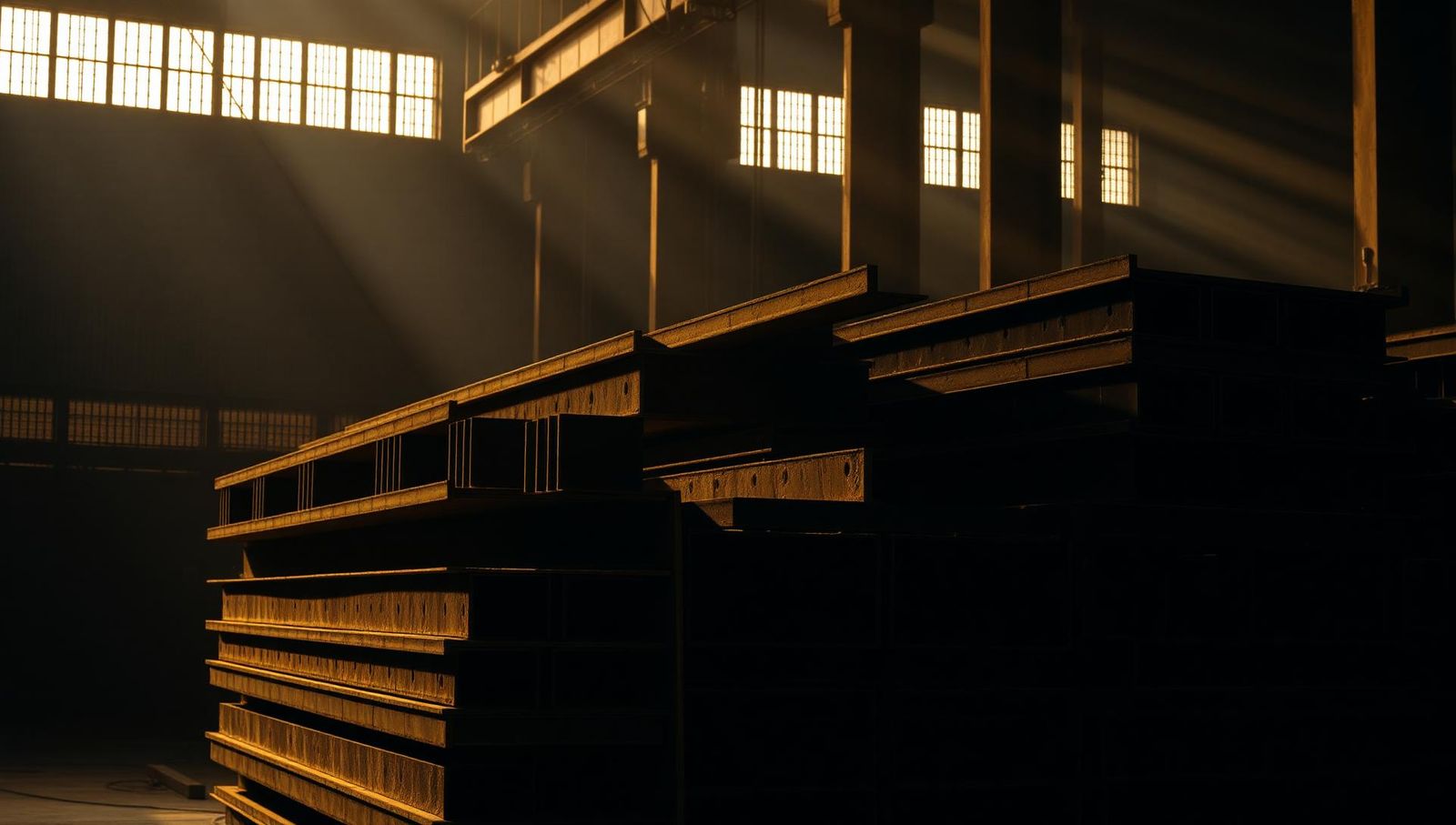
Structural Steel
H Beams, I Beams, UB / UC, IPE / IPN, HEA / HEB / HEM, PFC / UPN, channels, angles, tees and Z-sections, supplied to EN, BS, ASTM and JIS.
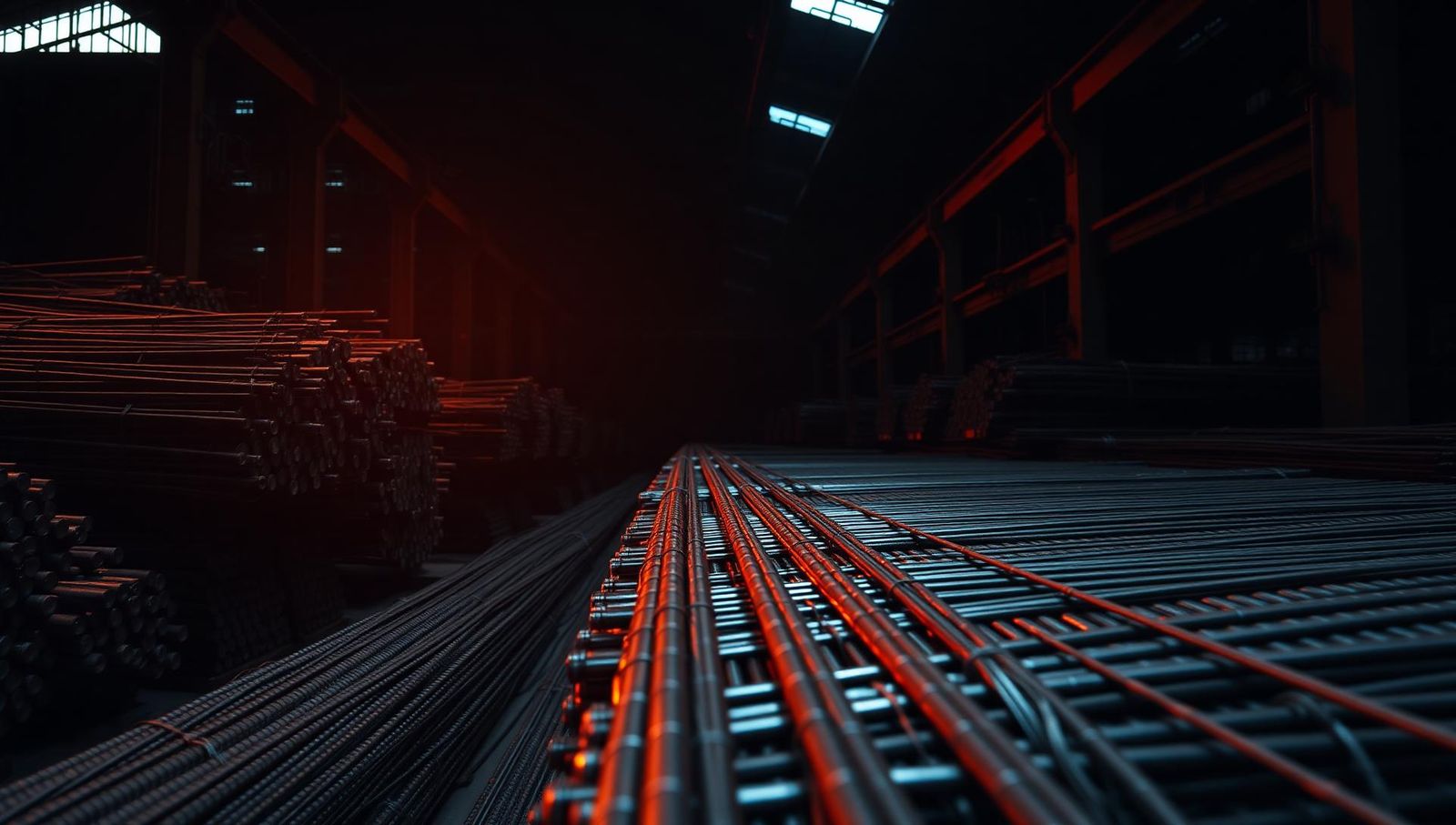
Steel Bars & Merchant Products
HR round bars, square bars, flat bars, steel flats, steel squares, steel rounds and mild steel bars, for fabrication, machining and forging.
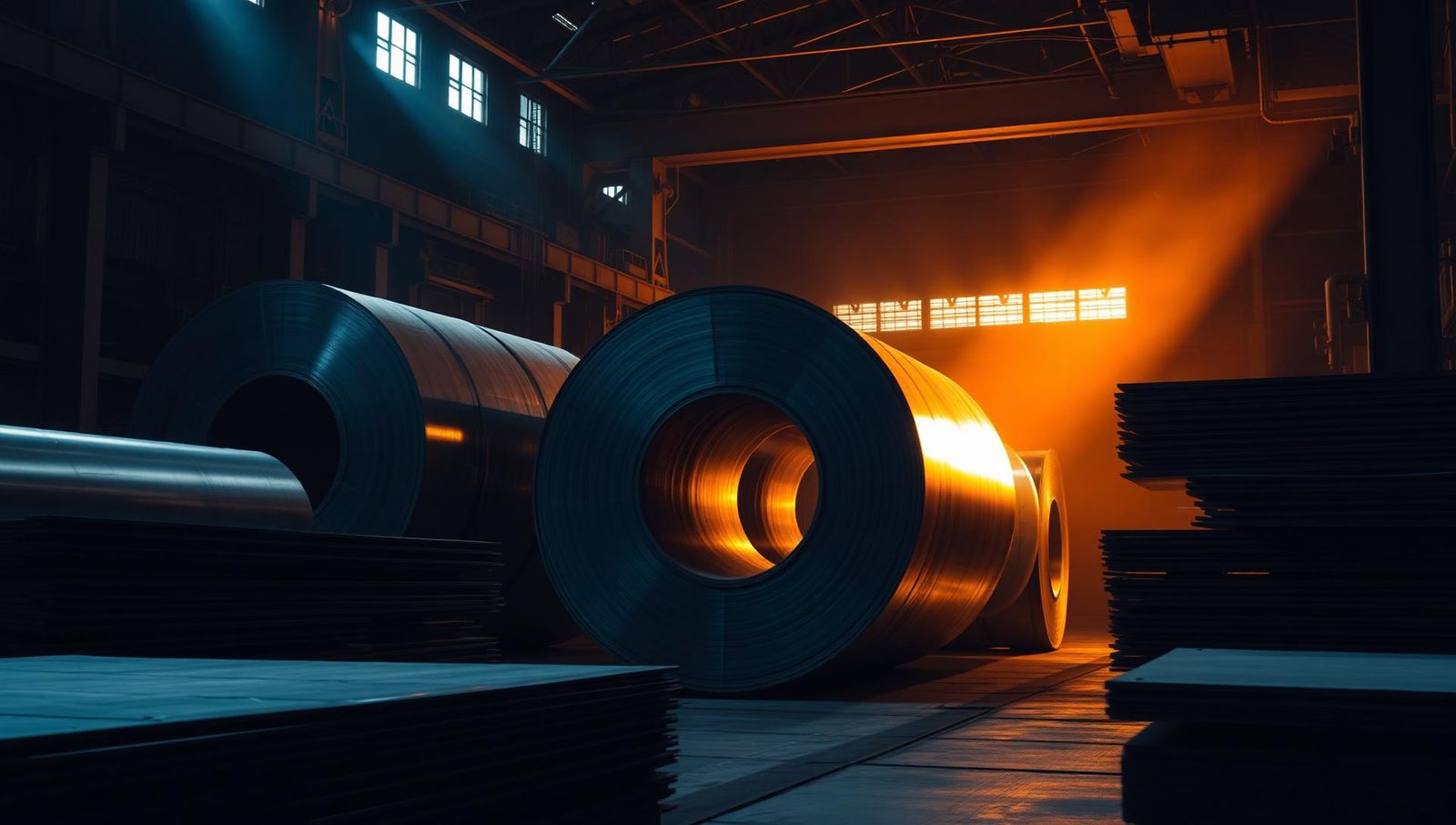
Flat Steel Products
Hot rolled coils & plates, cold rolled coils, chequered plates, boiler plates, wear plates and shipbuilding plates to EN, ASTM, ASME, ABS / DNV / LR.
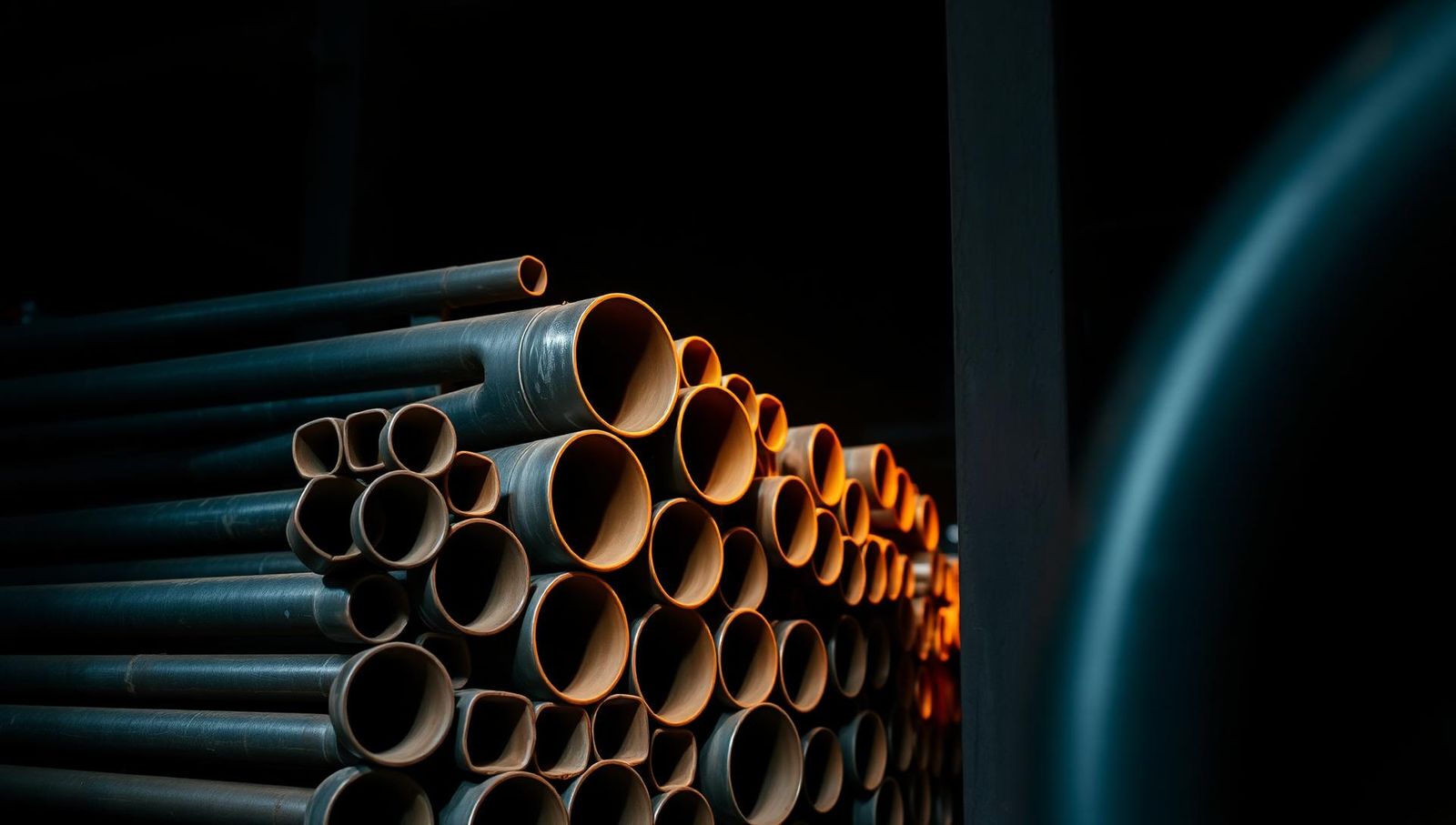
Pipes & Hollow Sections
ERW pipes, seamless pipes, MS pipes, and circular / square / rectangular hollow sections, for water, gas, structural and oil & gas service.
Mesh, Expanded Metal & Gratings
Welded wire mesh, expanded metal and hot-dip galvanised steel gratings for slabs, walkways, façades and industrial platforms.
EN · ASTM · BS · JIS · GB · DIN: the specifier's reference.
Every dispatch complies with the internationally recognised structural steel standard specified in your project drawings or tender.
| Standard | Description | Scope |
|---|---|---|
| EN 10025-2 | Hot-rolled products of structural steels, non-alloy structural steels, grades S235, S275, S355, S420, S460 (JR/J0/J2/K2). | European primary standard, GCC default |
| EN 10210 | Hot-finished structural hollow sections of non-alloy and fine grain steels, CHS, SHS, RHS, S275J0H, S355J2H. | Hot-finished hollow sections |
| EN 10219 | Cold-formed welded structural hollow sections, CHS, SHS, RHS, S235JRH, S355J2H. | Cold-formed hollow sections |
| EN 10034 | Structural steel I- and H-sections, tolerances on shape and dimensions. | I / H section tolerances |
| ASTM A36 | Carbon structural steel, minimum 250 MPa yield, 400–550 MPa tensile, the legacy US workhorse for general framing. | US general structural steel |
| ASTM A572 Gr.50 | High-strength low-alloy columbium-vanadium structural steel, 345 MPa yield. | US high-strength structural |
| ASTM A992 | Structural steel for shapes, modern US wide-flange (W-section) standard. 345 MPa yield, controlled chemistry for weldability. | US wide-flange / W-shapes |
| ASTM A500 | Cold-formed welded and seamless carbon steel structural tubing in rounds and shapes, Grades B and C. | US structural hollow sections |
| BS 4-1 | Structural steel sections, Specification for hot-rolled sections (UB, UC, UBP, PFC). | UK / GCC legacy framing |
| DIN 1025 | I-beams, IPE (1025-5) and IPN (1025-1) tapered-flange sections (superseded by EN 10365). | European I-beam (legacy) |
| JIS G3192 | Dimensions, mass and permissible variations of hot-rolled steel sections, Japanese H, I, channel, angle. | Japanese sections |
| JIS G3101 / G3106 | Rolled steels for general structure (SS400) and welded structure (SM400/490/520). | Japanese structural grades |
| GB/T 11263 | Hot-rolled H-sections and partial T-sections, Chinese H-beam standard (HW / HM / HN). | Chinese H-sections |
| GB/T 1591 | High-strength low-alloy structural steels, Q355, Q390, Q420, Q460. | Chinese high-strength steel |
From S235 to S460, A36 to A992, Q235 to Q460.
| Region | Grade | Yield | Tensile | Typical Use |
|---|---|---|---|---|
| Europe | S235JR | 235 MPa | 360–510 MPa | General framing, secondary structure, light industrial |
| Europe | S275JR / J0 / J2 | 275 MPa | 410–560 MPa | Commercial buildings, warehouses, secondary members |
| Europe | S355JR / J2 / K2 | 355 MPa | 470–630 MPa | Primary frames, towers, bridges, heavy industry, GCC workhorse |
| Europe | S460 | 460 MPa | 540–720 MPa | Tall buildings, long-span trusses, weight-critical structures |
| USA | A36 | 250 MPa | 400–550 MPa | General structural, miscellaneous bars and plates |
| USA | A572 Gr.50 | 345 MPa | ≥ 450 MPa | Structural shapes, plates, bars, HSLA workhorse |
| USA | A992 | 345 MPa | 450–620 MPa | Modern wide-flange W-shapes, building columns and beams |
| China | Q235B | 235 MPa | 375–500 MPa | General-purpose carbon structural steel |
| China | Q355B / Q355D | 355 MPa | 470–630 MPa | High-strength structural, the EN S355 equivalent for Chinese-origin steel |
| Japan | SS400 | 235–245 MPa | 400–510 MPa | General Japanese-origin structural sections |
| Japan | SM490 / SM490A | 315–325 MPa | 490–610 MPa | Welded structure grade, bridges, marine structures |
Grade-vs-grade, standard-vs-standard.
Detailed comparisons for consultants and structural engineers deciding between competing structural steel grades.
ASTM A36 vs EN S275
| Property | ASTM A36 | EN S275JR |
|---|---|---|
| Minimum yield strength | 250 MPa | 275 MPa |
| Tensile strength | 400–550 MPa | 410–560 MPa |
| Minimum elongation (A5) | 20% | 23% |
| Charpy impact | Not required | 27 J at +20 °C (JR) |
| Chemistry control | C 0.26%, Mn 0.80–1.20% (plates) | C ≤ 0.21%, Mn ≤ 1.60% |
| Typical use | Legacy US framing, plates, bars | General GCC commercial framing |
| Verdict | Lower yield, no impact testing, keep for like-for-like replacement | Stronger and tougher, modern default |
ASTM A36 vs ASTM A572 Gr.50
| Property | ASTM A36 | ASTM A572 Gr.50 |
|---|---|---|
| Yield strength | 250 MPa | 345 MPa (38% higher) |
| Tensile strength | 400–550 MPa | ≥ 450 MPa |
| Type | Carbon structural | HSLA (high-strength low-alloy) |
| Weight savings vs A36 | Baseline | 20–30% lighter per equivalent capacity |
| Weldability | Excellent | Excellent, controlled C, Cb-V microalloyed |
| Best use | General framing, plates, secondary | Primary columns, long-span beams, bridges |
| Verdict | Use only where spec calls A36 | Default US-spec primary structural grade |
EN S275 vs EN S355
| Property | S275JR | S355J2 / K2 |
|---|---|---|
| Yield strength | 275 MPa | 355 MPa (29% higher) |
| Tensile strength | 410–560 MPa | 470–630 MPa |
| Impact requirement | 27 J at +20 °C | 27 J at −20 °C (J2) / 40 J at −20 °C (K2) |
| Weight saving vs S275 | Baseline | 20–25% per equivalent moment capacity |
| Typical use | Secondary framing, warehouses, light industrial | Primary columns, long-span beams, towers, bridges |
| Cost premium | Baseline | +5–10% on the mill |
| Verdict | Sufficient for light commercial | Workhorse for GCC infrastructure & towers |
GB Q235 vs GB Q355
| Property | Q235B (GB/T 700) | Q355B (GB/T 1591) |
|---|---|---|
| Yield strength | 235 MPa | 355 MPa |
| Tensile strength | 375–500 MPa | 470–630 MPa |
| EN equivalent | ≈ S235JR | ≈ S355JR |
| Carbon equivalent (CE) | ≤ 0.42% | ≤ 0.48% |
| Weldability | Excellent | Excellent |
| Typical use | General-purpose framing | Primary structural, high-rise, industrial mega-projects |
| Origin | Chinese mills (Hesteel, Baowu, Shagang) | Chinese mills, certified for export |
European vs ASTM Grade Map
| European | ASTM Equivalent | JIS Equivalent | GB Equivalent |
|---|---|---|---|
| S235JR | A283 Gr.C / A36 (close) | SS400 | Q235B |
| S275JR | A529 Gr.50 (close) / A36 | SM400 | Q275B |
| S355JR / J2 | A572 Gr.50 / A992 | SM490 / SM490A | Q355B |
| S460 | A572 Gr.65 / A913 Gr.65 | SM520 | Q460C |
| S355J2H (hollow) | A500 Gr.C / A847 | STKR490 | Q355B (GB/T 6728) |
H-Beam vs I-Beam (Engineering Comparison)
| Property | H-Beam (Wide-Flange) | I-Beam (IPN / IS) |
|---|---|---|
| Inner flange face | Parallel | Tapered (14%) |
| Flange width vs depth | Approximately equal | Narrow, depth dominates |
| Primary role | Columns, heavy framing, biaxial loads | Floor & roof beams, bending |
| Compression efficiency | Very high (biaxial) | Moderate |
| Bending efficiency | Good | Excellent (deep section) |
| Connection ease | Bolted / welded, simple | Tapered washers needed |
| Max practical depth | 1000+ mm | 600 mm |
| Standards | EN 10034 · ASTM A992 · JIS G3192 | EN 10024 · IS 808 · DIN 1025-1 |
Where structural steel goes.
High-Rise & Commercial
- Primary columns & beams
- Composite floor systems
- Transfer trusses & megabraces
- Curtain wall support steel
Industrial & Warehouses
- PEB portal frames
- Crane gantries (up to 100 t)
- Mezzanine floors
- Process pipe-rack steel
Infrastructure
- Highway & viaduct girders
- Box-girder bridges
- Truss bridges
- Metro & rail viaducts
Oil, Gas & Petrochemical
- Process modules & skids
- Pipe-rack T-frames
- Offshore jackets & topsides
- Storage tank shells & roofs
Airports & Ports
- Terminal long-span roofs
- Apron control buildings
- Quay-wall sheet piles & tie-rods
- Container yard gantry rails
Power & Utility
- Power plant boiler steel
- Transmission line towers
- Substation gantries
- Solar tracker structures
Stadia & Public Realm
- Roof trusses & cable steel
- Iconic curved members
- Concourse columns
- Pedestrian bridges
Marine & Defence
- Shipbuilding plates (ABS/DNV/LR)
- Naval base infrastructure
- Heavy floating docks
- Marine piling & jetties
The viaduct is the steel.
On every bridge, viaduct, metro line and mega-project across the GCC, S355J2 plate girders and A572 Gr.50 W-shapes carry the load that would otherwise need twice the concrete. TIC Dubai supplies the sections, and the mill traceability that wins consultant approval on Aramco, ADNOC, ASHGHAL, NEOM and RTA tenders.
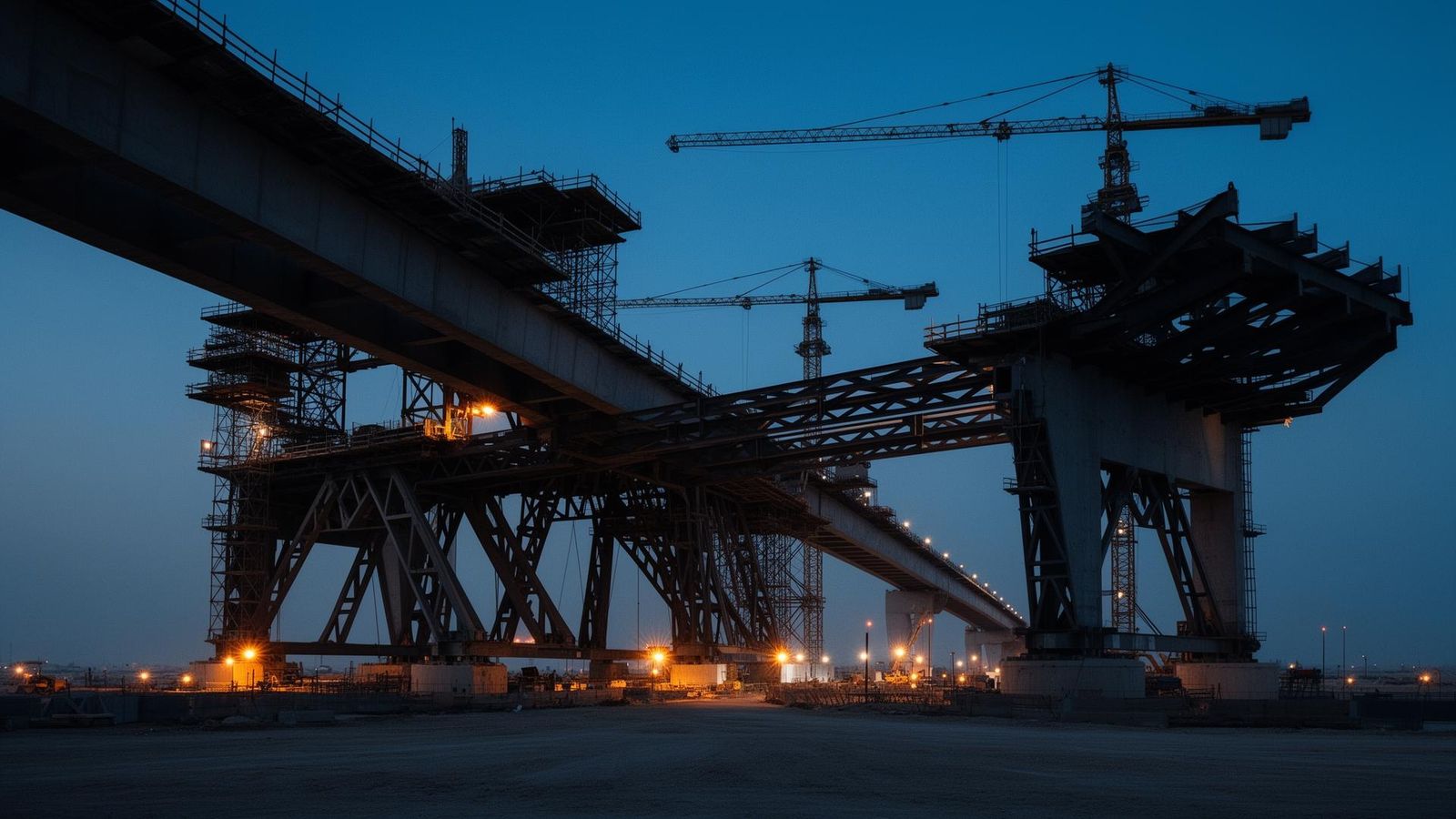
H-beam · I-beam · Channel · Angle · Hollow · Plate.
| Section | Best Use | Why |
|---|---|---|
| H-Beam (HE / W / Asian H) | Building columns, heavy industrial primary frames, bridge piers | Wide parallel flanges resist biaxial buckling, column-of-choice up to 1000+ mm depth |
| I-Beam / IPE / UB | Floor and roof beams, secondary framing, crane gantries | Tall narrow geometry maximises section modulus per kg for pure bending |
| PFC / UPN Channel | Purlins, side rails, stair stringers, lintels, mezzanine edge beams | Open C-section, easy bolted connections, good for one-way bending where torsion is restrained |
| Equal / Unequal Angle | Bracing, trusses, lintels, fabricated lattice towers, secondary bracing | L-section, efficient in tension, easy connections, low cost per kg |
| CHS (Circular Hollow Section) | Exposed architectural steel, space frames, jetty piles, offshore | Best torsional stiffness, lowest drag, equal capacity in all directions |
| SHS / RHS (Square / Rectangular HS) | Architectural exposed steel, trusses, frames where torsion present | Closed section, high torsional capacity, clean connections, low surface area for painting |
| Plate | Built-up girders, gussets, base plates, bridge decks, tanks | Custom sections from plate where rolled sizes are insufficient |
Cut, drilled, welded, galvanised, painted, inspected.
Value-added services delivered from mill or fabrication partner, including cutting to length, project marking, coating to specification and dispatch ready for erection.
Cutting
Oxy-fuel for plates ≥ 8 mm, plasma for 1–40 mm, laser for plates ≤ 20 mm, sawing for sections and pipes. Tolerances to EN 1090.
Drilling & Punching
Beam-line CNC drilling, punching for ≤ 25 mm holes, reamed for friction-grip connections. AISC / EN holes.
Welding
SMAW, FCAW, GMAW and SAW to EN ISO 15614 / AWS D1.1 WPS, with qualified welders to EN ISO 9606 / AWS QC.
Galvanizing
Hot-dip galvanising to ISO 1461, 85 µm typical, 120 µm for marine. Vent and drain holes per ASTM A385.
Shot-Blasting & Painting
Sa 2½ blast cleaning, primer + intermediate + topcoat to ISO 12944 C3 / C4 / C5-M for GCC coastal exposure.
NDT & Inspection
VT, UT, MT, PT, RT to EN ISO 17635 / AWS D1.1. CWI-supervised. Reports issued with the project dossier.
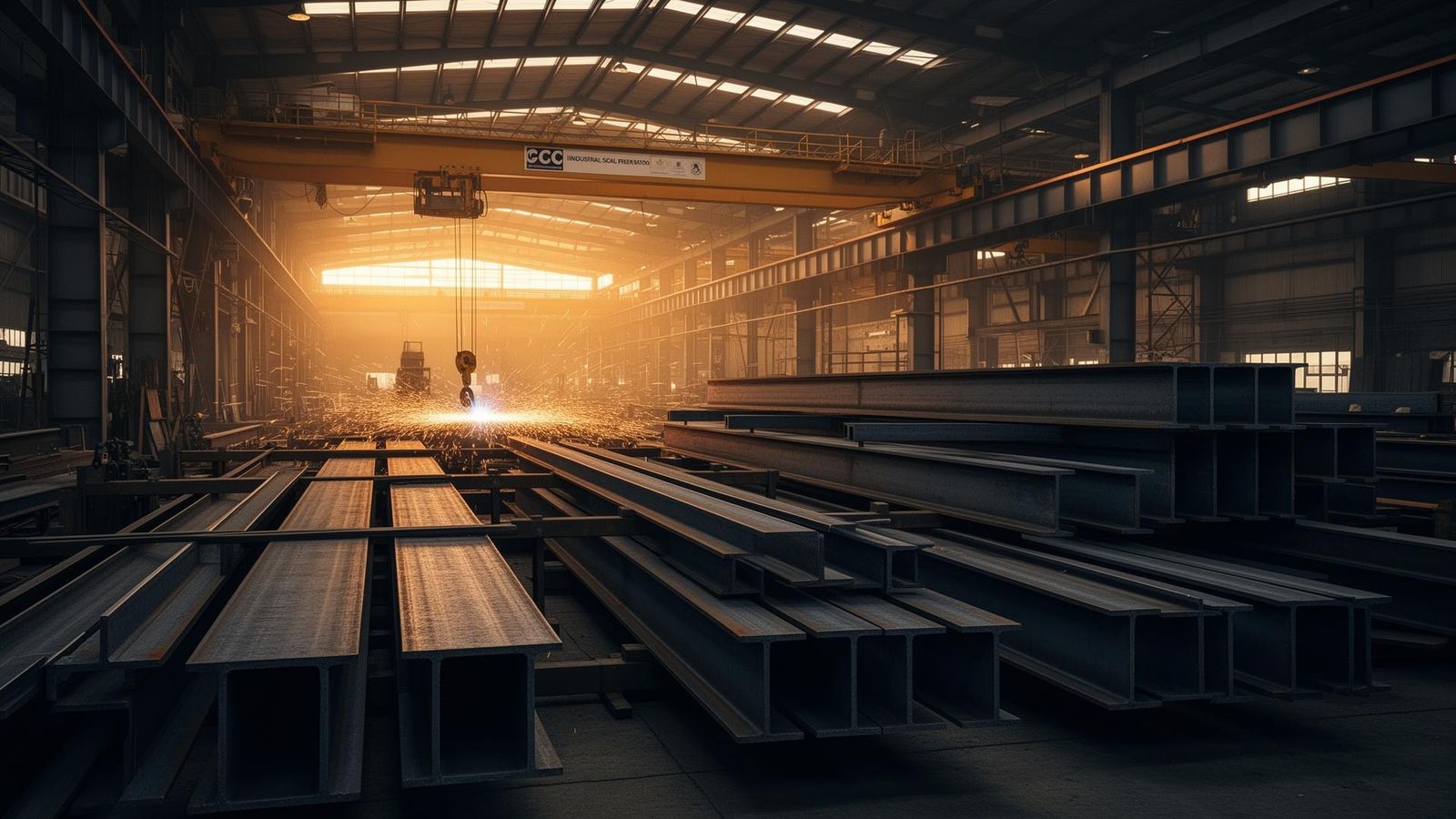
Audited fabricators across UAE, KSA, Türkiye and India.
EN 1090-2 EXC2 / EXC3, AISC AISC 207 / 360, ISO 3834-2 certified shops with beam-line CNC drilling, robotic welding and IS0 1461 hot-dip galvanizing capacity to 24 m.
Mill test certification, heat-number traceability, third-party inspection.
EN 10204 3.1 minimum, heat-numbered, with chemistry and mechanical properties. 3.2 third-party inspected certificates issued by SGS, Bureau Veritas, Intertek, TÜV, Lloyd's or DNV on indent.
Every length stamped with the mill heat number, traceable end-to-end from the steelmaking ladle to the final structure.
Ladle and product analysis: C, Mn, P, S, Si, plus Cb, V, Ti for HSLA grades. Carbon equivalent (CE) calculated for weldability.
Yield strength, tensile strength, elongation, Charpy V-notch impact at specified temperature (J2 = −20 °C, K2 = −20 °C @ 40 J).
Length, depth, flange width, web thickness, straightness, twist, verified to EN 10034, ASTM A6 or JIS G3192 tolerances.
Free of laminations, scabs, slivers, harmful cracks. Visual inspection plus UT on plates where required by code.
SGS, Bureau Veritas, Intertek, TÜV, load-port and pre-shipment inspection coordinated for Aramco, ADNOC, ASHGHAL, NEOM, RTA and EPC tenders.
Tensile, bend, Charpy and chemistry can be re-tested at a UAE accredited lab (ISO/IEC 17025) on the consultant's instruction.
Corrosion. Galvanising. Certification. Specified out.
Atmospheric corrosion & rust
Improper galvanizing
Welding distortion
Weld failure / cracks
Fabrication dimensional errors
Storage damage
Transit & handling damage
Wrong grade or substandard material
Specify, certify, ship, in that order.
- 01Specify grade, standard and sub-grade, S355J2 to EN 10025-2, A992 to ASTM, Q355B to GB/T 1591, not just 'S355'.
- 02List section designation, dimensions and tonnage per item, e.g. HE 300 B × 12 m × 50 pcs (≈ 70 t).
- 03State surface finish and coating, black, shot-blast Sa 2½ + primer, hot-dip galvanising to ISO 1461 (coating µm), or full paint system to ISO 12944 C5-M.
- 04Specify MTC level, EN 10204 3.1 default, 3.2 third-party inspected for project tonnages (SGS / BV / Intertek / TÜV / Lloyd's).
- 05Confirm length tolerance, standard mill 6 / 9 / 12 m, custom cut-to-length up to 24 m, project-marked dispatch.
- 06Declare end-use and design code, Eurocode 3, AISC 360, BS 5950 or local code, for the mill to certify weldability / toughness.
- 07Provide discharge port and incoterm, CFR Jebel Ali, CFR Jeddah, CFR Hamad, CFR Sohar, and any consultant nomination requirements.
- 08Issue an indent confirmation including mill identity, rolling programme date, vessel ETA, MTC delivery and inspection plan.
Eight checks before the steel leaves the yard.
- 01MTC verification, heat number on every piece matches the certificate; chemistry and mechanicals meet the specified sub-grade.
- 02Visual inspection, straightness, twist, flange squareness, surface laminations or scabs, weld continuity on welded sections.
- 03Dimensional check, depth, flange width, web thickness, length, hole positions if drilled, to EN 10034 / ASTM A6.
- 04Coating verification, DFT (dry film thickness) of galvanising or paint per piece, average and minimum readings.
- 05Stamping & marking, mill name, grade, heat number, section designation, project mark visible on at least one end per piece.
- 06Packaging, banded bundles, hardwood dunnage, dunnage every 1.5 m on long lengths, identification tags secured.
- 07Documentation, original MTC, packing list, mill invoice, COO, certificate of conformity, third-party report where applicable.
- 08Independent re-test sample, pull tensile and impact specimens from 2–5% of heats for laboratory re-verification on critical projects.
Nine markets, every major port.
Container, break-bulk and full bulk vessel shipments coordinated to the right discharge port, and the standards preference of each market.
| Market | Discharge Ports | Standards Preference | Typical Projects & Authorities |
|---|---|---|---|
| United Arab Emirates | Jebel Ali · Khalifa · Hamriyah · Khorfakkan · Port Rashid | EN 10025 / 10210 / 10219 dominant; BS 4-1 legacy; ASTM on US-licensed projects | Etihad Rail · RTA bridges · ADNOC modules · DEWA · Expo legacy infrastructure |
| Saudi Arabia | Jeddah · King Abdulaziz Dammam · King Abdullah Port · Yanbu · Jubail | ASTM A36 / A572 / A992 (Aramco), EN 10025 (general) | NEOM · Diriyah Gate · Aramco · Riyadh Metro · Saudi Vision 2030 |
| Qatar | Hamad Port · Doha Port | EN 10025 / BS 4-1 / ASTM mix | ASHGHAL Public Works · QatarEnergy · Lusail · Doha Metro |
| Kuwait | Shuwaikh · Shuaiba | ASTM / EN dual-spec | Ministry of Public Works · KIPIC clean fuel · Kuwait North City |
| Oman | Sohar · Salalah · Sultan Qaboos | EN 10025 / BS 4-1 / ASTM | Duqm SEZ · PDO · airport expansions · Sohar petrochemicals |
| Bahrain | Khalifa Bin Salman Port | EN / BS dominant | MOWMUP roads · BAPCO modernisation · housing & infrastructure |
| Egypt | Alexandria · Damietta · Port Said · Sokhna | ASTM / EN mix | New Administrative Capital · Suez Canal Zone · Cairo Metro extensions |
| Jordan | Aqaba | EN 10025 / ASTM | Aqaba SEZ · highway upgrades · water infrastructure |
| Iraq | Umm Qasr · Khor Al Zubair | ASTM dominant (US-licensed oil & gas) | Basra reconstruction · power plants · refinery upgrades |
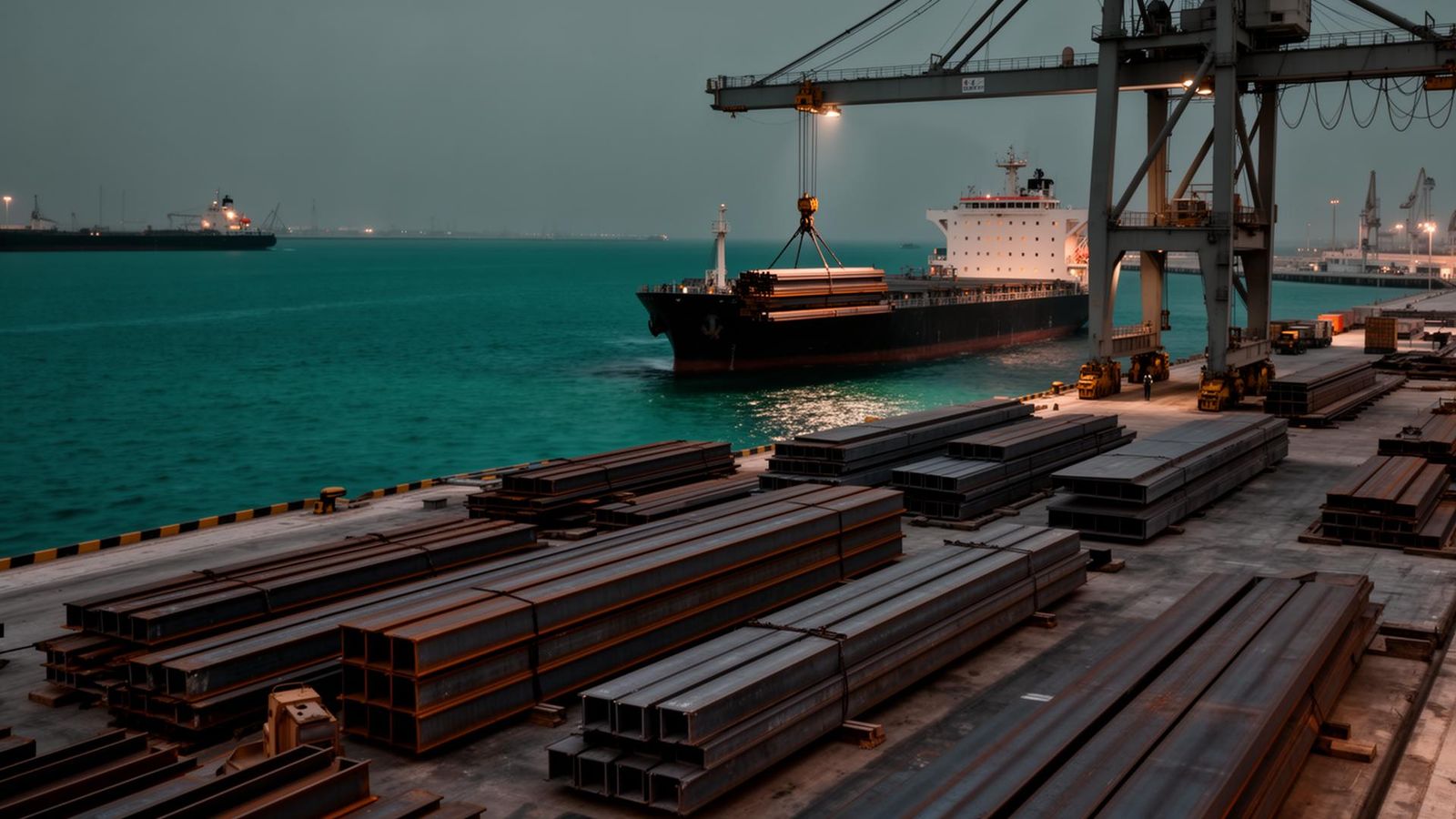
Mill-direct sailings into every GCC gateway.
Weekly liner services from Türkiye and Korea, regular project break-bulk lifters from China and India, and full bulk-vessel charter for major rolling programmes, discharging at Jebel Ali, Khalifa, Jeddah, Dammam, Hamad, Sohar, Sokhna and Aqaba.
Structural Steel across the GCC and Middle East
Mill-direct structural steel supply across GCC and Middle East markets.
Shipments routed through Jebel Ali, Khalifa, Hamad, King Abdulaziz Dammam, Sohar and other major regional ports, coordinated with contractor and procurement schedules.
TIC Dubai supplies structural steel (H beams, I beams, universal columns, plates and hollow sections) to fabricators, EPC contractors and infrastructure developers across Dubai, Abu Dhabi, Sharjah, Ras Al Khaimah, Fujairah, Riyadh, Jeddah, Dammam, Doha, Kuwait City, Muscat and the wider GCC. Material is shipped with full mill test certification to EN 10025, ASTM A36/A572 and BS standards.
- Dubai
- Abu Dhabi
- Sharjah
- Ajman
- Ras Al Khaimah
- Fujairah
- Umm Al Quwain
- Al Ain
- Khor Fakkan
- Riyadh
- Jeddah
- Dammam
- Al Khobar
- Jubail
- Yanbu
- Mecca
- Medina
- Tabuk
- Abha
- JAFZA
- DIP
- Dubai Industrial City
- Sharjah Industrial Area
- KIZAD
- Hamriyah Free Zone
- RAKEZ
- SAIF Zone
- Doha
- Lusail
- Al Rayyan
- Mesaieed
- Al Wakrah
- Kuwait City
- Shuwaikh
- Shuaiba
- Ahmadi
- Manama
- Muharraq
- Riffa
- Sitra
- Muscat
- Sohar
- Salalah
- Duqm
- Nizwa
- Amman
- Zarqa
- Irbid
- Aqaba
- Baghdad
- Erbil
- Basra
- Mosul
- Najaf
- Karbala
- Sulaymaniyah
- Kirkuk
- Jebel Ali Port
- Khalifa Port
- Hamriyah Port
- Port Rashid
- Khor Fakkan Port
- King Abdulaziz Port Dammam
- Jeddah Islamic Port
- King Abdullah Port
- Jubail Commercial Port
- Yanbu Commercial Port
- Hamad Port
- Shuwaikh Port
- Shuaiba Port
- Khalifa Bin Salman Port
- Port of Sohar
- Port of Salalah
- Port of Duqm
- Port of Aqaba
- Umm Qasr Port
- Khor Al Zubair Port
Foundations: standards, grades and section selection.
The technical reading we share with consultants, fabricators and contractors specifying structural steel across the GCC.
What Is Structural Steel? Definition, Grades and How It Is Specified
A foundational reference on what structural steel actually is, chemistry, sections, standards and the procurement language consultants use across GCC infrastructure.
S275 vs S355 Steel: Yield, Weldability and When to Specify Each
Two grades, one structural steel standard, and a decision that quietly shifts tonnage and cost on every GCC tender. A consultant-grade reference.
ASTM A36 vs ASTM A572: Yield, Cost and When to Specify Each
A36 is the historical default. A572 Grade 50 is increasingly the modern default. Here is the engineering and the economics behind the shift.
EN 10025 Explained: The European Structural Steel Standard
EN 10025 is the most-cited steel standard in modern GCC tenders. A consultant-grade reference covering every part of the standard and how it is used on procurement orders.
What Is a Mill Test Certificate (MTC)? How to Read and Verify
An MTC is the document that proves your steel is what you ordered. A line-by-line reading guide for procurement, QC and consultant teams.
Structural Steel Standards in UAE and Saudi Arabia
A practical reference for consultants and fabricators specifying structural steel across GCC projects, covering EN, ASTM and BS standards in use today.
Deep dives: galvanizing, formwork, fasteners and adjacent systems.
ASTM vs EN Structural Steel: A Practical Comparison
When projects accept either system, knowing the real equivalences and the gaps protects fabrication budgets and structural integrity.
H Beam vs I Beam: Selection Guide for GCC Construction
The choice between H and I sections changes connection design, fabrication cost and erection schedule. A field guide for engineers and fabricators.
GI Zinc Coating Standards in GCC Construction
The number after the Z matters more than the colour of the coil; here is a contractor's guide to GI zinc coating across GCC construction.
GCC Ports and the Construction Materials Supply Chain
Port choice quietly drives lead time, demurrage exposure and inland trucking cost. A procurement-side view of GCC logistics for construction materials.
Construction Materials Procurement Across the GCC
Lead times, container economics, mill-direct sourcing and the regional logistics layer that quietly decides whether a project hits its concrete pour date.
Scaffolding System Selection for UAE Projects
Frames, props, H20 beams and the accessories that hold them together: a procurement guide for GCC contractors.
The systems that ship alongside structural steel.
Stainless Steel
Architectural and engineering stainless, 304, 316L, duplex, sheets, plates, bars and tubes.
Galvanized Steel (GI)
Hot-dip galvanized sheets and coils, Z140 to Z275, roofing, sandwich panels, HVAC.
Aluminium
Aluminium extrusions, sheets, plates, alloy 1050, 5052, 5083, 6061, 6063.
Scaffolding & Formwork
Cuplock, ringlock, H-frame, props and shoring systems for site contractors.
Hardware
Wire nails, bolts, fasteners, anchors and structural connectors.
Film Faced Plywood
Concrete formwork plywood, brown and black film for high-cycle pours.
Construction Materials
Bitumen softboard, cement boards, insulation and expansion joint systems.
The structural steel specification partner.
Global mill-direct sourcing
Direct relationships with primary mills in China, India, Türkiye, Korea, Japan, Vietnam, the GCC and Europe, with competitive ex-mill pricing and verified origin.
Certified to international standards
EN, ASTM, JIS, BS, GB and IS standards, supplied with mill test certificates, EN 10204 3.1 / 3.2 inspection on request.
Project-grade supply
Container, break-bulk and full project shipments, coordinated from origin port to UAE/GCC discharge or onward delivery.
Cut-to-length & fabrication ready
Standard mill lengths, custom cut-to-length, heat-numbered bundles and project-marked dispatch.
Fast indent turnaround
Stock-and-indent model: held stock for fast-moving sizes, mill rolling on programme for project tonnages.
Middle East market expertise
Five decades of experience supplying contractors, fabricators and EPC firms across the UAE, KSA, Qatar, Oman, Kuwait and Bahrain.
Structural steel: answered.
What steel products does TIC Dubai supply?
TIC Dubai supplies the full structural and merchant steel range: H beams, I beams, UB / UC, IPE / IPN, HEA / HEB / HEM sections, channels, angles, tees and Z-sections; rounds, squares and flats; HR / CR coils and plates, chequered, boiler, wear and shipbuilding plates; ERW, seamless and MS pipes; CHS / SHS / RHS hollow sections; welded wire mesh, expanded metal and steel gratings.
Which standards do you supply to?
EN 10025 / 10210 / 10219 / 10056 / 10058 / 10060 / 10025-6 (European); BS 4-1 / BS 4483 / BS 1387 (British); ASTM A36 / A53 / A106 / A500 / A572 / A992 / A1011 / A1064 and ASME (American); JIS G3101 / G3106 / G3192 / G3141 (Japanese); IS 808 / 1239 / 2062 (Indian); GB/T 706 / 3274 / 11263 (Chinese); API 5L (line pipe).
Which countries do you supply to?
TIC Dubai supplies steel across the UAE, Saudi Arabia, Qatar, Oman, Kuwait, Bahrain, the wider Middle East, East Africa and the Indian subcontinent, direct ex-mill or ex-Dubai stock.
Are mill test certificates included?
Yes: every dispatch includes original mill test certificates per heat number to EN 10204 3.1 by default; 3.2 third-party inspected certificates (Lloyd's, BV, DNV, TÜV, SGS) can be arranged on indent.
Can you supply cut-to-length and project-marked steel?
Yes: standard mill lengths of 6, 9 and 12 metres are stock; custom cut-to-length up to 24 metres, project-marked dispatch and heat-numbered bundles are arranged direct from mill for project tonnages.
What is structural steel?
Structural steel is hot-rolled or cold-formed carbon and low-alloy steel manufactured into standard sections, H beams, I beams, channels, angles, hollow sections and plates, used to form the load-bearing skeleton of buildings, bridges, industrial plants and infrastructure. It is specified by grade and standard (e.g. S355J2 to EN 10025-2, A992 to ASTM, Q355B to GB/T 1591) and supplied with mill test certificates traceable to the steelmaking heat.
What is the difference between structural steel and mild steel?
Mild steel is a colloquial term for low-carbon steel (≈ 0.05–0.25% C), used historically for general bar, plate and pipe. Structural steel is a specified-strength product, minimum yield, minimum elongation, controlled chemistry, dimensional tolerances and Charpy impact requirements per EN 10025 / ASTM A36-A992 / GB/T 1591. All structural steel is mild steel by chemistry; not all mild steel meets a structural specification.
Which structural steel grade is most common in the GCC?
S355JR / S355J2 to EN 10025-2 is the dominant primary structural grade across the UAE, Qatar, Oman, Kuwait and Bahrain for buildings, bridges and infrastructure. ASTM A992 / A572 Gr.50 dominate Aramco / ADNOC / US-licensed projects in Saudi Arabia, Iraq and Kuwait. Q355B is the equivalent on Chinese-origin steel.
What is the difference between an H-beam and an I-beam?
H-beams (wide-flange / W-section) have flanges approximately equal to the depth, with parallel inner faces. They resist biaxial buckling and are the column-of-choice. I-beams (IPN / IS 808) have narrow tapered flanges and a much deeper web relative to width, optimised for pure bending, used for floor and roof beams.
What is the difference between S275 and S355?
S355 has 29% higher minimum yield (355 vs 275 MPa) and higher tensile strength. For a given moment capacity, S355 saves 20–25% mass over S275, usually with a 5–10% mill price premium. S355J2 is the GCC default for primary structural members; S275JR is used for secondary framing and light commercial.
What is the ASTM equivalent of S355?
ASTM A572 Gr.50 and A992 are the closest equivalents, both with 345 MPa minimum yield. A992 is the modern US wide-flange standard with tighter chemistry control for weldability. Cross-substitution is acceptable on most GCC projects but must be approved by the consultant.
What is ASTM A992?
ASTM A992 is the standard specification for structural steel shapes (W-sections) used in building columns and beams in the US market. It supersedes A36 for rolled shapes, with 345 MPa minimum yield, 450–620 MPa tensile, controlled carbon equivalent (CE ≤ 0.45%) and Yield-to-Tensile ratio ≤ 0.85 for ductility under seismic loading.
What is the difference between hot-finished and cold-formed hollow sections?
Hot-finished (EN 10210) sections are formed and welded above the recrystallisation temperature, giving uniform mechanical properties around the perimeter and tighter corner radius. Cold-formed (EN 10219) sections are roll-formed at room temperature, slightly strain-hardened at the corners, more economical, slightly larger corner radius. Both are valid for structural use; designer choice depends on fatigue, fire and connection details.
What does JR / J0 / J2 / K2 mean in EN 10025?
These are sub-grades indicating Charpy V-notch impact testing temperature: JR = +20 °C, J0 = 0 °C, J2 = −20 °C, K2 = −20 °C at 40 J. Lower temperature = tougher steel. GCC indoor and warm-climate structures normally specify JR; cold-storage, bridges or low-temperature applications use J2 or K2.
What is an MTC and why do I need it?
A Mill Test Certificate (EN 10204 3.1 or 3.2) is the original document issued by the steelmaker confirming chemistry, mechanical properties, heat number and grade conformance for the supplied material. Without an MTC the steel is not project-grade; consultants will not approve installed material against an unverifiable chain of custody.
What is the difference between EN 10204 3.1 and 3.2?
3.1 is a mill-issued certificate signed by the manufacturer's quality department, witnessing tests done by the mill, the GCC default. 3.2 is a 3.1 certificate additionally signed by an independent inspector (SGS, BV, Intertek, TÜV, Lloyd's, DNV) who witnessed the testing at the mill. 3.2 is required on Aramco, ADNOC, NEOM and most major EPC tenders.
Does TIC Dubai arrange third-party inspection?
Yes, SGS, Bureau Veritas, Intertek, TÜV, Lloyd's Register and DNV are all coordinated routinely. Inspection can be witnessed at the mill (pre-production, in-process, final) and / or at load port. Reports are issued with the project documentation pack.
Can you supply Aramco-approved steel?
Yes, we supply to Aramco SAES standards including ASTM A572 Gr.50, A992 and stainless equivalents, from Aramco-approved mills with 3.2 inspected MTCs and Aramco-recognised third-party inspection. Vendor lists and project ticketing are handled through the consultant of record.
What is heat number traceability?
Every length of structural steel is stamped with the mill's heat number, the unique identifier of the steelmaking ladle from which it was cast. The heat number cross-references the MTC chemistry and mechanicals, enabling end-to-end traceability from the ladle to the installed member. Lost stamps invalidate the chain of custody.
What does hot-dip galvanizing add?
Immersion in molten zinc at ≈ 450 °C, producing a metallurgically bonded zinc-iron alloy coating (typically 85 µm on structural steel, 120 µm on marine). It is the most durable atmospheric corrosion protection, 30–70 year life in C3 / C4 environments per ISO 9223.
Galvanized vs painted steel, which is better for GCC coastal use?
Hot-dip galvanizing (HDG) to ISO 1461 is generally superior for coastal UAE, Bahrain, Eastern Province and Sohar applications because zinc sacrificially protects exposed steel at cuts and scratches. Paint systems require near-perfect prep and are vulnerable to mechanical damage. For aesthetics-critical exposed steel, a duplex system (HDG + paint to ISO 12944 C5-M) gives the longest life.
What surface preparation grade is required for paint?
Sa 2½ (near-white blast cleaning) per ISO 8501-1 for full ISO 12944 systems. Roughness profile Rz 50–85 µm. The blast must be done immediately before priming; the prep must not flash-rust before the primer is applied.
What welding process is used for structural steel?
SMAW (stick), FCAW (flux-cored), GMAW (MIG) and SAW (submerged arc) are all standard. WPS qualified to EN ISO 15614 or AWS D1.1, welders qualified to EN ISO 9606 or AWS QC. SAW is preferred for long fillet welds on plate girders; FCAW for site work; SMAW for repairs and complex geometry.
Why is preheat required on thick sections?
Preheat (typically 50–150 °C for S355 > 25 mm) reduces the cooling rate of the heat-affected zone, preventing hydrogen-induced cracking. The required preheat depends on carbon equivalent (CE), section thickness, heat input and restraint. The WPS specifies the value.
What is a Charpy impact test?
A pendulum test that measures the energy absorbed by a notched specimen at a specified temperature. Higher absorbed energy = higher toughness = lower risk of brittle fracture in cold or impact conditions. S355J2 must achieve ≥ 27 J at −20 °C.
How do I prevent steel from rusting on a UAE construction site?
Insist on shop primer at the mill or fabricator, store on dunnage off the ground with drainage, cover during long storage, touch up site damage immediately with the same primer system, and apply the topcoat before exposure to coastal humidity. Galvanized steel is the most forgiving solution for site storage.
What is the lead time for structural steel from China?
Stock items in Dubai: 1–3 days. Mill-rolled tonnages from Chinese, Turkish or Korean mills: 30–45 days from indent confirmation to vessel sailing. Transit Jebel Ali: 18–25 days from China, 7–12 days from Türkiye. Total project indent: typically 60–90 days FOB-to-yard.
What is the lead time from Türkiye to Jebel Ali?
7–12 days port-to-port with weekly liner services and regular project breakbulk lifters. Turkish mills (Erdemir, Kardemir, ICDAS, Kocaer, MMK Metalurji, Çolakoğlu) are the GCC's fastest mill-direct source, with full EN 10025 / 10210 / 10219 coverage.
Can TIC Dubai supply both container and break-bulk shipments?
Yes, containerised 20'/40' shipments for parcels up to 25 t, project break-bulk for tonnages 100 t and above, and full bulk vessel charter for major rolling programmes. Stowage and lashing plans are coordinated with the carrier and surveyor.
What is the longest H-beam I can ship in a container?
11.8 m fits inside a standard 40' container after dunnage; 12 m+ requires a 40' open-top, flat-rack, or break-bulk shipment. Sections up to 18 m can move on 40' flat racks; 24 m+ moves break-bulk only.
How is steel plate measured and ordered?
By grade × thickness × width × length × tonnage. E.g. S355J2+N to EN 10025-2, 20 mm × 2000 mm × 6000 mm, 50 plates ≈ 94 t. Surface condition (mill, pickled, primer), edge (mill, sheared, gas-cut) and any UT requirement (EN 10160 S0, S1, S2) must also be specified.
What is a wear plate?
Through-hardened or quenched-and-tempered abrasion-resistant plate (e.g. Hardox, Bisalloy, Quard) with Brinell hardness 400–600 HB. Used for mining buckets, cement plant chutes, dump truck bodies and crusher liners. Wears 3–10× longer than mild steel under abrasion.
What are shipbuilding plates?
Plates certified by classification societies (ABS, DNV, Lloyd's, BV, ClassNK, KR) for marine structure use, grades A, B, D, E (mild steel) and AH32, DH32, EH36, FH36 (higher-strength). Re-cert is required for any structural component on a registered vessel or floating platform.
What is the difference between ERW, seamless and LSAW pipe?
ERW (Electric Resistance Welded), coil rolled to circle and high-frequency welded; ≤ 24" OD, economic for water, gas and structural use. Seamless, pierced from a billet, no weld seam, the only choice for high-pressure / high-temperature service. LSAW (Longitudinal Submerged Arc Welded), plate rolled and submerged-arc welded; large diameters (24–60"+), used for line pipe and structural piling.
Do you supply API 5L line pipe?
Yes, API 5L X42, X52, X60, X65 and X70 in seamless and welded forms, PSL1 and PSL2, with full API certification, hydrostatic test reports and 3.2 inspection where required for oil & gas pipeline projects.
How is structural steel priced?
Mill base price (USD/tonne FOB) + section / grade extras + size extras + length extras + finish extras + freight + insurance + UAE duty / VAT + handling + margin. Mill base price tracks iron ore, coking coal, scrap and electricity costs; daily quotes are valid 24–72 hours pending mill confirmation.
What is mill-direct pricing?
Pricing negotiated directly with the primary steel mill (not through traders or stockists), based on tonnage, grade, mill loading and rolling programme. TIC Dubai holds long-standing relationships with mills in China, Türkiye, Korea, Japan, India, Vietnam, the GCC and Europe, allowing us to combine multiple buyers into a single mill indent.
Can you consolidate steel with plywood, hardware and scaffolding in one shipment?
Yes, mixed-product 40' containers are routinely coordinated for contractors and EPCs running multi-package procurement, combining structural sections, plates, mesh, fasteners, film-faced plywood and scaffolding into a single landed cost.
What documentation is included on every shipment?
Original MTC (EN 10204 3.1 minimum), packing list with heat numbers, commercial invoice, certificate of origin, certificate of conformity, bill of lading, third-party inspection report (where applicable), CE Declaration of Performance for EN-grade structural steel (EN 1090), and any project-specific submittal forms.
What is EN 1090 and is it relevant in the GCC?
EN 1090 is the European standard for execution of steel and aluminium structures, and the CE-marking framework for structural steel products. EN 1090-1 covers the conformity assessment, EN 1090-2 the execution requirements. It is mandatory in Europe, increasingly required on UAE / KSA projects with European consultants, and is the basis for a Declaration of Performance accompanying every CE-marked structural section.
Do you supply steel for offshore / marine projects?
Yes, ABS, DNV, Lloyd's, BV, ClassNK and KR-certified plates and sections for offshore jackets, topsides, jetty piling, marine platforms and shipbuilding. Welder, WPS and consumable qualifications coordinated with the classification society as required.
How should structural steel be stored on site?
Stack on hardwood dunnage 150 mm above ground, slope for water drainage, separate by grade and member to avoid mixing, cover for long-term storage in coastal yards, isolate galvanized from black steel to prevent contact corrosion. Cover plates with tarps angled to shed water away from labels and identification stamps.
What is a heat affected zone (HAZ) and why does it matter?
The region of the parent metal next to a weld where the temperature rose high enough to alter the microstructure but stayed below the melting point. The HAZ can be harder and less ductile than the parent steel, and is the most common location for hydrogen cracking. Controlled by preheat, low-hydrogen consumables and proper WPS.
Can TIC Dubai cut, drill and primer-coat steel before shipment?
Yes, cut-to-length to ± 5 mm, beam-line CNC drilling, surface preparation Sa 2½ shot-blast and shop primer or full ISO 12944 paint system to the project specification. Heat-numbered piece-marking and consultant-approved colour codes are arranged direct from mill or via local partner fabricators.
Which Turkish mills does TIC Dubai source from?
Kocaer Çelik, Erdemir, Kardemir, ICDAS, MMK Metalurji, Çolakoğlu Metalurji and Çemtaş, all CE-marked for EN 10025 / 10210 / 10219 production, with regular weekly vessel sailings to Jebel Ali, Jeddah, Dammam, Hamad and Sohar.
Which Chinese mills do you work with?
Hesteel (Hebei Iron & Steel), Baowu Group (Baosteel + Wuhan + Maanshan), Shagang, Shandong Iron & Steel, Anshan Iron & Steel, Jianlong, Rizhao Steel, covering Q235B, Q355B, Q420 and Q460 to GB/T 1591, plus dual-certified EN 10025 and ASTM A572 / A992 production.
The five buyers ask first.
The shortlist consultants, contractors and EPC firms send us before any indent.
Factory-Direct Supply Model.
TIC Dubai operates as a mill representation and international procurement partner. Every order is coordinated directly with a verified overseas manufacturer and shipped in container quantities against your project specification.
We do not maintain local warehouse stock. Products are supplied directly from carefully selected international manufacturing partners.
- Direct mill sourcing
- Container-load shipments
- Forward production bookings
- Project-based supply
- International procurement
- Mill-direct pricing
- Consistent, certified quality
- Long-term supply partnerships
Who we work with.
TIC Dubai partners with organisations that specify, import or build at project scale, across the UAE, GCC, Levant, Africa and wider Middle East.
How our supply model works best.
A quick view of where TIC Dubai adds the most value, and where a local stockist may serve you faster.
Container, project & repeat procurement.
- Container orders
- Factory bookings
- Project supply
- Repeat procurement
- Long-term contracts
- Bulk purchasing
Retail, spot & same-day pick-ups.
- Retail-quantity purchases
- Same-day requirements
- Spot warehouse pick-ups
If your requirement sits on the right, a local stockist is likely to serve you faster. We're happy to point you in the right direction.
Factory-direct sourcing, answered.
Do you keep stock in Dubai?
TIC Dubai is a mill representation and international procurement company. Rather than holding warehouse stock, we coordinate factory-direct shipments sized to your project and consolidate deliveries against your programme.
Can I buy a few sheets or a single length?
Our supply model is built around container-load and project quantities. For small retail requirements, a local stockist will serve you faster; for bulk, project or recurring procurement, we're the right partner.
Do you supply containers directly from the factory?
Yes. Every enquiry is quoted mill-direct, with forward production booking, third-party inspection and shipment coordinated by our procurement team, from FOB origin through to your discharge port.
Can you support recurring procurement?
Yes. Long-term supply agreements and forward production bookings are the core of what we do for importers, contractors, distributors and EPC firms across the GCC and wider Middle East.
What is your minimum order?
Typically one FCL container per specification, though this varies by product and mill. Share your requirement and we'll confirm the mill's MOQ, lead time and indicative pricing.
Discuss your structural steel programme.
Share grade, section, standard, tonnage and destination port. We revert with mill-direct availability, forward production booking and container pricing within one working day.
Technical reading on this division
Structural Steel Standards in UAE and Saudi Arabia
A practical reference for consultants and fabricators specifying structural steel across GCC projects, covering EN, ASTM and BS standards in use today.
ASTM vs EN Structural Steel: A Practical Comparison
When projects accept either system, knowing the real equivalences and the gaps protects fabrication budgets and structural integrity.
H Beam vs I Beam: Selection Guide for GCC Construction
The choice between H and I sections changes connection design, fabrication cost and erection schedule. A field guide for engineers and fabricators.
GCC Ports and the Construction Materials Supply Chain
Port choice quietly drives lead time, demurrage exposure and inland trucking cost. A procurement-side view of GCC logistics for construction materials.