Scope of each standard
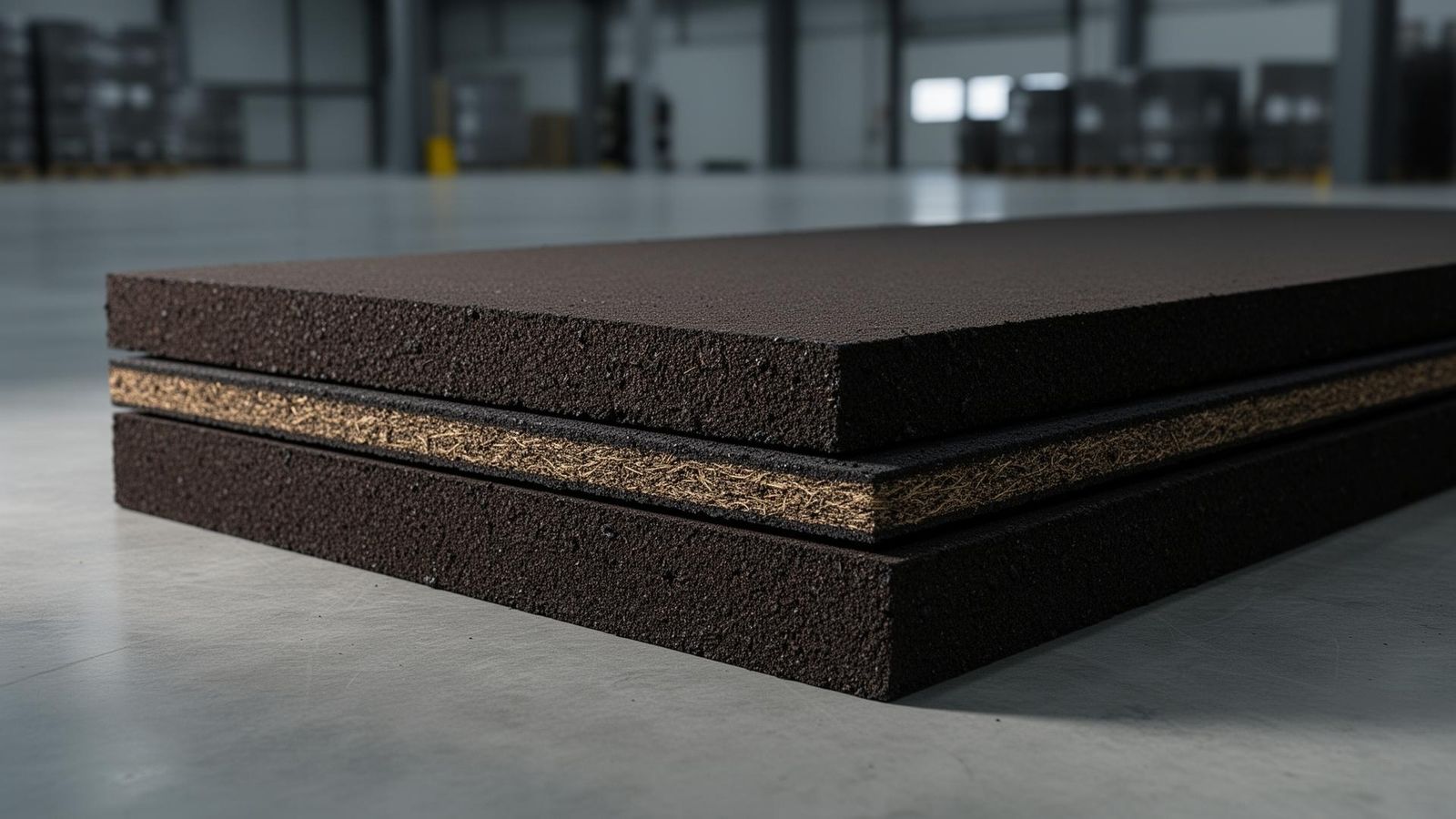
ASTM D1751 covers preformed expansion joint fillers made from non-extruding bituminous, resilient materials. In practice this means: bitumen-impregnated cellulose fibre boards (bitumen softboard). Single material class, single test regime.
ASTM D1752 covers preformed expansion joint fillers made from three distinct material classes: Type I sponge rubber, Type II self-expanding cork, Type III resin-bonded cork. Each type has different physical property requirements.
Performance requirements compared
Compression (D1751): 1000 psi (6.9 MPa) maximum applied stress to compress to 50% of original thickness. Recovery: minimum 70% after 1 hour. Extrusion: maximum 6.4mm under 12.4 MPa load. Compression (D1752 Type I, sponge rubber): 100-400 psi to compress to 50%. Recovery: minimum 95%. Highest recovery class. Compression (D1752 Type II, self-expanding cork): material expands back to original thickness when wet. Used in vertical and submerged joints. Compression (D1752 Type III, resin-bonded cork): 50-500 psi to compress to 50%. Recovery: 85%+. Most-used cork type in GCC.
D1751 materials accept higher compression loads; D1752 Type I/III materials recover more completely.
Bitumen extrusion and dimensional stability
D1751 specifies a maximum extrusion (bitumen squeezing out under load) of 6.4mm. In practice modern bitumen softboards extrude far less than this. The standard also requires <2% water absorption, <1.5% dimensional change after water immersion, and resistance to disintegration when wetted and dried.
D1752 cork-based fillers absorb more water than D1751 bitumen boards. Type II self-expanding cork is designed to swell on wetting; Type III bonded cork stays dimensionally stable. This is why cork is preferred for water-retaining structures and bitumen is preferred for paving.
How GCC specifications cite these
Most consultants specify "preformed expansion joint filler to ASTM D1751" for roads, airports, infrastructure paving and general structural concrete. This automatically selects bitumen softboard.
For water tanks, swimming pools, tunnels and structures where extension cycles dominate, consultants specify "self-expanding cork to ASTM D1752 Type II' or 'resin-bonded cork to ASTM D1752 Type III".
A specification calling out both standards (e.g. "to ASTM D1751 or D1752 as appropriate") leaves the choice to the contractor; in practice bitumen softboard is procured by default unless the application demands cork.