
The movement calculation
Total joint movement = (slab length) × (thermal coefficient) × (temperature range) + shrinkage allowance.
Thermal coefficient of normal-weight concrete: 10×10⁻⁶ /°C. GCC slab service temperature range: 5°C winter low to 70°C summer surface high = 65°C operating range (paving). Building interiors: 15-35°C = 20°C range. Drying shrinkage: 0.3-0.6 mm/m for normal concrete, 0.2-0.4 mm/m for low-shrinkage mixes.
Example - 20m road slab: 20,000mm × 10×10⁻⁶ × 65 = 13mm thermal + 8mm shrinkage = 21mm total movement. Specify 25mm filler. Example - 6m warehouse slab: 6,000mm × 10×10⁻⁶ × 25 = 1.5mm thermal + 3mm shrinkage = 4.5mm total. Specify 12-15mm filler (minimum practical thickness).
Standard thickness by application
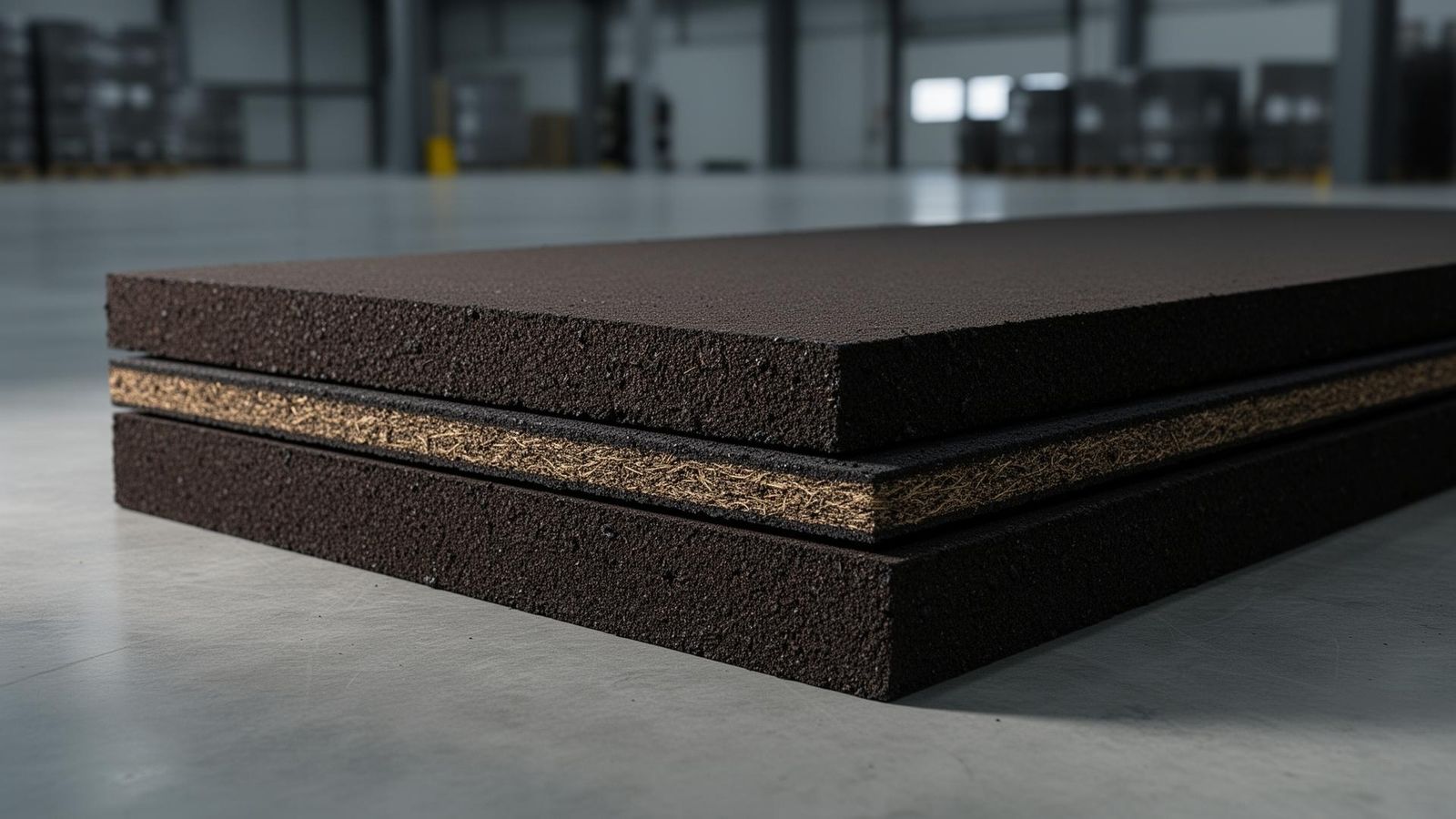
Building slabs (4-6m bays): 12-15mm bitumen softboard. Industrial warehouse floors (6-10m bays): 15-20mm. Port yards and heavy paving (8-12m bays): 20-25mm. Roads (4-6m transverse joints): 20-25mm. Bridge deck joints (3-15m structural movements): 25-40mm + proprietary joint cover. Airport runways and taxiways (6m bays): 20-25mm. Water-retaining structures: 20-25mm cork (D1752 Type II/III).
These ranges reflect current consultant practice across UAE, KSA, Qatar, Kuwait, Oman, Jordan and Iraq. Project-specific design loads may require larger thicknesses.
Joint spacing matters as much as thickness
Doubling slab length doubles the movement, so doubling filler thickness is required to maintain the same compression ratio. Many GCC infrastructure failures originate from contractor-side decisions to widen joint spacing while keeping standard filler thickness, halving the movement allowance per joint.
For new design: keep slab bays under 6m where practical, use 15-25mm filler, and specify recoverable filler material (D1751 bitumen or D1752 Type III cork).
Width tolerance on site
The filler should sit slightly proud of the formwork (1-2mm) so that the second pour does not encroach beyond the joint line. Standard board sizes are 1220x2440mm, 1000x2000mm and 600x2000mm. Common thicknesses: 10, 12, 15, 20, 25, 30, 40, 50mm.
Specify thickness tolerance ±5%, density 290-320 kg/m³, and require mill test certificates per consignment.
Reseal and replace thresholds
Bitumen softboard at depth in a properly-sealed joint typically delivers 25+ years of service. Surface sealant above the filler is the wear element and is replaced every 5-10 years on roads, 10-15 years on building joints. Failed sealant is not a filler failure - it is the expected maintenance cycle.