Cement board composition
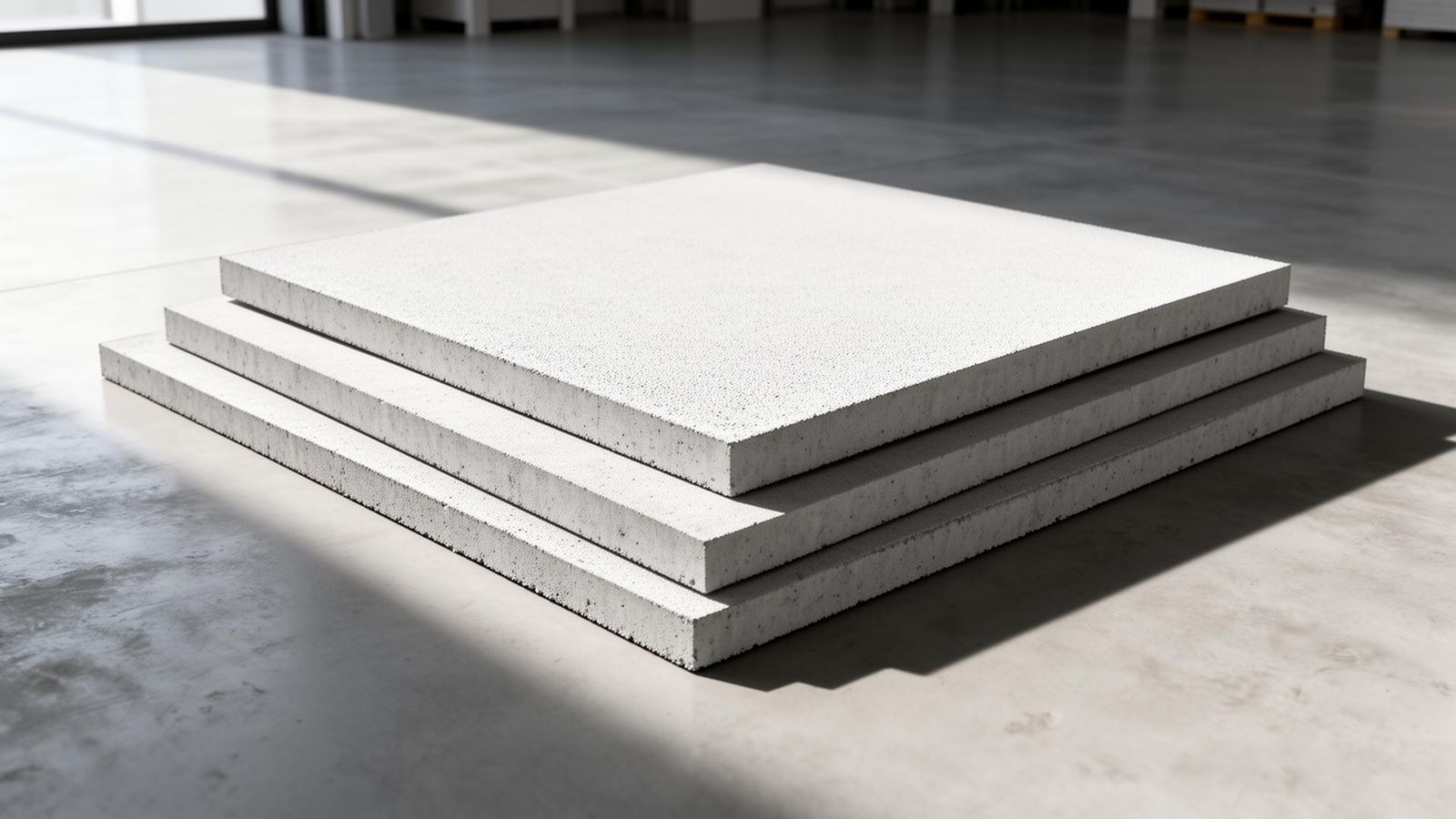
Portland cement matrix + cellulose or PVA fibre + silica + water, cured by air or autoclave. Density 950-1850 kg/m³. Strong, impact-resistant, water-resistant, non-combustible. Standards: EN 12467, ASTM C1186, ISO 8336.
Calcium silicate board composition
Calcium silicate hydrate matrix (formed by reaction of lime with silica) + cellulose or other reinforcing fibre, autoclave-cured. Density typically 450-1300 kg/m³ (significantly lighter than dense cement board). Excellent fire resistance, low thermal conductivity, dimensional stability under high heat. Standards: EN 12467 (when classed under fibre-cement), proprietary product certifications (Promat, Skamol, Hilux), ISO 12467.
Performance comparison
Fire resistance under prolonged exposure: Calcium silicate maintains structural integrity to higher temperatures (1000°C+) than typical cement board, making it the default for high-spec fire-rated assemblies, fireproofing of steelwork, and back-of-furnace lining. Impact resistance: Cement board higher. Density / weight: Calcium silicate lighter; advantageous for ceilings and overhead applications. Water resistance: Both good; cement board slightly higher when fully submerged. Cost per m²: Calcium silicate typically 1.5-2.5x cement board; specialised fire-rated grades higher still. Workability: Calcium silicate easier to cut and machine; cement board requires diamond tooling for dense grades.
Application split in GCC projects
Cement board: exterior cladding, wet-area wall lining, tile backer, general fire-rated partitions, structural sheathing. Calcium silicate board: fireproofing of structural steel and beams (Promat, Skamol systems), fire-rated ceilings in hotels and high-rises, back-of-house plant room walls, electrical riser linings, kitchen exhaust enclosures, smoke compartmentation walls.
A typical UAE hotel uses cement board in bathrooms and exterior, gypsum in dry corridors, and calcium silicate in fire compartmentation walls and steel encasements.
Specification clarity
Consultants should specify product by category (cement board to EN 12467, calcium silicate to manufacturer reference) and by required performance (fire rating in minutes, density class, edge type). Generic "fibre board" specifications create substitution disputes and post-installation rework. TIC Dubai works with consultants to clarify board class against intended performance at PO stage.