
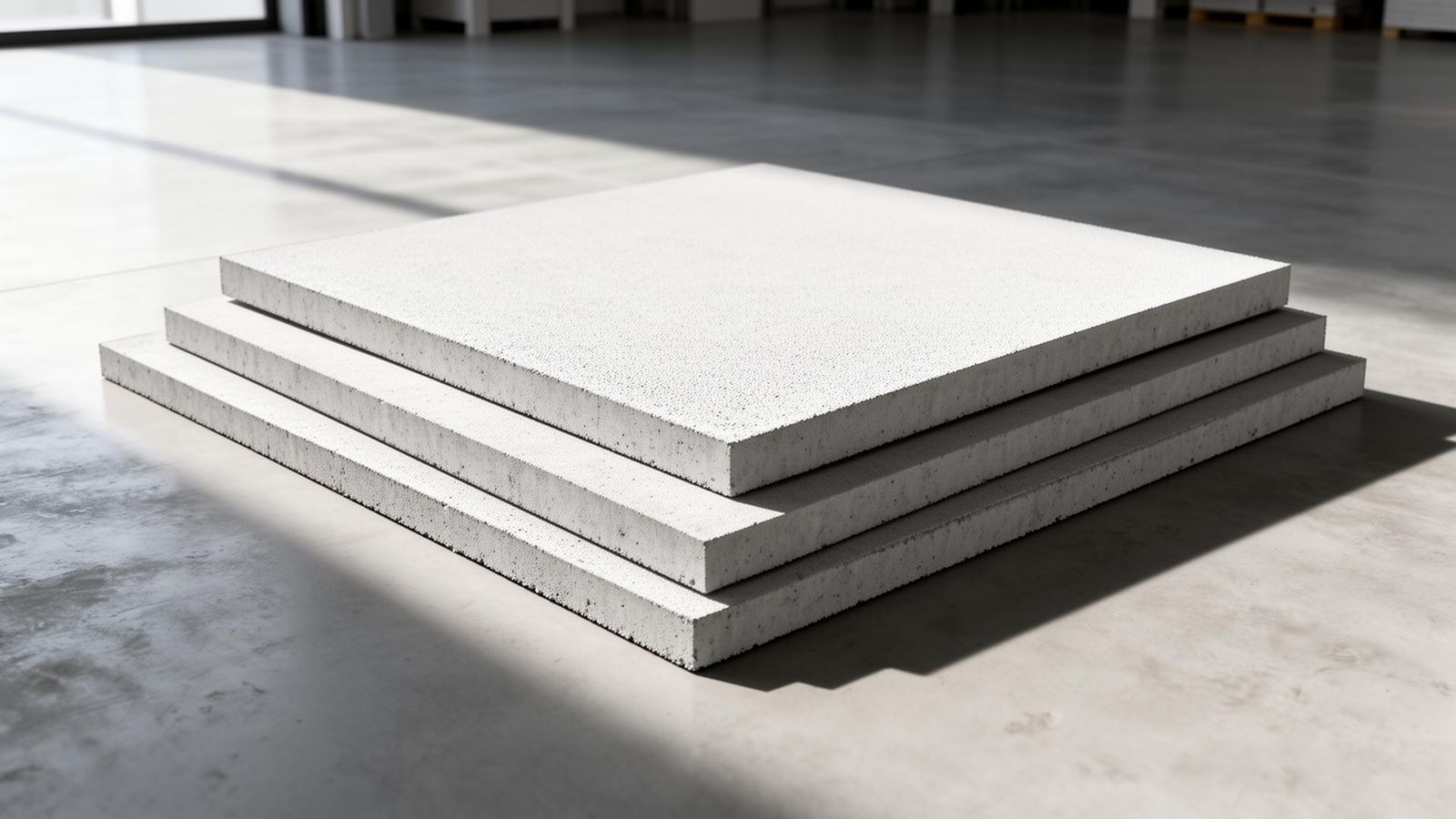
The standard wet-area partition
From wet face to dry face, a typical bathroom partition is built as: 1) Tile (porcelain, ceramic, natural stone) bedded in waterproof adhesive 2) Liquid-applied waterproof membrane (cementitious or polymer) - the primary water barrier 3) 12mm cement board, screwed to studs, joints taped with alkali-resistant tape and set with cement adhesive 4) Light-gauge galvanised steel studs at 400-600mm centres, with mineral wool insulation between for acoustic and thermal performance 5) 12.5mm fire-rated gypsum board on the dry face, taped and skimmed for paint 6) Paint or wallpaper finish.
This assembly delivers waterproofing, fire rating (typically 60-120 minutes depending on stud and board class), acoustic separation (45-55 STC), and impact resistance to standard residential and hotel use.
Shower compartment specifics
For showers, the partition is enhanced with: full-wall waterproof membrane (not just splash zone), waterproof membrane wrapping into the floor and tray, mechanical drainage detail at the floor-to-wall junction, and continuous membrane lap behind any niche, shelf or shower mixer body.
Cement board behind shower tile should be 12mm minimum. Joints between boards should be 3-5mm with elastomeric sealant fill, then taped and skimmed with waterproof cementitious adhesive before membrane application.
Pool and water-retaining wall lining
For internal pool walls, splash decks and changing rooms, the assembly upgrades to: - High-density cement board (1500+ kg/m³, EN 12467 Category A Class 4 or 5) - Two-coat cementitious waterproofing or sheet membrane with welded laps - Anti-slip pool-rated tile in wet zones, slip-graded to DIN 51097 Class C or BS 7976 Pendulum >36 - Stainless steel fastenings (A2 minimum, A4 for chlorinated environments)
Kitchen and laundry walls
For commercial and residential kitchens behind cookers and around sinks, cement board provides impact resistance, heat tolerance (typically up to 80°C continuous, higher with calcium silicate where required by code), and a stable substrate for tile, stainless steel or wipeable laminate finishes.
Around dishwashers and washing machines, plumbing penetrations should be sealed with mastic and chased through metal-edged sleeves through the cement board.
Common mistakes to avoid
(1) Using MR gypsum (green board) behind shower tile - fails within 2-3 years from hidden moisture. (2) Skipping the waterproof membrane and relying on cement board alone - cement board is water-resistant, not waterproof. (3) Using mild-steel fixings in chlorinated pool environments - corrosion-staining at every screw within 6-12 months. (4) Skim-coating joints with non-cementitious filler - membrane delamination at every joint. (5) Cement board in dry corridor walls - unnecessary cost, weight and labour penalty.