
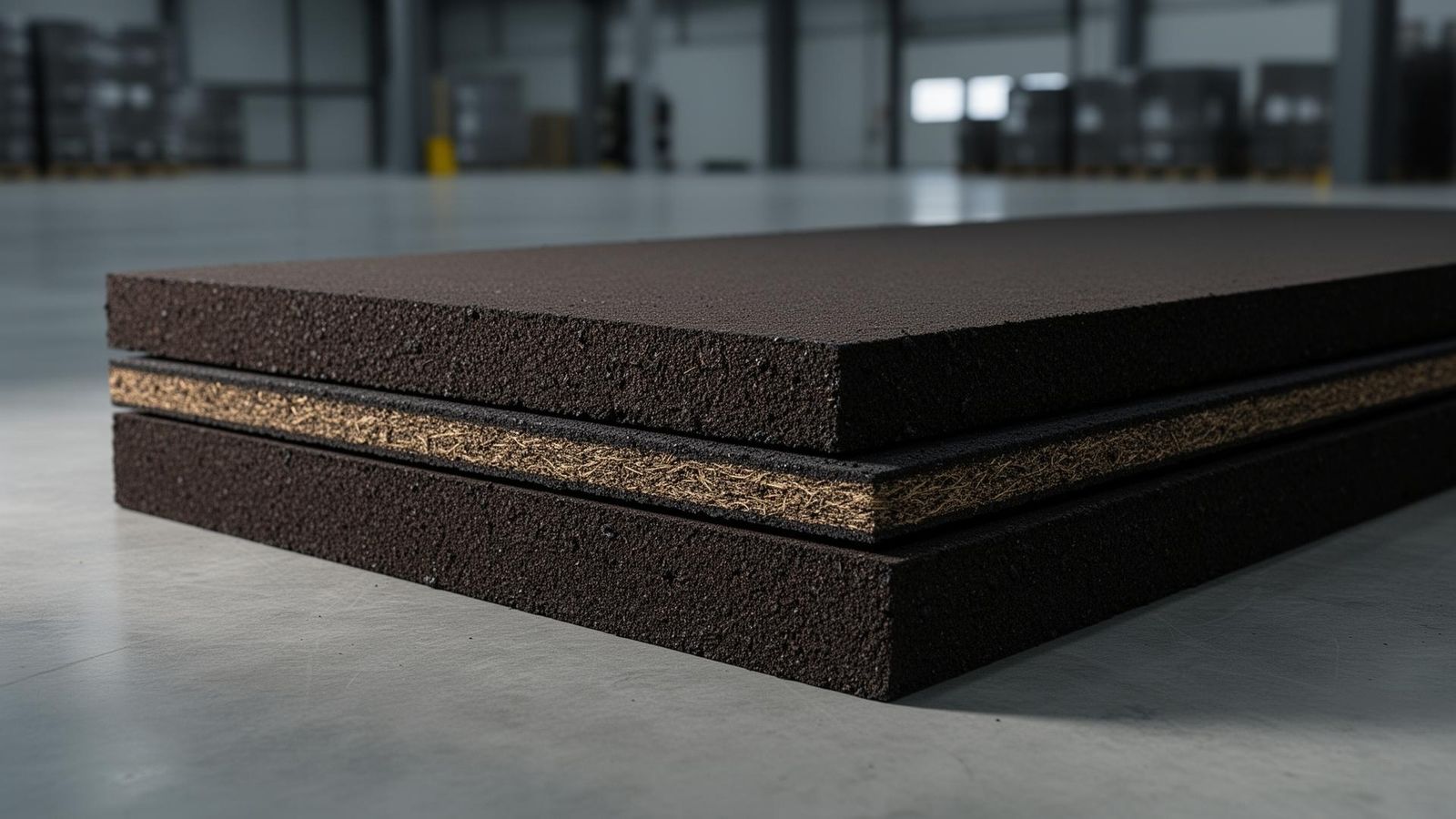
Physical comparison
Bitumen softboard: 290-320 kg/m³ density, 0.5-1.5 MPa load to 50% compression, 70-85% recovery after 1 hour, <2% water absorption, ASTM D1751. Resin-bonded cork (D1752 Type III): 220-280 kg/m³ density, 0.35-3.5 MPa load to 50% compression, 85-95% recovery, 5-12% water absorption, ASTM D1752 Type III. Self-expanding cork (D1752 Type II): 220-250 kg/m³, recovers fully on wetting, used in vertical and submerged joints.
Bitumen is denser, requires more force to compress, recovers slightly less, and is far more water-resistant. Cork is softer, recovers further, and tolerates wet/dry cycling.
Where bitumen softboard wins
Roads, highways, runways, taxiways, port yards, industrial pavements, slab-on-grade construction, and any application dominated by compression cycles. Bitumen handles heavy mechanical load, vehicle traffic and persistent exposure to water at the joint. It is also significantly more cost-effective per square metre, which matters on infrastructure-scale tenders.
Across UAE Etihad Rail, ASHGHAL roads in Qatar, Riyadh Metro, NEOM infrastructure, Saudi Land Bridge, Kuwait North City and Egyptian New Capital, bitumen softboard is the default infrastructure joint filler.
Where cork wins
Water-retaining structures (tanks, reservoirs, pools, treatment plants), tunnels, basements with hydrostatic pressure, vertical joints in walls, and any joint where extension cycles dominate or where the joint must self-seal as the structure dries. Cork's higher recovery and the self-expanding behaviour of Type II make it the correct choice here.
Cork is also chosen for visible architectural concrete joints, where the colour and texture are sometimes preferred to bitumen.
Cost and supply
Bitumen softboard: 1.0x baseline cost (the reference material for GCC infrastructure pricing). Resin-bonded cork: 2.5-4x bitumen cost depending on thickness and density. Self-expanding cork: 3-5x bitumen cost.
Bitumen softboard is supplied container-direct from mills in India, China, Indonesia and the GCC region. Cork is imported from Portugal and Spain; lead times can run 8-12 weeks for project quantities. For large infrastructure programmes, both materials need to be ordered against a phased delivery schedule.
Hybrid specifications
On large mixed projects, consultants increasingly specify bitumen for paving joints and cork for water-retaining joints in the same package. TIC Dubai supplies both materials with a single PO and consolidated MTCs to simplify procurement for EPCs.