Natural veneer
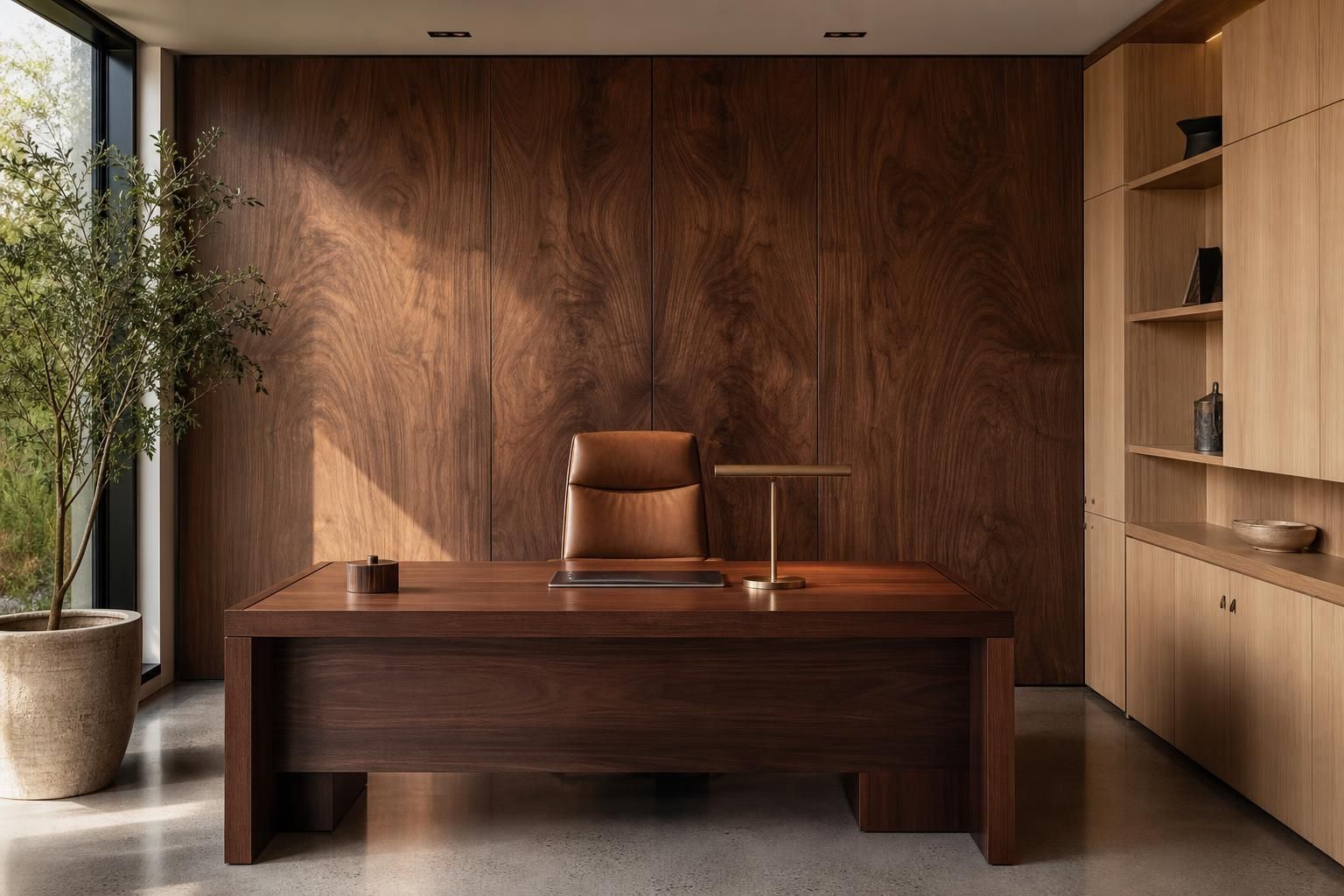
Natural veneer is sliced directly from a single tree log. Each leaf shows the unique grain, figure, knots and colour variation of that log. Sequence matters: leaves are kept in the order they were cut from the flitch so designers can specify book-matched or slip-matched layups that reproduce the natural progression of grain across a panel.
Natural veneer is irreplaceable for one-of-a-kind installations where character, depth and tactile authenticity define the project. Limitations: colour variation between logs, limited width (typically 200-450mm per leaf), defect inclusion that requires layup planning.
Engineered veneer (reconstituted veneer)
Engineered veneer is produced by slicing fast-growing utility timber (typically poplar, Ayous or Obeche) into thin sheets, dyeing each sheet to a controlled colour, restacking the dyed sheets into a laminated block that simulates the structure of a premium species, and re-slicing the block to produce face leaves with controlled grain and colour.
The result is a veneer with: uniform colour across thousands of square metres, uniform grain pattern, no natural defects (knots, mineral streaks), wider leaf widths (up to 640mm or 1240mm depending on process), and the ability to simulate species that are CITES-restricted (Rosewood, Macassar) or unsustainably harvested.
Comparing production economics
Natural veneer: priced per square metre by species and grade, with the most expensive species (Macassar Ebony, Burl Walnut, Olive Ash) running 5-15x the cost of Oak or Walnut. Lead time depends on flitch availability at European or American slicers.
Engineered veneer: priced at the mid-to-upper range of natural Oak and Walnut, with production-quality consistency. Lead time is shorter and project quantities are more predictable.
Where each is correctly specified
Natural veneer wins when: the project depends on visible authenticity (heritage hotels, presidential suites, executive boardrooms), CITES-permitted species are available, the budget supports flitch selection and matched layup design, or large-format leaves are not required.
Engineered veneer wins when: large continuous panels of uniform colour are required (hotel corridor cladding, retail roll-outs), CITES species need to be simulated for legal compliance, repeat installations across multiple buildings must match exactly, or the budget needs to land between natural veneer and high-pressure laminate.
Most large GCC hospitality projects use both: natural veneer in feature areas, engineered veneer in repeat-pattern zones.
Specification cues
Engineered veneer should be specified by manufacturer name (ALPI, Tabu, Decospan recon ranges), reference code, and substrate. Natural veneer should be specified by species name (botanical and trade), origin region, cut, match, grade and flitch reference. Mixing the two in one purchase requires explicit drawings noting which zones are which.