
The standard grade ladder
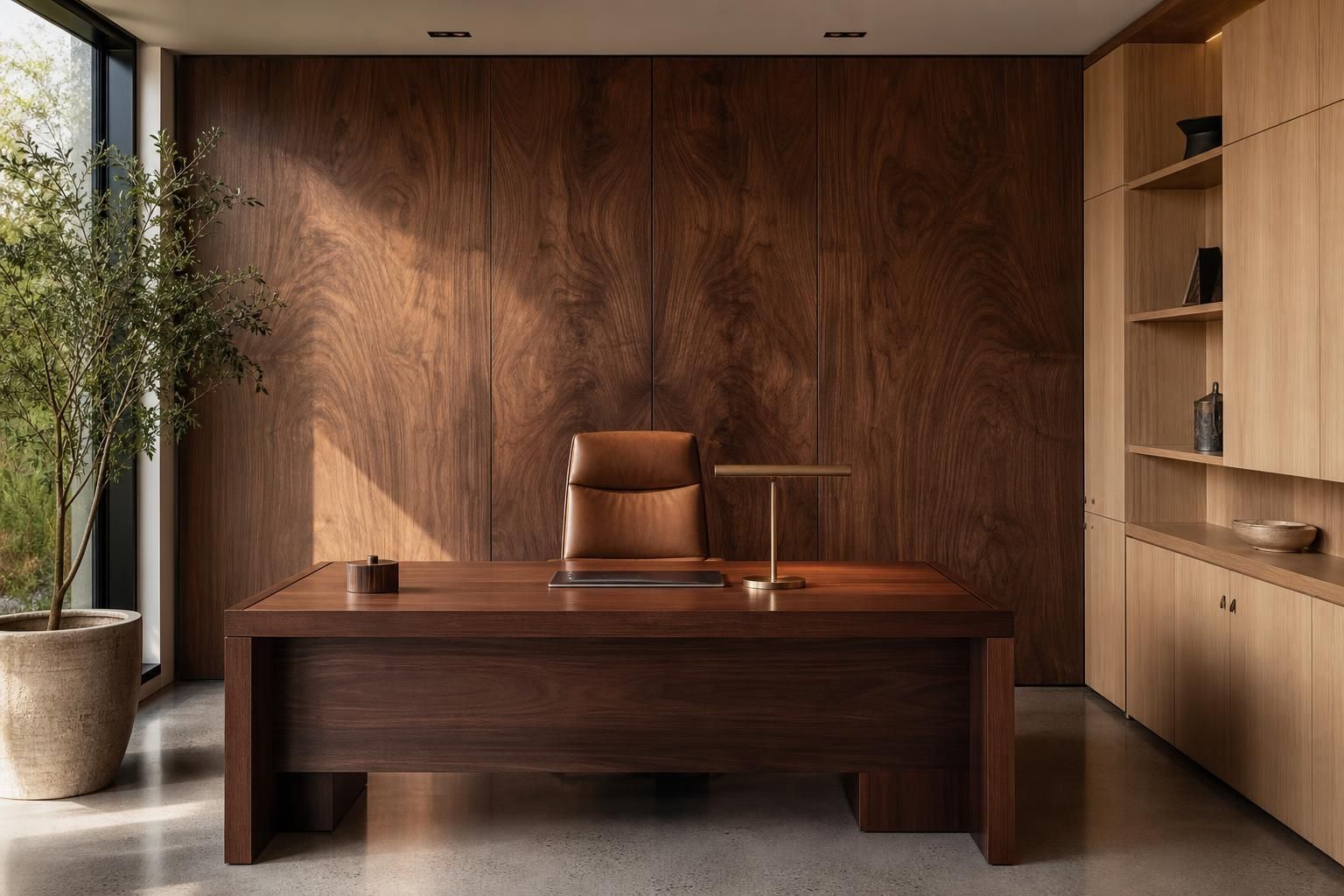
Premium / AA / Architectural: top of the ladder. Minimal colour variation, no visible defects, leaves are sequence-matched for layup, sapwood limited or excluded. Reserved for feature walls, presidential suites, executive boardrooms, ground-floor lobbies.
Grade A: high quality with minor allowable defects (small sound knots, slight colour variation), sequence preserved within bundles. The GCC project standard for guestrooms, corridor cladding and general luxury joinery.
Grade B: commercial-quality joinery face, larger allowable defects, no sequence guarantee. Used for back-of-house, utility doors, and concealed panel faces.
Grade C / Sound Backer: rotary-cut utility face, defects filled or patched. Used on the back of veneered panels and as substrate face on hidden surfaces.
AWI, WIC and HPVA reference standards
AWI (Architectural Woodwork Institute, USA) Quality Standards Illustrated: Premium, Custom, Economy grades for architectural woodwork including veneered panels. The dominant reference standard for North American specifiers, increasingly used by GCC consultancies of American origin. WIC (Woodwork Institute, California): similar three-tier system. HPVA (Hardwood Plywood and Veneer Association) HP-1 standard: A, B, C, D, E grades for plywood faces; closely aligned to architectural panel use. EN 13986: European standard for wood-based panels in construction, references EN 635 for plywood face grades.
GCC specifications typically reference AWI Custom or Premium plus a face grade (e.g. "AWI Premium, Walnut A-grade face").
What 'defect-free' actually means
Even AA / Premium veneer is not defect-free in absolute terms; natural wood always has minor character. The grade defines maximum size and frequency of: sound knots (≤3mm in A, ≤6mm in B), mineral streaks (limited length per leaf), colour variation (within a defined range), sapwood (excluded or limited), pinholes, surface checks.
For procurement, request leaf samples that show the actual grade boundary rather than relying on adjectives. TIC Dubai supplies graded veneer with sample bundles representative of the bulk delivery.
Matching grade to budget
Five-star hotel suite / luxury residence master bedroom: AA / Premium book-matched. Five-star hotel standard room: A book-matched or slip-matched. Four-star hotel guestroom: A slip-matched or commercial book-matched. Corporate office cellular workspace: A or B slip-matched. Retail back-of-house: B or commercial-grade. Door blanks and concealed faces: C/Sound Backer.
Spending Premium-grade money on concealed faces wastes budget; specifying B-grade on a feature wall reads as cheap in a luxury context.
Documentation and sample control
Each delivery should include: grade certificate per bundle, species certificate (including FSC chain-of-custody when required), thickness and moisture content report, and a control sample stored with the project mockup. This control sample is the reference for any disputed acceptance during installation.