
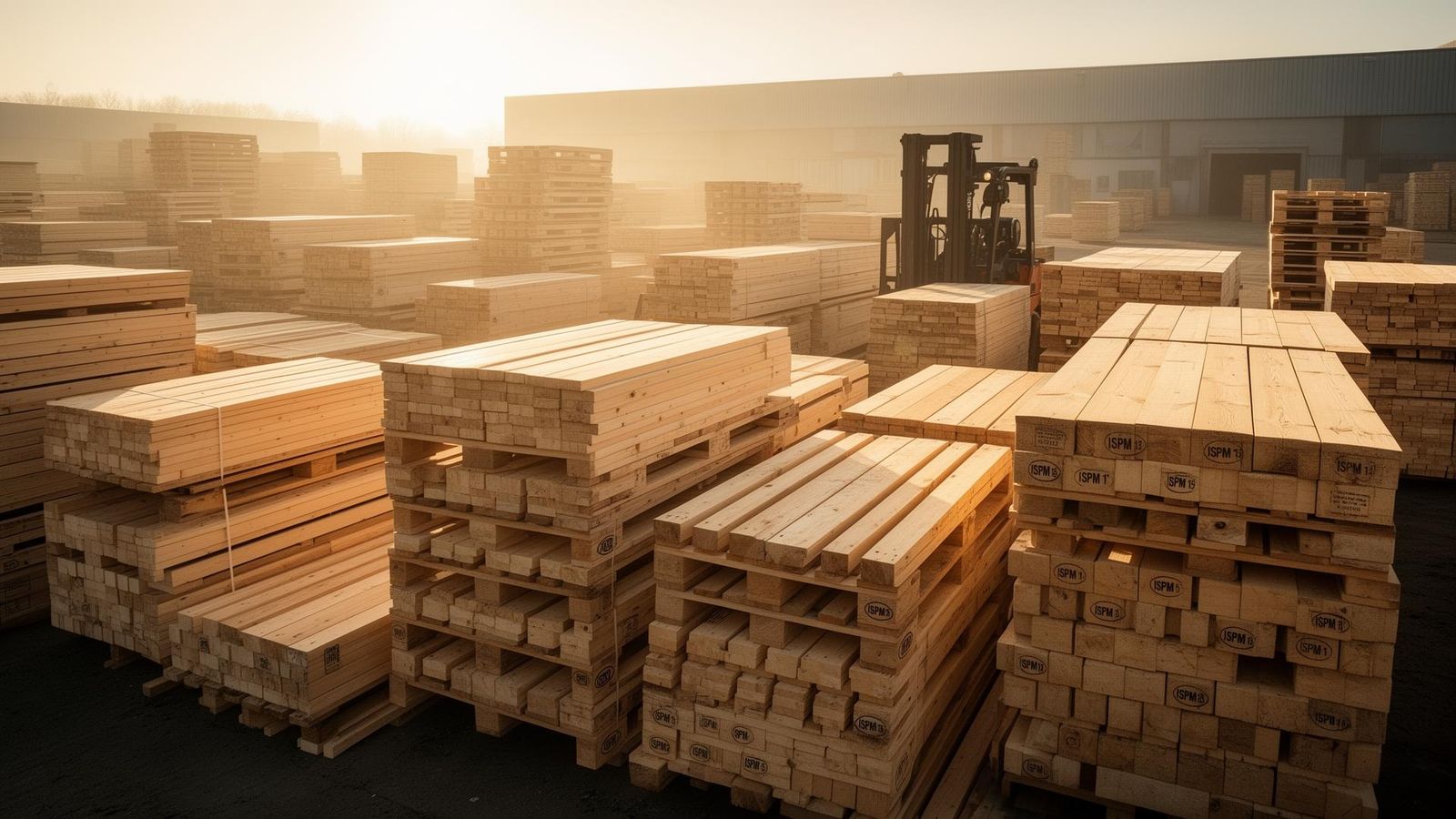
HT-stamped pallet wood, kits & components for GCC export.
Boards, stringers, bearers, blocks, pallet kits and dunnage timber, heat-treated to ISPM-15, IPPC-stamped at registered facilities, and delivered across the UAE, Saudi Arabia, Qatar, Oman, Kuwait, Bahrain, Jordan and Iraq.
Sawn softwood, engineered for the export-packaging chain.
Pallet wood is kiln-dried softwood, pine, whitewood, spruce, sawn into deck boards, stringers, bearers and blocks for pallet manufacturing, export packaging and industrial logistics. To cross international borders, every wooden component must be heat-treated (HT) to ISPM-15 specification and stamped with the IPPC mark.
TIC Dubai supplies the full pallet-wood programme, loose components, pre-cut kits, finished EPAL/CP/ISO pallets, custom-engineered project-cargo pallets and HT-stamped dunnage, across the UAE, GCC and wider Middle East, with phytosanitary documentation handled in one workflow.
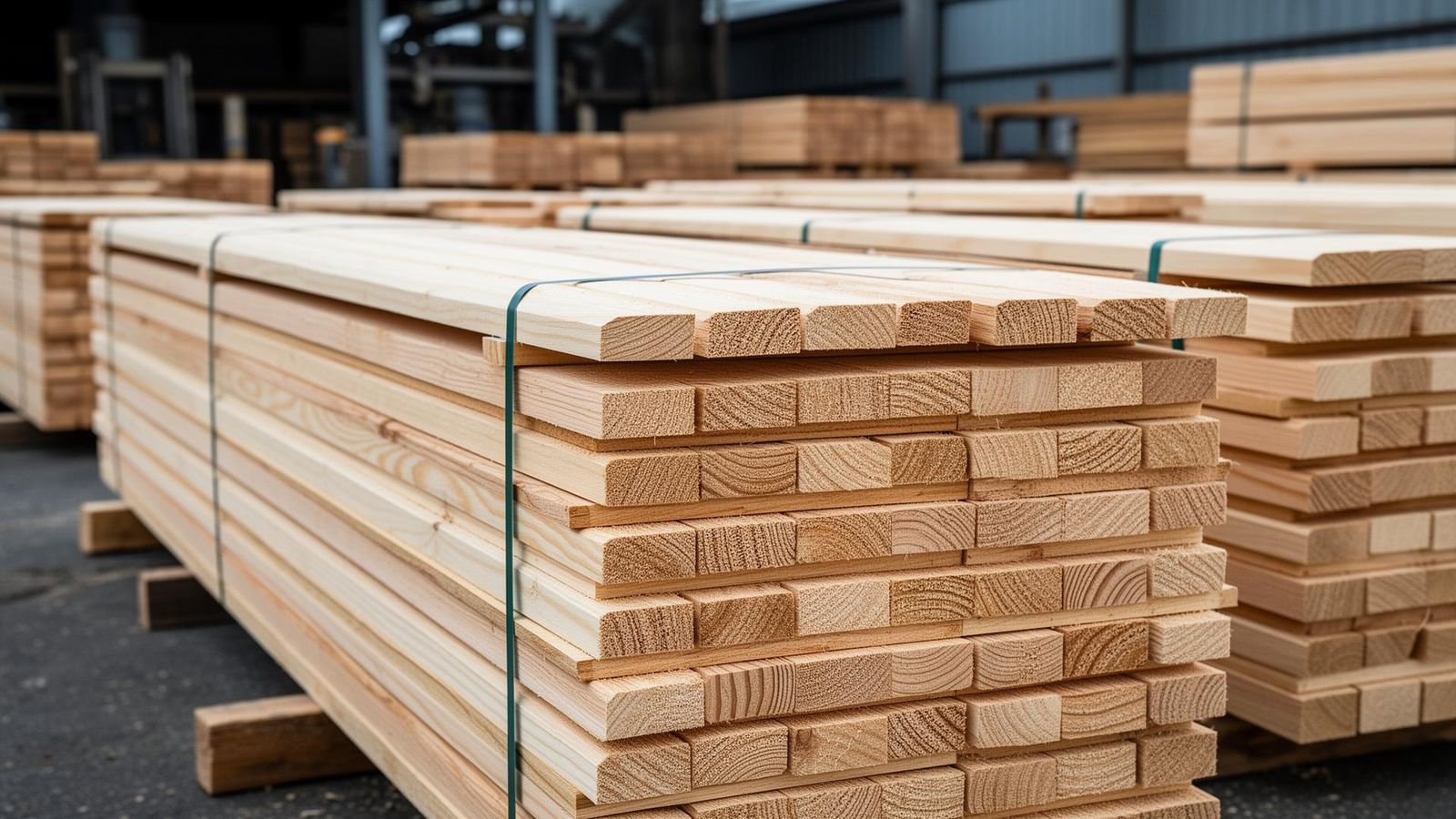
Every pallet component, every section.
Deck boards, stringers, bearers, blocks (solid, finger-jointed and composite), pre-cut pallet kits and ISPM-15 dunnage, all kiln-dried, heat-treated and IPPC-stamped to specification.
Top & Bottom Deck Boards
Kiln-dried softwood deck boards in standard pallet thicknesses.
Stringers
Longitudinal load-bearing pallet members in pine and whitewood.
Bearers
Cross-members supporting pallet decks and forklift access.
Solid Pallet Blocks
Single-piece softwood corner and middle blocks per EPAL spec.
Finger-Jointed Blocks
End-joined blocks from clean offcuts, 15–30% cost saving on solid.
Composite Blocks
Veneer/chip-laminated blocks with engineered density and uniformity.
Pallet Kits
Pre-cut pallet kits, boards, stringers, blocks, ready for assembly.
ISPM-15 Dunnage
HT-stamped bracing, blocking and dunnage timber for break-bulk and project cargo.
EPAL, CP, ISO & custom, engineered to your trade lane.
| Standard | Dimensions | Weight / Capacity | Best For |
|---|---|---|---|
| EPAL Euro | 1200 × 800 mm | 24 kg / 1,500 kg dynamic | EU exchange-pool flows, FMCG, automotive, supermarket logistics |
| ISO Euro (1200×1000) | 1200 × 1000 mm | 30 kg / 2,000 kg | Global standard, large industrial cargo, intermodal flows |
| CP1 | 1200 × 1000 mm | 1,500 kg | Chemical industry standard (CEFIC), drum & bag cargo |
| CP3 | 1140 × 1140 mm | 1,500 kg | IBC tanks, chemical and petrochemical exports |
| US 48×40 | 1219 × 1016 mm | 20–25 kg | US-bound cargo, stringer construction, two-way entry |
| Custom | Engineered to load | To spec | Heavy machinery, project cargo, irregular loads |
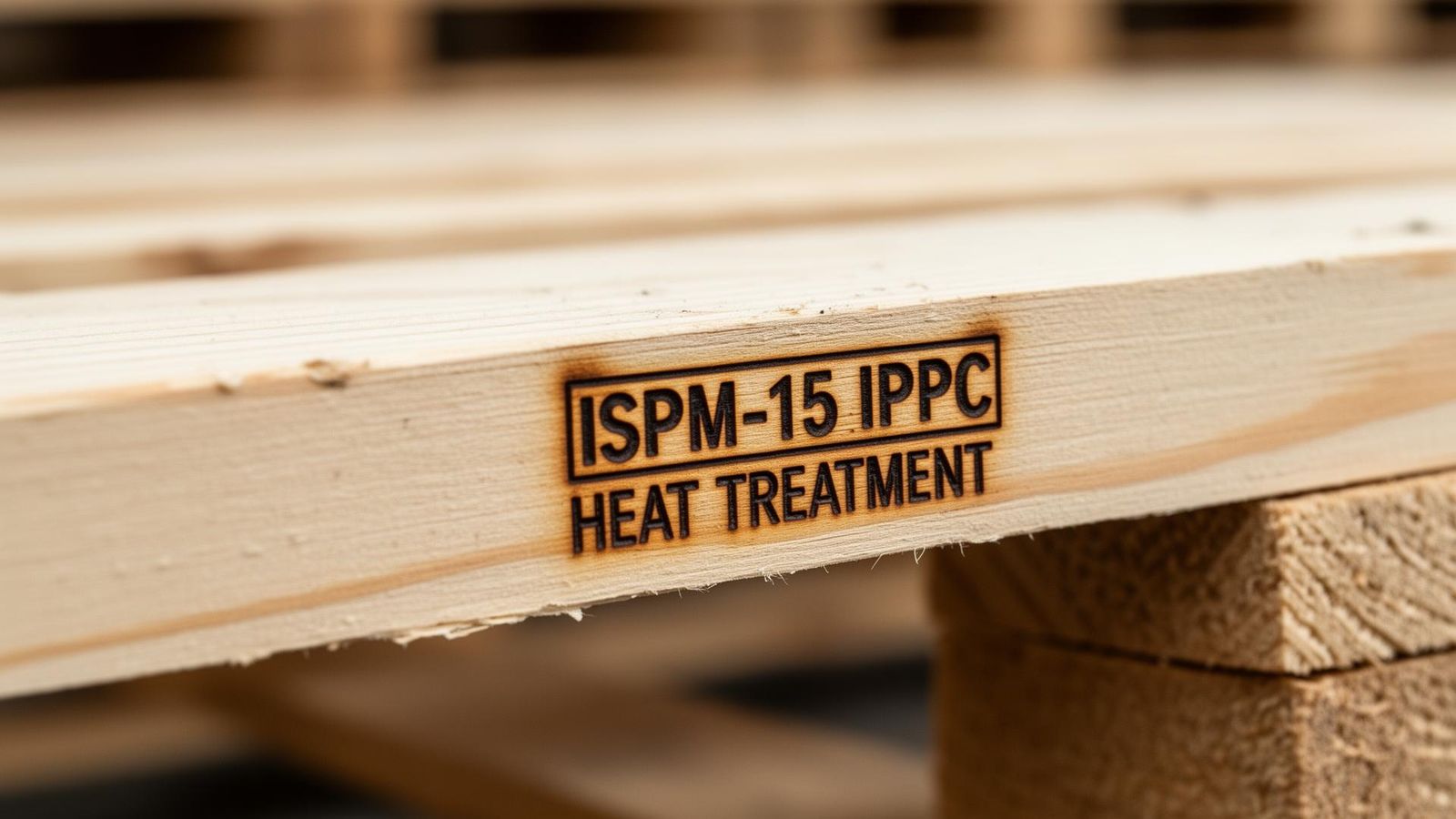
The single phytosanitary standard that clears your pallet across every border.
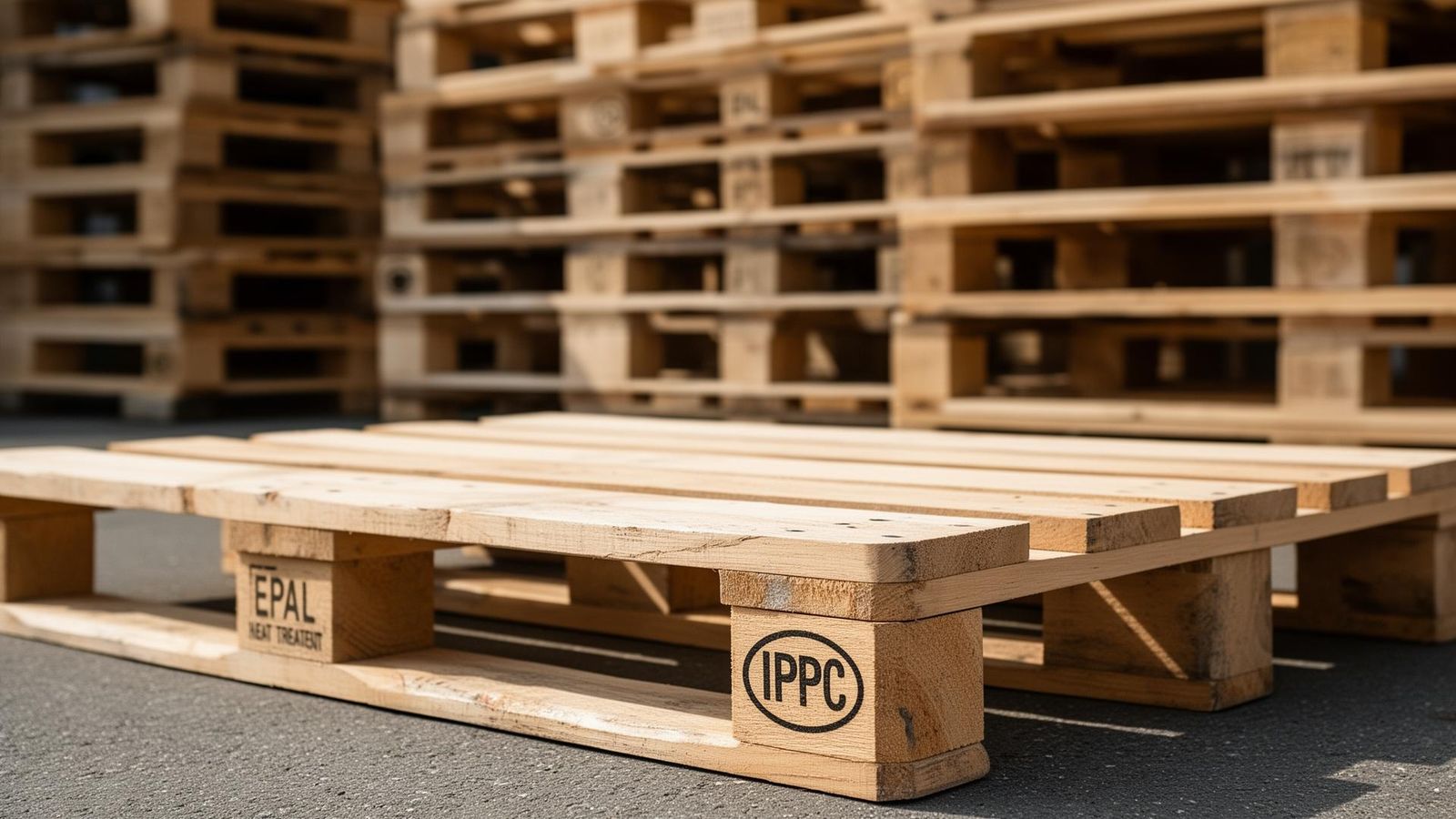
ISPM-15 is the IPPC's global standard for solid wood packaging crossing international borders. Treatment is almost always heat treatment (HT, wood core ≥ 56 °C for ≥ 30 minutes). The IPPC mark is burned in on at least two opposite sides of every assembled pallet, crate and piece of dunnage.
- IPPC Logo: Stylised wheat-ear symbol, universal IPPC mark, identical worldwide.
- Country Code: ISO two-letter code of the producing country (AE, IN, CN, TR, DE, IT, BR …).
- Facility Number: Unique registration ID of the licensed treatment facility, assigned by the national NPPO.
- Treatment Code: HT (heat treatment), KD-HT (kiln-dried to HT), DH (dielectric), MB (methyl bromide, legacy).
- Debarked Suffix: DB added where the wood was debarked before treatment, mandatory for some destinations.
Two routes to the same IPPC stamp. One is the new standard.
TIC Dubai supplies HT exclusively for new programmes, universally accepted, chemical-free, and the only ISPM-15 route compatible with EU-bound onward shipments.
| Aspect | Heat Treatment (HT) | Methyl Bromide (MB) |
|---|---|---|
| Mechanism | Core temperature ≥ 56 °C for ≥ 30 minutes | Methyl bromide fumigation under sealed conditions |
| Cycle time | 4–12 hours (KD-HT integrated) | 16–24 hours |
| Chemical residue | None, wood is chemical-free post-cycle | Trace residue; gas is human-toxic until vented |
| Environmental | Clean, biomass-fuelled kilns recover sawmill offcuts | Class I ozone-depleting substance under Montreal Protocol |
| EU acceptance | Universal | Refused at all EU ports |
| GCC acceptance | Universal, the dominant choice | Accepted but discouraged for new programmes |
| Cost per pallet | Lower at scale; biomass fuel cheap | Higher, chemical cost, licensed operator, venting |
| TIC Dubai supplies | Yes, exclusively for new programmes | Legacy inventory only on request |
One thermal cycle. Moisture controlled, pests eliminated, ISPM-15 certified.
KD-HT (kiln-dried to heat-treatment specification) is the modern pallet plant standard, wood enters the kiln at 30%+ moisture content and exits at 18–22% MC, simultaneously satisfying the ISPM-15 thermal profile. Single cycle, single certification, lowest total cost.
- Core temperature monitored by load-embedded probes throughout the cycle.
- Biomass-fuelled kilns recover sawmill offcuts, clean energy footprint.
- Cycle records archived against IPPC stamp number for full audit traceability.
- Output ships within 30 days of treatment to prevent re-infestation.
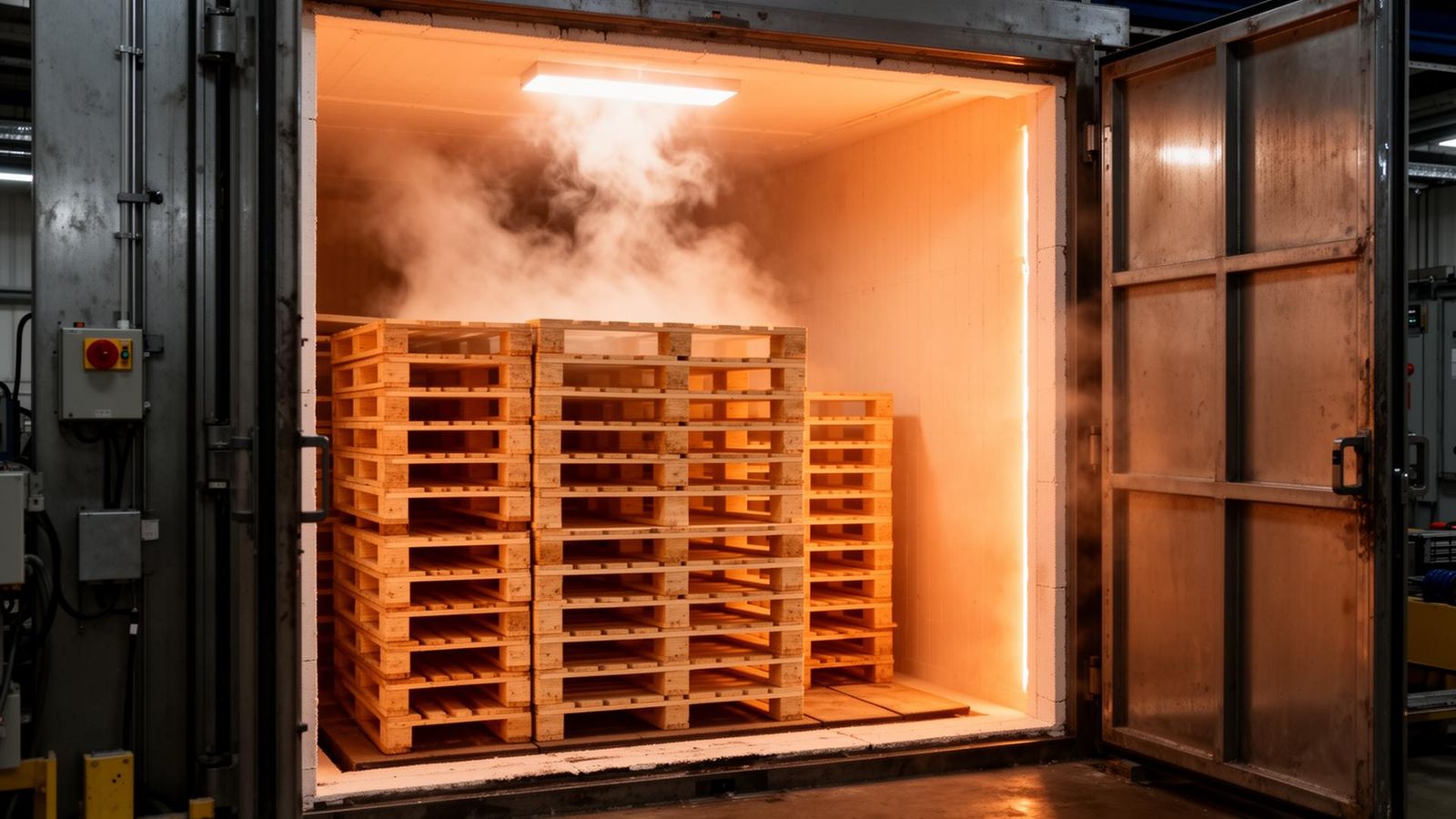
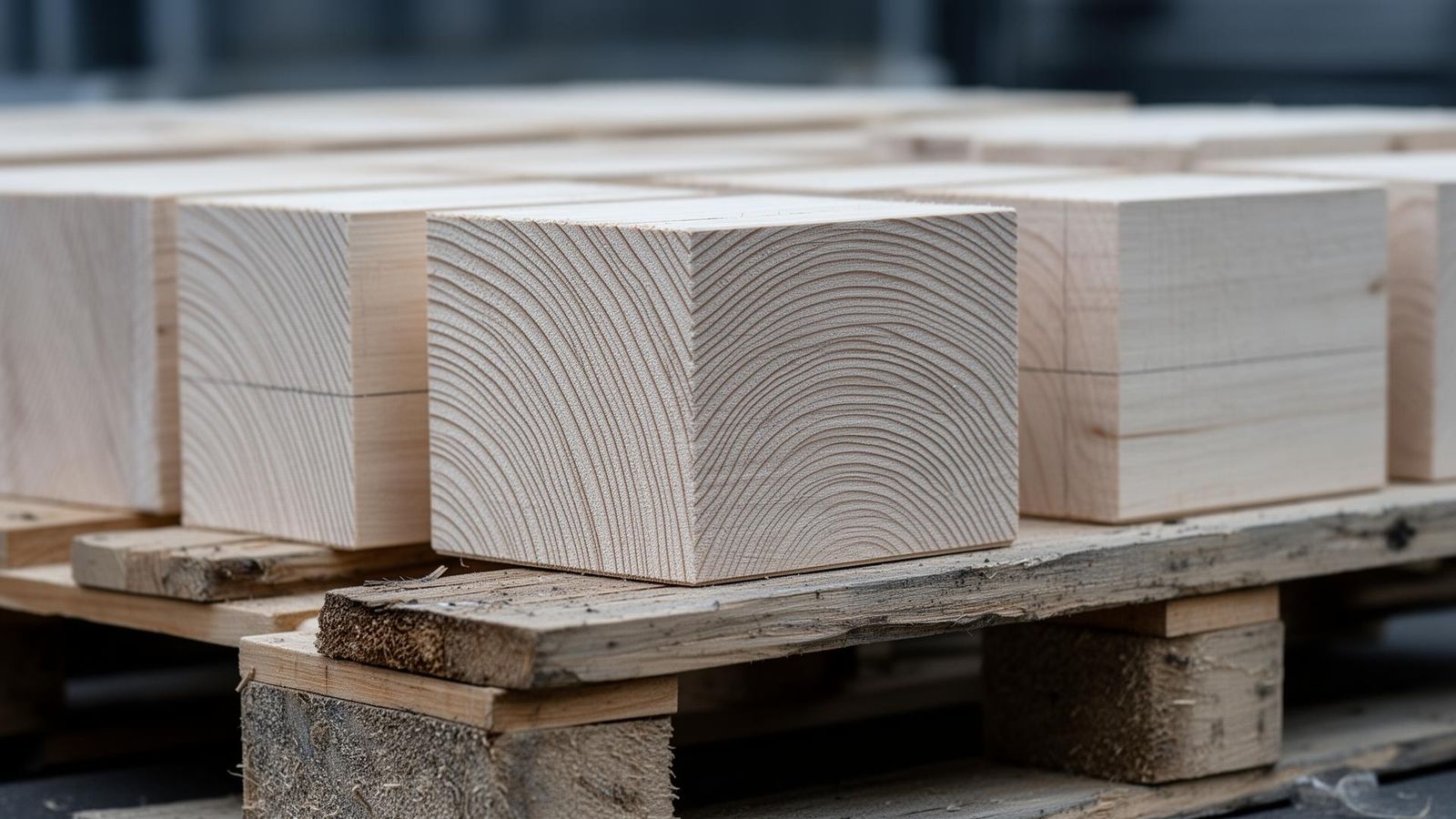
Solid, finger-jointed or composite, all EPAL-approved.
Three construction routes, three cost-performance profiles. EPAL approved finger-jointed blocks for Euro pallet manufacture in 2010, the modern industrial workhorse, while solid and composite blocks cover heavy-duty and precision-engineered applications.
- Solid
- Single-piece, highest strength-to-weight, EPAL default.
- Finger-Jointed
- 15–30% cheaper than solid, EPAL-approved since 2010.
- Composite
- Engineered density, exceptional dimensional stability.
Where TIC Dubai pallet wood goes to work.
Pallet Manufacturing
Block, stringer and Euro pallet production for FMCG, industrial and chemical sectors.
Export Packaging & Crating
Heavy-duty crates, boxes and skids for project cargo, machinery and equipment.
Warehousing & Logistics
Pool pallets for 3PL, distribution centres, and warehouse racking systems.
FMCG & Manufacturing
Production-line pallets for food, beverage, pharma and consumer goods supply chains.
Project Cargo & Break-Bulk
Engineered pallets and dunnage for transformers, modules and oversize cargo.
Heavy Machinery Packaging
Custom load-rated pallets for industrial equipment and OEM export.
The 1200 × 800 mm pallet that runs European trade.
78 nails in the prescribed pattern, 24 kg unloaded, 1,500 kg dynamic / 4,000 kg static / 1,000 kg in racking. The EUR/EPAL corner-block markings and IPPC HT stamp together certify the pallet for entry into the European exchange pool, one-for-one swappable with any other certified EPAL pallet across the continent.
TIC Dubai sources licensed EPAL Euro pallets to GCC delivery for FMCG, automotive, supermarket logistics and EU-bound exporters who need pool-pallet entitlement on arrival.
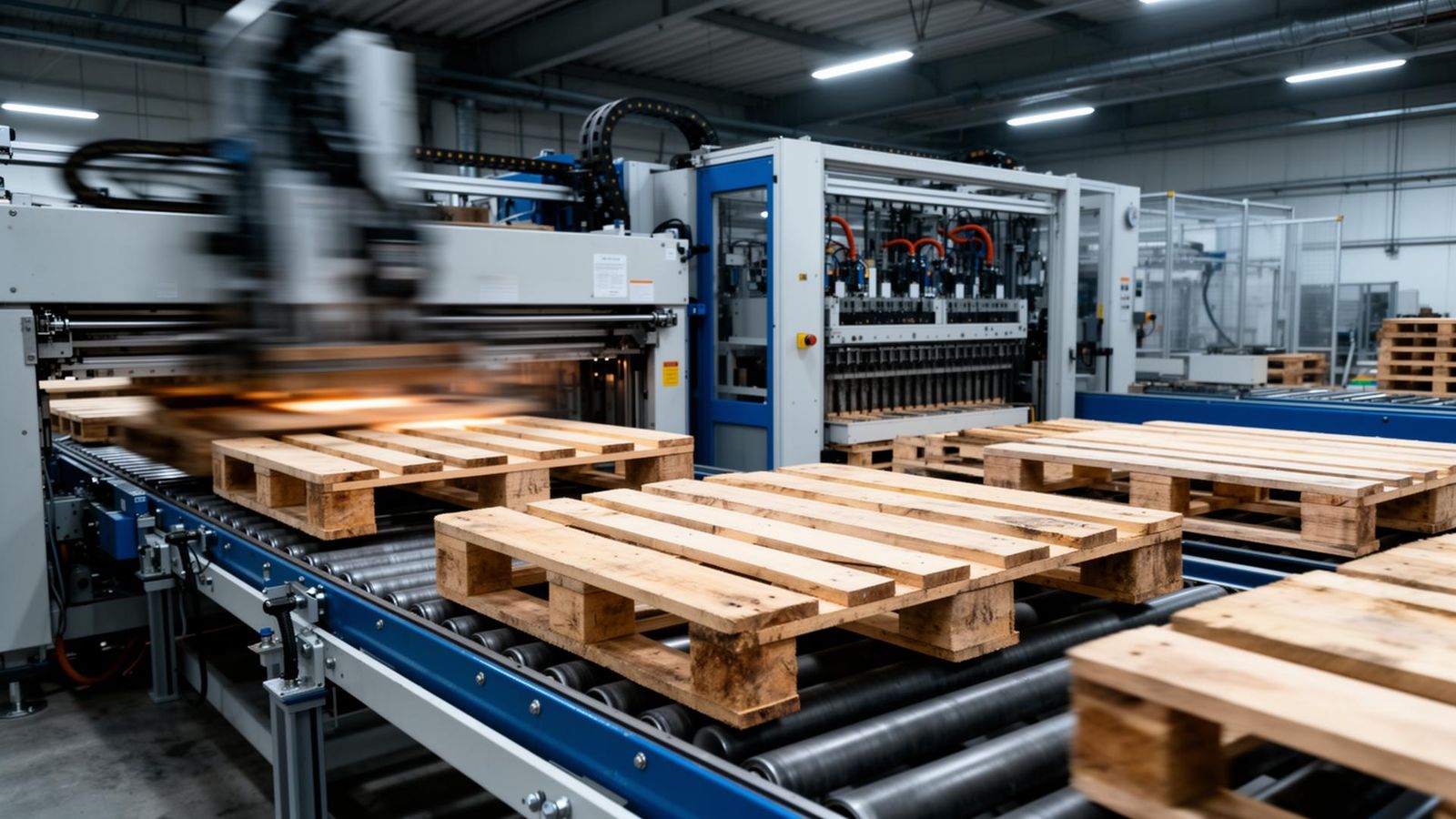
Automated lines, audited facilities, traceable output.
TIC Dubai works with registered pallet manufacturers in the UAE, Türkiye, India, Romania and Eastern Europe, automated nailing, calibrated component dimensions, HT chambers integrated with the production line, and IPPC stamping in real time against the facility's NPPO record.
- NPPO-registered HT facilities at every production partner.
- Burn-in IPPC branding, durable, transit-proof, port-inspector compliant.
- Per-batch traceability from kiln cycle to packing list to BL.
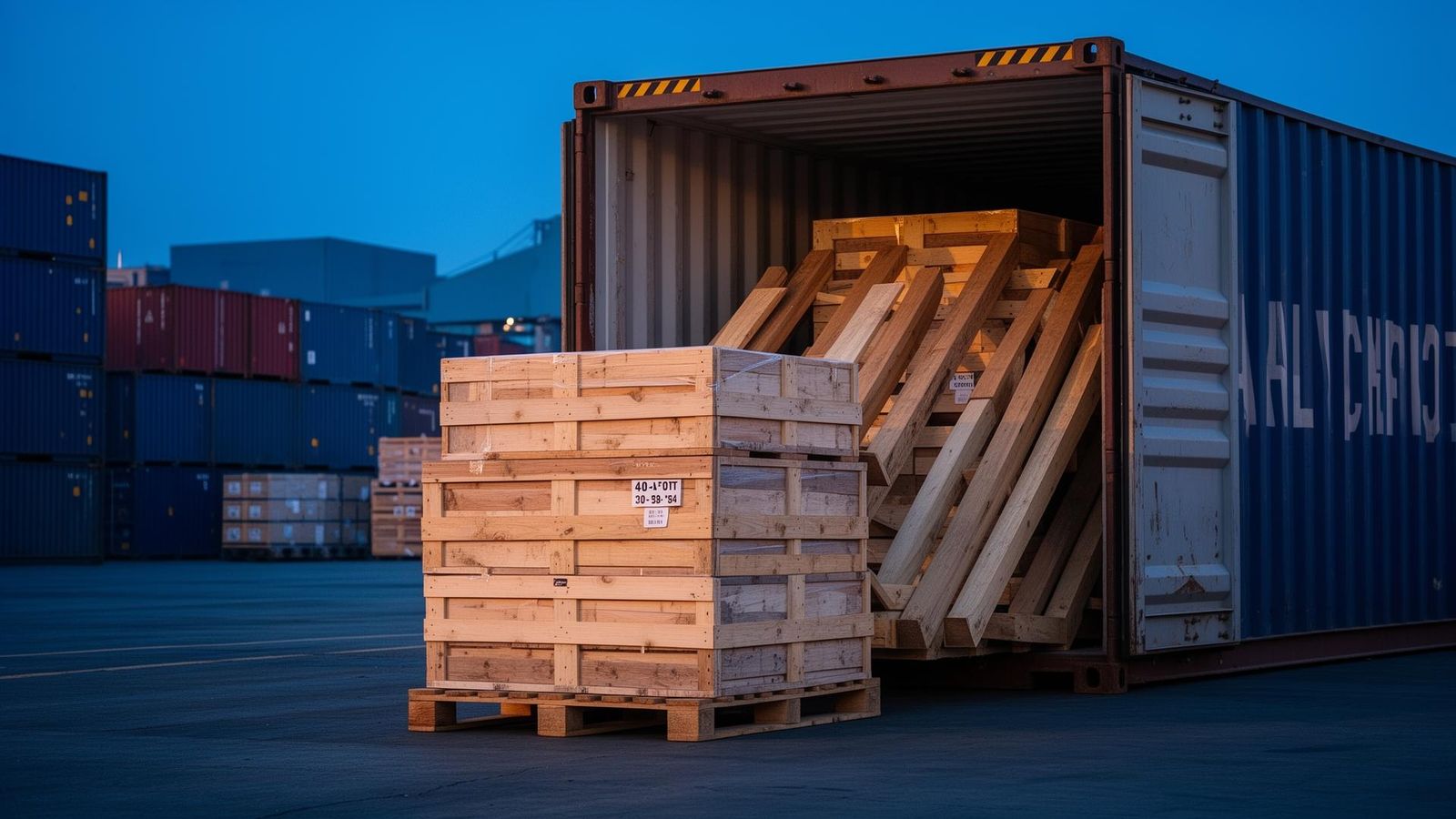
- Container loading photographs supplied with every shipment.
Six reasons pallets get rejected at GCC ports.
All six are preventable at the procurement stage. TIC Dubai's QA workflow addresses every one of them before the container seal goes on.
- 01Missing or illegible IPPC stamp on the assembled pallet.
- 02Visible bark on any wooden component (DB grade mandatory).
- 03Live insect, borer or fungal activity discovered at inspection.
- 04Stamp facility code mismatched against phytosanitary certificate.
- 05Repaired pallet shipped without re-stamping after non-treated repair.
- 06Structural failure (crushed blocks, broken boards) at port handling.
Eight RFQ lines that get the right pallet quoted the first time.
- 01Confirm pallet standard (EPAL, ISO, CP, US 48×40, custom) and dimensions.
- 02Specify component sections: deck-board thickness, stringer section, bearer count, block type.
- 03State load rating: dynamic, static and racking capacity required in service.
- 04Confirm moisture content (KD-HT 18–22% MC is the export standard).
- 05Specify block type: solid / finger-jointed (FJ) / composite, EPAL accepts all three.
- 06Treatment: HT (the default) with IPPC stamp burned in, not ink-applied.
- 07Debarking: DB grade required for stringent destinations and project cargo.
- 08Destination port (Jebel Ali, Hamad, Dammam, Sohar, Shuwaikh) and clearing agent.
Hardwoods across the GCC and Middle East
African and North American hardwoods for premium architectural projects.
Shipments routed through Jebel Ali, Khalifa, Hamad, King Abdulaziz Dammam, Sohar and other major regional ports, coordinated with contractor and procurement schedules.
Sapele, Iroko, Meranti, White Oak, American Walnut, Ash and other premium hardwoods are supplied (kiln-dried, graded and packed) for joinery workshops, luxury fit-out contractors, hotel developers and yacht builders across the UAE, KSA, Qatar and the wider GCC.
- Dubai
- Abu Dhabi
- Sharjah
- Ajman
- Ras Al Khaimah
- Fujairah
- Umm Al Quwain
- Al Ain
- Khor Fakkan
- Riyadh
- Jeddah
- Dammam
- Al Khobar
- Jubail
- Yanbu
- Mecca
- Medina
- Tabuk
- Abha
- JAFZA
- DIP
- Dubai Industrial City
- Sharjah Industrial Area
- KIZAD
- Hamriyah Free Zone
- RAKEZ
- SAIF Zone
- Doha
- Lusail
- Al Rayyan
- Mesaieed
- Al Wakrah
- Kuwait City
- Shuwaikh
- Shuaiba
- Ahmadi
- Manama
- Muharraq
- Riffa
- Sitra
- Muscat
- Sohar
- Salalah
- Duqm
- Nizwa
- Amman
- Zarqa
- Irbid
- Aqaba
- Baghdad
- Erbil
- Basra
- Mosul
- Najaf
- Karbala
- Sulaymaniyah
- Kirkuk
- Jebel Ali Port
- Khalifa Port
- Hamriyah Port
- Port Rashid
- Khor Fakkan Port
- King Abdulaziz Port Dammam
- Jeddah Islamic Port
- King Abdullah Port
- Jubail Commercial Port
- Yanbu Commercial Port
- Hamad Port
- Shuwaikh Port
- Shuaiba Port
- Khalifa Bin Salman Port
- Port of Sohar
- Port of Salalah
- Port of Duqm
- Port of Aqaba
- Umm Qasr Port
- Khor Al Zubair Port
Pallet wood questions, answered.
What is ISPM-15 and when do I need it?
ISPM-15 is the international phytosanitary standard for solid wood packaging crossing borders. Any pallet, crate or piece of dunnage leaving the UAE for any international destination must be ISPM-15 treated (almost always via heat treatment) and stamped with the official IPPC mark.
Do you supply heat-treated (HT) pallet timber and components?
Yes. TIC Dubai supplies HT-treated, IPPC-stamped pallet boards, stringers, blocks, kits and finished pallets across the UAE and GCC, with each consignment shipping with full treatment documentation.
Can you supply pallet kits instead of assembled pallets?
Yes. Pre-cut pallet kits (deck boards, stringers, blocks) are an economical option for in-house assembly. Components are supplied to specification, treatment and stamping handled at our partner facility.
What pallet timber species do you supply?
European whitewood, Scots pine and radiata pine dominate. SPF (spruce-pine-fir) is available for North American spec. Hardwood pallets (eucalyptus, mixed tropical) on request for heavy-duty applications.
Do you supply finger-jointed and composite pallet blocks?
Yes. Solid wood, finger-jointed (EPAL-approved) and composite (LVL-style) pallet blocks are all stocked in EPAL standard dimensions 78×78×95, 78×78×100 and 78×78×145 mm.
What is the difference between HT and KD-HT?
HT (heat treatment) certifies the wood was heated to ≥ 56 °C core for ≥ 30 minutes, satisfies ISPM-15. KD-HT (kiln-dried to HT specification) certifies the same thermal cycle simultaneously achieved a target moisture content (typically 18–22%). KD-HT is the export-grade standard.
Are methyl bromide (MB) pallets accepted in the UAE?
UAE accepts both HT and MB ISPM-15 marks, but MB is being phased out globally and refused by the EU. TIC Dubai supplies HT exclusively for new programmes.
What EPAL standard block sizes do you supply?
EPAL standard 78×78×95, 78×78×100 and 78×78×145 mm in solid, finger-jointed and composite construction. Custom sizes engineered to non-EPAL pallet designs on request.
Can you supply EPAL Euro pallets in the UAE?
Yes. Licensed EPAL Euro pallets (1200×800 mm, EUR/EPAL block markings) are sourced and shipped to the UAE and GCC with the IPPC heat-treatment stamp.
Do you engineer custom pallets for heavy or irregular cargo?
Yes. Heavy-load and project-cargo pallets are engineered with reinforced bearers, calculated nail/screw schedules and tie-down anchor points, then HT-stamped and shipped to specification.
What pallet dimensions optimise a 40' container?
1200×1133 mm pallets fill a 40' container floor exactly (10 pallets in 2 rows, no wasted space), an 8–15% per-container payload gain over standard EPAL. Custom dimensioning is part of TIC Dubai's procurement service.
How is dunnage timber priced versus assembled pallets?
Loose HT-treated dunnage in 50×100, 100×100 and 150×150 mm sections is priced per cubic metre, typically 30–50% lower per m³ than assembled pallets, given the simpler conversion.
Does dunnage timber require ISPM-15 stamping?
Yes. Every loose dunnage piece in international cargo must be HT-treated and IPPC-stamped, destination customs may sample individual pieces, not just the bundle.
What moisture content should pallet wood have?
Export pallets: 18–22% MC, kiln-dried to HT specification (KD-HT). Lower than 18% increases nail-splitting; higher than 22% risks warping and blue-stain fungus.
Why do some pallets turn black inside the container?
Almost always blue-stain fungus from inadequate drying before sealing the container. Specify KD-HT wood at the RFQ stage to eliminate the risk.
Can pallets be re-treated to recover ISPM-15 status?
Yes, if structurally sound. Re-treatment at a registered HT facility, followed by re-stamping with the new date and facility code, restores compliance.
What is the lead time for HT-stamped pallets in the UAE?
Stock components from regional partners: 2–7 days. Manufactured-to-spec custom pallets: 10–21 days. Container-load export programmes from Türkiye, India or Eastern Europe: 30–45 days.
Which ports does TIC Dubai ship pallets to?
Jebel Ali, Hamriyah, Khorfakkan, Sohar, Salalah, Dammam, Jeddah, Hamad, Shuwaikh, Khalifa Bin Salman, Aqaba and Umm Qasr, for onward distribution across the UAE, Saudi Arabia, Qatar, Oman, Kuwait, Bahrain, Jordan and Iraq.
Why do pallets get rejected at GCC ports?
The six common causes: missing/illegible IPPC stamp, visible bark, live insect activity, paperwork mismatch, un-re-stamped repairs, and structural failure on handling. All are preventable at the procurement stage. TIC Dubai's QA workflow addresses every cause.
What payment terms do you accept for pallet wood?
Letter of Credit at sight, Documents against Payment (DP), advance payment, and open account for established repeat buyers across the GCC.
Are EPAL pallets ISPM-15 stamped?
Yes, licensed EPAL Euro pallets ship with both the EUR/EPAL corner-block markings and the IPPC HT stamp.
Can you consolidate pallet wood with our other timber orders?
Yes, pallet boards, blocks and dunnage consolidate cleanly in mixed-product containers with other softwood, hardwood or panel-product orders for cost-efficient GCC delivery.
Why source pallet wood through TIC Dubai?
Mill-direct supply, HT-stamped at registered facilities, full ISPM-15 documentation, container and break-bulk logistics handled in one workflow, and over five decades of GCC industrial supply experience, punit@ticdubai.ae for offers.
Technical reading on pallet wood & ISPM-15.
ISPM-15 deep dives, IPPC stamp anatomy, EPAL standards, block types, component dimensions and custom pallet engineering, the working reference for pallet plant procurement and export logistics teams.
What Is ISPM-15? The Complete Pallet Wood Compliance Guide
The single phytosanitary standard that decides whether your wooden pallet clears customs or gets quarantined. A working reference for exporters.
Heat Treatment vs Methyl Bromide: ISPM-15 Treatment Comparison
Two pest-control routes to the same IPPC stamp, with very different commercial and environmental profiles. Which one should be on your purchase order.
Anatomy of the IPPC Stamp on a Pallet
Every digit of the IPPC stamp tells you who treated the pallet, where, and how. A two-minute reading guide for procurement teams.
EPAL vs CP vs Custom Pallets: Choosing the Right Standard
Three pallet standards cover 90% of GCC trade flows. Choosing between them is a question of weight, route and reuse strategy.
Pallet Block Types Explained: Solid, Finger-Jointed and Composite
Three ways to make a 78×78×95 mm pallet block, each with a different strength curve and cost profile. A working guide for pallet plant procurement.
Pallet Component Dimensions: Boards, Stringers, Bearers, Blocks
Five components, fifteen workhorse sections. The dimensional reference that gets the RFQ priced right the first time.
Quote pallet wood, kits & components.
Tell us component, dimensions, standard, treatment, volume and destination. We revert with HT-stamped offers, lead times and indicative pricing within one working day.