
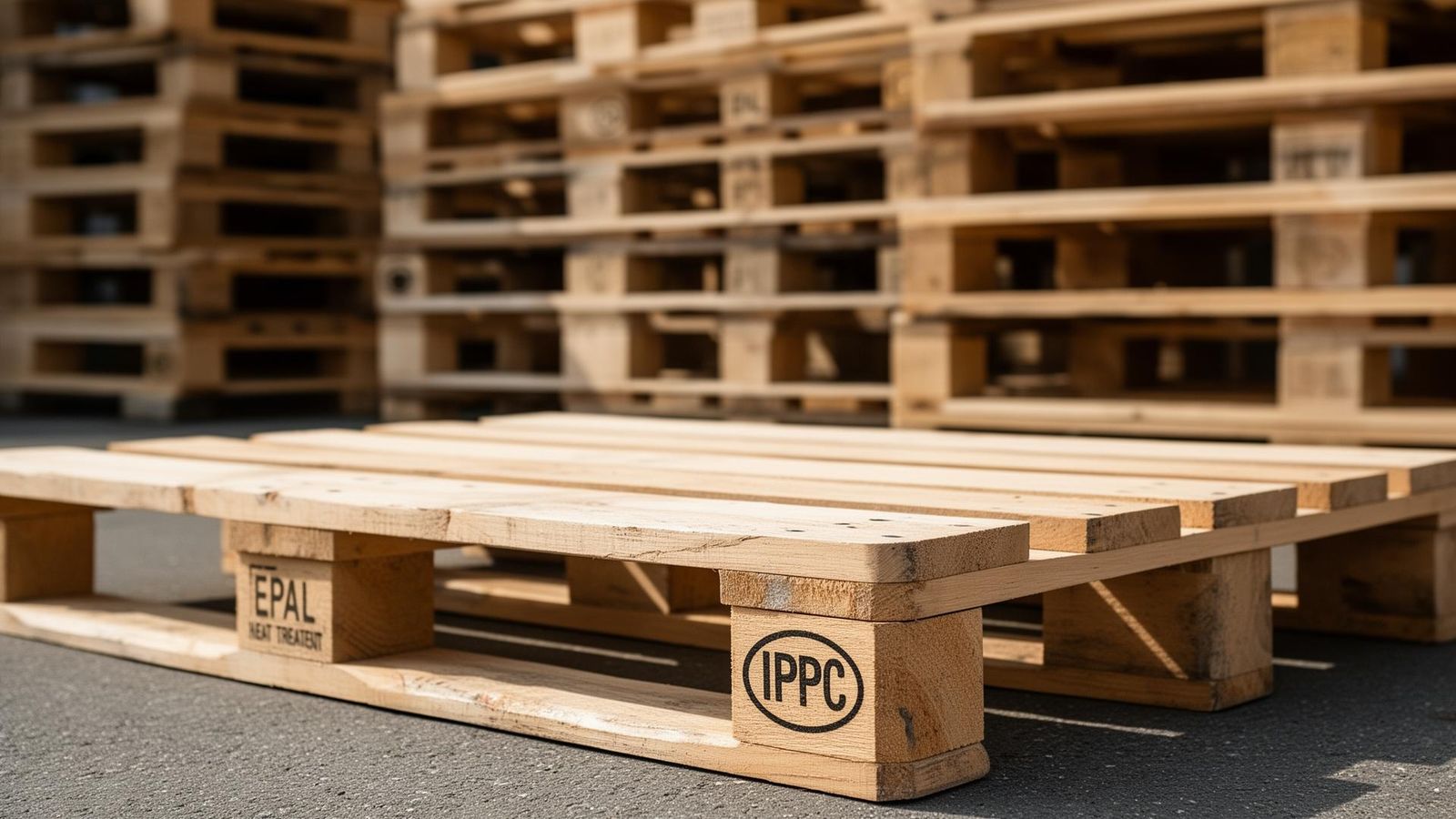
EPAL Euro pallet (1200 × 800 mm)
The European Pallet Association standard, marked EUR/EPAL on the corner blocks. 78 nails in the prescribed pattern, 24 kg unloaded, 1,500 kg dynamic / 4,000 kg static / 1,000 kg in racking. The dominant pool pallet across EU-bound trade lanes, exchangeable on a one-for-one basis between participating partners.
Best for: EU-destined exports, FMCG distribution, automotive parts, supermarket logistics. Premium price (~2-3x a plain custom pallet) buys the exchange-pool entitlement.
CP pallets (Chemical Pallets, 9 variants)
Standardised by the European chemical industry (CEFIC) for chemical and petrochemical shipments. Nine size variants (CP1-CP9) cover IBC tanks, drums, big-bags and powder sacks. CP3 (1140 × 1140 mm) is the most common for IBC carriage; CP1 (1200 × 1000 mm) is the workhorse for chemical drums.
Best for: petrochemical, agrochemical, paint and coatings, lubricant exports. Stronger build than EPAL, no exchange pool, buy new, ship once.
Custom pallets
Bespoke pallets engineered to the load, the container fill and the destination handling equipment. Dimensions tuned for high cube utilisation (e.g. 1100 × 1100 mm to maximise a 40' container floor). Block, perimeter, two-way or four-way entry as required. Built to the load, typically 30-60% cheaper than an EPAL of equivalent capacity.
Best for: machinery, project cargo, heavy industrial equipment, one-way exports, intra-GCC trade where pallet recovery is impractical.
When the standard pallet stops making sense
If the cargo is irregular, if the route is non-EU, or if pallet return is uneconomic, custom is almost always the lower-landed-cost answer. TIC Dubai engineers and supplies all three categories from a single workflow, with ISPM-15 HT treatment and IPPC stamping coordinated at the manufacturing plant.