Field 1: the IPPC wheat-ear logo
The stylised ear of wheat is the universal IPPC certification mark, identical across every member country. Its presence is the first thing port inspectors check; any pallet stamp lacking the logo is treated as non-compliant by default.
Field 2: the two-letter ISO country code
The producing country's ISO 3166-1 alpha-2 code: AE for United Arab Emirates, IN for India, CN for China, TR for Türkiye, DE for Germany, IT for Italy, etc. This is the country where treatment was performed, not necessarily where the wood was grown or where the pallet was finally assembled.
Field 3: the facility registration number
A unique numeric code assigned by the national plant protection authority (in the UAE: the Ministry of Climate Change and Environment) to each registered treatment facility. Cross-referencing this number on the national NPPO register confirms the facility's licence is current and its records auditable.
Field 4: the treatment code (and optional debarking suffix)
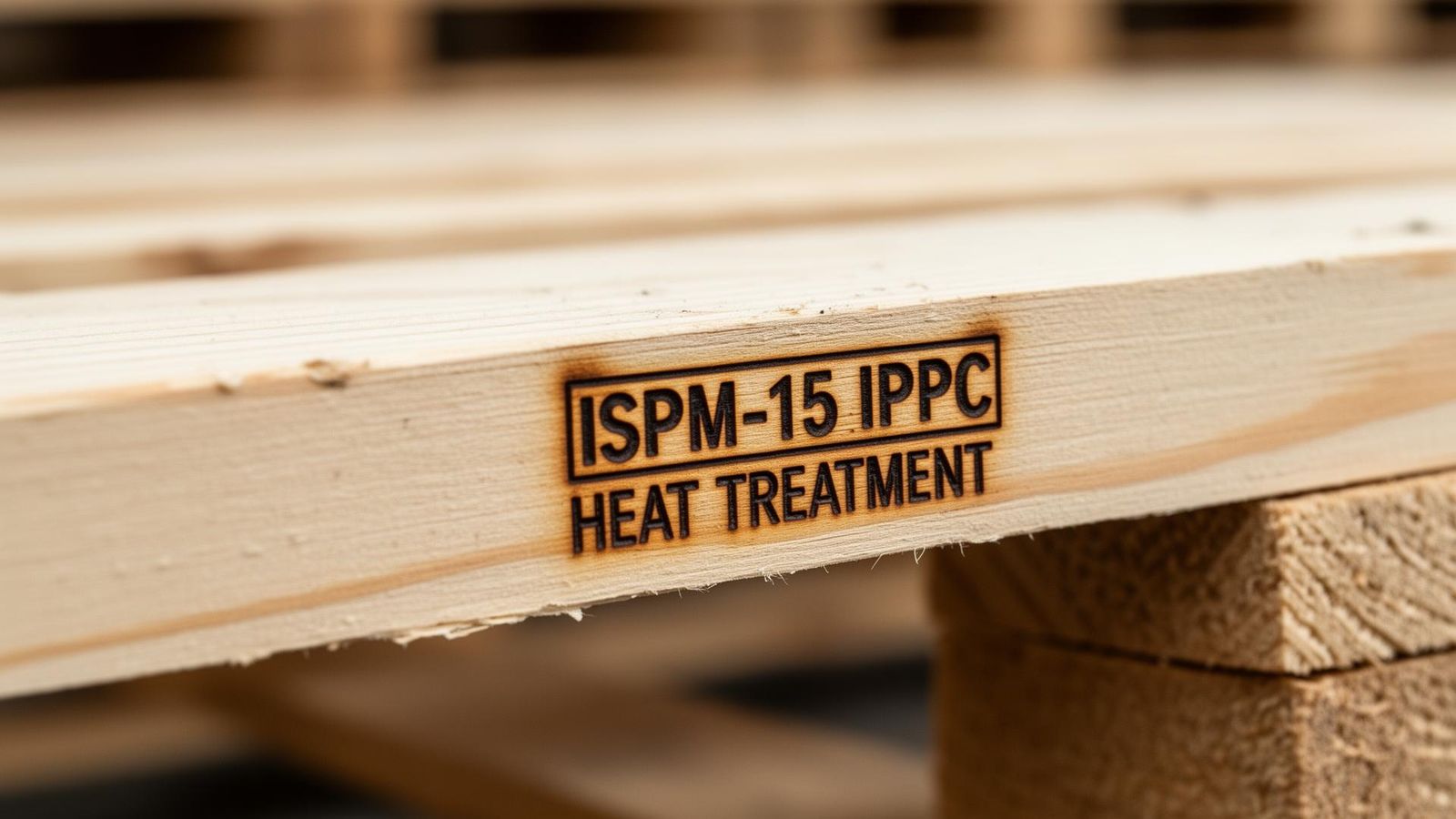
HT, heat treatment (the dominant code in 2026). KD-HT, kiln-dried wood that also satisfies HT specification. DH, dielectric heating. MB, methyl bromide (legacy, increasingly refused at destination).
DB suffix, added when the wood was debarked before treatment, a hard requirement in some destinations.
The mark must be applied on at least two opposite sides of the pallet, never on a single loose component.