
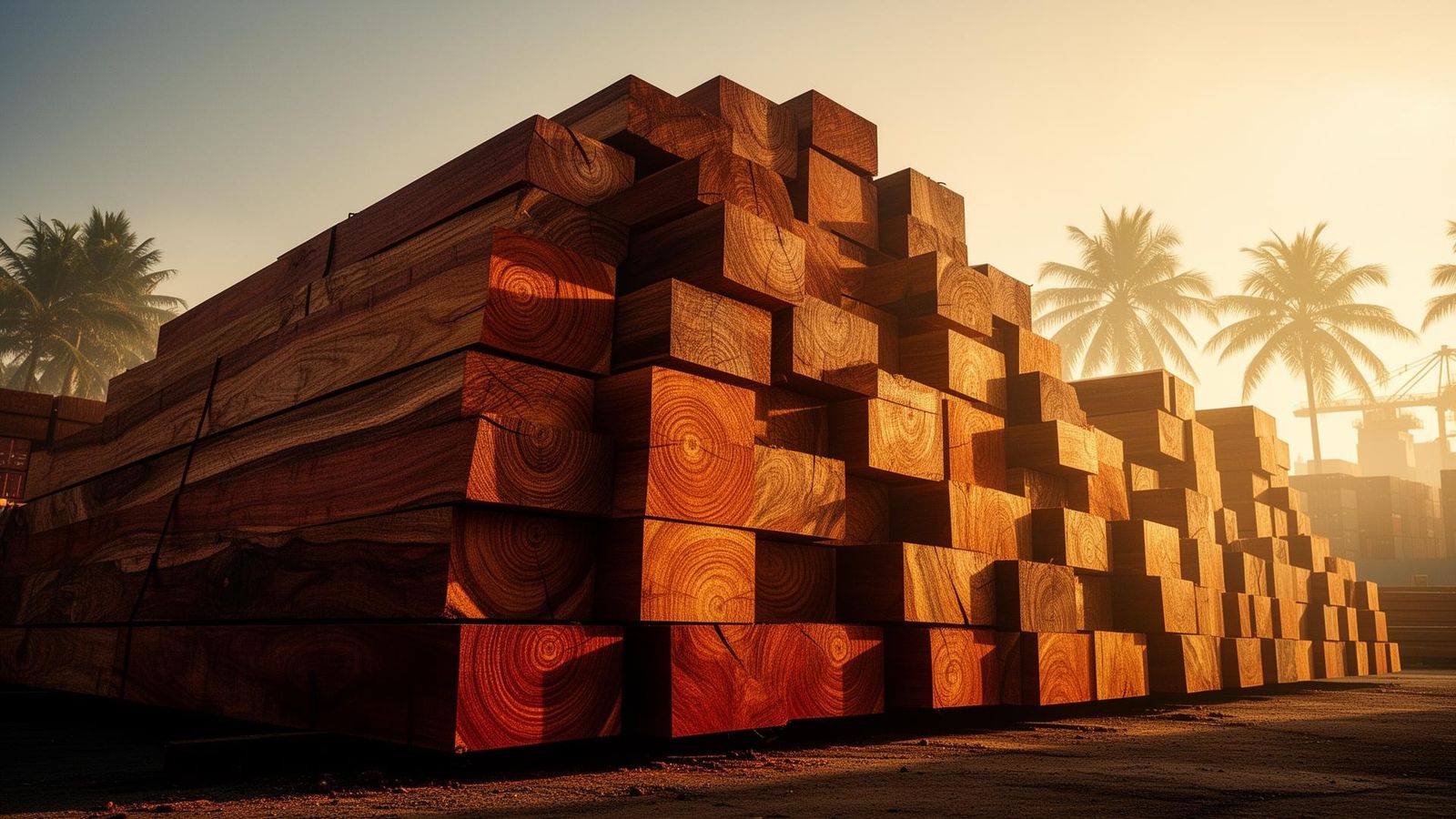
Dabema at a glance
Botanical: Piptadeniastrum africanum. Origin: Cameroon, Gabon, Congo, Côte d'Ivoire. Density: 640 kg/m³ at 12% MC. Janka hardness: 5,800 N. Heartwood: yellow-brown to medium brown, darkening with light exposure. Durability class: 2 (durable, suitable for above-ground exterior use).
Why specifiers reach for dabema
Cost-to-performance is the answer. At a similar density to iroko and sapele, dabema is consistently 15-25% cheaper landed at GCC ports. For heavy interior construction, sleepers, decking substructure, flooring and re-sawn boards where the species name on the spec doesn't matter, dabema is the procurement default.
Applications
Heavy construction framing, railway and crane sleepers, exterior decking joists, marine grade substructure, industrial flooring strips, re-sawn boards for door and window cores. Less common but acceptable: visible joinery where colour matching is not critical.
Drying and finish
Dabema dries slowly with some risk of distortion. KD schedules should be conservative; AD requires 8-14 months under cover. Machining is moderate (slightly interlocked grain). Finishes well with oil and lacquer systems; matte finishes hide the slightly coarse grain better than gloss.