
Peeler logs for plywood and LVL
Rotary peeling demands large-diameter (40+ cm SED), straight, low-taper, knot-controlled logs. A-grade pruned radiata and high-grade Scots pine are the dominant peeler species. The log is centred on a lathe and a thick knife peels a continuous veneer ribbon of 1.5-3.0 mm thickness, dried and clipped into plywood-format sheets.
Chip and fibre furnish for MDF and particleboard
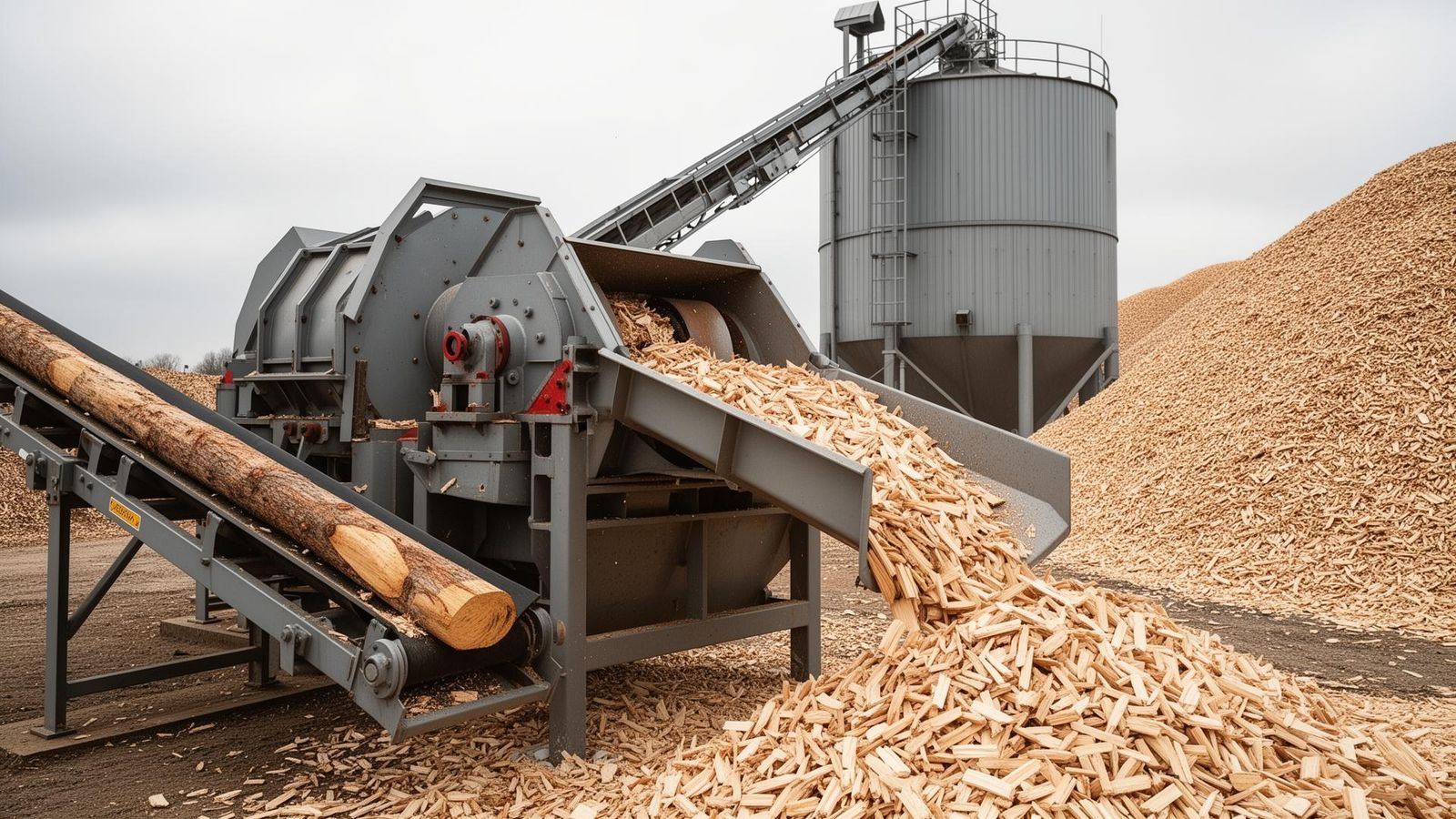
Pulp-grade logs (smaller SED, lower quality) and offcuts from sawmills feed MDF and particleboard plants. The logs are debarked, chipped to specification, screened, refined (MDF) or flaked (particleboard) and bonded with UF, MUF, PMDI or other resins into the finished panel. Pine fibre delivers consistent panel colour, density and machining characteristics.
OSB and engineered structural products
OSB (Oriented Strand Board) plants use larger strands of pine wood, oriented and bonded under heat and pressure. LVL (Laminated Veneer Lumber) plants laminate peeled pine veneer into structural billets. Glulam plants use pine sawn lamellae glued into large structural members. CLT (Cross-Laminated Timber) for mass timber buildings increasingly uses radiata or Scots pine.
Why pine dominates engineered wood
Three factors: consistent fibre quality (plantation-grown logs deliver predictable density and chemistry), high gluability (pine bonds well with PF, MUF and PMDI resins), and global supply scale (pine is the only softwood available in the volumes engineered wood plants consume).