The thermal modification process
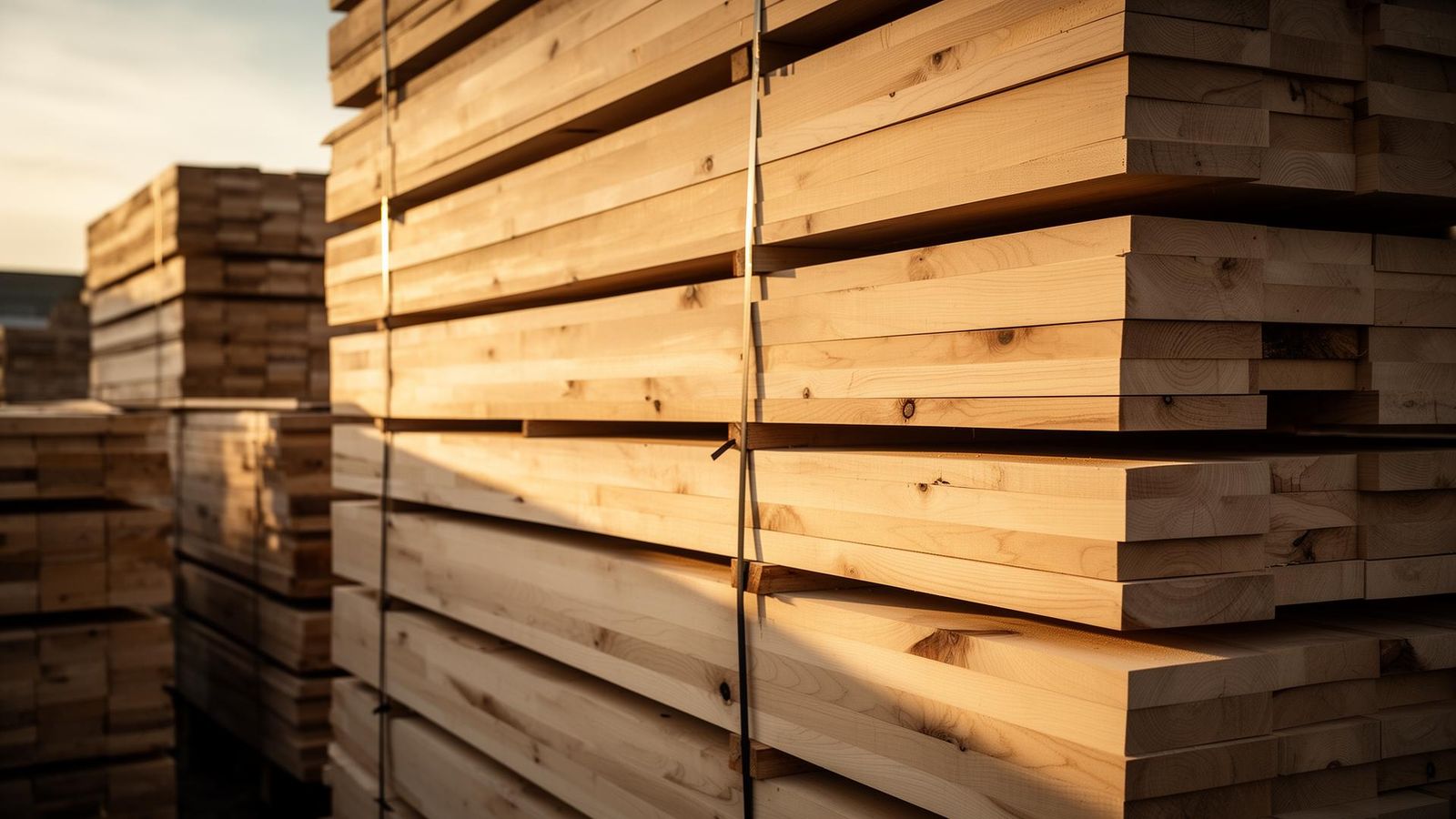
Kiln-dried beech is loaded into a sealed chamber, the atmosphere is purged with inert gas or steam (oxygen content below 3%), and the temperature is ramped to 180–220°C and held for 2–4 hours. The heat chemically alters the hemicellulose, eliminates the polar groups that bind water, and produces a permanently darker, more dimensionally stable, more durable timber.
What changes in the wood
Colour: cream/pink → coffee brown to dark chocolate (uniform through the section). Moisture: equilibrium MC drops from ~12% to ~5-7%. Stability: tangential movement drops by 40-60%. Durability: from EN 350 class 5 (not durable) to class 1-2 (durable to very durable). Hardness: drops 10-15% from the unmodified baseline. Strength: bending strength drops 20-30%, so thermo-beech is not used in load-bearing structural applications.
Where thermo-beech wins
Exterior cladding, decking, garden furniture, sauna interiors, premium window joinery for high-RH environments, marine interior fit-out. The colour is permanent and uniform throughout the section, so machining and edge-finishing do not expose lighter sub-layers.
Specifying thermo-beech
Confirm the treatment standard (ThermoWood D for European thermo-beech, broadly equivalent to DIN EN 113). Confirm the target colour band (medium vs deep treatment), and the end-use durability class. Thermo-beech is non-toxic (no chemical impregnation) and FSC®/PEFC certifiable.