
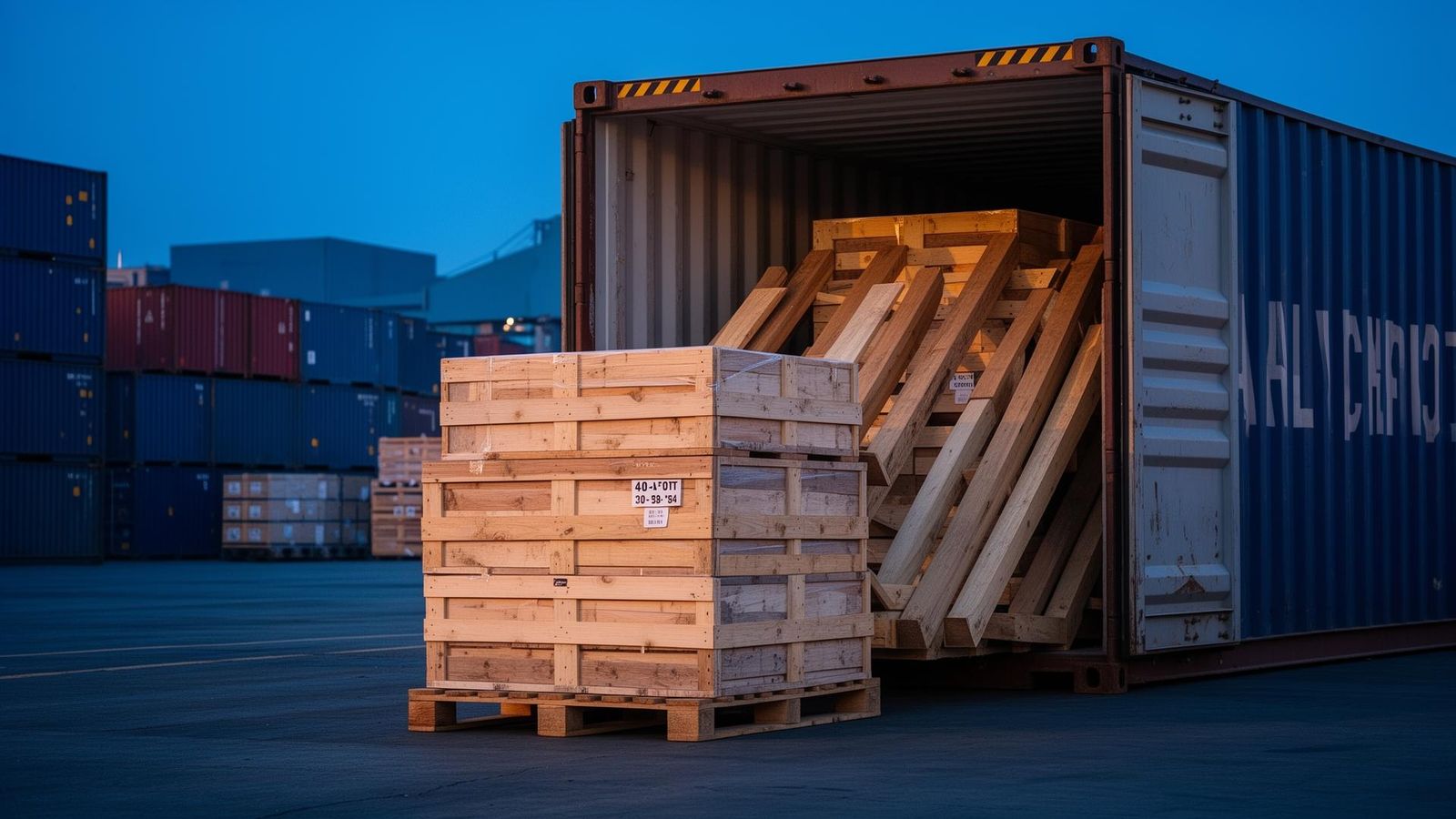
Cause 1: missing or illegible IPPC stamp
The single most common rejection. The stamp must be present on at least two opposite sides, legible from arm's length, with all four required fields (logo, country, facility, treatment). Faded ink, partial burns and stamps applied over knots are routinely rejected. Specify burned-in branding for export pallets, ink stamps fade in transit.
Cause 2: visible bark on wooden components
ISPM-15 requires bark-free wood. Customs inspectors visually scan for bark fragments at random. Any visible bark larger than the tolerance triggers fumigation or return. Always specify "DB" debarked grade and inspect before container loading.
Cause 3: live insect or borer activity
Properly HT-treated wood should be biologically dead. Any sign of fresh frass, exit holes or live larvae on inspection triggers rejection. Cause is almost always re-infestation during yard storage post-treatment, store treated pallets under cover and use within 90 days.
Cause 4: mismatched paperwork
The IPPC stamp facility code must match the phytosanitary certificate, the packing list and any cross-referenced supplier declaration. Mismatches between paperwork and physical stamps trigger detention pending resolution.
Cause 5: repair without re-stamping
If a pallet is repaired with non-treated wood, the new components must be HT-treated and the pallet re-stamped at a registered facility. Repaired pallets shipping with only the original stamp will be rejected.
Cause 6: structural failure on arrival
Crushed corner blocks, broken deck boards or sagging stringers cause cargo damage and may trigger refusal under the carrier's contract of carriage even if the pallet is ISPM-15 compliant. Specify load-rated pallets, not just commodity stock.