
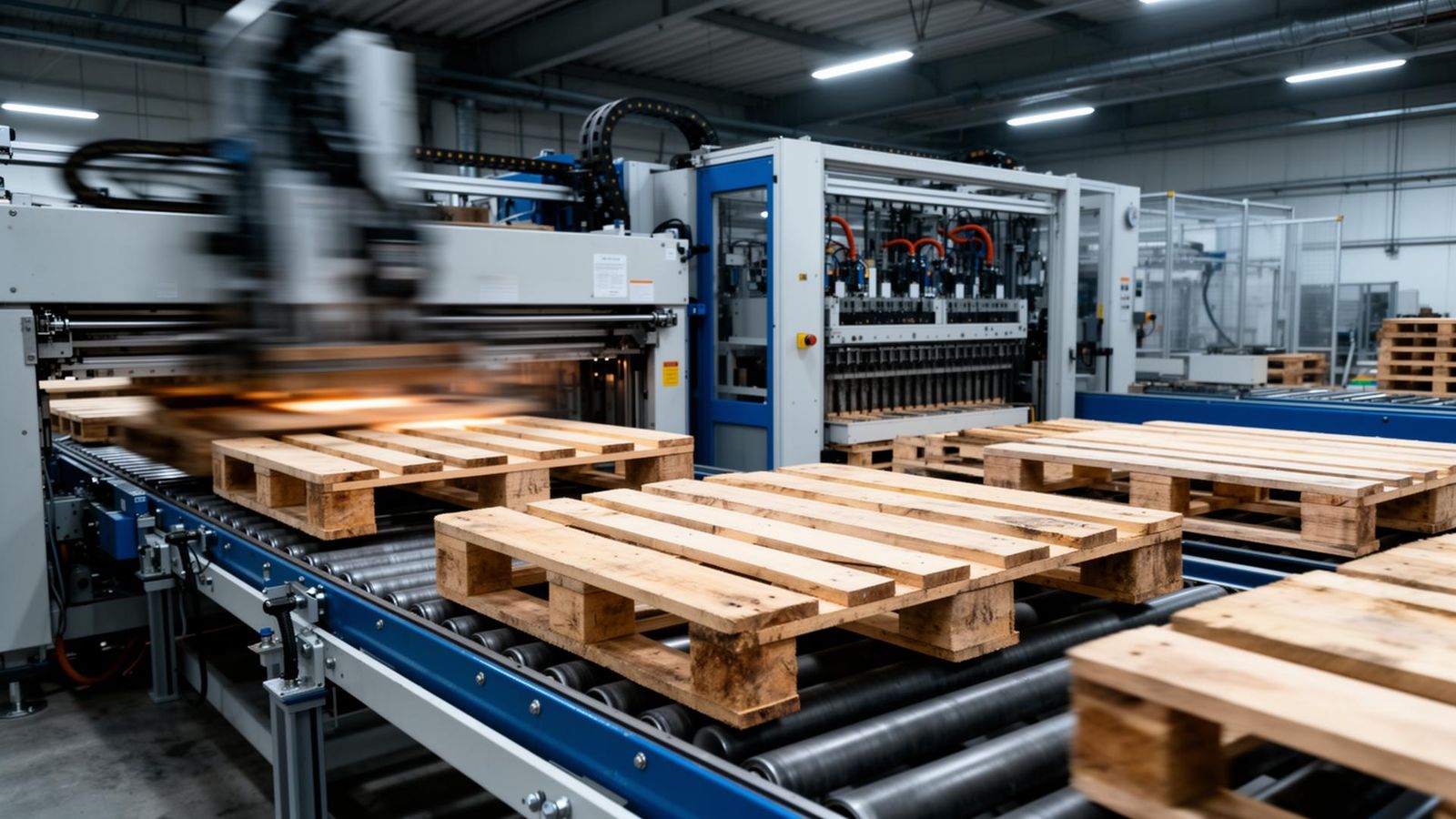
Kiln-dried (KD) pallet wood
Wood dried in a controlled kiln chamber to a specified moisture content, typically 18-22% for pallet stock. Kiln drying kills mould spores and insect eggs, stabilises dimensions and prepares the wood for HT certification.
KD pallets are the export standard, they don't warp en route, don't stain inside containers and arrive at destination interchangeable with the importer's existing inventory.
Air-dried (AD) pallet wood
Wood seasoned in open-air stacks. Cheaper, but slower (weeks to months), with wider moisture variation (typically 18-28%) and higher risk of blue-stain fungus during the drying window. AD wood needs subsequent HT for ISPM-15, and the HT cycle may not fully stabilise moisture content if the wood entered the kiln too wet.
AD pallets are acceptable for domestic, intra-regional trade where the destination depot can handle minor warping; less suitable for sealed-container exports.
KD-HT: the export standard
KD-HT means the wood was kiln-dried and the same kiln cycle satisfied the ISPM-15 heat-treatment spec (≥ 56 °C core for ≥ 30 min). The stamp reads KD-HT and the pallet is simultaneously dimensionally stable, biologically clean and phytosanitarily compliant.
This is the format TIC Dubai supplies for all export pallet programmes, single thermal cycle, single certification, lowest total cost.
Why moisture content matters
Wood shrinks and warps as it dries; pallets assembled from over-moist boards will deform in a sealed dry container, breaking nail joints and crushing corner blocks. Conversely, over-dry wood (< 12%) becomes brittle and prone to nail-splitting during assembly. The 18-22% window is the sweet spot for pine pallet manufacture.