
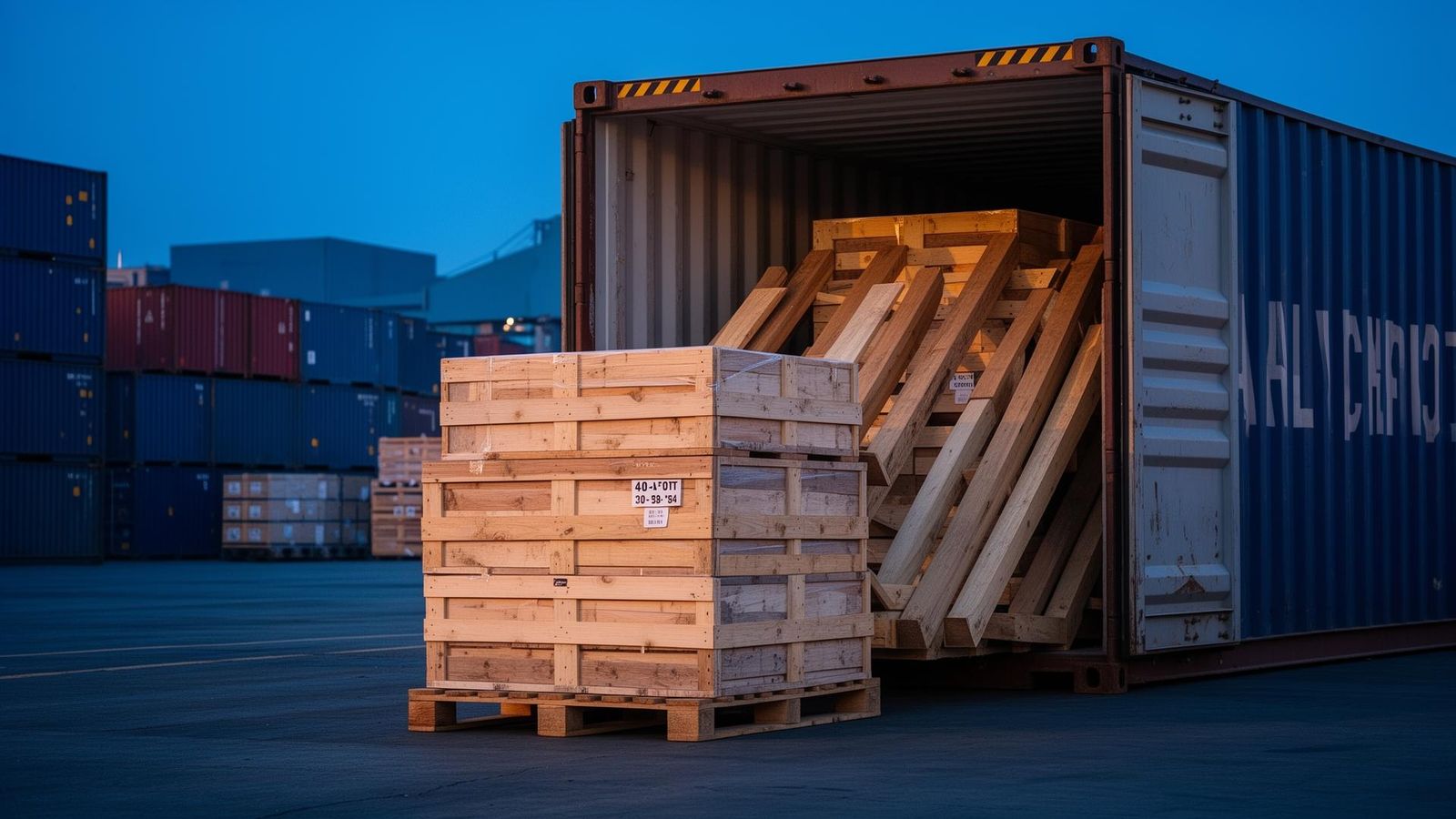
What dunnage actually does
Dunnage is loose timber placed between, beneath and around cargo in a vessel hold or container to absorb shock, distribute weight, prevent shift and protect against moisture. Bracing timber is fastened into the cargo space to lock loads against bulkheads. Blocking is short timber wedges that arrest movement at specific contact points.
On a heavy-lift vessel carrying transformers, modules or refinery columns, dunnage may account for 10-15% of total stow-plan timber and is essential to insurance and class compliance.
Standard dunnage dimensions
4×4 inch (100×100 mm) softwood blocks in 1.0-2.4 m lengths. 6×6 inch (150×150 mm) softwood beams for heavy point-loads. 2×4 and 2×6 inch (50×100, 50×150 mm) softwood for bracing. Plywood mats (12-18 mm structural) for spreading vehicle and equipment loads.
Pine, whitewood and spruce dominate, strong, light, predictable. Hardwood dunnage (eucalyptus, gum) appears for very heavy point-loads.
ISPM-15 and dunnage
Dunnage is solid wood packaging material and falls fully under ISPM-15. Loose dunnage timber in a vessel hold must be HT-treated and IPPC-stamped on every piece (the stamp on the bundle is not enough, destination customs may sample individual pieces). Many shippers buy pre-stamped dunnage bundles to eliminate the risk of being asked to land non-compliant timber at port.
GCC port practice
Jebel Ali, Sohar, Dammam, Doha and Umm Qasr all enforce ISPM-15 on imported dunnage. Non-compliant dunnage is either fumigated at the importer's cost or returned with the cargo. TIC Dubai supplies pre-stamped HT dunnage bundles to project cargo agents and break-bulk shippers across all major GCC ports.