Particle Board (Chipboard)
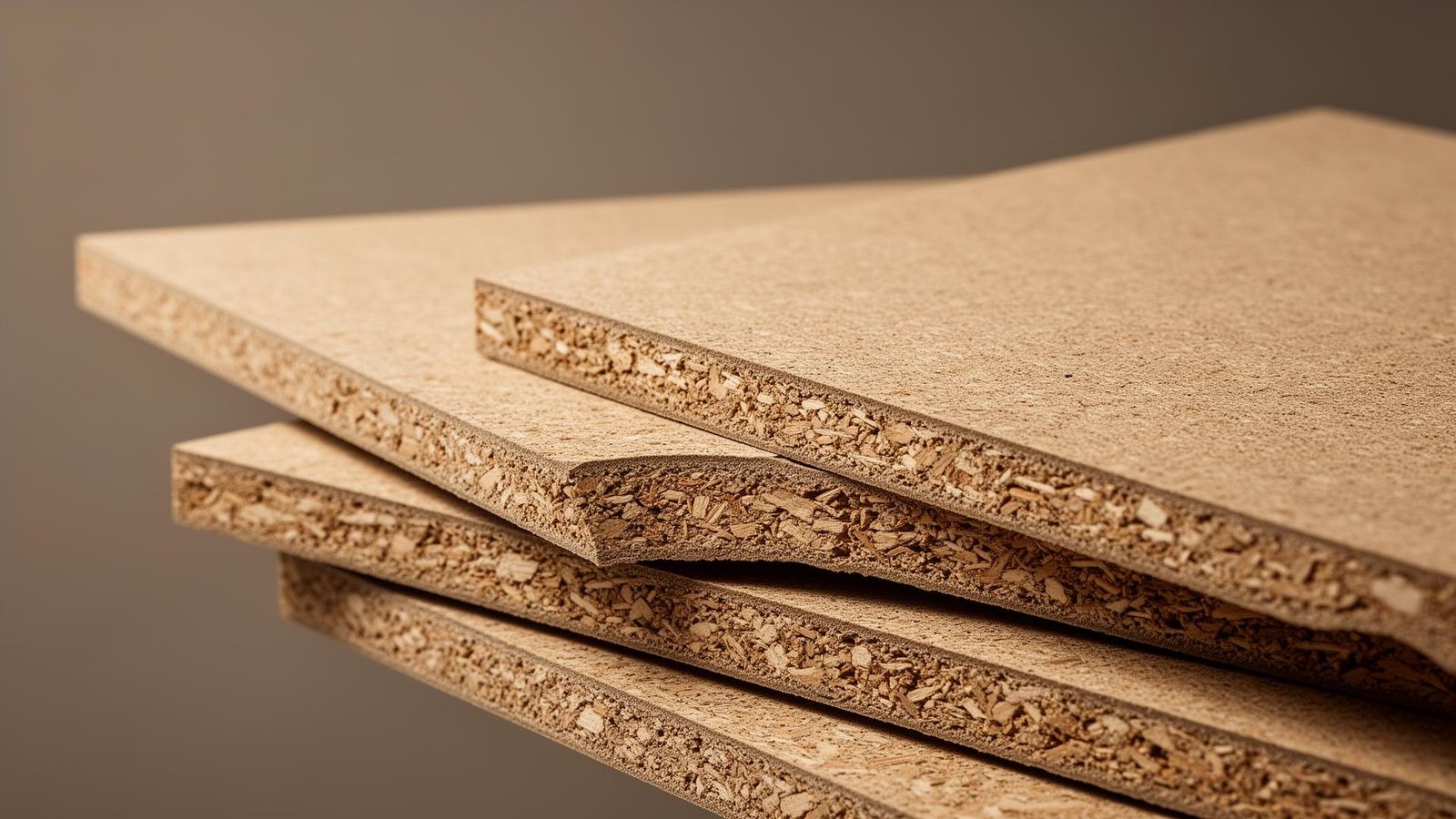
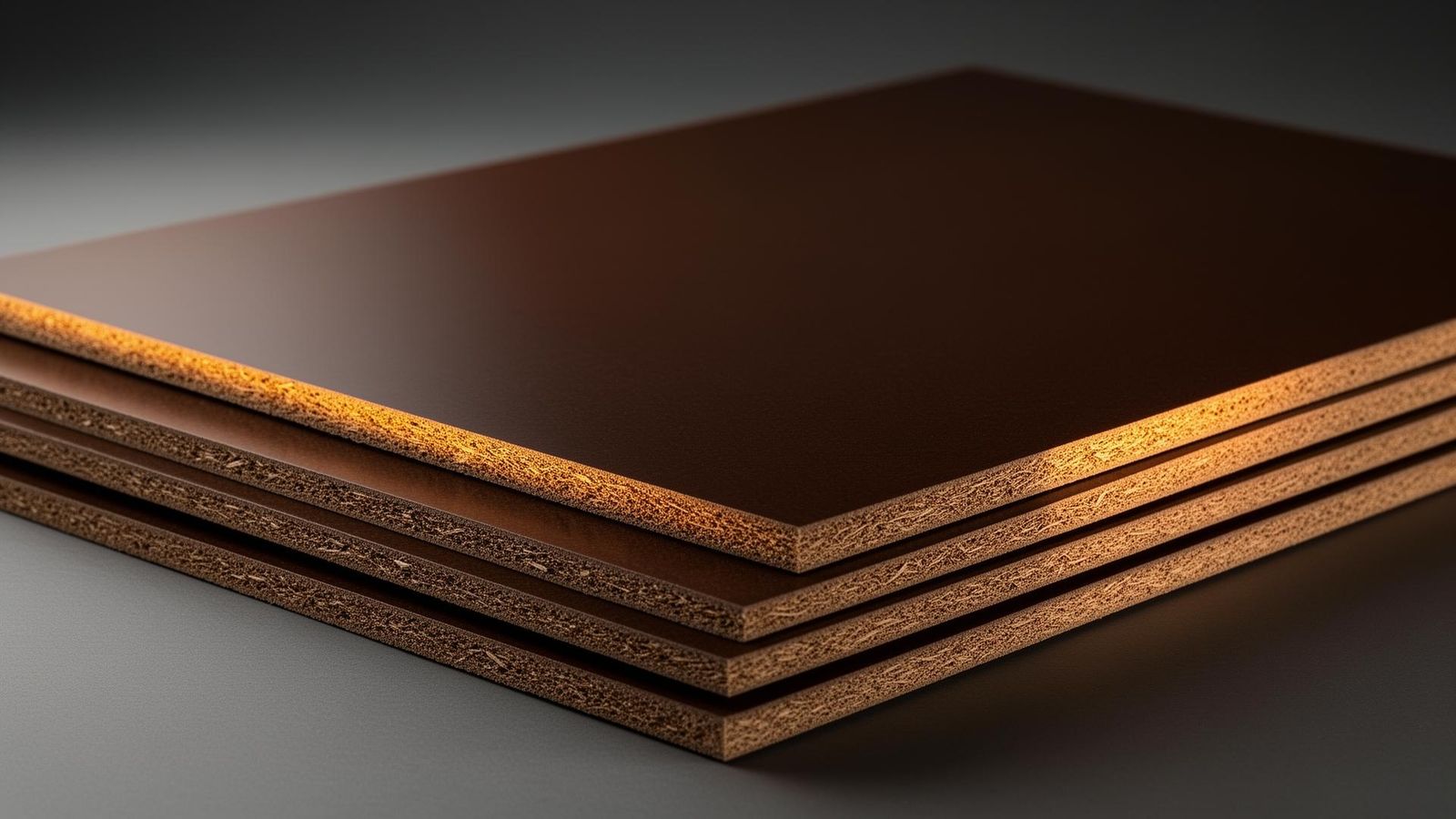
Engineered wood particle board / chipboard, the workhorse substrate of modern furniture and cabinetry. Uniform core, smooth sanded face, ready for melamine, veneer, foil or laminate.
What particle board is.
Particle Board (also known as chipboard) is the foundation substrate of the modern furniture, cabinetry and interior fit-out industry. Manufactured from wood particles bonded under heat and pressure with a thermosetting resin, it delivers a uniform, dimensionally stable, cost-efficient panel that takes melamine, foil, veneer and laminate finishes flawlessly.
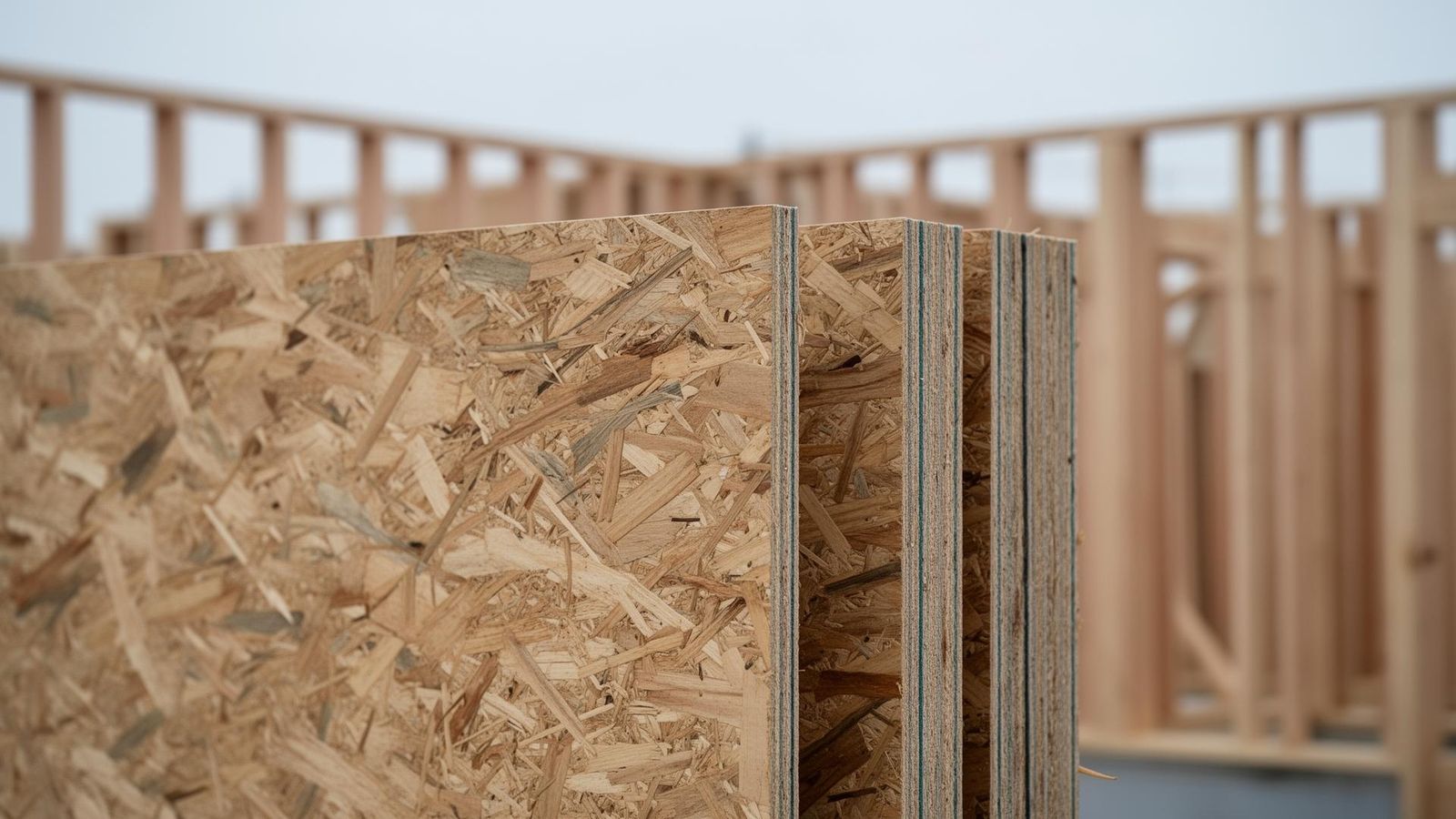
Particle Board (PB / chipboard) is an engineered wood-based panel produced by combining graded wood particles (typically softwood and recycled wood residuals) with a urea-formaldehyde (UF) or melamine-urea-formaldehyde (MUF) resin. The mat is formed in three layers (fine-coarse-fine), then pressed under high temperature and pressure to produce a panel with a smooth fine surface and a denser coarse core. The result is a homogeneous, machinable substrate engineered specifically for furniture, cabinetry, shelving and interior carcassing.
Manufacturing: Wood is chipped, dried, graded and resinated, then formed into a continuous mat with a fine surface layer above and below a coarser core. The mat is pre-pressed, then hot-pressed at 180–220°C, sanded calibrated on both faces, and trimmed to size. Density, thickness, resin system and surface fineness are all engineered to grade.
Particle Board variants.
P2: Interior Furniture
Standard interior-grade chipboard for dry conditions. Used for furniture, wardrobe carcasses, shelving, partitions and cabinet sides. EN 312 P2.
P3: Moisture Resistant
Moisture-resistant chipboard with MR resin (often dyed green for identification). Suitable for humid interior environments, kitchen carcasses, bathroom vanities and hospitality fit-out. EN 312 P3.
P5: Load-bearing MR
Load-bearing moisture-resistant grade for structural and semi-structural use in humid conditions. Used in flooring underlay and engineered partitions. EN 312 P5.
Melamine Faced Chipboard (MFC)
Particle board pre-laminated with decorative melamine paper on both faces. The default ready-to-machine carcass board for modular furniture, wardrobes and modern kitchens.
Configured to your specification.
Share the parameters below. We revert with mill availability, lead time and pricing.
Density, strength, performance.
Where particle board is specified.
- Furniture manufacturing: wardrobes, dressers, beds, tables
- Kitchen cabinet carcasses and shutters
- Office and modular furniture
- Shelving and storage systems
- Wall panelling and partitions
- Door cores and infill panels
- Display and retail fit-out
- Hospitality interior joinery (with MR / melamine grades)
Why it's specified.
- Cost-efficient substrate at industrial volume
- Dimensionally stable in controlled humidity
- Smooth, uniform face, excellent for melamine, foil and laminate
- Available pre-faced (MFC) for production efficiency
- Recycled wood content with a strong sustainability profile
- Easy to machine, cut, drill and edge-band on standard furniture lines
Where to specify carefully.
- Lower screw-holding strength than plywood; use confirmat / cam-lock fittings
- Plain (P2) grades degrade rapidly in standing water; specify P3 for any wet area
- Edges must be sealed or banded, as exposed edges are visually rougher than MDF
Certified to international specification.
Particle Board: answered.
Continue exploring Panels & Boards.
Quote Particle Board.
Share grade, thickness, panel size, fire / emission rating and quantity. We revert with mill availability, lead time and pricing within one working day.