OSB (Oriented Strand Board)
Engineered structural panel made from large oriented wood strands bonded with moisture-resistant resin. The global standard for wall sheathing, roof decking, subfloor systems and industrial packaging.
What osb is.
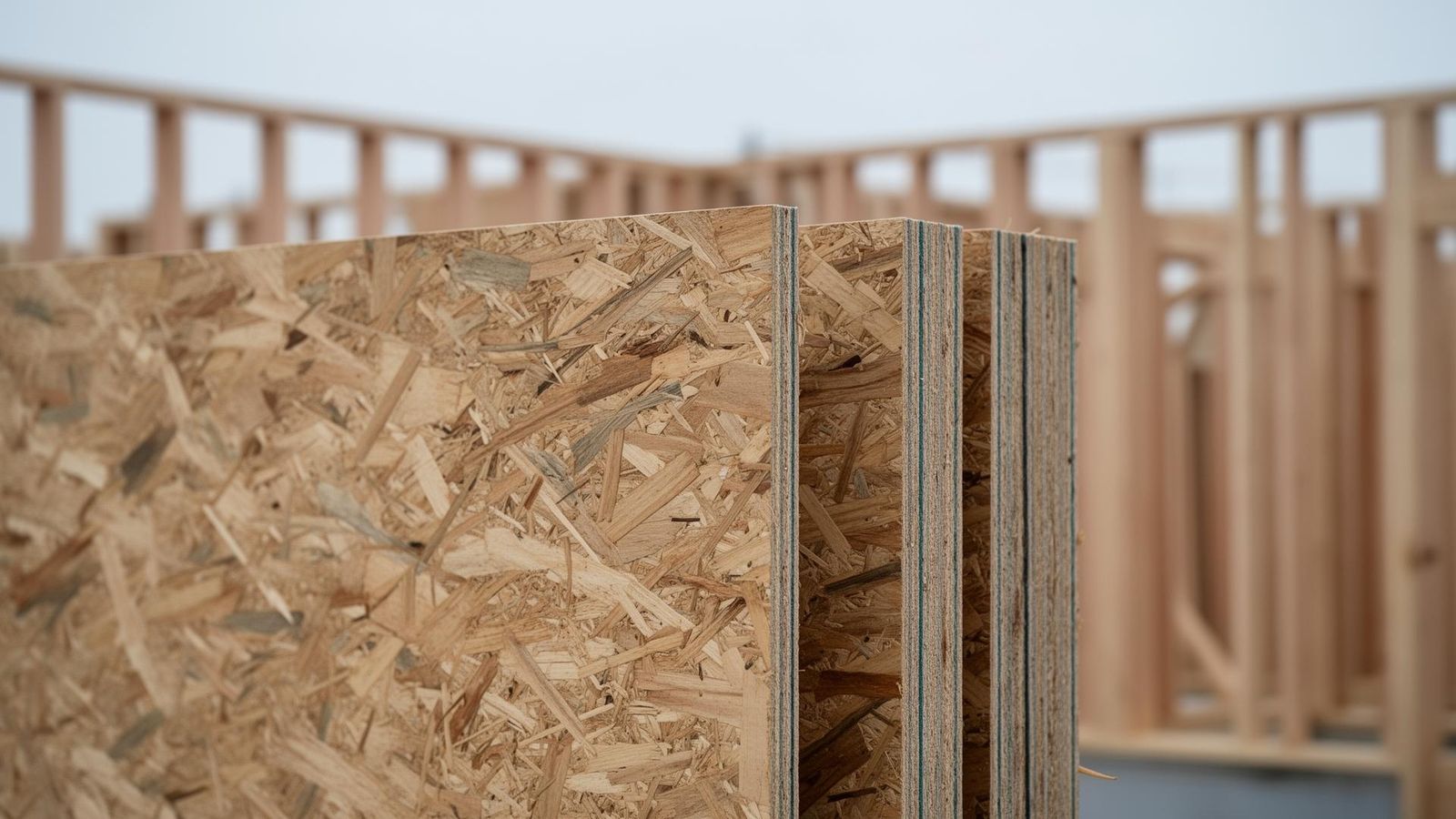
OSB, or Oriented Strand Board, is the global structural panel of choice for timber-frame construction, prefab housing, modular buildings and heavy industrial packaging. Engineered from large rectangular wood strands oriented in cross-directional layers and bonded with moisture-resistant resin, it delivers high strength-to-weight, predictable structural performance and consistent panel-to-panel quality.
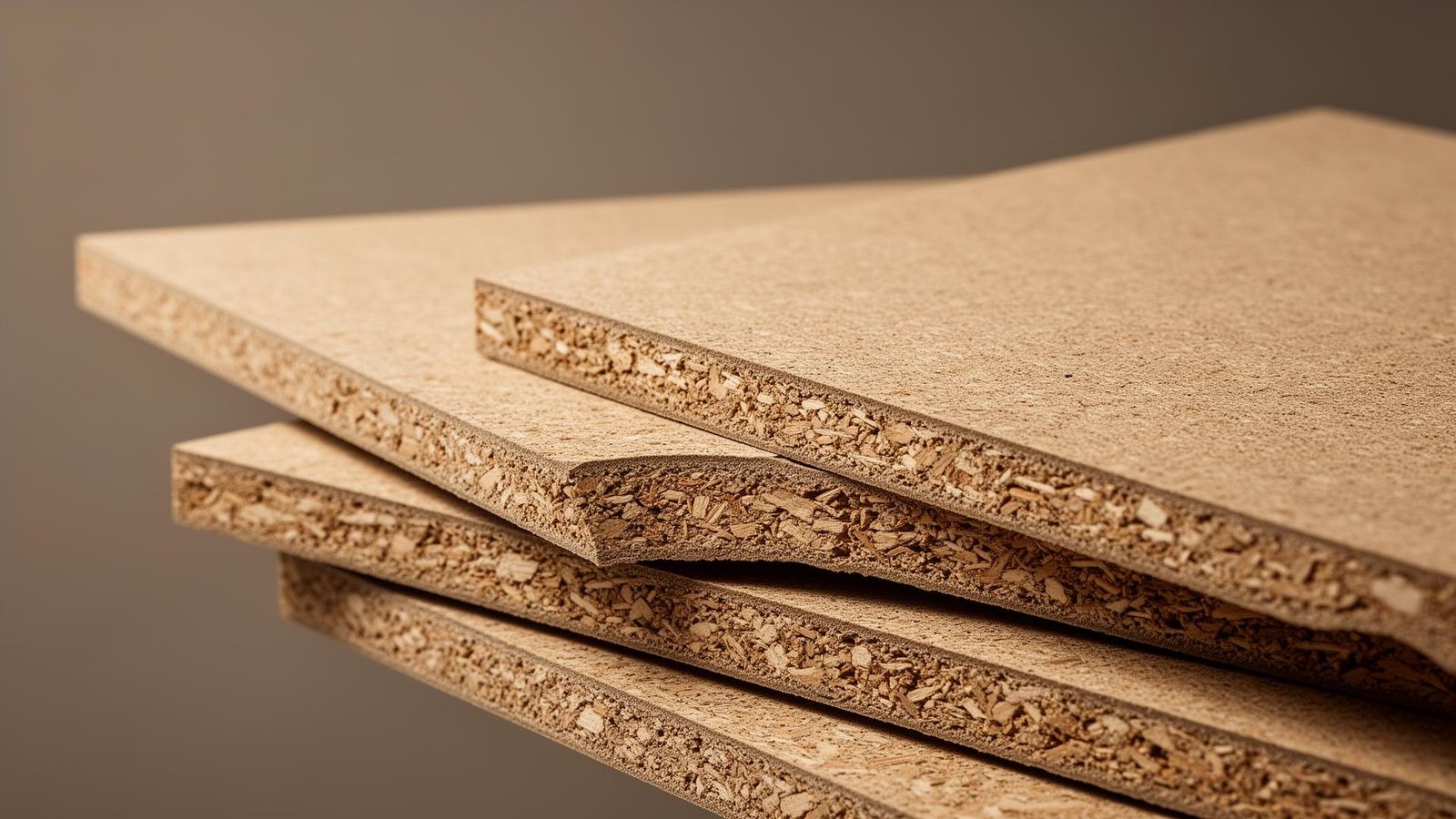
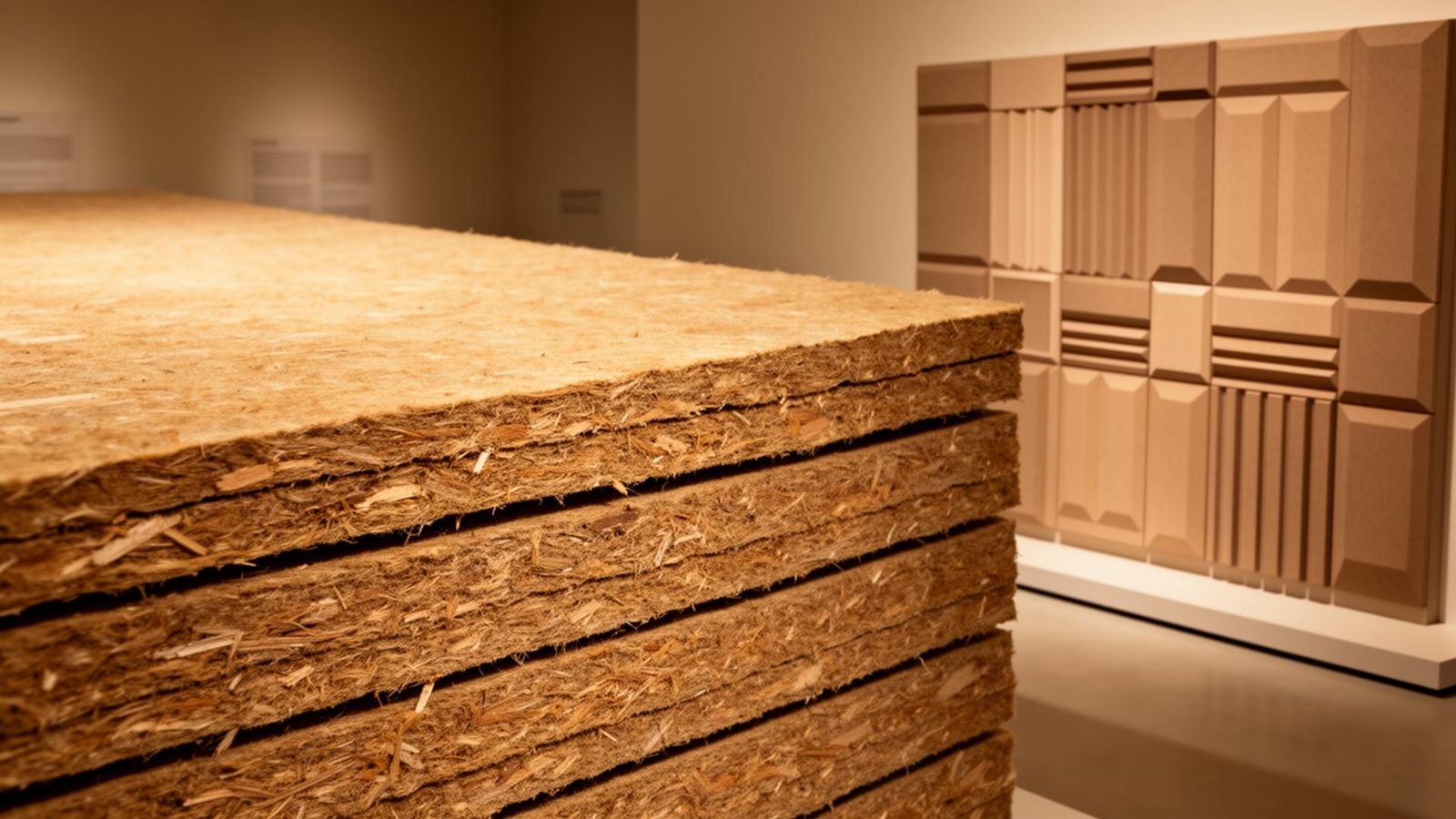
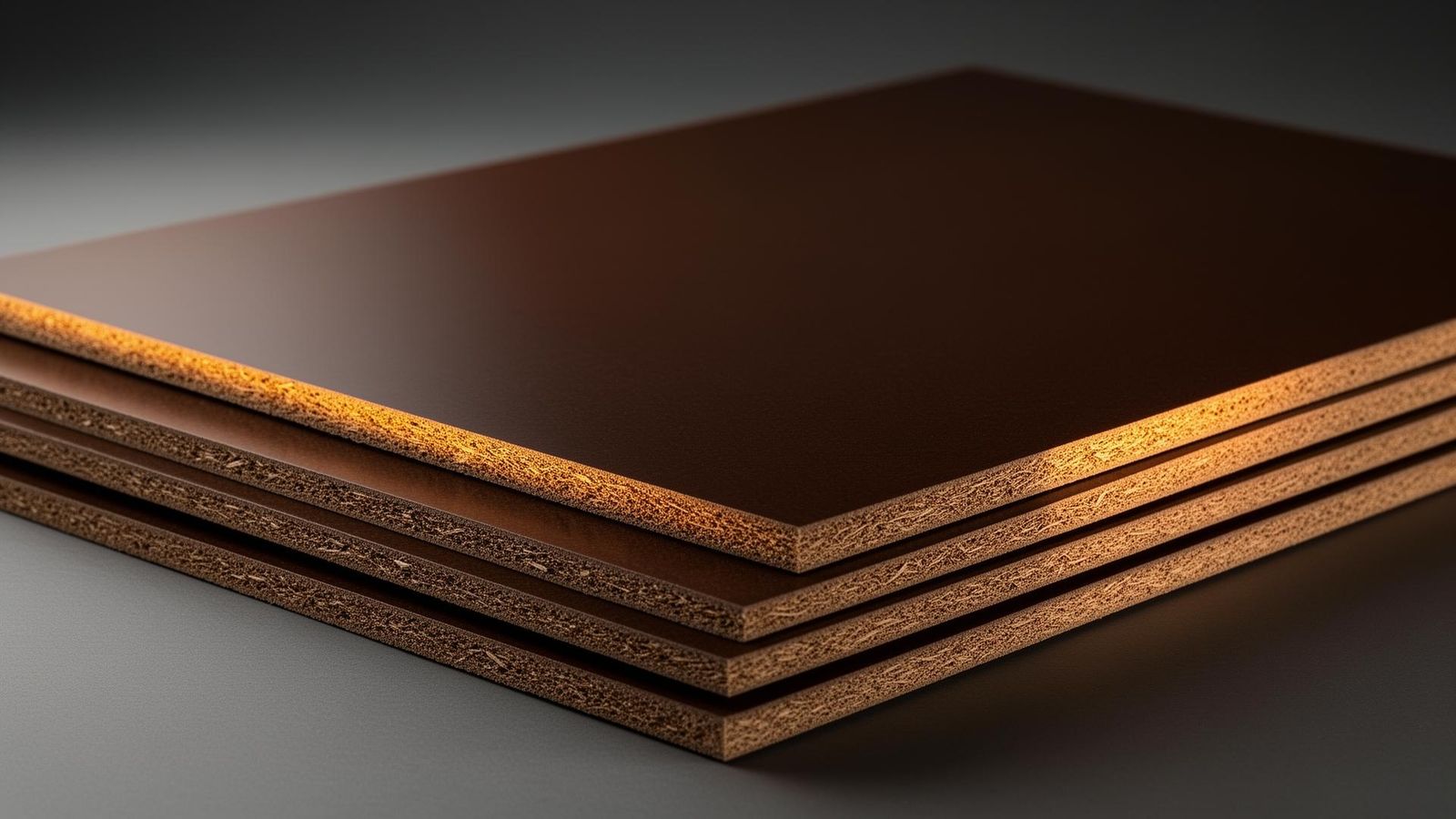
OSB is a load-rated engineered wood panel produced by orienting long rectangular strands of softwood (typically pine or aspen) in perpendicular layers (face-strands aligned with the long axis, core-strands cross-oriented) and bonding them under heat and pressure with a phenolic, PMDI or melamine-urea resin. The cross-oriented strand structure delivers far higher dimensional stability, panel shear and bending strength than non-oriented particle boards.
Manufacturing: Logs are debarked, stranded, dried, screened, blended with resin and wax, then formed into a multi-layer oriented mat. The mat is hot-pressed at high temperature into a structural panel, then sized, edge-sealed and load-grade stamped per EN 300 (OSB/1 to OSB/4).
OSB variants.
OSB/2: Dry Interior Loadbearing
Loadbearing panel for use in dry interior conditions only. Service class 1. Used in interior partitions, dry-zone subfloor and interior carcassing.
OSB/3: Humid Loadbearing
The most widely specified OSB grade. Loadbearing panel suitable for use in humid conditions. Service class 2. Wall sheathing, roof decking, subfloor, prefab construction.
OSB/4: Heavy-duty Humid Loadbearing
Heavy-duty loadbearing panel for humid conditions. Higher mechanical performance, used in industrial flooring, mezzanines and demanding structural applications.
Configured to your specification.
Share the parameters below. We revert with mill availability, lead time and pricing.
Density, strength, performance.
Where osb is specified.
- Wall sheathing in timber-frame and steel-frame construction
- Roof decking and roof sheathing
- Structural subfloor and flooring substrate
- I-joist web stock and engineered timber systems
- Prefabricated and modular building panels
- Heavy-duty industrial packaging, crating and pallets
- Site hoarding and temporary structures
- Interior partitions and shopfitting carcassing
Why it's specified.
- High shear and bending strength from oriented strand structure
- Excellent dimensional stability vs particle board
- Lower cost than equivalent structural plywood
- Consistent panel-to-panel quality (no veneer voids or core gaps)
- Available in large panel formats, reducing joints on site
- Strong sustainability profile: fast-growth softwood, high yield from log
Where to specify carefully.
- Edges swell more than face when exposed to liquid water; protect cut edges
- Face texture is not finish-grade and is typically over-clad or sheathed
- OSB/2 must not be specified for humid or external-protected service
Certified to international specification.
OSB: answered.
Quote OSB.
Share grade, thickness, panel size, fire / emission rating and quantity. We revert with mill availability, lead time and pricing within one working day.