
Definition
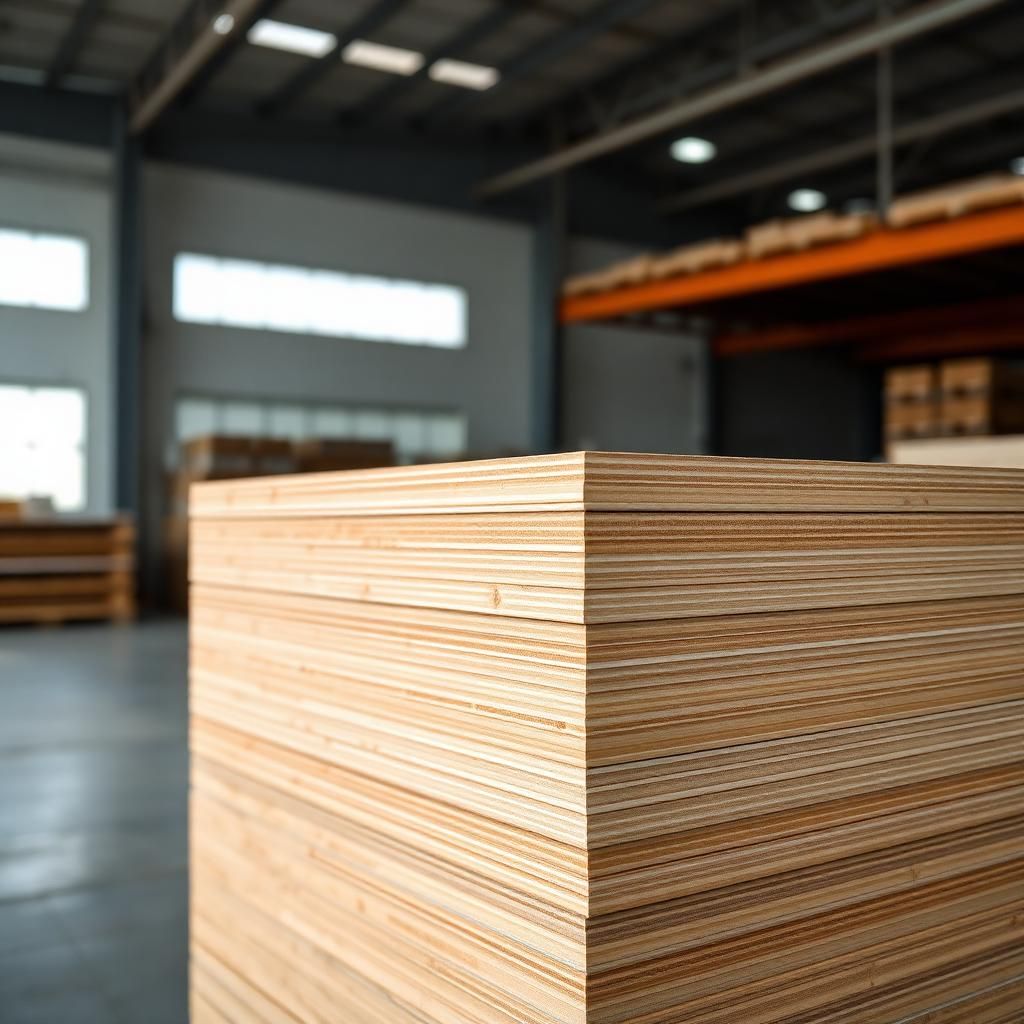
Marine plywood is a hardwood-faced, hardwood-cored plywood bonded with phenolic resin to a defined boil-resistance class (BWP / WBP / EN 314-2 Class 3), with strict requirements on veneer species, density, defect grade and core voids. It is engineered for prolonged service in wet, marine and submerged environments, boatbuilding, dockside structures, marine joinery, hatch covers and exterior architectural panels. Critically, marine plywood is defined by the panel as a whole, not just the glue line; a "WBP-bonded" panel with low-density core veneers and voids does NOT meet marine grade.
Governing standards
IS 710 (Bureau of Indian Standards), Marine Plywood. The dominant marine plywood standard in GCC procurement. Requires BWP phenolic bonding, hardwood throughout (face, core and back), specified density (≥800 kg/m³ in some clauses, 750+ kg/m³ typical), defined cyclic boil test and mycological (fungal) resistance.
BS 1088, Marine Plywood. The British standard, with a more performance-based definition: hardwood veneers of specified density, WBP phenolic bonding to BS 1203, defined permissible defects and void rate.
EN 13986 / EN 636-3, European harmonised reference for exterior plywood, used in combination with EN 314-2 Class 3 bonding. Marine-grade panels in Europe carry both EN 636-3 and species-specific declarations.
Lloyd's Register Type Approval, Some boatbuilding tenders require Lloyd's-approved marine plywood, which adds independent third-party verification.
Species and density requirements
IS 710 acceptable face veneers include Gurjan, Keruing, Bintangor and similar tropical hardwoods of specified density. BS 1088 lists acceptable species in BS 6566. Common marine plywood species: Gurjan (Dipterocarpus spp.), Keruing, Meranti (red and yellow), Okoume, Sapele, Bintangor and Hardwood Khaya. Mixed face/core species are permitted provided each ply meets the density floor. Low-density softwood cores (poplar, pine) do NOT meet IS 710 or BS 1088 even if the face is hardwood and the glue is phenolic.
Marine plywood vs WBP plywood
WBP refers to the glue line alone (phenolic resin, EN 314-2 Class 3 bonding). Marine plywood requires WBP bonding plus the full marine species, density and void rate requirements. Every marine plywood panel is WBP-bonded; not every WBP-bonded panel is marine plywood. Substituting "WBP" for "marine" in a tender is one of the most common procurement disputes in GCC fit-out work.
Standard sizes and thicknesses
2440 x 1220 mm (8' x 4') is the universal sheet size. 3050 x 1525 mm (10' x 5') is available from select mills for hatch covers and large panels. Thicknesses: 4mm, 6mm, 9mm, 12mm, 15mm, 18mm, 21mm, 25mm, with 12mm and 18mm the most-used in GCC joinery and marine fit-out. Ply count is always odd (3, 5, 7, 9, 11, 13) and balanced about the centre ply.
Applications
Boatbuilding and yacht interiors: bulkheads, decks, interior joinery. Marine signage and dockside structures in UAE, Oman, Qatar and Saudi Arabia coastal projects. Exterior architectural panels and soffits where prolonged moisture exposure is expected. High-end joinery in wet areas: spa rooms, swimming pool surrounds, marine villas, beachfront restaurants. Dunnage and crating for marine equipment shipments. False ceilings and bulkheads on commercial vessels.
How to verify marine plywood
1. Request the IS 710 or BS 1088 mill test certificate. Generic "WBP marine" labels without an IS or BS reference are a flag.
2. Confirm species declaration on the certificate matches the standard's accepted species list.
3. Inspect a freshly cut edge: dark amber-to-brown phenolic glue lines, uniformly hardwood throughout (no softwood core plies), and minimal voids.
4. Density check: weigh a 30x30cm sample and back-calculate density. IS 710 marine plywood typically lands at 750-900 kg/m³. Density below 700 kg/m³ is a red flag.
5. Field boil test on a 50x50mm sample (3 hours boil, 8 hours dry): no delamination, no void opening.
6. For high-stakes projects, request Lloyd's or BIS third-party inspection at the mill.
GCC supply chain
Marine plywood into the GCC is supplied from Indian (Greenply, Century, Sarda, Kitply, all IS 710 certified), Indonesian (Korindo and others, JAS Type 1, equivalent to BWP), Malaysian (BS 1088 mills) and Chinese (selected mills with BS 1088 certification) origins. TIC Dubai supplies IS 710 and Korindo marine-grade panels mill-direct with full certification and load-port inspection for project requirements.