
Chile
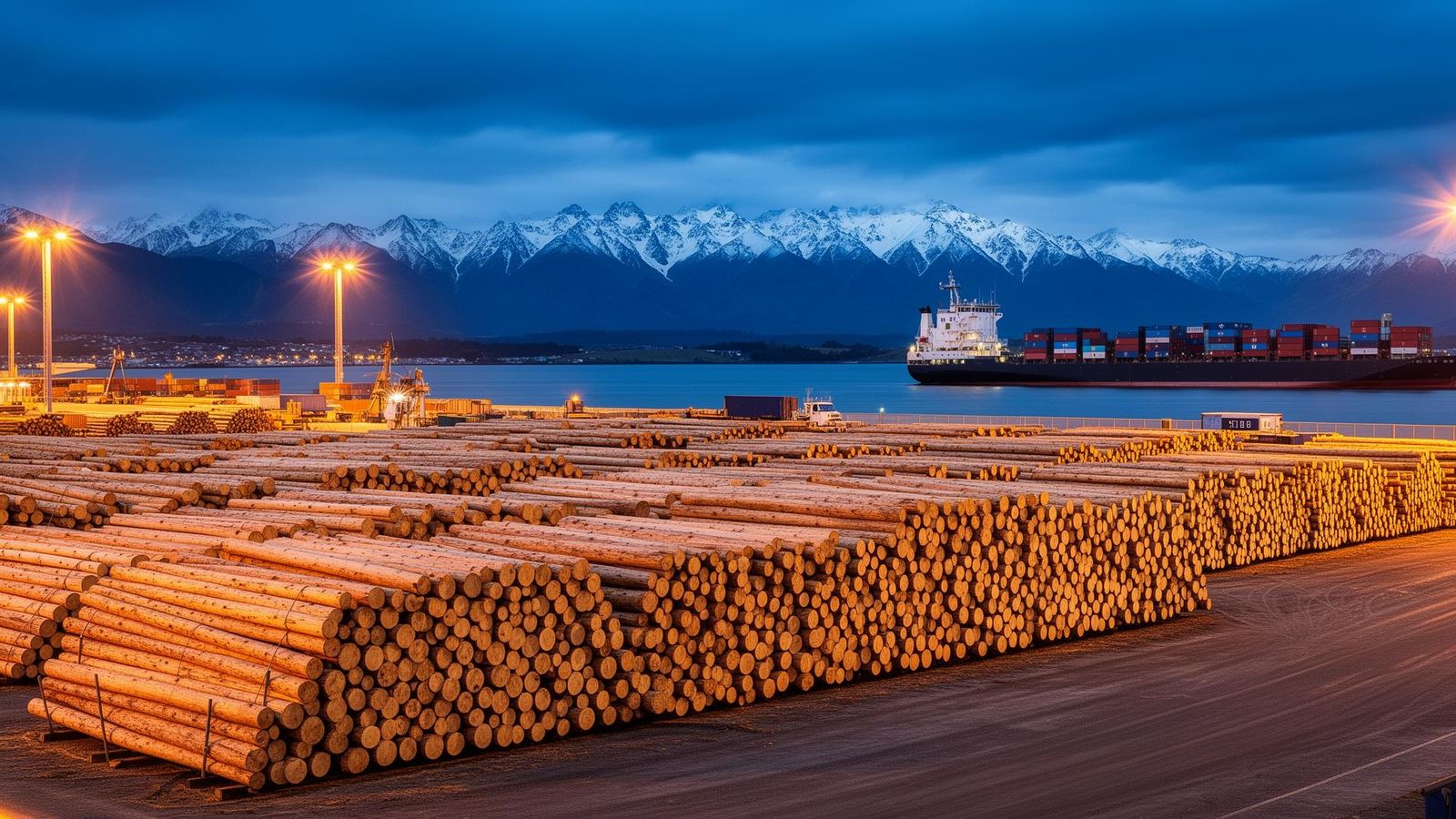
2.3 million hectares of plantation, predominantly radiata pine plus eucalyptus. Major exporters: CMPC, Arauco. Export ports: San Vicente, Lirquen, Coronel, Talcahuano. Export volume: 4-6 million m³ logs annually. Lead time to GCC: 45-60 days.
Brazil
Plantation pine focused on Pinus taeda (loblolly pine) and Pinus elliottii (slash pine) across Paraná, Santa Catarina and Rio Grande do Sul. ~2 million hectares of plantation. Export ports: Paranaguá, Itajaí, Itapoá, Rio Grande. Lead time to GCC: 45-55 days.
Uruguay
Smaller but growing plantation base, ~1 million hectares of pine and eucalyptus. Export port: Nueva Palmira, Montevideo. Generally consolidated with Brazil flows for vessel economics.
Why GCC buyers diversify across origins
Origin diversification: spreading risk across NZ + Chile + Brazil mitigates single-origin disruption from labour, weather, phytosanitary or regulatory events. Spec optionality: each origin produces a slightly different log specification, buyers match the source to the end use.