
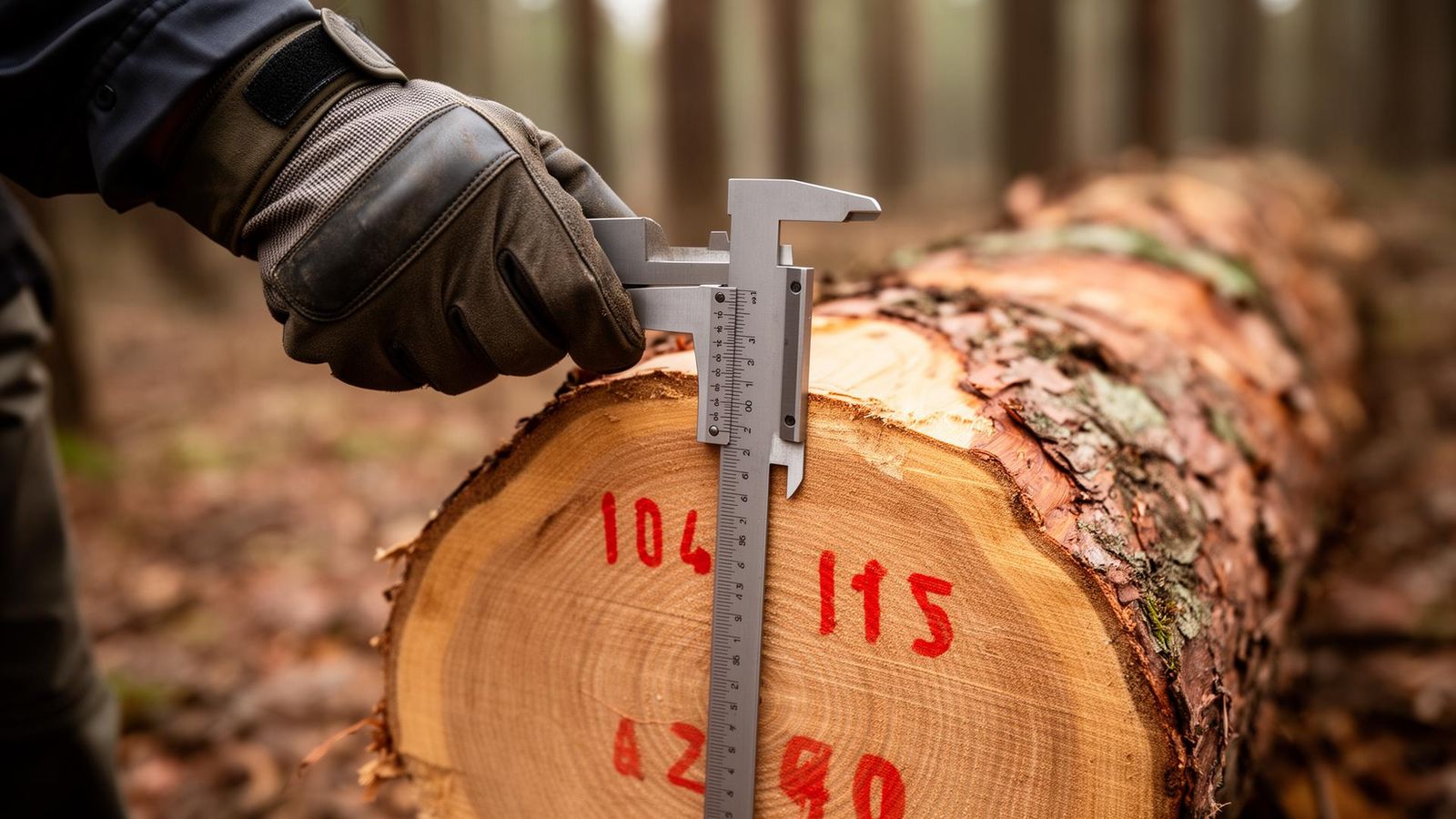
The New Zealand grading framework
The New Zealand radiata pine industry runs the most-traded export grading rules globally. Five tiers: A/P (Pruned clears), K/KI (Knotty Industrial), KIS (Knotty Industrial Sawlog), S (Structural Sawlog) and Pulp.
A/P (Pruned): logs from the bottom of pruned-tree butt sections, knot-free, command the highest price as appearance-grade peeler logs for plywood face veneers and clear joinery. K/KI: knotty industrial logs with sound, intergrown knots, peeler and sawmill grade. KIS: the workhorse sawmill grade. S: structural sawlogs. Pulp: smaller diameter and lower quality, for chipping.
The European grading framework
European Scots pine grades follow national standards but most exports run by SED (small-end diameter) class and broad quality category: ABC sawlog, D pulp, with national codes for knot allowance, sweep, ovality and decay. Russian/Baltic logs typically classified A, B, C against length and SED bands.
Defects that downgrade
Sweep (longitudinal curvature beyond 2 cm per metre), excessive taper, ovality, large or dead knots, knot whorls, ring shake, end checks beyond 50 mm, blue stain in sapwood, insect borer activity, decay and butt rot. Acceptance limits are species- and grade-specific; the origin grading rules document the exact tolerances.
Writing the RFQ grading line
State species (Pinus radiata / Pinus sylvestris), grade reference (e.g. "NZ KIS A-grade"), SED (small-end diameter) band, length, origin port, inspection authority and discharge port. Example RFQ line: "Pinus radiata, NZ KIS, SED 25-35 cm, length 4.0-6.0 m, FOB Tauranga, SGS load-port inspection, CFR Jebel Ali."