
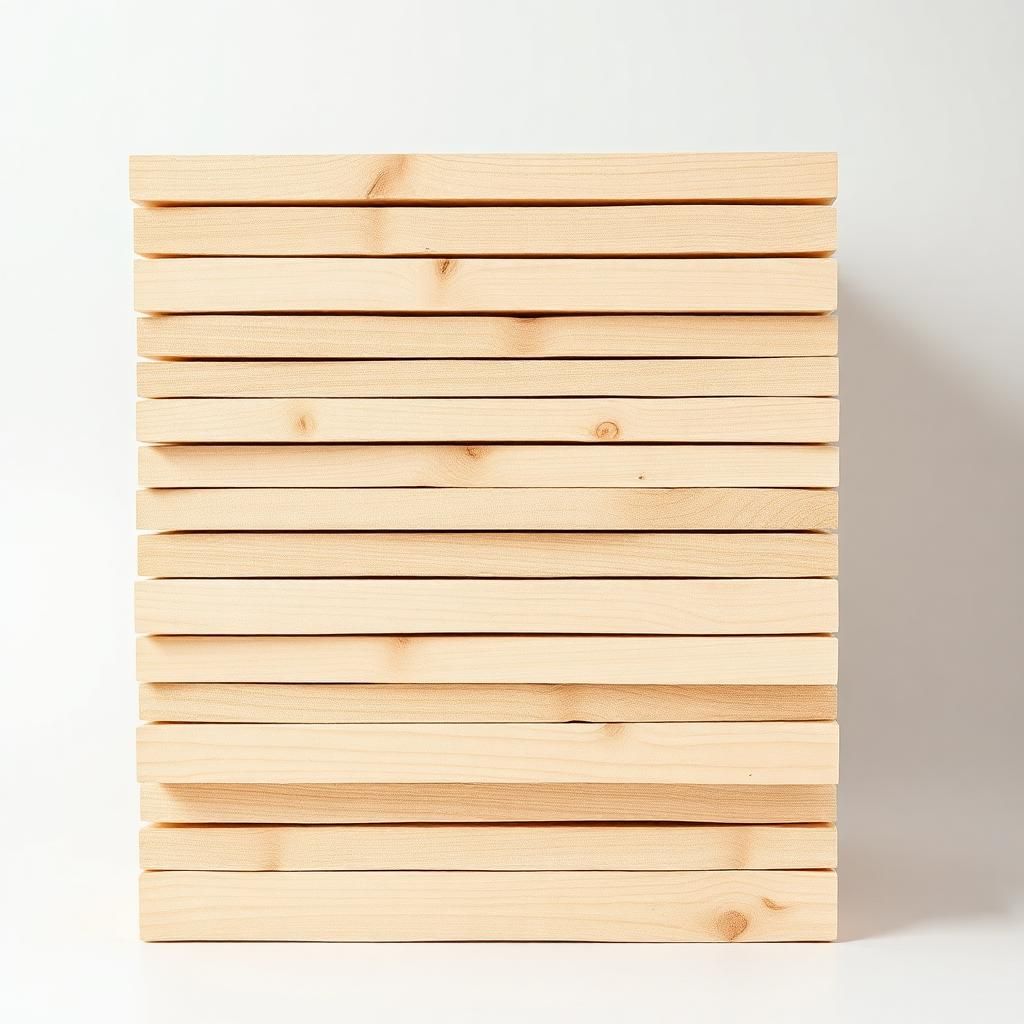
Moisture content terminology
MC (moisture content) is expressed as the weight of water in the wood divided by the oven-dry weight of the wood, as a percentage. Green timber is typically 60-200% MC. Air-dried timber in GCC outdoor conditions reaches 12-16%. Kiln-dried construction timber is supplied at ≤19% MC (KD19). Joinery and interior-grade timber is supplied at ≤12-14% MC.
EMC (Equilibrium Moisture Content) is the MC that wood reaches when stored long enough in stable ambient conditions. Wood gains or loses moisture until its MC matches the EMC of the surrounding air.
EMC across GCC climate zones
Coastal UAE (Dubai, Abu Dhabi, Sharjah, Doha, Manama, Muscat): summer outdoor EMC 12-15%, indoor air-conditioned EMC 7-9%. Inland UAE & KSA (Al Ain, Riyadh, Hail, Jeddah outskirts): summer outdoor EMC 6-10%, indoor 5-8%. Coastal KSA (Jeddah, Yanbu, Dammam, Al Khobar): summer outdoor EMC 12-16%, indoor 7-9%. Egypt (Cairo, Alexandria, New Capital): outdoor EMC 8-13%, indoor 6-9%. Kuwait inland: outdoor EMC 6-10%; coastal 10-13%.
These ranges drive specification. Joinery installed in an air-conditioned Riyadh hotel needs to be supplied at 8% MC; the same joinery in a Dubai beachfront villa should be 10-11% MC. Mismatching MC to EMC is the primary cause of post-installation joinery distortion in the GCC.
Shrinkage and expansion
Wood shrinks and swells primarily across the grain. Typical tangential shrinkage from green to oven-dry: 5-9% for SPF and Whitewood, 6-10% for Radiata Pine, 8-12% for tropical hardwoods. Radial shrinkage is approximately half of tangential. Longitudinal shrinkage is negligible.
For practical specification: a 200mm-wide SPF board installed at 19% MC in a Dubai showroom (EMC 8%) will shrink approximately 2-3mm in width over 3-6 months. Floor decking, wall cladding and joinery details should accommodate this with expansion gaps or floating fixings.
How kiln drying works
Kiln drying applies controlled heat (40-80°C) and humidity to reduce timber MC over 5-20 days depending on species, thickness and target MC. Modern kilns use temperature and humidity probes plus in-wood resistance probes to monitor MC through the cycle.
For SPF and Whitewood imported into the GCC, kiln drying at origin to ≤19% MC is standard. Re-drying at destination to ≤12-14% for joinery is offered by specialist UAE and KSA kilns and adds approximately 5-7 working days.
Specification reference
Carcass framing, formwork backing, packaging: KD ≤19% MC. General joinery substrate: KD ≤14% MC. Furniture-grade, hotel and luxury joinery: KD ≤10% MC. External cladding and decking (acclimatised on site): 14-18% MC at install, allow movement. Pallets and crates: KD ≤19% MC, HT-stamped for KSA entry.
Always require an MC certificate per shipment, with values measured at 3-5 points per bundle using a calibrated resistance meter.