
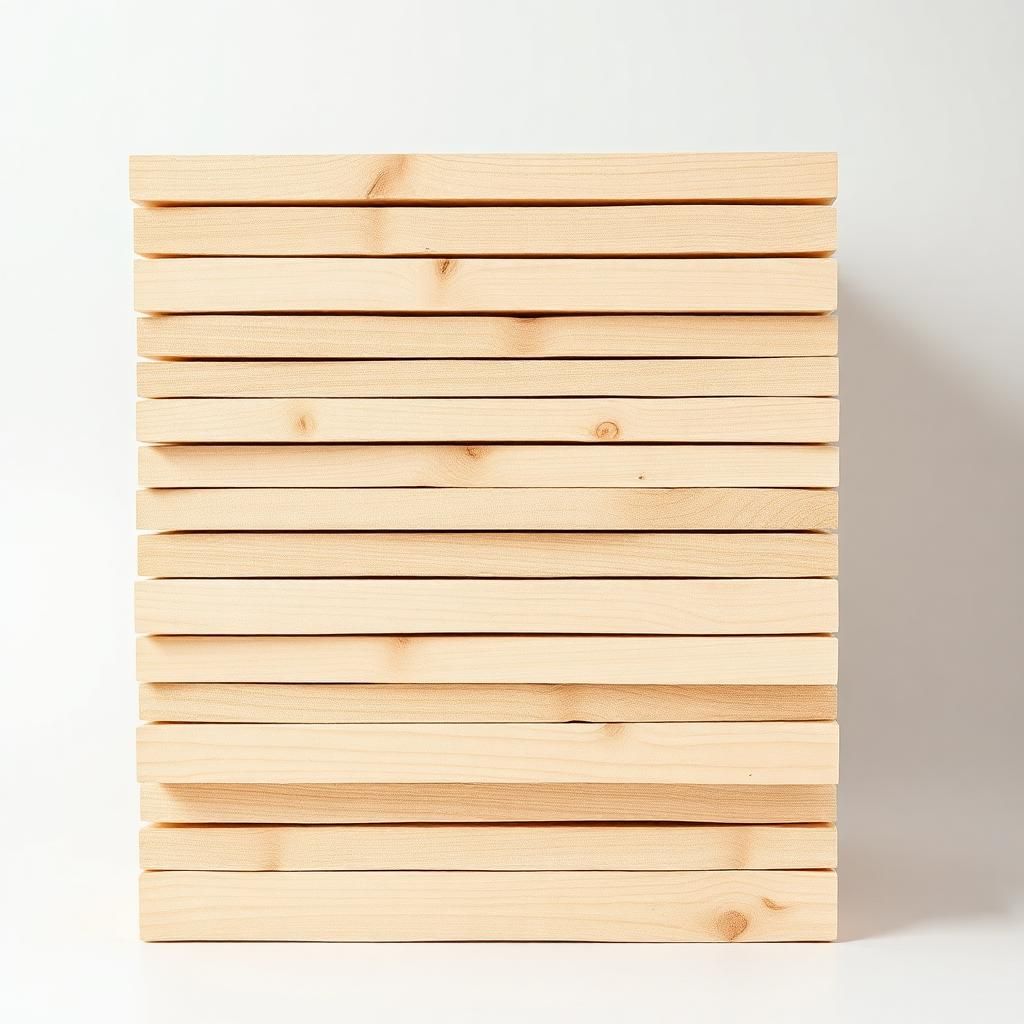
Immersion (dip tank) treatment
Bundled timber is fully submerged in a tank holding the AST solution for a defined contact time, typically 30-90 seconds. The bundle is then lifted, allowed to drip back into the tank, and stacked for surface drying.
Advantages: maximum coverage including end grain, knot fissures and bundle interiors; consistent retention across every face. Disadvantages: slower throughput (limited by tank size and crane cycles), higher chemical inventory in the tank, requires biocide top-up monitoring against dilution from wet timber. Standard at Canadian, German, Austrian and most Brazilian mills supplying premium grades.
Spray (tunnel) treatment
Loose or bundled timber moves on a conveyor through an enclosed cabinet fitted with multiple high-pressure spray nozzles. Application takes 5-15 seconds; excess solution drains and is recirculated. The system is automated and integrated with the sawmill green-chain.
Advantages: 3-5x higher throughput than dip; precise chemical dosing; minimal handling. Disadvantages: end grain and bundle interiors receive less solution than the outer surfaces; requires regular nozzle maintenance to maintain uniformity. Standard at modern Scandinavian, New Zealand Radiata and Chilean Pine mills.
Retention and performance comparison
Independent retention testing (NZ Forest Research, BRE UK) shows: well-maintained spray systems achieve 80-95% of immersion retention on outer faces, but only 50-70% on internal bundle surfaces. For unbundled, freshly sawn timber moving through a spray tunnel before stacking, performance is comparable to dip.
In practice, this means: spray-treated timber that is stickered (separated by spacers) before treatment performs as well as dip. Spray-treated timber sprayed after bundling performs less well than dip.
What GCC buyers should specify
For 6-week direct-shipment cargo: either method is acceptable provided mill is reputable and AST certificate is issued. For 8-12 week consolidated cargo (Brazil, Chile, NZ to UAE/KSA): specify immersion or pre-stacked spray. For winter season shipments: either method, with reduced concern. For summer arrivals June-September into UAE, KSA and Qatar: prefer immersion.
TIC Dubai works with sawmills that document treatment method, retention level and bundle-stacking sequence; the certificate is available with each shipment.