
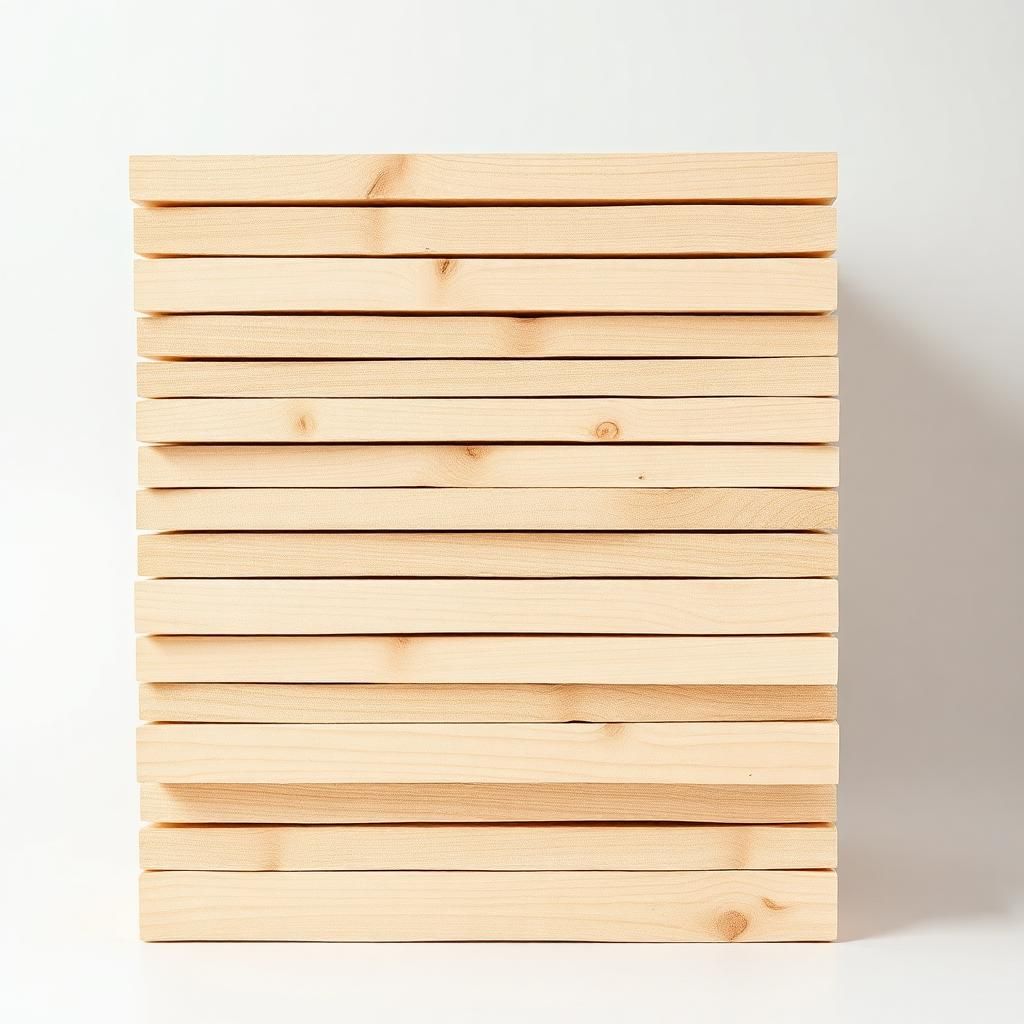
What AST is and isn't
AST (Anti-Sapstain Treatment) is a short-term surface biocide applied to freshly sawn softwood to prevent sapstain fungi and surface mould during the period between mill exit and end-use kiln drying. It is not a preservative treatment, not pressure-impregnated, and not equivalent to CCA, ACQ or creosote.
The purpose of AST is to protect green timber for the 6-12 week period during which moisture content exceeds the 22% threshold for fungal activity. Once timber dries below 20% MC, the biocide has done its job and is no longer needed.
Active ingredients in commercial use
Propiconazole (triazole fungicide, broad spectrum) and Tebuconazole (triazole, primarily against Ophiostoma) are the most common active ingredients, typically at 0.05-0.15% in the dip solution. IPBC (3-iodo-2-propynyl butylcarbamate) is added for surface mould control. DDAC (didecyldimethyl-ammonium chloride) acts as a wetting agent and supplementary biocide. Carbendazim is used in some Asian and South American mills but is restricted in EU exports.
Modern formulations are water-based, non-CCA, low-VOC and meet WHO Class III (slightly hazardous) classification, which is the minimum acceptable for handling without specialised PPE.
Application methods
(1) Dip / immersion: full submersion of bundled timber in a dip tank for 30-90 seconds. Highest retention, most uniform coverage, used in Canadian, European and Brazilian sawmills. (2) Spray tunnel: timber passes through an enclosed cabinet on a conveyor and is sprayed from multiple nozzles. Faster throughput, lower chemical use, slightly less uniform on end grain. (3) Brush / flow coating: manual or semi-automatic; lowest retention, used in small mills only.
For GCC import quality, dip or full-spray tunnel are the only acceptable methods. Brush application is unreliable through a 30-45 day sea voyage.
Retention and certification
Typical AST retention targets: 1.5-3.0 g/m² of active ingredient on the wood surface. Mills should issue an AST treatment certificate per shipment listing the chemical name, concentration, application date and method. For projects in Saudi Arabia and UAE requiring full traceability, TIC Dubai supplies the certificate with the bill of lading.
Limitations to understand
AST is a topical treatment. It does not penetrate beyond the outer 1-2mm of the timber surface. It does not protect against termites, marine borers, or in-service decay. It does not replace pressure preservative treatment (Tanalith, Wolmanit) for ground-contact or external structural use. After kiln drying, AST is consumed and the timber is no longer biocide-protected against re-wetting.